

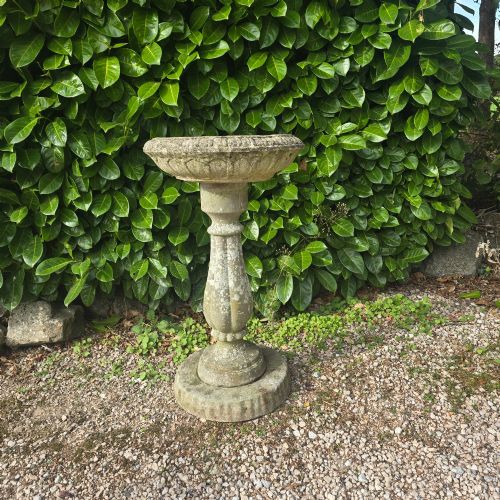
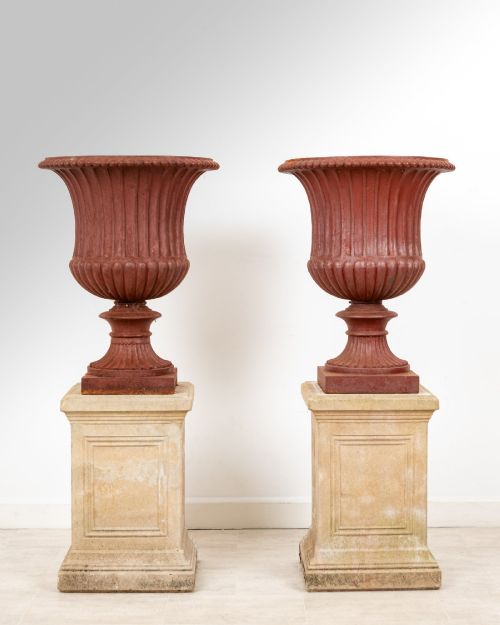
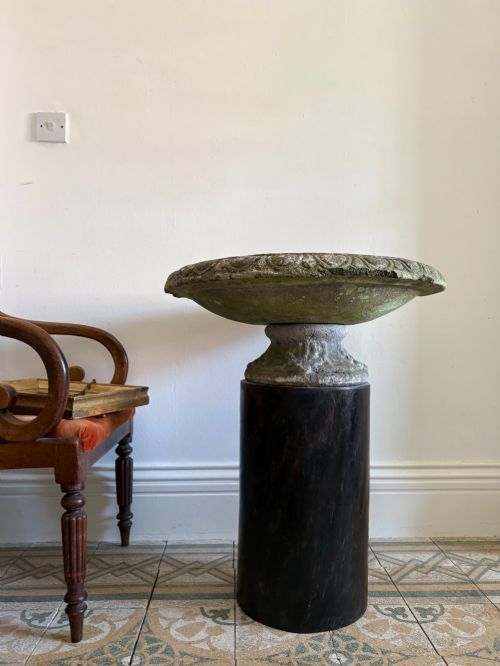
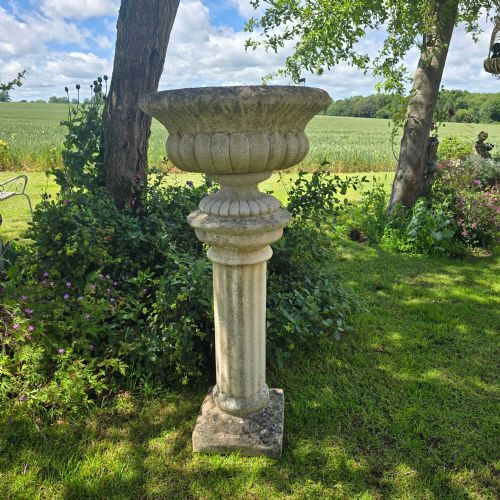




Outdoor Cast Stone Urn
An outdoor cast stone urn anchors a garden with classical mass, offering deep planting bowls shaped by Victorian and early twentieth century hands.
Outdoor Cast Stone Urn
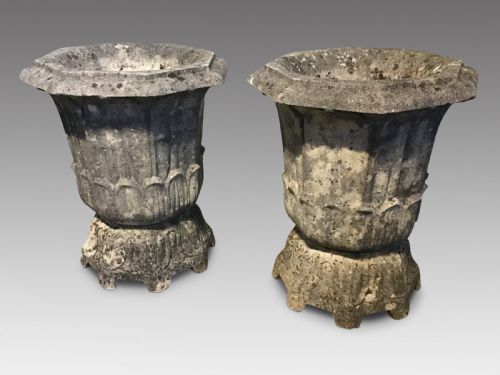
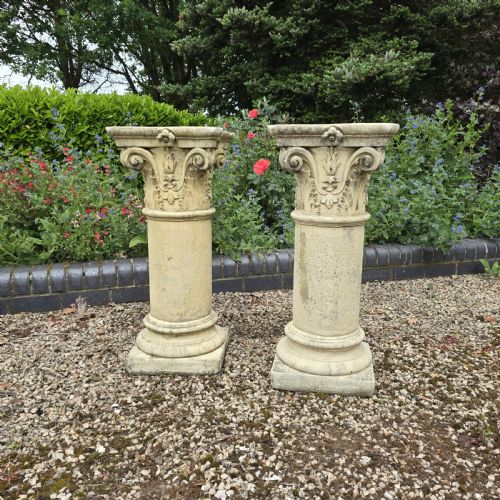
An outdoor cast stone urn brings sculptural weight to paths and lawns, drawing directly on Neoclassical, Gothic Revival, and Victorian Classical traditions. Buyers encounter these vessels paired with matching plinths, pedestals, or standalone column bases that elevate the planting bowl for maximum visibility in a garden scheme.
The pieces listed on this page span the nineteenth century through the mid twentieth century, featuring works from the Victorian era, the nineteen-tens, nineteen-twenties, and nineteen-thirties. Forms range from traditional campana shapes to seven-sided planters and birdbath combinations designed for classical English country house settings.
While many examples emerge from the Victorian period and the early twentieth century, simpler round garden planters and Corinthian columns also appear alongside heavy cast iron variants. These items serve primarily as focal points or structural accents within historic and established outdoor spaces.
Materials and construction
Makers utilised reconstituted stone, cast stone, and traditional cast iron poured into detailed moulds to achieve crisp architectural ornamentation. Acanthus leaves, classical drapery, and fluted columns were cast directly into the surface, creating high-relief details that weather naturally over decades of exposure.
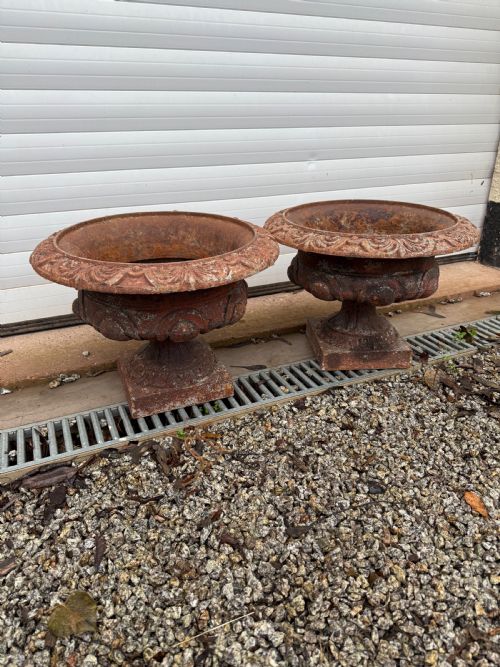
Many heavy vessels combine heavy iron bowls with separate stone plinths or pedestals to distribute weight securely across garden lawns and terraces. Surface treatments involve natural weathering or layers of paint that soften the transition between raw stone and established garden foliage.
Outdoor Cast Stone Urn Retail Price Guide 2026
Typical asking prices for outdoor cast stone urn among the pieces listed under this phrase on Sellingantiques today, from the lower quarter to the upper quarter. They describe what is for sale here now, not the wider market.
One seven-sided garden urn stands ready to confuse geometry enthusiasts who expect their classical antiques to remain strictly round.
Evaluating quality and presence
Quality rests in the crispness of the cast ornament, where sharply defined acanthus leaves and deep undercut mouldings separate superior work from softer, worn production. The thickness of the stone walls and the structural integrity of the base determine how well the vessel withstands freezing temperatures and heavy soil loads.
Proportion dictates visual success, with finer examples demonstrating a balanced relationship between the bowl capacity and the height of the supporting plinth or pedestal. The depth of the weathering patina also contributes to the visual authority of the piece, as genuine age imparts tonal variation across the stone surface.
Andrew Handyside
The Outdoor Cast Stone Urn Glossary
- Cast stone
- A refined building product manufactured from white or grey cement, graded aggregate, and pigments, simulating natural cut stone. It provides durable architectural detail for garden ornaments.
- Campana urn
- A bell-shaped garden vessel with an everted rim and a footed base, derived from ancient Roman pottery forms. This silhouette remains a staple of classical garden design.
- Plinth
- A heavy block or base supporting an urn, column, or statue, elevating the focal point above ground level. Plinths often feature moulded cornices and paneled sides.
- Reconstituted stone
- Aggregate material bound with cement and moulded into specific architectural shapes. It offers high resistance to weathering in outdoor environments.
- Neoclassical
- A revival style drawing inspiration from classical antiquity, prominent in nineteenth-century garden ornaments. It emphasises symmetry, restrained ornament, and classical motifs.
Outdoor Cast Stone Urn: Frequently Asked Questions
How do I clean an outdoor cast stone urn?
Wash the surface gently with a soft brush and warm water to remove accumulated dirt and moss without stripping the natural weathered patina.
Avoid harsh chemical cleaners or high-pressure washers, which can etch the cast stone surface and accelerate the breakdown of the aggregate.
Will cast stone urns crack in winter frost?
High quality cast stone is dense and withstands normal winter freezes provided trapped water drains freely from the planting bowl.
Ensure the drainage hole remains clear, or lift the vessel onto pot feet so moisture does not freeze and expand at the base.
How heavy are these garden urns?
Most pieces possess substantial mass due to the density of cast stone and iron, often requiring two people or mechanical assistance to position safely.
Once placed on a level stone or paved surface, their sheer weight keeps them stable against strong winds without additional fixing.
Can I plant directly inside the urn?
Planting directly into the vessel works well if the drainage hole functions properly and you add a layer of gravel at the base.
Alternatively, placing a smaller plastic pot inside the main bowl protects the interior stone from damp soil and makes seasonal replanting simpler.
How do I date an antique garden urn?
Examine the casting quality, the type of aggregate used, and the style of decorative motifs such as acanthus leaves or egg-and-dart moulding.
Victorian and early twentieth-century examples typically display hand-finished details and deeper weathering patterns compared to modern reproductions.