






Weathered Stone Garden Feature
A weathered stone garden feature brings age and permanence to an outdoor space, offering decades of quiet character.
Weathered Stone Garden Feature
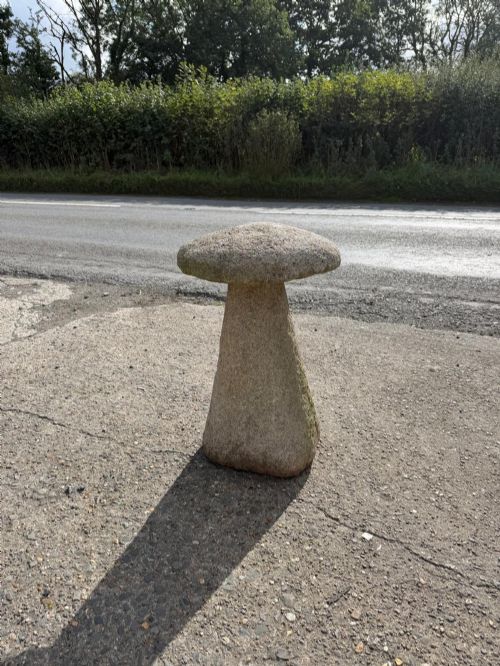
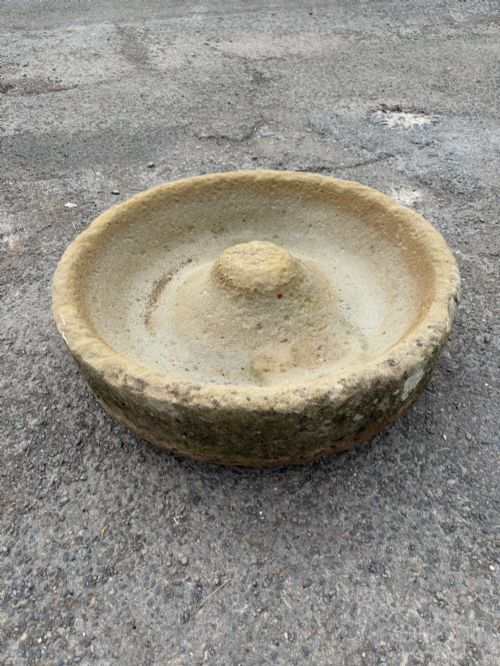
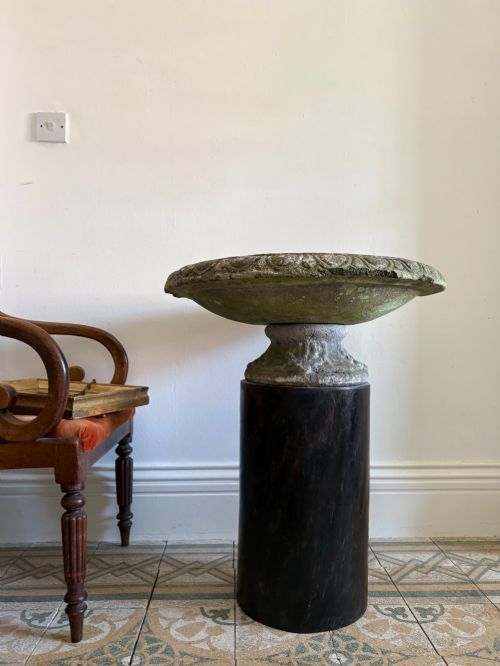
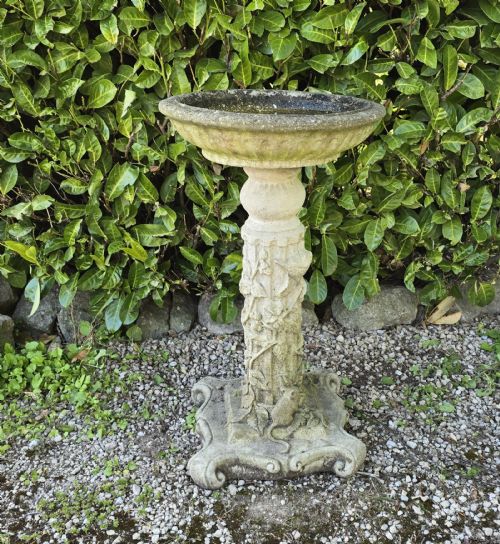
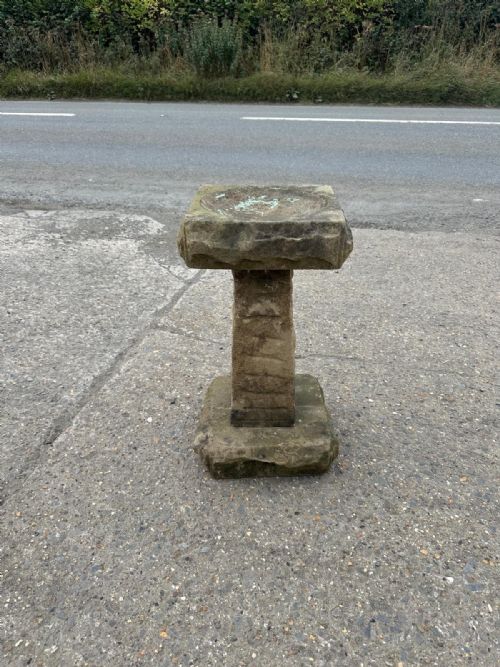
A weathered stone garden feature encompasses practical staddle stones, architectural troughs, classical birdbaths, and figures shaped for the landscape. When searching for a weathered stone garden feature, buyers encounter items ranging from eighteenth-century vernacular staddle stones to mid-twentieth-century birdbaths.
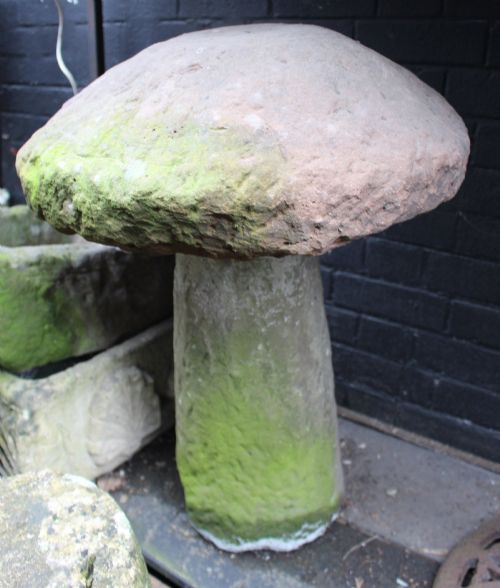
Most examples appearing here take the form of functional stone birdbaths or structural staddle stones fashioned from Cornish granite, Purbeck stone, and cast stone. These pieces display the natural patina of age, including moss and lichen growth accumulated over generations outdoors.
Earlier centuries contribute carved sandstone and Carrara marble items, such as neo-classical cisterns and funerary altars. Later nineteenth and twentieth-century examples frequently utilise reconstituted stone, limestone, and cast concrete to achieve traditional ornamental forms.
Materials and construction methods
Masonry items such as staddle stones and mill wheels are hewn from natural hardstones including granite, Purbeck stone, sandstone, and limestone using traditional banker masonry techniques. These durable materials withstand centuries of exposure while developing deep surface weathering.
Decorative birdbaths and architectural urns rely on cast stone and reconstituted stone poured into rigid moulds to replicate carved stonework. This method allows classical motifs and neo-classical styling to reach gardens without the immense cost of bespoke carving.
Surface maturity develops through prolonged exposure to damp conditions, encouraging layers of moss, lichen, and general weathering to adhere to the stone matrix. This natural ageing process softens the sharp edges of newly dressed masonry.
Weathered Stone Garden Feature Retail Price Guide 2026
Typical asking prices for weathered stone garden feature among the pieces listed under this phrase on Sellingantiques today, from the lower quarter to the upper quarter. They describe what is for sale here now, not the wider market.
Listings feature items spanning from the eighteenth century to the mid-twentieth century, constructed in granite, sandstone, limestone, and cast stone.
Judging quality and character
Quality rests in the integrity of the stone substrate and the authenticity of the weathering rather than uniform surface perfection. Hand-carved natural stone from the eighteenth century or earlier holds higher sculptural value than mid-twentieth-century moulded alternatives.
The harmony between form and material dictates the visual success of a piece, such as the proportional balance of a staddle stone cap and base. Intact original pairings outrank assembled components lacking historical continuity.
The Weathered Stone Garden Feature Glossary
- Staddle Stone
- A stone support once used to raise granaries and rick yards off the ground to deter vermin and damp. They typically feature a tapered base and a rounded cap.
- Reconstituted Stone
- A composite material made from crushed stone aggregate and cement binder, moulded into architectural or garden ornaments. It emerged as a durable alternative to carved masonry.
- Purbeck Stone
- A form of limestone quarried in the Isle of Purbeck, Dorset, widely utilised for durable architectural elements and birdbaths. It weathers to a dense, grey-toned surface.
- Cornish Granite
- A coarse-grained igneous rock native to Cornwall, prized for extreme hardness and rough durability. It forms heavy staddle stones and mill wheels capable of enduring harsh coastal climates.
- Carrara Marble
- A white or blue-grey marble sourced from the city of Carrara in Tuscany, used for high-status classical cisterns and architectural salvage. It ages with a softer, powdery surface texture.
Weathered Stone Garden Feature: Frequently Asked Questions
How do I clean moss off my stone feature?
Harsh scrubbing and chemical agents damage the delicate surface patina and strip away accumulated lichen that gives a weathered stone garden feature its visual appeal. Gentle brushing with water helps remove loose debris while preserving the historic age.
Allowing natural weathering to continue protects the outer stone matrix from unnecessary erosion. Aggressive cleaning accelerates wear on softer sandstone and cast stone surfaces.
Are staddle stones frost proof?
Granite and hard limestones possess low porosity and withstand freezing temperatures without sustaining structural damage. Water trapped within unsealed cracks of softer sandstone or cast stone requires monitoring during severe winter months.
Elevating pieces slightly off wet ground prevents moisture from rising through the base via capillary action. Protecting vulnerable birdbaths during deep freezes reduces the risk of surface spalling.
How do I date a weathered stone birdbath?
Tool marks left by masons offer clues to the era of manufacture, with hand-chiseled surfaces preceding modern machine-dressed alternatives. The transition from natural quarried sandstone to cast stone during the late nineteenth century provides another chronological marker.
Stylistic cues such as neo-classical proportions align pieces with eighteenth-century design revivals. Examining the depth and density of lichen growth helps confirm long-term outdoor exposure.
What is a staddle stone used for today?
Modern gardens utilise staddle stone caps and bases as focal points, gatepost stanchions, or supports for timber garden structures. Their sculptural silhouette brings historic weight to contemporary and traditional planting schemes alike.
Arranging pairs along pathways or near garden entrances frames outdoor spaces effectively. Their sturdy construction requires minimal maintenance once positioned on level ground.