





Grey Cast Stone Planter
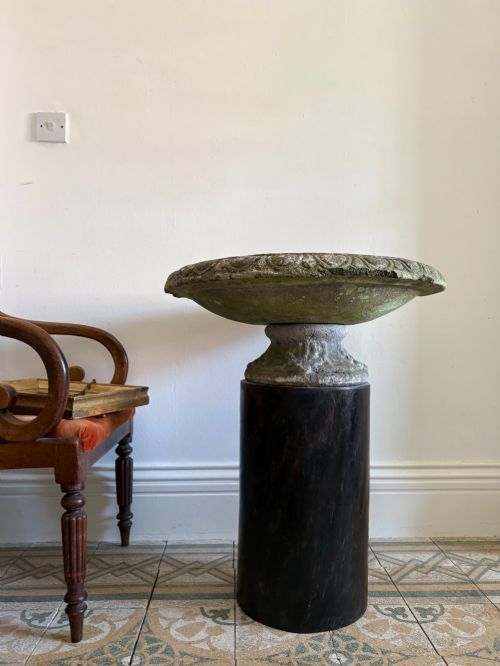
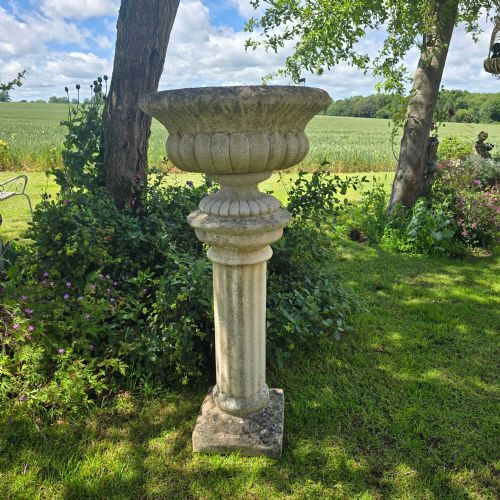
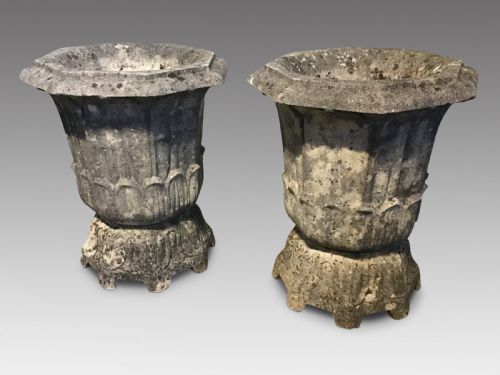
A grey cast stone planter brings sculptural presence to a terrace, taking the form of classical urns and pedestals that age with distinct character.
Grey Cast Stone Planter
A grey cast stone planter is a sturdy garden ornament designed to hold planting, appearing across periods from the Victorian era through the mid twentieth century. Buyers seeking this phrase typically find campana urns, garden planters, and birdbath planters paired with matching plinths or pedestals.
The selection on this page draws on diverse historical revivals, including neoclassical, classical revival, and gothic revival styles. These pieces range from simple round forms to seven sided vessels and Roman funerary altar designs.
Most examples originate from the early twentieth century, the nineteen-twenties, and the nineteen-thirties, alongside Edwardian and Victorian iterations. They function primarily as architectural garden antiques meant for outdoor display.
Materials and construction
These garden objects are constructed using cast stone, reconstituted stone, composite stone, and concrete, moulded into rigid architectural shapes. Some examples utilise cast iron, particularly in campana urn forms dating to the Victorian period.
Manufacturing methods involved pouring aggregate mixtures into moulds to replicate carved stone or metal vessels. Surface weathering occurs naturally over decades of exposure to the elements, creating the characteristic grey patination seen on these garden pieces.
Grey Cast Stone Planter Retail Price Guide 2026
Typical asking prices for grey cast stone planter among the pieces listed under this phrase on Sellingantiques today, from the lower quarter to the upper quarter. They describe what is for sale here now, not the wider market.
Materials represented include cast stone, reconstituted stone, concrete, composite stone, and cast iron.
Factors that distinguish quality
Quality in a grey cast stone planter rests on the crispness of the moulded ornament and the depth of the classical detailing, such as egg and dart borders or fluting. Sharp relief work indicates a superior mould and careful aggregate selection during production.
The presence of a matching plinth or pedestal elevates the architectural impact of an urn or planter. Pieces that have weathered evenly over time display a more desirable surface texture than those with uniform or artificial colouration.
Andrew Handyside
The Grey Cast Stone Planter Glossary
- Campana urn
- A bell shaped garden vessel with a flared rim and footed base, frequently utilised in classical landscape design. These forms date across Victorian and early twentieth century production.
- Cast stone
- A refined masonry product manufactured to resemble natural cut stone, used extensively for garden ornaments and architectural antiques. It provides durability and detailed moulding capabilities.
- Reconstituted stone
- A material created from crushed stone or aggregate bound with cement, cast into moulds for garden planters and urns. It mimics the weight and appearance of quarried stone.
- Plinth
- A heavy architectural base or pedestal supporting an urn, planter, or birdbath. It elevates the planted vessel to improve visibility in a garden setting.
- Neoclassical
- A design style drawing inspiration from classical antiquity, featuring symmetrical forms and restrained ornamentation. This style appears frequently in early twentieth century garden antiques.
Grey Cast Stone Planter: Frequently Asked Questions
What is a grey cast stone planter?
A grey cast stone planter is a durable garden vessel moulded from aggregate and cement to resemble traditional carved stone. These objects take forms such as campana urns, birdbaths, and architectural planters.
They are designed for outdoor placement on terraces, lawns, and formal gardens. Over time, exposure to weather develops a distinctive grey surface texture.
How do I date a cast stone planter?
Dating these pieces involves examining the style of the ornamentation, such as neoclassical motifs or gothic revival details. The manufacturing technique and materials, including early concrete and composite stone mixes, also provide clues to the period.
Many examples originate from the Victorian era through the nineteen-thirties. Matching plinths and the extent of natural weathering help confirm age.
Are cast stone planters frost resistant?
Cast stone and reconstituted stone are heavy, dense materials built to withstand outdoor conditions year round. Their robust construction suits permanent garden placement.
Proper drainage helps prevent water accumulation during freezing weather. Most examples have endured decades outdoors across various climates.
How should I display an urn planter?
Urn planters look best when paired with a matching plinth or pedestal to lift the vessel off the ground. This creates a focal point on formal terraces, path junctions, or lawn borders.
They can be planted with trailing foliage or box hedging to complement their classical proportions. Placing them in pairs frames doorways and garden pathways effectively.