
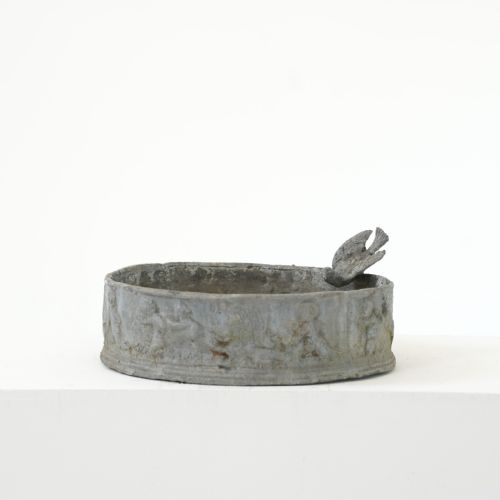
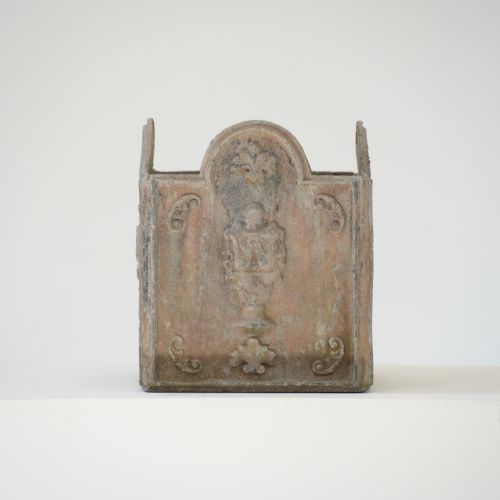


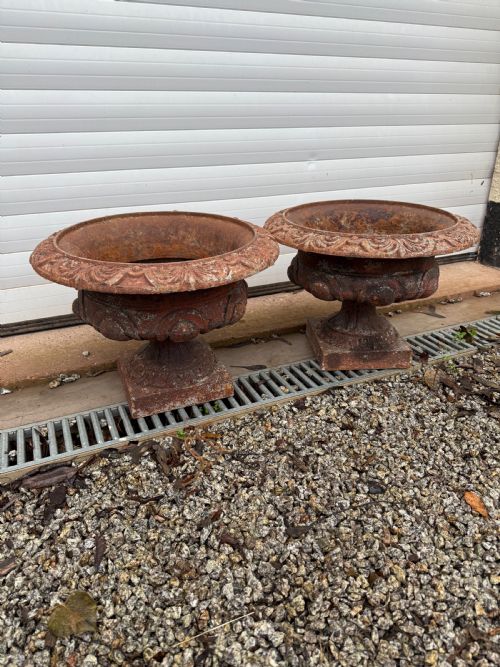


Outdoor Garden Trough Planters
Outdoor garden trough planters bring structure and timeless horticulture to terraces, pathways and courtyards.
Outdoor Garden Trough Planters
Outdoor garden trough planters provide solid, linear planting beds designed to organise greenery along walls, window sills and garden perimeters. The pieces gathered here span several centuries and styles, ranging from robust nineteenth century ironwork to traditional natural stone and lead vessels.
You are most likely to encounter nineteenth century cast iron and stone troughs, alongside sturdy wrought iron and zinc examples from the early twentieth century. These linear vessels accommodate everything from herbaceous perennials to structured box hedging in both formal and rustic settings.
How they were made
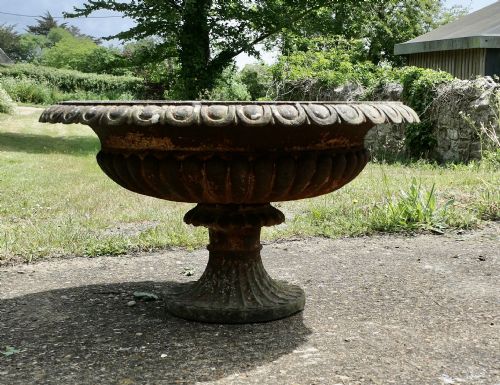
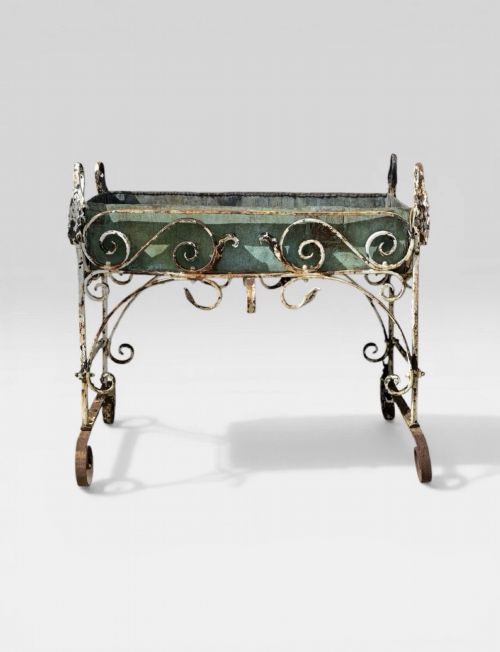
Makers shaped these troughs using durable heavy metals and quarried minerals capable of withstanding constant exposure to weather and damp soil. Cast iron, steel and zinc pieces utilise foundry casting or hand-riveted sheet construction, often featuring decorative strapwork or handles.
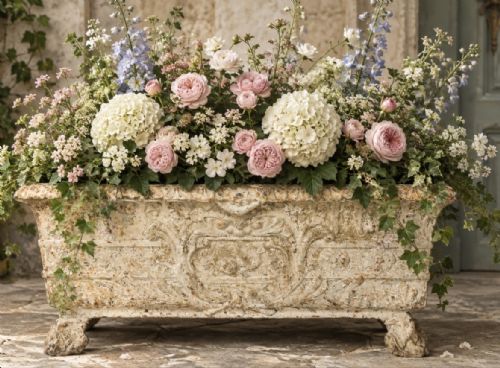
Stone, terracotta and lead vessels rely on traditional masonry and casting methods. Natural stone and sandstone are hand-chiselled into sturdy rectangular basins, while lead planters are cast in flat sections and soldered or jointed at the corners.
Some resilient stone planters carry fragments of history from the Houses of Parliament after being damaged during the Blitz.
What varies in quality
Quality rests upon the integrity of the material, the crispness of any cast ornamentation and the structural thickness of the walls. Heavy gauge metals and deeply carved natural stone represent the superior end of the spectrum, offering greater longevity against frost and soil pressure.
Proportion and scale also dictate distinction, particularly in matched pairs or pieces bearing evidence of early foundry work or period architectural provenance.
The Outdoor Garden Trough Planters Glossary
- Strapwork
- Flat metal bands applied externally to strengthen or decorate the body of a metal planter. This technique adds structural rigidity and visual rhythm to iron vessels.
- Salt glazed
- A ceramic finishing method where salt is thrown into the kiln during firing to produce a glossy, durable vitreous coating. It protects the earthenware body from moisture penetration.
- Terracotta
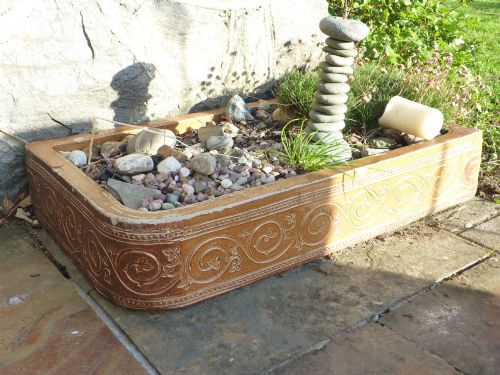
- Fired unglazed clay possessing a porous structure that allows plant roots to breathe. Buff terracotta variations offer a pale, uniform earth tone.
- Jardiniere
- An ornamental pot or trough designed specifically to hold flowering plants. They frequently appear in large scales suitable for conservatories or patio terraces.
- Pancheon
- A wide, shallow earthenware or stone vessel traditionally used in dairies but repurposed in gardens as a planting trough.
Outdoor Garden Trough Planters: Frequently Asked Questions
How do I protect stone troughs from frost?
Natural stone and cast stone troughs require adequate drainage holes at the base to prevent trapped water from freezing and expanding within the pores. Elevating the vessels slightly on pot feet ensures moisture escapes freely during winter months.
lining vulnerable stone interiors with protective matting further buffers extreme temperature drops against the masonry.
Can lead planters go straight onto soil?
Lead planters sit comfortably on hard landscaping, gravel or direct earth without degrading quickly. Their heavy weight provides inherent stability for larger shrubs and small trees.
placing them on stone paving prevents direct contact with damp soil and helps preserve the underside of the metal.
How do I identify a nineteenth century iron trough?
Nineteenth century iron troughs typically display heavy casting seams, hand-hammered rivets and substantial wall thickness. Surface patination often includes layered oxides and historical paint remnants.
stylistic clues like Gothic revival tracery or classical strapwork point directly to Victorian manufacturing techniques.
Are zinc planters suitable for outdoor use?
Zinc planters withstand outdoor elements exceptionally well due to the protective patina that forms naturally on the surface. They offer a lighter alternative to cast iron while maintaining rigid structural integrity.
pairing them with appropriate soil mixes ensures healthy root development in courtyard or terrace settings.