




Victorian Style Iron Planters
Victorian style iron planters bring enduring classical form to gardens and conservatories, offering sturdy vessels for botanical displays.
Victorian Style Iron Planters
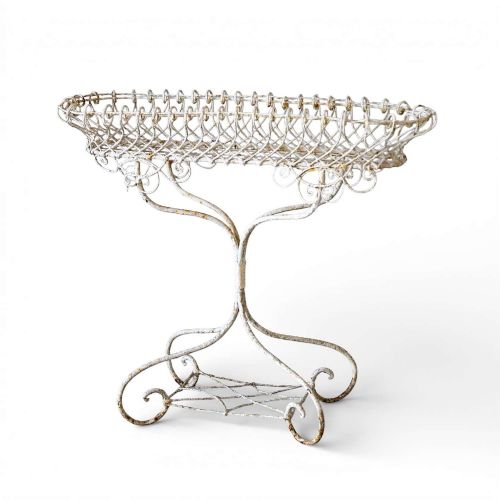
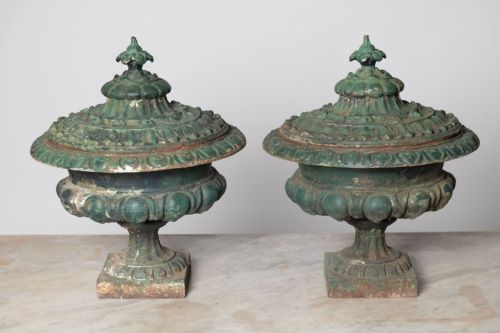
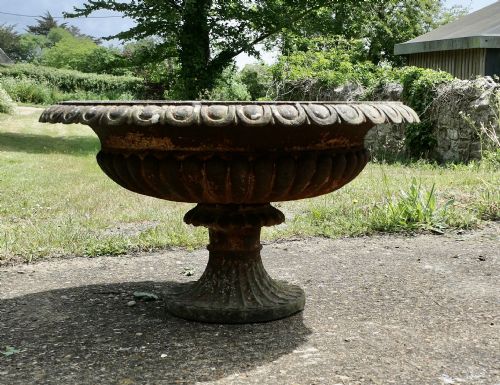
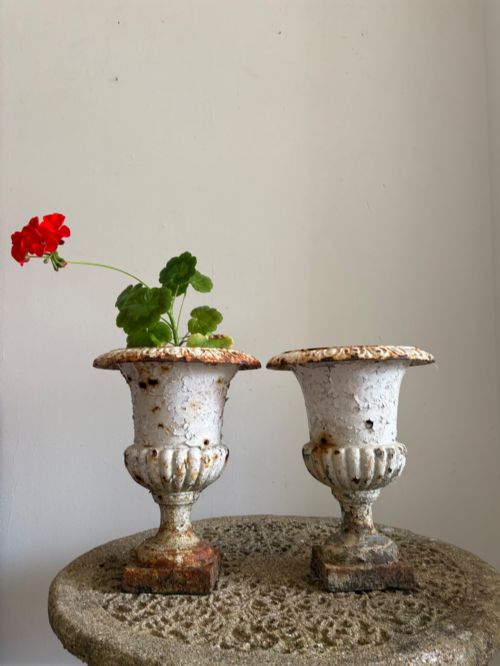
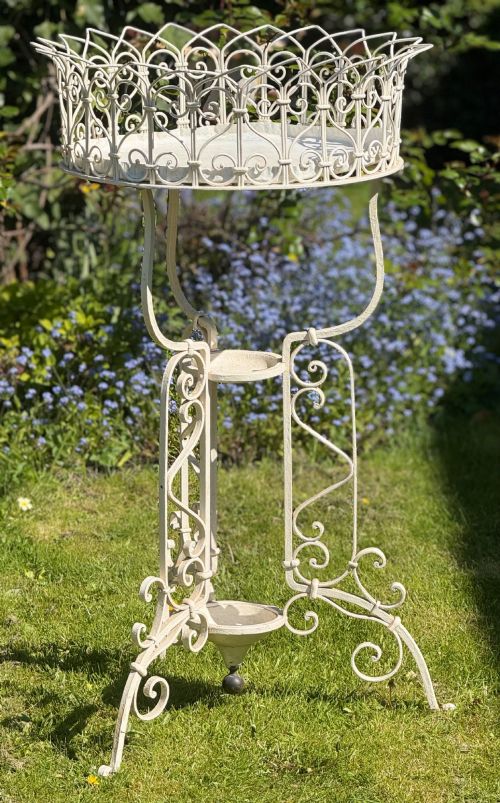
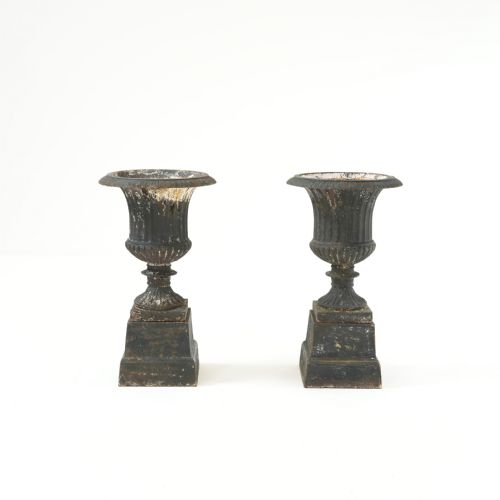
Victorian style iron planters comprise robust garden urns, plant stands, and jardinieres originating predominantly from the nineteenth century alongside later periods. These pieces range from substantial classical campana urns on plinths to intricate wirework conservatory plant stands.
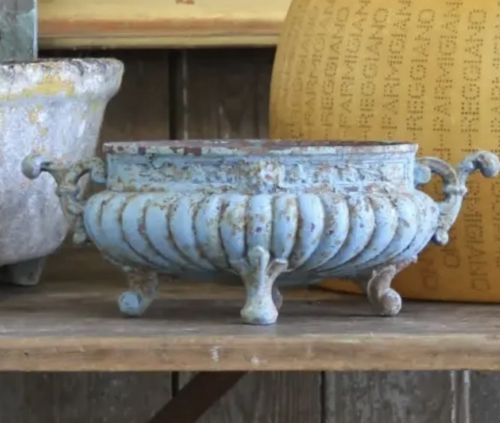
Buyers frequently encounter cast iron and wrought iron variants, often shaped into urns or formal jardinieres reflecting nineteenth-century classical and neoclassical influences. Many examples display original distressed paint finishes that evidence their age and garden use.
Forms span from small French jardinieres to large pairs of garden urns on pedestals, reflecting the diverse requirements of period gardens and English country houses.
Materials and construction
Makers utilised durable cast iron and malleable wrought iron to achieve both heavy, monumental garden urns and lighter, open wirework frames. Cast components allowed for crisp relief moulding such as acanthus leaf decoration.
Constructed pieces frequently incorporated additional metals including brass, copper, and zinc alongside structural wirework to create specialised conservatory plant stands and jardinieres. Painted surfaces provided protection against the elements while contributing to the aged appearance seen on nineteenth-century examples.
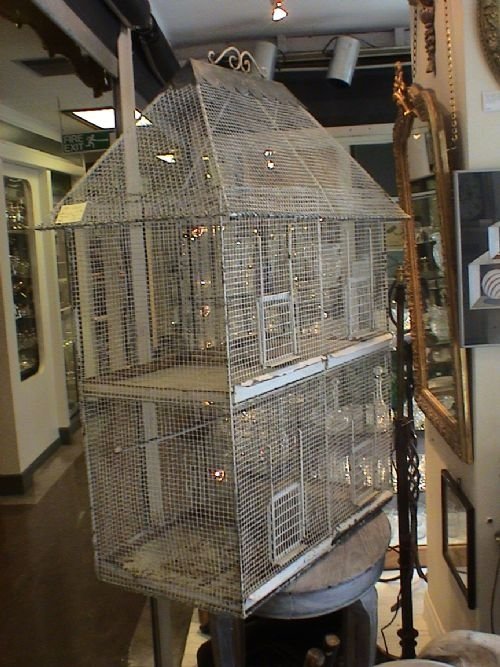
Alongside heavy garden urns, domestic spaces sometimes gained whimsical character from substantial brass and copper bird cages.
Assessing quality and character
Quality rests in the crispness of the iron casting, the balance of proportions in classical campana urns, and the integrity of structural scrollwork on plant stands. Heavier, substantial pieces with integrated plinths demonstrate superior presence.
The preservation of original surface treatments, such as early distressed paint, distinguishes pieces that retain authentic garden patina from those with later interventions. Fine execution of decorative motifs like acanthus leaves marks superior craftsmanship.
The Victorian Style Iron Planters Glossary
- Campana urn
- A bell-shaped garden vessel with an everted rim, widely produced in cast iron during the nineteenth century. These classical forms often sit upon matching plinth bases.
- Jardiniere
- An ornamental pot or stand designed to hold growing plants, constructed in iron, wirework, or mixed metals for interior or conservatory placement.
- Wrought iron
- Iron that has been heated and hammered into shape by hand, resulting in fibrous structures suited for intricate scrollwork and plant stands.
- Wirework
- Metal strands shaped into open lattices and baskets, commonly utilised for Edwardian conservatory plant stands and light garden planters.
Victorian Style Iron Planters: Frequently Asked Questions
Where were these planters placed?
These iron vessels served utilitarian and decorative roles in nineteenth-century gardens, framing pathways, accenting terraces, and populating formal lawns.
Lighter wirework stands and jardinieres found their natural home inside conservatories and country house interiors, displaying potted plants away from frost.
How do I care for cast iron?
Cast iron garden pieces require minimal intervention, though monitoring surface paint helps prevent active corrosion in damp outdoor environments.
During harsh winter months, emptying soil from urns prevents frost damage from expanding trapped moisture within the metal casting.
Are these pieces waterproof?
Many iron and metal planters accommodate direct planting, while others function primarily as decorative cachepots holding inner pots.
Checking the interior for drainage holes determines whether a liner is necessary to protect plant roots from standing water.