


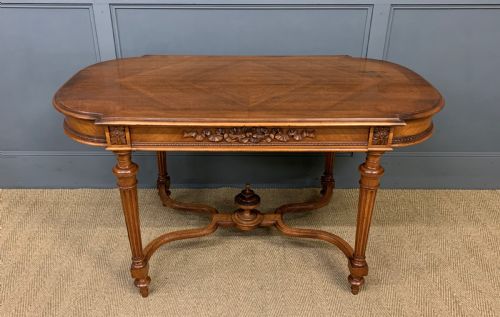
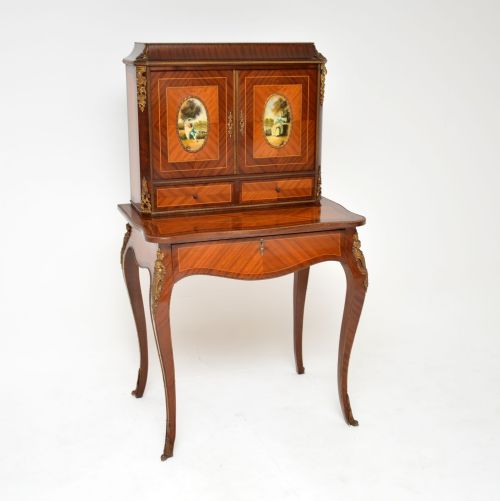
Vintage French Writing Table
A vintage french writing table brings practical surface area and Continental character to a room, ranging from simple provincial oak to ornate inlaid walnut.
Vintage French Writing Table
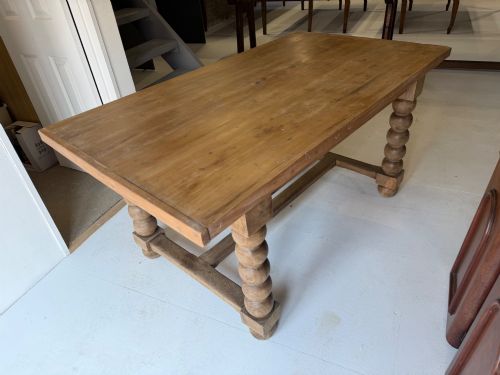
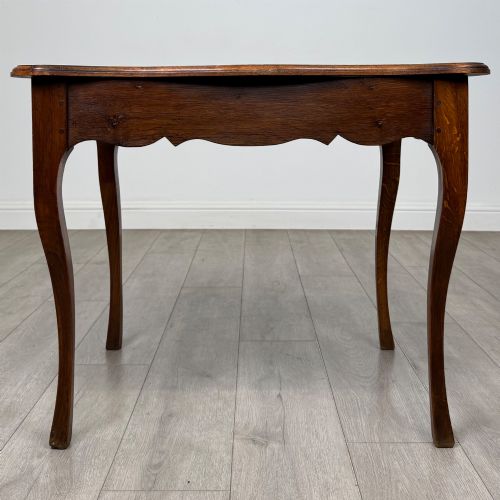
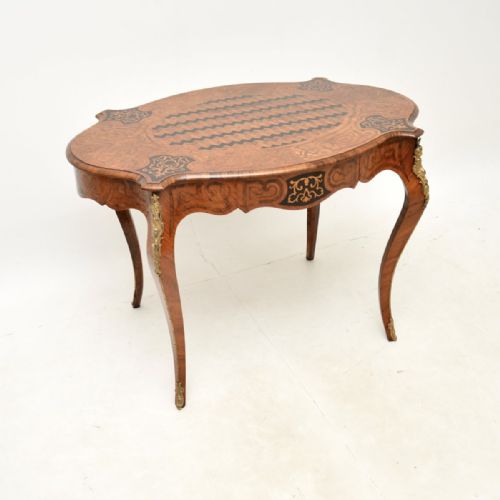
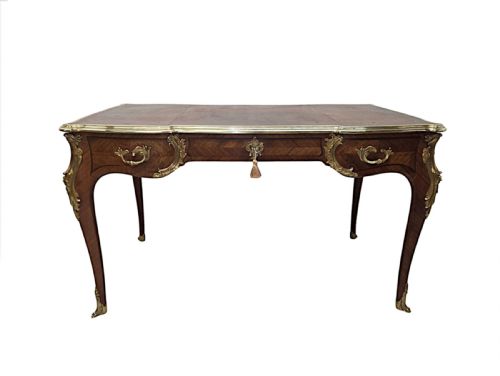
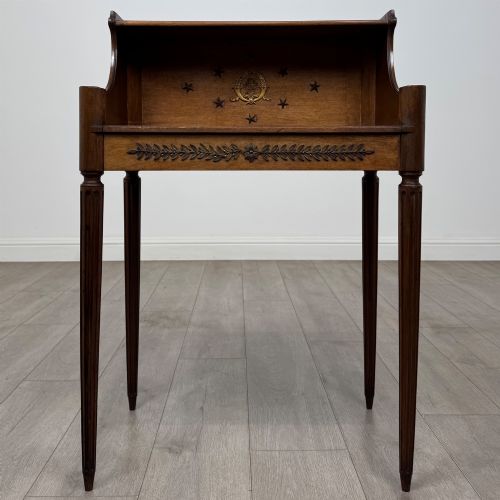
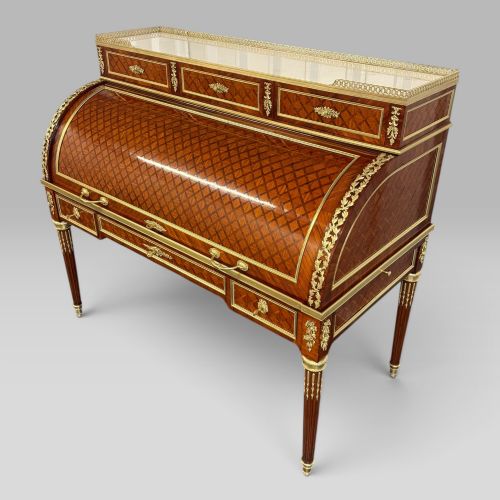
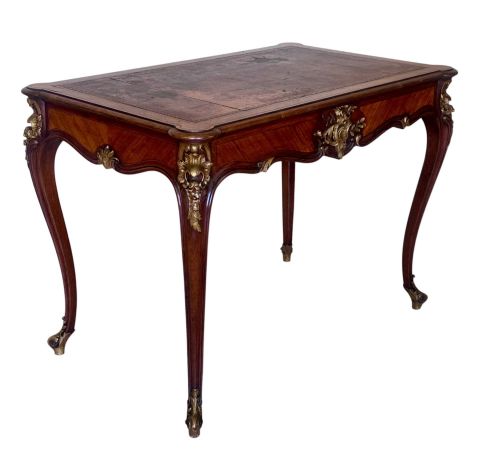
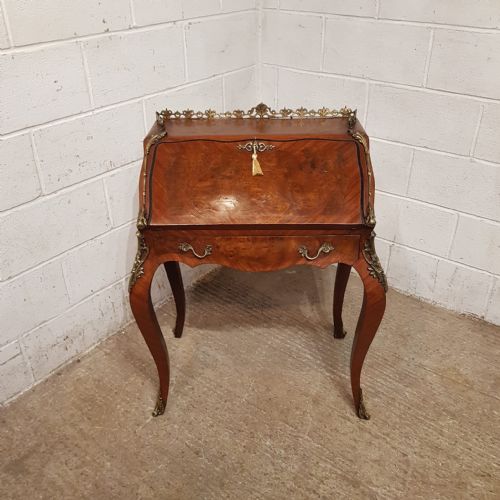
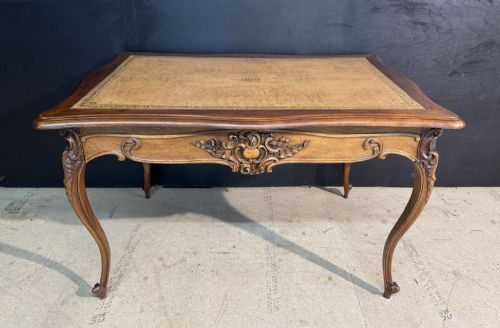
A vintage french writing table encompasses various forms designed for correspondence and light study, including bureau plat desks, side tables, and freestanding centre tables. These pieces appear across multiple periods, most notably the nineteenth century, Edwardian era, and the art deco decades of the nineteen-twenties and nineteen-thirties.
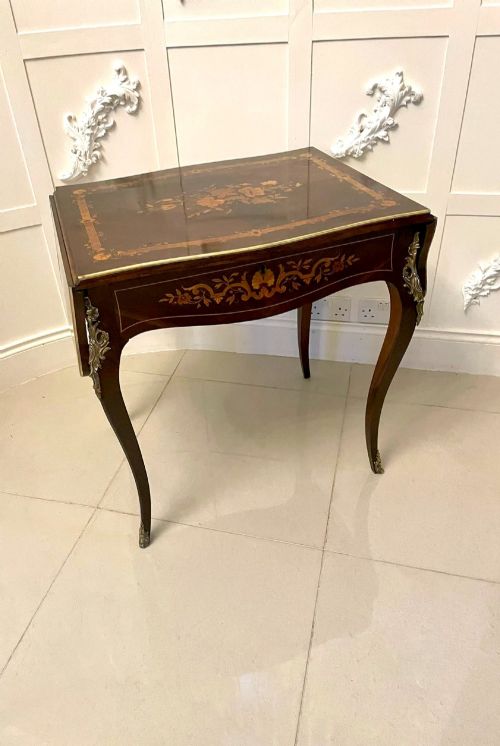
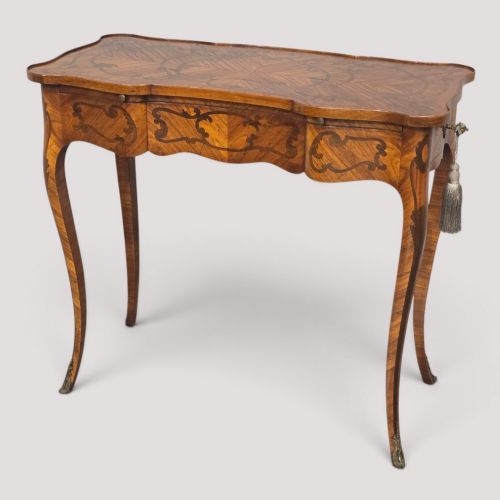
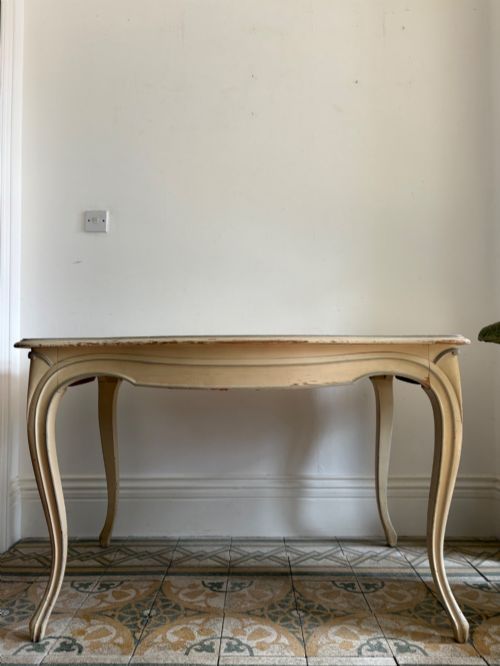
The aesthetic vocabulary leans heavily on revival movements, particularly Louis XV and Louis XVI styles, alongside French provincial and Empire designs. Surfaces often feature inset leather or suede panels paired with cabriole legs, serpentine fronts, or classical linear proportions.
Woods vary widely according to the period and region of origin, spanning mahogany, walnut, kingwood, rosewood, oak, and satinwood. Buyers encounter both elaborate marquetry and parquetry ornamentation and restrained, painted or scrub-top finishes.
How they were made
Cabinet makers utilised dense hardwoods like mahogany, walnut, and rosewood as structural timber, frequently applying contrasting veneers such as kingwood, tulipwood, and satinwood in geometric parquetry or floral marquetry patterns. Brass and gilt bronze ormolu mounts provide structural accents and protective edging along legs, drawers, and writing surfaces.
Writing surfaces traditionally incorporate inset panels of supple leather or suede, sometimes framed with blind tooling. Joinery relies on traditional methods suited to each era, accommodating curved serpentine carcases, cylinder fronts, and cabriole legs.
Vintage French Writing Table Retail Price Guide 2026
Typical asking prices for vintage french writing table among the pieces listed under this phrase on Sellingantiques today, from the lower quarter to the upper quarter. They describe what is for sale here now, not the wider market.
Listings feature woods spanning mahogany, walnut, kingwood, rosewood, oak, and satinwood across the nineteenth and twentieth centuries.
What varies in quality
Quality rests in the crispness of the gilt bronze ormolu casting and the precision of the veneer work, where intricate marquetry demands exact alignment of diverse timber grains. Superior examples display harmonious proportions and seamless integration of mounts to the timber carcase.
The choice of secondary woods and the refinement of internal drawer construction signal the standard of workshop execution. Subtleties in hand-carved cabriole legs or gallery rails separate standard production items from master cabinet maker outputs.
CH. Jeanselme and Co·Étienne Kohlmann·Maurice Dufrêne
The Vintage French Writing Table Glossary
- Bureau plat
- A freestanding writing table fitted with one or more drawers in the frieze. This form gained prominence during the seventeenth century and remained popular through subsequent revival periods.
- Ormolu
- Gilt bronze mounts applied to furniture for decorative effect. The technique involves treating brass or bronze with an amalgam of gold.
- Marquetry
- Decorative veneer patterns formed by fitting together small pieces of various coloured woods, ivory, or shell. Craftsmen apply these designs to table tops and drawer fronts.
- Parquetry
- A geometric mosaic of wood pieces used for surface decoration, commonly seen on eighteenth and nineteenth-century table tops.
- Cabriole leg
- A furniture leg that curves outward at the knee and tapers inward toward the foot, echoing animal limb shapes found in period design.
Vintage French Writing Table: Frequently Asked Questions
What is a bureau plat?
A bureau plat is a traditional freestanding writing desk featuring a wide flat top, often inset with leather, and drawers built into the frieze below.
Unlike standard wall desks, these pieces are finished on all sides so they can sit in the middle of a room.
How do I identify Louis XV style?
Louis XV style furniture is characterised by asymmetrical curves, floral marquetry, and sinuous cabriole legs without straight lines.
Ormolu mounts on these pieces typically depict natural motifs like foliage and scrolls rather than strict classical geometry.
Where should I place a writing table?
These tables adapt well to home offices, living rooms, or bedrooms functioning as compact desks or decorative console tables. Freestanding centre tables look best positioned away from walls to showcase grain patterns and ormolu mounts.
Pair the surface with a comfortable chair matching the desk height for daily writing use.
How do I care for leather desk tops?
Leather inset tops require gentle cleaning with a dry or slightly damp cloth to prevent drying out and cracking over time. Avoid harsh chemical cleaners and direct sunlight to preserve the colour and supple texture of the hide.