


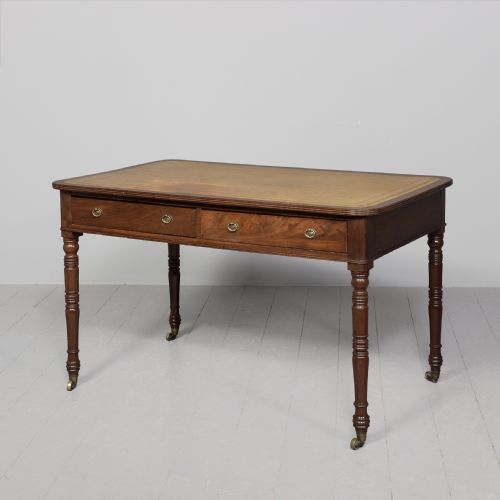
Tan Leather Desk
A tan leather desk brings warmth and practical writing space to a room, combining rich hide surfaces with sturdy timber frames.
Tan Leather Desk
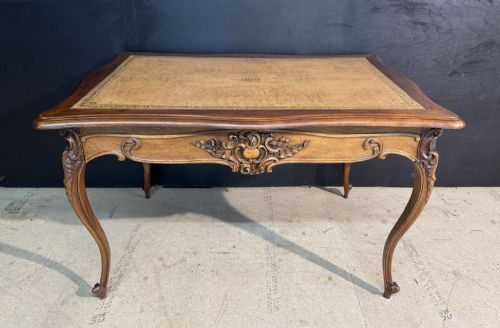
A tan leather desk encompasses both writing tables and pedestal desks surfaced in supple hide, often accompanied by matching leather desk chairs. These pieces span periods from the Georgian era through Victorian times and into Edwardian workshops.
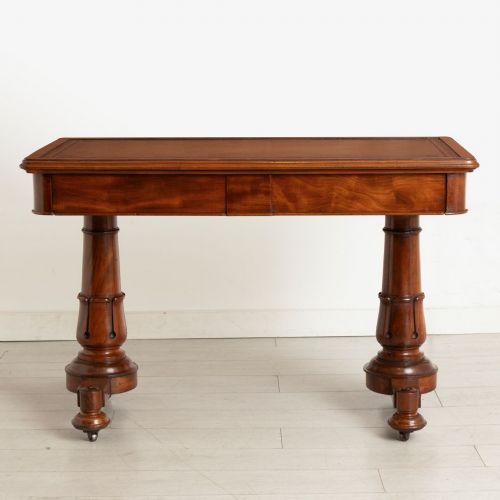
Pedestal formats feature twin banks of drawers beneath a generous writing surface, while library tables offer simpler freestanding proportions supported by robust timber legs. Mahogany and oak form the structural backbone of these working pieces, punctuated by brass fittings.
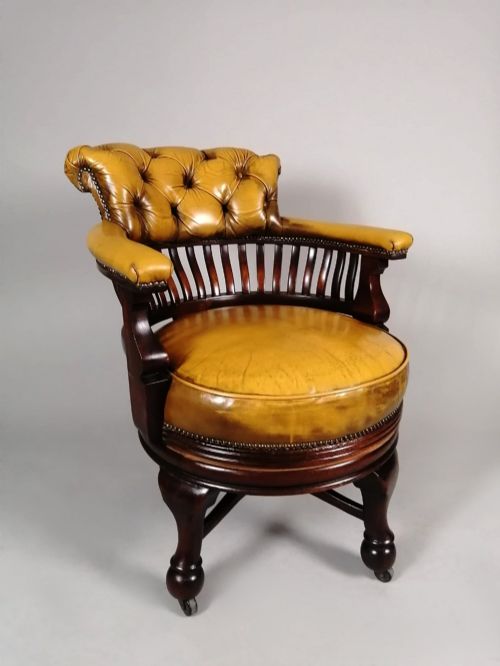
Victorian examples dominate the available selection, ranging from heavy partners desks to revolving swivel chairs upholstered in tan leather. Buyers find both formal architectural pieces and simpler domestic writing tables shaped by traditional cabinet makers.
Materials and construction methods
Cabinet makers constructed the frames of a tan leather desk using dense timbers like mahogany, oak, and walnut, joined with traditional mortise and tenon techniques. Secondary woods such as beech appear in hidden structural components.
Writing surfaces employ vegetable-tanned leather secured to timber tops with hand-beaten brass tacks or subtle blind tooling. Finishes rely on shellac-based polishes built up over successive layers to highlight the natural grain of the wood.
One past item offered an ingenious inkstand disguised precisely as two leather-bound books.
Assessing quality in construction and hide
Quality rests in the selection of timber and the depth of the cabinet work, visible in drawer linings made from solid mahogany rather than thin secondary veneers. Hand-cut dovetails and smooth running mechanisms separate high workshop production from utilitarian output.
The leather itself shows variation in its preparation, with older skins retaining a softer patina and finer tooling around the perimeter. Solid brass hardware that operates without modern replacement parts indicates a better grade of original manufacture.
Howard & Son's·Asprey's of London
The Tan Leather Desk Glossary
- Pedestal desk
- A heavy writing desk consisting of two independent pedestals of drawers supporting a wide top. It provides storage on both sides when built as a partners version.
- Partners desk
- A large double-sided desk designed for two people to work opposite one another. These pieces feature drawers and cupboards accessible from both faces.
- Blind tooling
- An ornamental impression pressed into leather using heated metal tools without gold leaf. This technique creates subtle decorative borders around the edge of a writing surface.
- Kneehole desk
- A compact writing desk featuring a central recess for the user's legs flanked by smaller drawers. It sits flush against a wall rather than standing freely in the room.
- Gainsborough chair
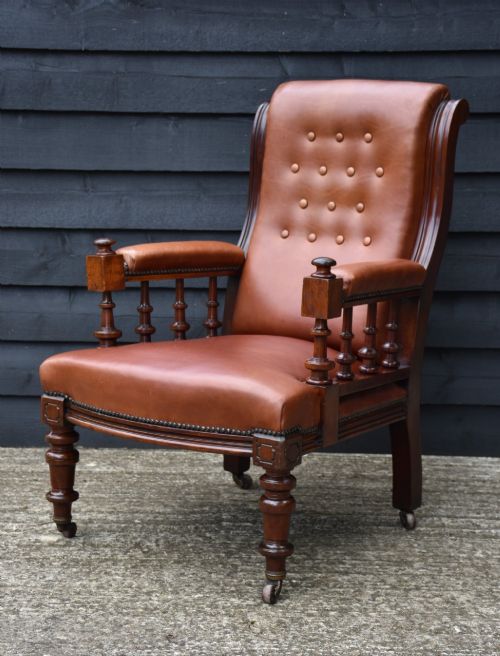
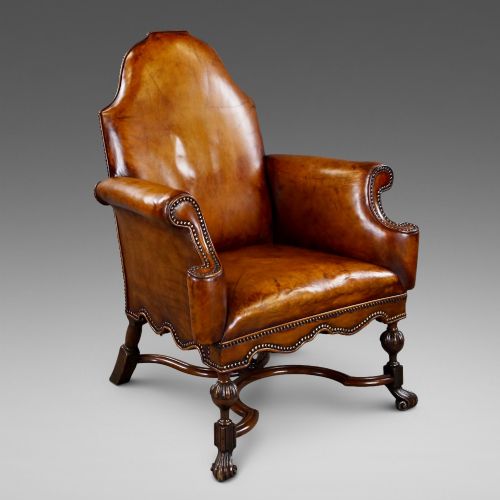
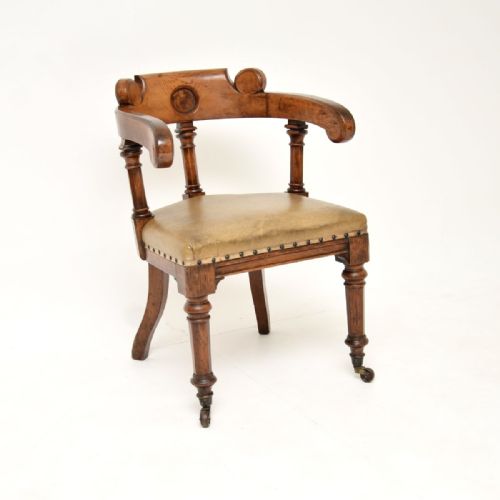
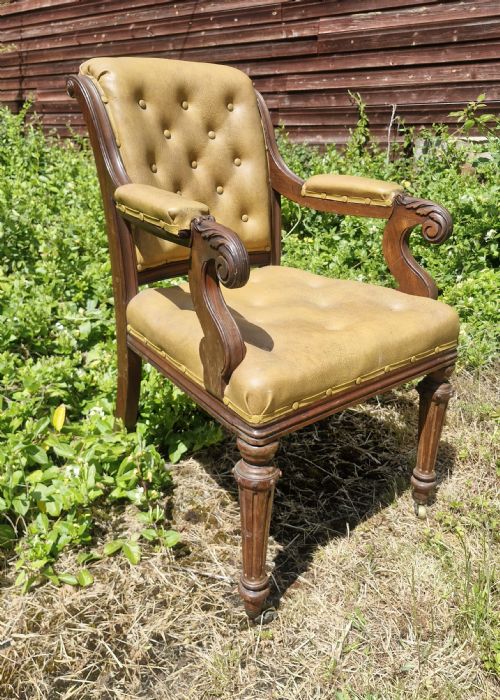
- A wide, low-seated armchair with upholstered armrests and back designed for writing or library use. Eighteenth-century versions inspired numerous revival copies in later periods.
Tan Leather Desk: Frequently Asked Questions
How do I clean a vintage leather desk top?
Wipe the leather gently with a soft, damp cloth to remove dust and surface grit without soaking the hide. Apply a specialist leather wax or balsam sparingly to nourish the material and preserve the aged finish.
Avoid chemical detergents or modern household sprays, which strip the original colour and dry out old leather. Regular light buffing maintains the natural sheen developed over decades of use.
Were partners desks used in private homes?
Partners desks primarily served institutional settings, law offices, and grand country house libraries where business required two working spaces. Their large proportions necessitated substantial rooms with plenty of surrounding floor space.
Over time, these heavy pieces found their way into domestic studies and living areas as owners repurposed them for modern writing tasks. Their dual-sided storage makes them practical for shared home offices today.
How do I tell a Victorian desk from a Georgian one?
Georgian desks typically display lighter proportions, cleaner lines, and finer timber figurations such as flame mahogany veneers. Their construction prioritizes elegant restraint, reflecting classical design influences of the eighteenth century.
Victorian pieces lean towards heavier construction, deeper mouldings, and more robust pedestal arrangements designed for intensive daily work. Drawers on Victorian models often use thicker secondary woods and machine-assisted dovetails as the nineteenth century progressed.
Can I use a swivel chair with a fixed pedestal desk?
A revolving desk chair fits comfortably beneath the kneehole space of most standard pedestal desks. The adjustable height allows users to find a comfortable working position relative to the fixed writing height of the top.
Ensure the clearance between the armrests and the underside of the desk drawer is measured before pairing them. Many nineteenth-century swivel chairs were specifically designed for office environments featuring fixed writing tables.