



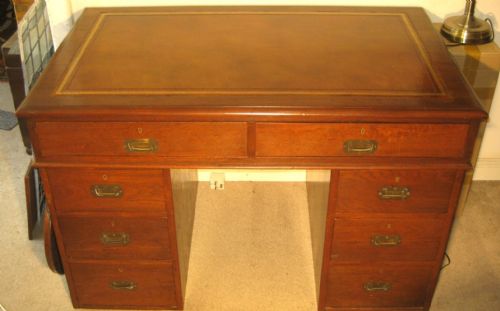


Colonial Teak Desk
A colonial teak desk brings sturdy utility and rich grain into a room, offering functional workspace rooted in nineteenth-century campaign and Anglo-Indian traditions.
Colonial Teak Desk
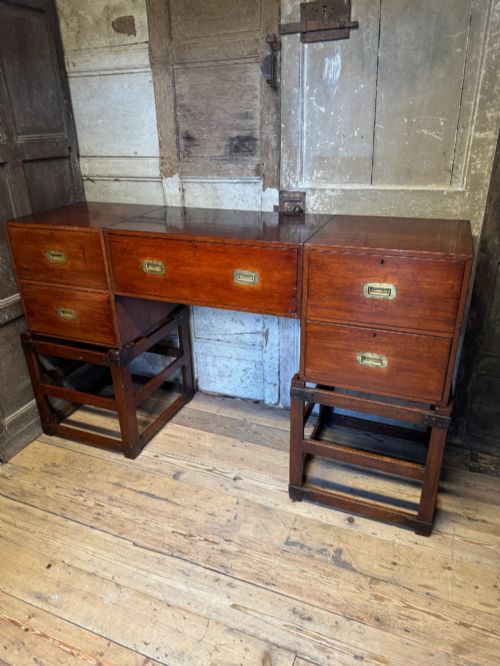
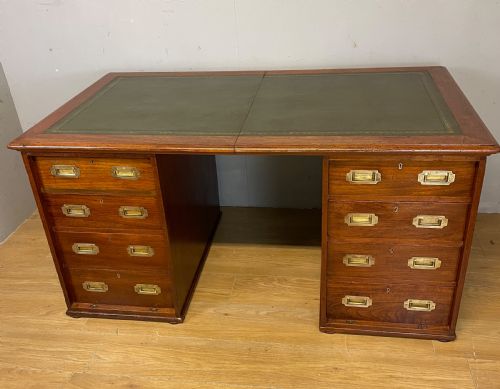
A colonial teak desk is a heavy, durable writing surface shaped by nineteenth-century military and Anglo-Indian influences. These pieces range from substantial partners desks and pedestal campaign forms to modular two-part secretaire chests.
Most examples found here date from the Victorian era and the early twentieth century, spanning decades of British colonial presence. They combine practical storage drawers with robust timbers designed to withstand travel and tropical climates.
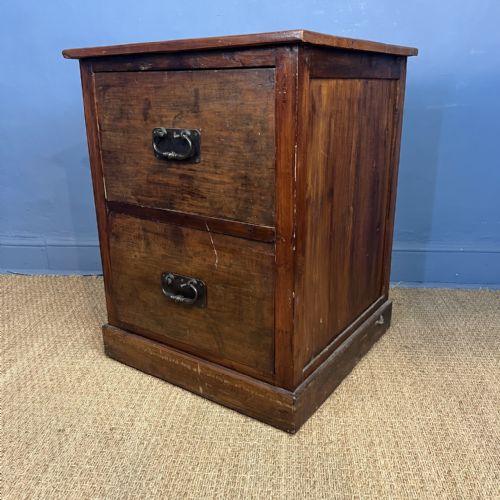
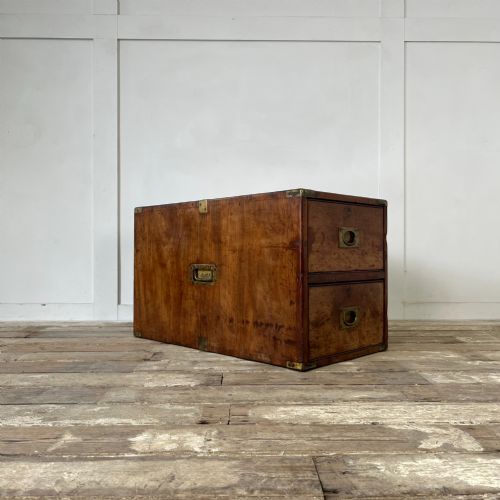
Buyers frequently encounter campaign-style writing furniture equipped with brass mounts and recessed handles. Alongside traditional desks, related forms such as filing cabinets, bureau desks and Davenport writing desks appear frequently.
How they were made
Construction relies heavily on dense teak and mixed hardwoods joined to handle disassembly and movement. Cabinet makers utilised solid teak framing paired with secondary timbers for internal drawer linings and hidden compartments.
Metal hardware plays an essential structural role, incorporating brass corners, flush drawer pulls and cast iron carrying handles. Writing surfaces often feature inset leather panels bordered by blind tooling.
Carving and decorative detailing appear on Anglo-Indian pieces, contrasting with the utilitarian austerity of strict military campaign items. Surfaces range from plain polished wood to deeply carved foliage and figurative motifs.
Listings feature nineteenth-century and Victorian pieces constructed primarily from teak, hardwood, and brass, spanning desks, campaign chests, and armchairs.
What varies in quality
Quality rests upon the integrity of the timber selection and the precision of the cabinet work. Superior examples exhibit tightly fitted modular sections, secure brass hardware and unwarped solid teak panels.
The sophistication of the internal fittings distinguishes finer desks from standard utility pieces. Fitted drawers, secret compartments and original leather writing surfaces elevate the standing of a desk.
Carving depth and sharpness define the aesthetic merit of Anglo-Indian pieces. Crisp, hand-carved detail reflects skilled workshop production compared to softer, more repetitive decorative work.
The Colonial Teak Desk Glossary
- Campaign desk
- A modular writing table designed for easy transport by military officers in the nineteenth century. These pieces typically separate into two or three stackable sections.
- Secretaire
- A cabinet or chest featuring a drop-front drawer that opens to reveal a writing surface and small pigeonholes. This form conceals storage while providing a stable desk.
- Anglo-Indian
- A style describing furniture made in India during the British Raj, combining British forms with traditional Indian carving and construction techniques. These items often feature dense tropical hardwoods.
- Partners desk
- A large double-sided writing table designed for two people to work opposite one another. They incorporate banks of drawers and cupboards on both long sides.
- Pedestal desk
- A heavy freestanding writing table supported by two vertical columns of drawers. They offer fixed storage beneath a spacious top.
Colonial Teak Desk: Frequently Asked Questions
What is a campaign desk?
A campaign desk is a portable writing table built for military officers on the move during the nineteenth century. These pieces are typically constructed in sections with brass corners and recessed handles to withstand frequent transit.
Today, they function well in home studies where their modular design and practical storage provide both character and everyday utility.
How do I care for teak furniture?
Teak is a dense, oily hardwood that requires minimal maintenance to keep its rich appearance. Regular dusting with a dry cloth and occasional application of appropriate wood wax preserves the finish.
Keep these pieces away from direct heat sources and strong sunlight to prevent the timber from drying out or the leather inserts from cracking.
Are these desks original Victorian pieces?
Many examples date from the Victorian era and the late nineteenth century, reflecting the peak of British colonial administration. Makers constructed these items from solid teak and hardwood to endure demanding climates.
Later pieces extending into the early twentieth century maintain similar traditional forms and brass hardware conventions.