



Vintage French Vanity Stool
A vintage french vanity stool offers low seating with distinct regional lines, bringing character to a bedroom corner or dressing area.
Vintage French Vanity Stool
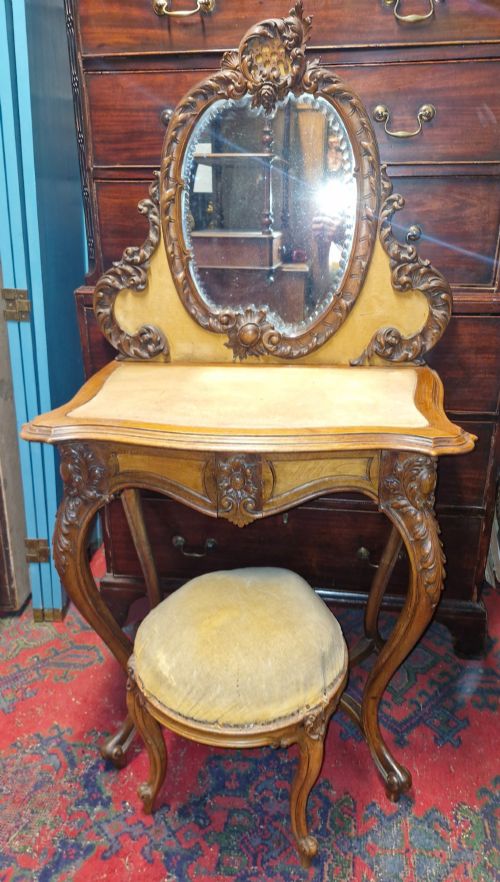
A vintage french vanity stool sits low to the floor, designed primarily for placement beside a dressing table or in a boudoir. The selection here spans compact single seats, larger duet variants, and circular boudoir forms.
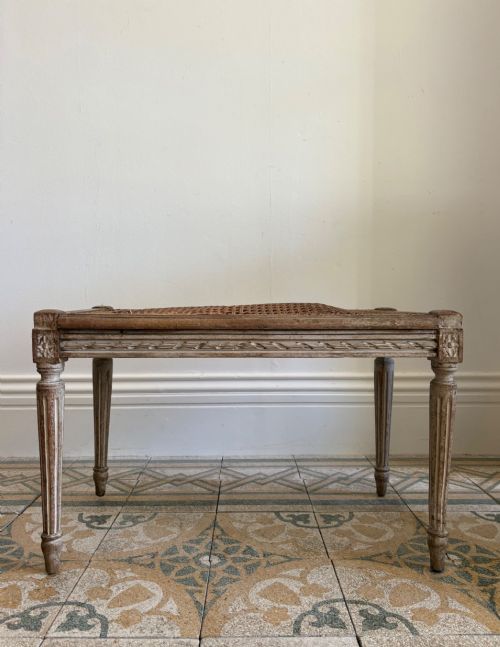
Makers drew on various historical design idioms, resulting in pieces shaped by French Rococo, Louis XV, Louis XVI, and Baroque styles. Victorian interpretations also appear frequently alongside traditional provincial pieces.
Dating ranges from the early nineteenth century through to the 1930s, encompassing both 19th Century craftsmanship and later adaptations. Formats include standard footstools, ottomans, and piano stools featuring adjustable screw tops.
How they were made
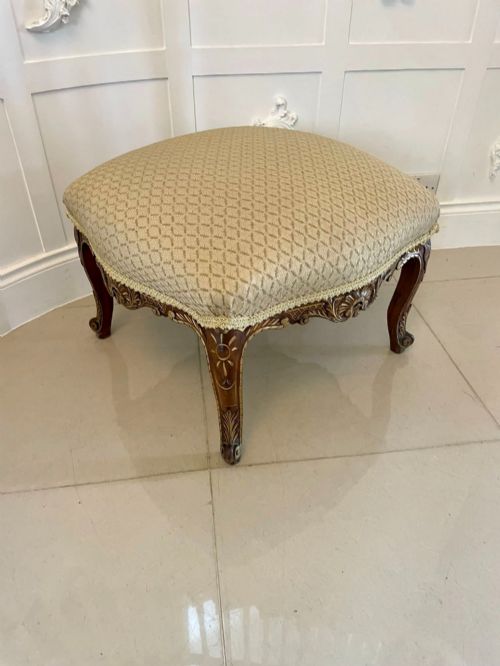
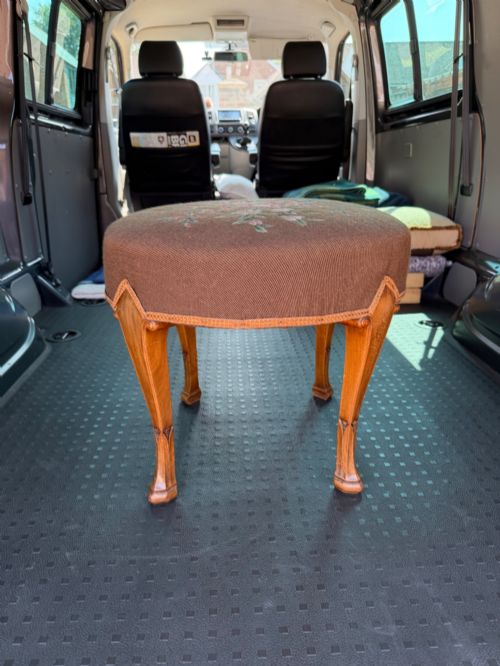
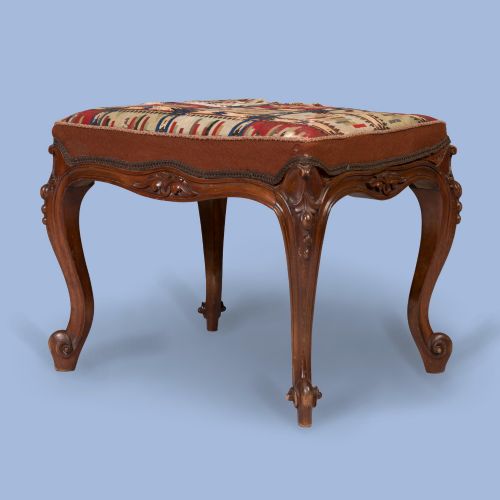
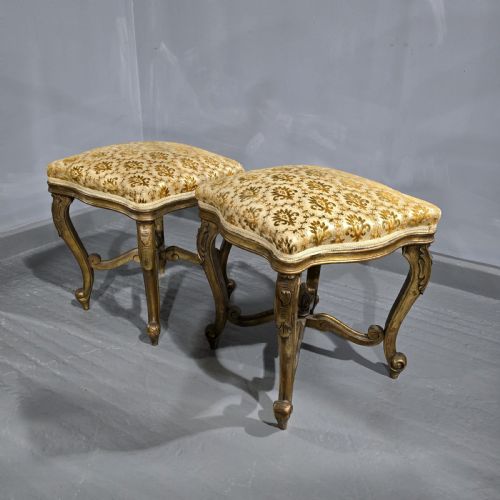
Carpenters relied on solid woods such as walnut and giltwood, shaping frames with hand-carved decorative motifs and cabriole legs. Painted finishes, gilding, and brass elements also feature prominently across the collection.
Upholstery relies on traditional textiles, incorporating fabric, velvet, linen, and tapestry seats. These materials are secured over sturdy wooden frames designed to support everyday seating.
Materials in this category rely heavily on walnut and giltwood, paired with fabric, velvet, and tapestry.
What varies in quality
The degree of detail in the hand carving distinguishes standard output from finer commissions. Crisp floral motifs, deep relief work, and refined gilding indicate a higher standard of craftsmanship.
Selection of timber and the preservation of original textile coverings heavily influence the overall standard. Robust joinery in walnut frames ensures longevity compared to lighter or later constructed alternatives.
The Vintage French Vanity Stool Glossary
- Cabriole leg
- A furniture leg that bends outward and then tapers inward, mimicking an animal's curving leg. This shape is common in Rococo and period seating designs.
- Giltwood
- Timber that has been coated with a thin layer of gold leaf or gilt paint. It is frequently seen on formal decorative frames from the nineteenth century.
- Duet stool
- An extended seating form designed to accommodate two people at once. These are often found paired with piano desks or large dressing tables.
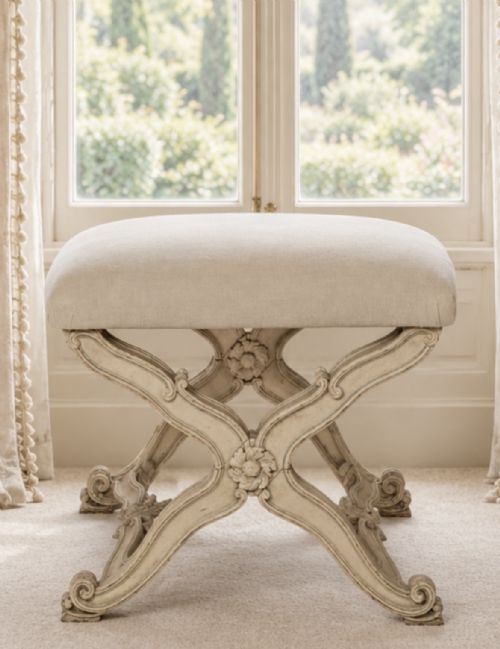
- Curule stool
- An ancient Roman magistrate's chair shape featuring crossed concave legs that form an X-frame. This classical outline reappears in nineteenth-century revival pieces.
- Tapestry seat
- A heavy woven textile used to cover the top of a stool. These often depict pictorial scenes or repeating floral patterns.
Vintage French Vanity Stool: Frequently Asked Questions
Where should I place a vanity stool?
These low seats fit naturally in front of a bedroom dressing table or beneath a mirror in a hallway. Their compact footprint also suits empty corners that require an understated accent.
Because many examples feature decorative carved walnut or gilt finishes, they work well as freestanding decorative pieces when not in active use.
How do I identify a French style stool?
Look for characteristic design markers such as cabriole legs, hand-carved floral scrolls, and painted or gilded wood surfaces. Styles often reference Louis XV, Louis XVI, or Rococo traditions.
Proportions tend to be lower and more decorative than standard household seating, reflecting their original boudoir purpose.
Are these stools comfortable for daily seating?
Most pieces were built for short-term sitting at a dressing table rather than lounging for hours. Their primary function was to complement bedroom furniture while providing practical low seating.
Upholstered pads vary in firmness depending on the age of the padding and whether the piece retains its original textile cover.
Can I use a piano stool as a vanity seat?
Adjustable screw top piano stools share the same compact scale and height requirements as dressing table seating. Their mechanical height adjustment makes them particularly versatile for different table levels.
Many nineteenth-century examples combine walnut frames with revolving tops designed for practical daily use.