






Vintage French Porcelain Vases
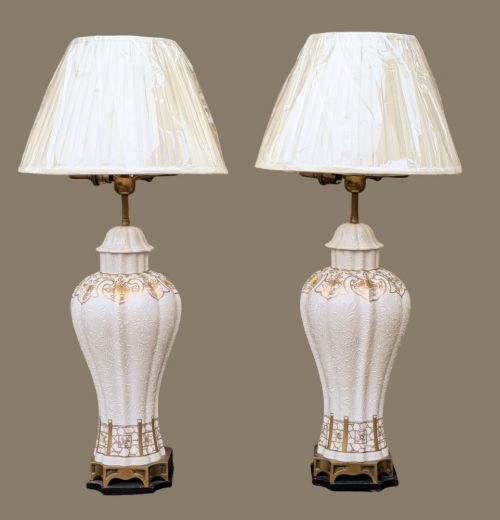
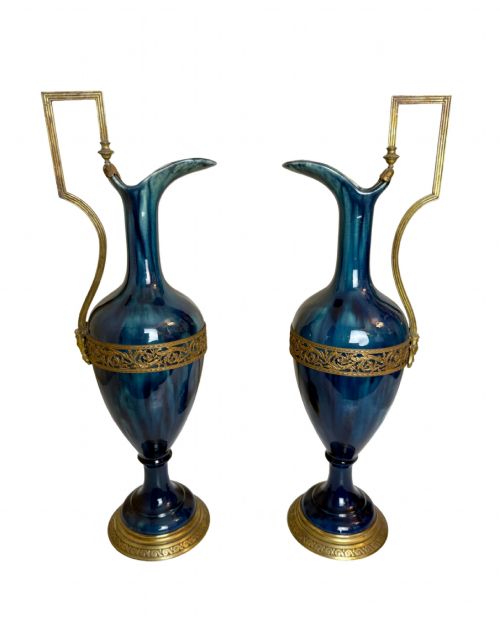
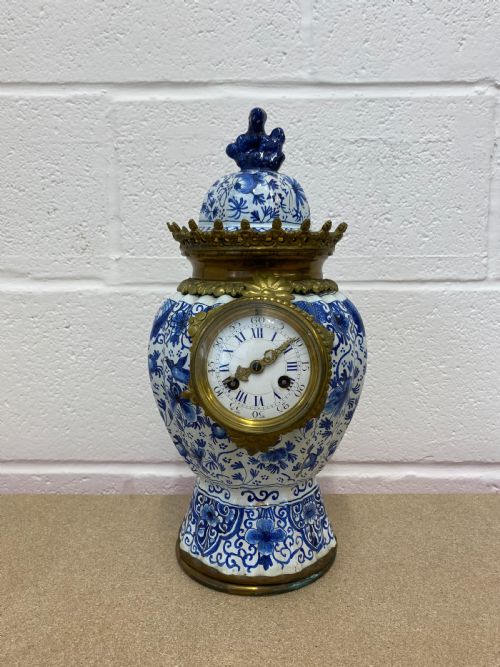
These vintage french porcelain vases bring hand-painted floral motifs, gilt bronze mounts and distinct nineteenth-century forms straight into a room.
Vintage French Porcelain Vases
Vintage french porcelain vases encompass nineteenth-century vessels, ewers, urns and converted lamp bases originating from Paris, Sevres and Samson workshops. Buyers searching for vintage french porcelain vases encounter hand-painted floral designs, raised white enamel and exotic bird motifs created during the Victorian and 1890 periods.
The selection on this page leans heavily toward nineteenth-century Paris porcelain and Sevres style pieces, alongside larger lidded urns and decorative ewers mounted in ormolu or gilt bronze. Many examples bridge the gap between decorative ceramics and functional lighting, having been adapted into table lamps over time.
How they were made
Potters and painters shaped these pieces using traditional ceramic techniques, applying hand-painted pigments and raised white enamel directly onto porcelain bodies. Kiln-fired glazes, including bleu celeste and delftware finishes, provided the smooth backgrounds required for detailed botanical and avian scenes.
Metalworkers completed the construction by adding cast brass, ormolu and gilt bronze mounts, handles and trim. Gold leaf accents were often hand-applied to highlight handles, rims and sculptural relief work around the body of the vase or urn.
Vintage French Porcelain Vases Retail Price Guide 2026
Typical asking prices for vintage french porcelain vases among the pieces listed under this phrase on Sellingantiques today, from the lower quarter to the upper quarter. They describe what is for sale here now, not the wider market.
Listings feature porcelain, brass, enamel, gilt bronze, ceramic, gold leaf, glass, and ormolu across nineteenth-century and early twentieth-century dates.
What varies in quality
Quality rests primarily in the precision of the hand-painting and the crispness of the porcelain moulding, where finer examples show exceptional detail in floral petals and exotic plumage. The weight and chasing of the gilt bronze or ormolu mounts also distinguish standard production pieces from finer studio outputs.
The presence of maker marks, workshop stamps or attribution to specific houses like Samson or Paris porcelain makers elevates an item's standing. Additionally, the original retention of matching covers or lids on urns and vase pairs preserves the integrity of the piece.
Samson Paris·Jacob Petit·Sevres
The Vintage French Porcelain Vases Glossary
- Ormolu
- A gilt bronze technique involving the application of a finely ground, high-karat gold-mercury amalgam to a bronze object before firing. This provides the bright metallic finish seen on mounts and bases.
- Faience
- Tin-glazed earthenware or ceramic ware produced in France. These pieces feature opaque glazes that accept painted decoration before a final kiln firing.
- Bleu celeste
- A pale, bright sky-blue ground colour utilised on luxury porcelain, particularly associated with Sevres production. It creates a striking contrast against gilt bronze trim and floral hand-painting.
- Clock garniture
- A set comprising a central mantel clock accompanied by matching side pieces such as vases, urns or ewers. These matched sets were designed to display symmetrically on a mantelpiece.
- Canton vase
- Chinese export porcelain decorated in vibrant enamel palettes, which heavily influenced nineteenth-century European taste and imitation wares. They appear alongside traditional Paris porcelain styles.
Vintage French Porcelain Vases: Frequently Asked Questions
Are these vases functional for holding water?
Many of these pieces have aged, feature delicate hand-painted enamel work, or have been converted into table lamps with drilled bases. Consequently, they are best regarded as decorative objects rather than functional vessels for water and fresh stems.
Displaying them dry protects the interior glaze and any underlying wiring if the piece functions as a lamp base.
How do I identify Paris porcelain?
Paris porcelain refers to the output of numerous independent workshops operating around Paris during the nineteenth century without the single unified mark of the royal Sevres factory. They often exhibit fine hand-painted floral designs, gilt bronze mounts, and eclectic stylistic borrowings ranging from Rococo Revival to Chinoiserie.
While some bear painted or impressed workshop initials, many remain unmarked and are attributed through their paste quality, palette, and form.
Can I safely clean gilt bronze mounts?
Gilt bronze and ormolu mounts benefit from gentle dusting with a soft, dry brush to remove particulate matter without abrading the thin gold leaf layer. Avoid chemical cleaners, metal polishes, or abrasive cloths entirely, as these substances strip away the historic gilding.
Take care to keep moisture away from both the porcelain surface and any applied enamel work during maintenance.
What is a clock garniture set?
A clock garniture is a decorative grouping consisting of a central mantel clock flanked by a matching pair of vases, urns, or ewers. Designed to be arranged symmetrically on a fireplace mantel or console table, the matching pieces share identical decorative motifs, materials, and colour palettes.
Finding a complete set keeps the visual balance intended by the nineteenth-century makers intact.