

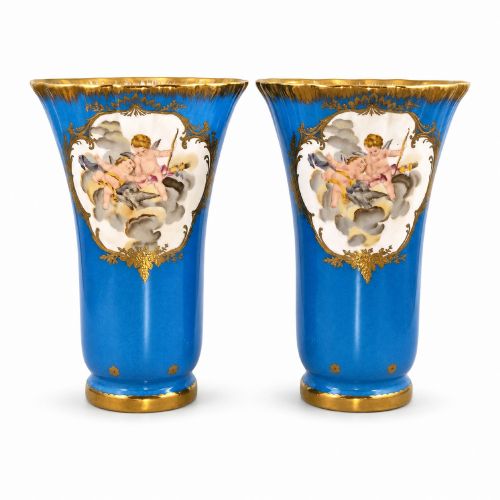


French Rococo Porcelain Vases
French rococo porcelain vases combine sculptural porcelain bodies with elaborate gilt bronze mounts, bringing opulent nineteenth-century decorative excess to a room.
French Rococo Porcelain Vases
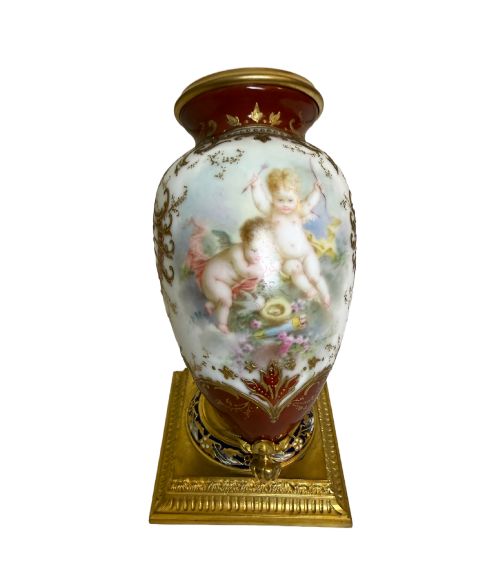
French rococo porcelain vases capture the exuberant, curving aesthetic of the nineteenth century through elaborate decorative urns, lidded vessels, and mantle garnitures. When buyers search for french rococo porcelain vases, they encounter pieces originating from the nineteenth century, including works associated with Sèvres, Samson of Paris, and Old Paris factories.
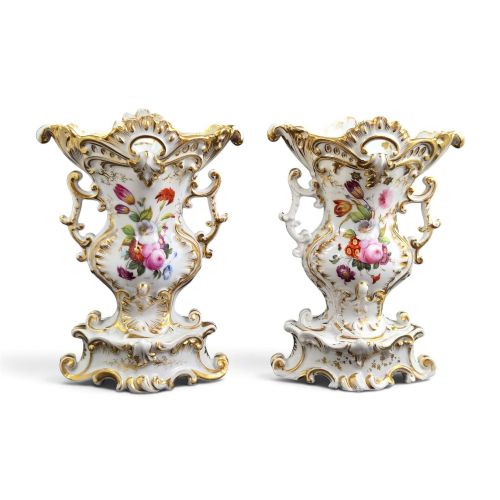
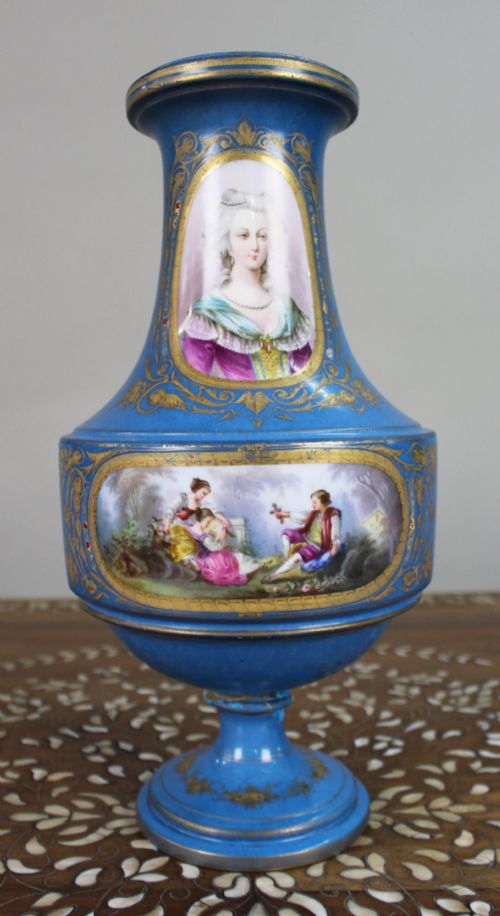
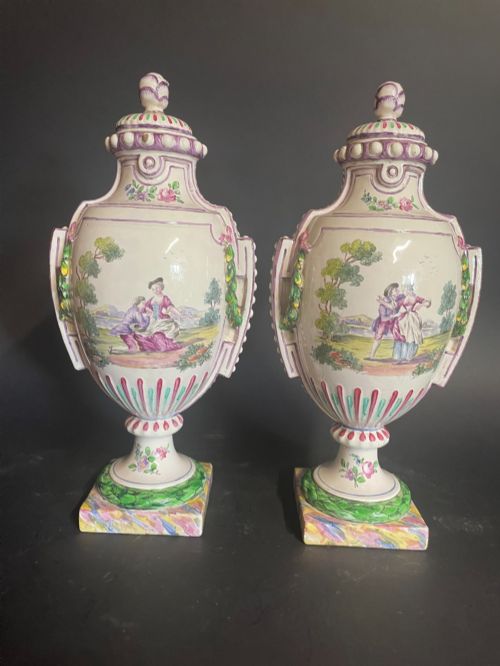
The selection ranges from pairs of tall lidded vases with hand-painted floral motifs to single decorative ewers and table lamps mounted in metal. Many items adopt the Sèvres style, featuring bleu céleste grounds and rich polychrome painting executed during the Victorian era and the decades surrounding eighteen-ninety.
How they were made
Makers shaped porcelain bodies using traditional ceramic techniques, often applying raised white enamel and hand-painted floral designs directly onto the glazed surface. Bisque porcelain also appears, offering a matte, unglazed finish that highlights sculptural form.
Metalwork played a defining structural and decorative role, with gilt bronze, ormolu, and brass mounts secured around the ceramic bases, rims, and handles. Gold leaf and enamelling added further ornamentation to accentuate the fluid, asymmetrical contours typical of the revival style.
French Rococo Porcelain Vases Retail Price Guide 2026
Typical asking prices for french rococo porcelain vases among the pieces listed under this phrase on Sellingantiques today, from the lower quarter to the upper quarter. They describe what is for sale here now, not the wider market.
Listings feature pieces spanning the nineteenth century, including items dated from eighteen-fifty, eighteen-sixty, eighteen-eighty, and eighteen-ninety.
What varies in quality
The finesse of the hand-painted decoration separates standard production from superior pieces, with delicate brushwork and rich colour application elevating the ceramic surface. Crisp detail in the chasing and gilding of the bronze mounts indicates higher craftsmanship.
Proportion and balance between the porcelain body and the metal mounts dictate overall visual success. Pieces displaying harmonious integration of the ceramic vessel with elaborate handles, bases, and lids represent the higher tier of the medium.
Jacob Petit·Samson Paris·Vion et Baury·Sceaux Faience
The French Rococo Porcelain Vases Glossary
- Bleu céleste
- A bright sky-blue porcelain ground colour associated with Sèvres factory pieces. This distinctive hue forms the backdrop for painted panels.
- Garniture
- A set of three or more matching decorative vases or urns designed to sit together on a mantlepiece. These sets often comprise a central lidded vase flanked by smaller matching vessels.
- Ormolu
- Gilt bronze mounts applied to the rims, handles, and bases of ceramic pieces. The technique involves applying a gold amalgam to bronze.
- Bisque
- Unfired or unglazed white porcelain possessing a matte texture. This material resembles marble in its finish and emphasises sculptural detail.
- Ewer
- A large jug with a wide spout and curved handle, adapted into a decorative vessel. These items often feature elaborate metal mounting.
French Rococo Porcelain Vases: Frequently Asked Questions
How do I identify a Sèvres style vase?
Sèvres style vases are distinguished by rich coloured grounds, frequently bleu céleste, paired with gilt bronze mounts and hand-painted pastoral or floral scenes.
They often date from the nineteenth century and replicate the decorative luxury of earlier royal French porcelain production.
What is a clock garniture set?
A clock garniture set consists of a central mantel clock accompanied by matching side vases or urns designed to be displayed together as a unified ensemble.
These sets utilise identical porcelain bodies and gilt bronze mounts to create a balanced decorative arrangement.
Where were Old Paris porcelain vases made?
Old Paris porcelain was produced by numerous independent workshops operating in and around Paris during the nineteenth century.
These pieces typically feature hand-painted floral designs and heavy gilding without bearing factory marks.
How should I clean gilt bronze mounts?
Gilt bronze mounts require gentle dusting with a soft, dry cloth to prevent the accumulation of dirt within the chased crevices.
Harsh chemical polishes should be avoided to protect the underlying gold leaf and ormolu surface.