

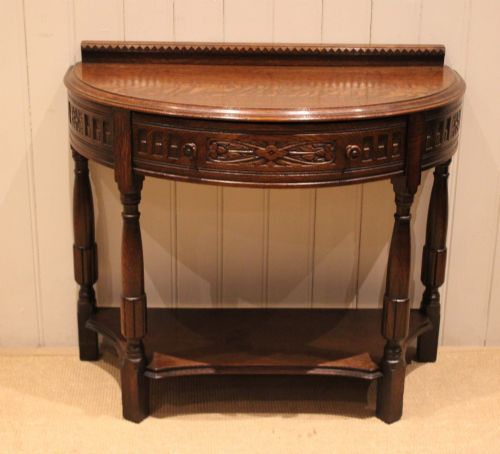


Vintage French Hallway Console
A vintage french hallway console brings architectural presence to an entrance, combining classical proportions with practical surface space for everyday use.
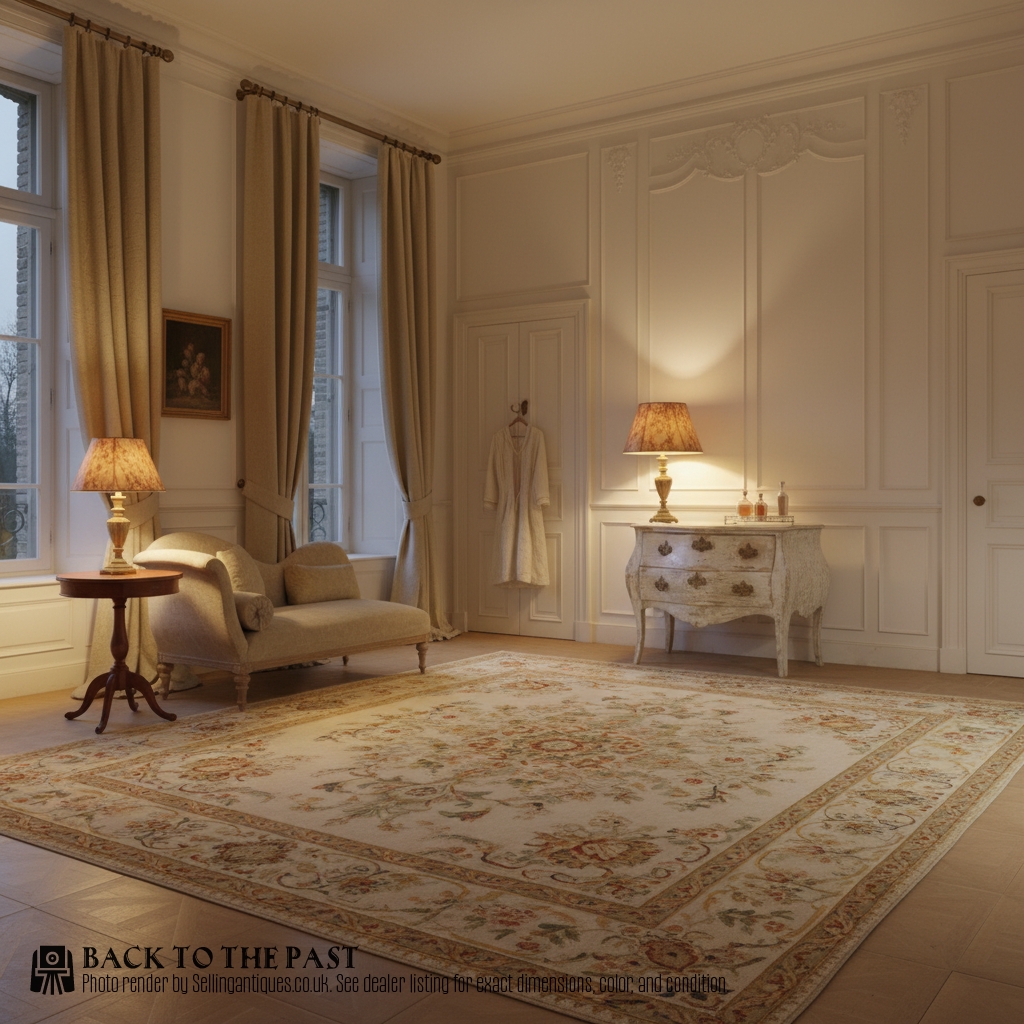
Vintage French Hallway Console
A vintage french hallway console encompasses narrow furniture forms designed to sit flush against a wall in a narrow passageway or reception space. These pieces serve as functional ledges for keys or decorative objects while anchoring an interior scheme.
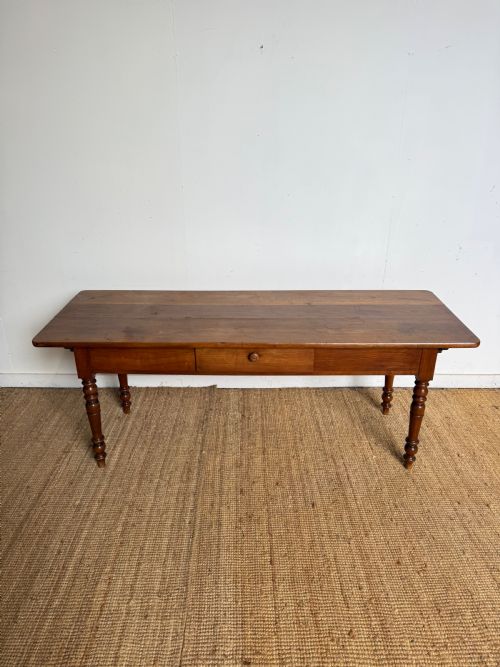
The selections available here draw on nineteenth-century and early twentieth-century origins, spanning styles from provincial country furniture to grander neoclassical revival pieces. Walnut, oak, cherry and painted pine form the structural foundation of these hall furnishings.
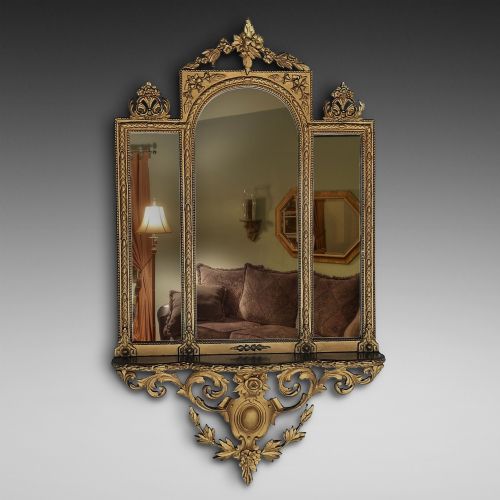
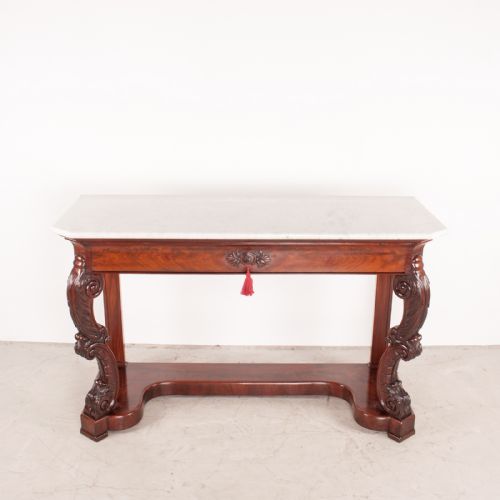
Buyers will encounter varied configurations, including marble-topped serving surfaces, trestle tables, and matched pairs incorporating carved giltwood mirrors. Each variant reflects the domestic requirements of historic French interiors adapted for modern hallways.
Materials and construction methods
Cabinetmakers utilised native European hardwoods such as oak, walnut, cherry, sycamore and elm, often joining them with traditional mortise and tenon techniques. Softer pine served as a reliable base for painted finishes, while heavy timbers provided stability for freestanding trestle forms.
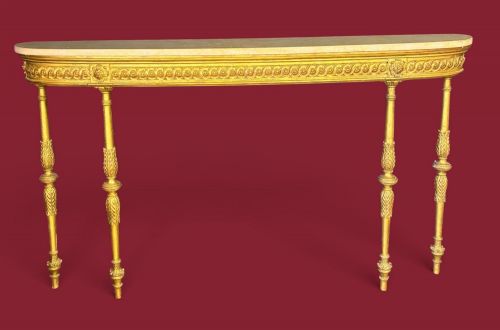
Surface ornamentation relied on applied gesso, hand-carved detailing, and parcel gilding to create rich textural contrast against the timber substrate. Smooth marble slabs, fitted precisely to the upper frames, provided durable, cool-touch surfaces resistant to daily wear.
Listings feature items spanning the nineteenth and early twentieth centuries, constructed from oak, walnut, pine, and marble.
Evaluating craftsmanship and integrity
The distinction between tiers rests upon the crispness of the hand-carved detailing and the depth of the original gilding or paint layers. Superior examples display refined proportions in serpentine outlines and harmonious integration between the wooden base and its stone top.
Structural honesty dictates value, where the original timber, secondary woods, and hardware remain undisturbed by extensive modern intervention. Fine stone tops fitted without modern shims indicate higher primary craftsmanship during the initial commission.
The Vintage French Hallway Console Glossary
- Console table
- A wall-mounted or freestanding narrow table designed to occupy minimal floor space in a corridor or reception room. These surfaces frequently support decorative objects or matching wall mirrors.
- Giltwood
- Timber coated with a thin layer of gold leaf over a prepared gesso ground. This technique creates a luminous metallic finish seen on ornate period frames and bases.
- Demi lune
- A half-moon shape characteristic of tables built with a curved front and a flat back edge to sit flush against a wall. This profile softens the geometry of narrow entrance halls.
- Trestle table
- A table construction consisting of two or more support frames connected by a horizontal beam. This vernacular form offers sturdy support without obstructing legroom.
- Potboard
- An open lower shelf built into a traditional table for storing kitchenware or household goods. In hallway settings, it provides secondary display space for larger items.
Vintage French Hallway Console: Frequently Asked Questions
Where should I place a console table?
These narrow tables suit entrance halls, narrow corridors, and reception rooms where floor space is restricted. They anchor wall mirrors and provide a convenient drop zone for daily essentials.
Positioning them away from direct heat sources protects the historic timber and maintains the stability of marble inserts.
How do I clean a marble top?
Wipe the stone surface using a soft, damp cloth and neutral soap designed for natural stone. Avoid acidic cleaners that etch polished marble.
Dry the surface thoroughly with a microfiber cloth to prevent water spots and preserve the historic sheen.
What is the difference between provincial and revival styles?
Provincial furniture reflects regional vernacular craftsmanship with simpler lines and utilitarian woods like pine or cherry. Revival styles emulate grander court periods like Louis XVI or Rococo with elaborate carving and gilding.
Both categories bring distinct historical character to an interior scheme depending on the desired aesthetic.
Can these tables support heavy lamps?
Solid timber frames and marble-topped consoles provide robust support for lamps and heavy decorative objects. Ensure the weight is distributed evenly across the surface.
Wall-mounted versions require secure fixing to solid masonry rather than partition plaster to guarantee stability.