
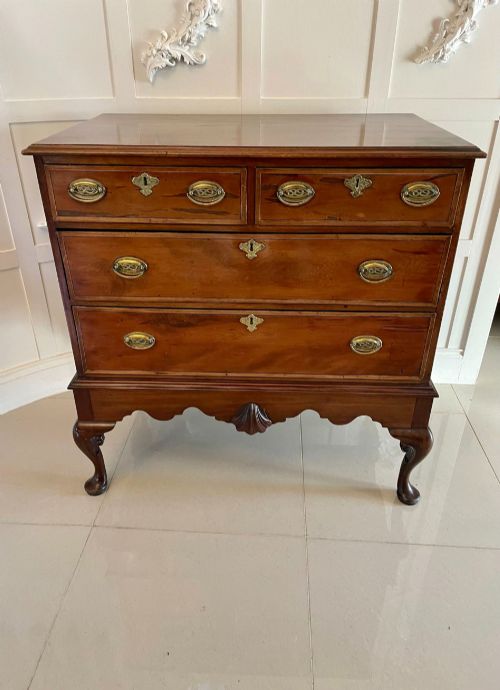
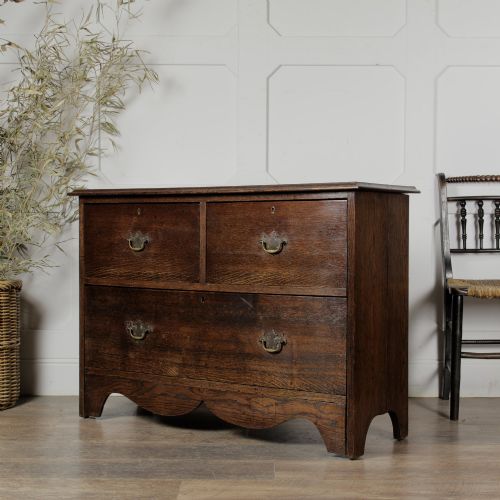
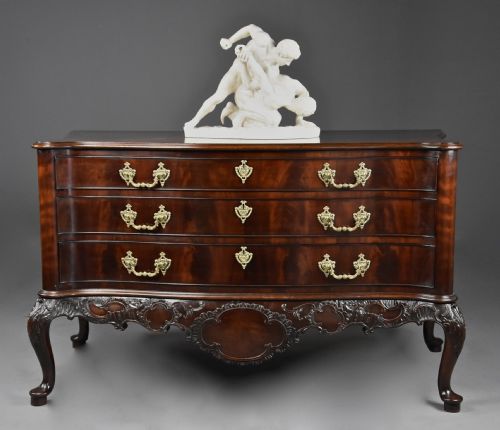

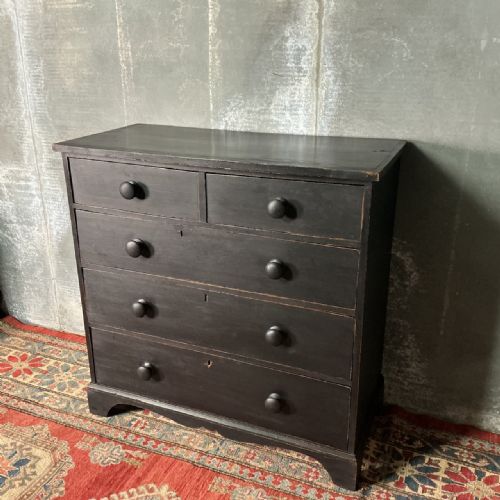


Carved Apron Commode Chest
These carved apron commode chest examples combine generous storage with shapely woodwork, offering period character and practical presence for the home.
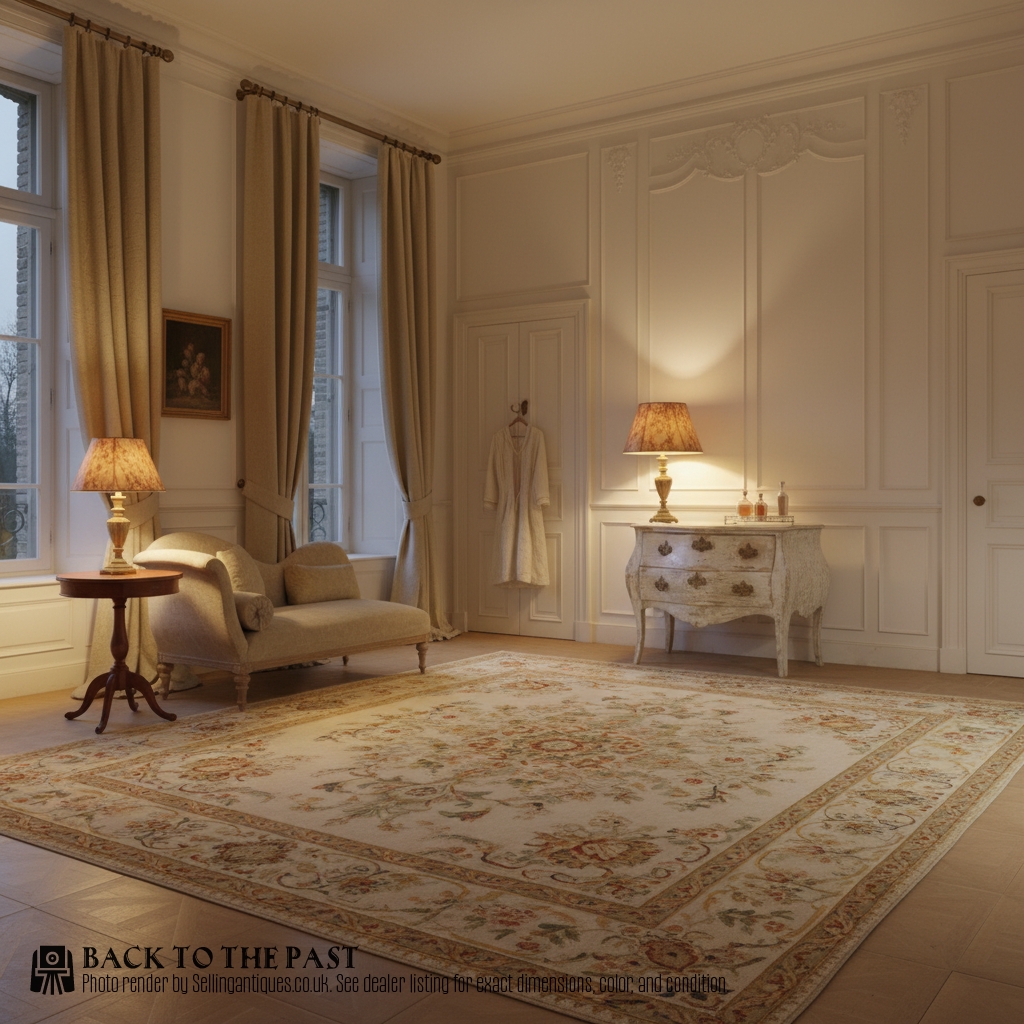
Carved Apron Commode Chest
A carved apron commode chest provides robust storage through multiple drawers while displaying shaped lower rails that set it apart from standard case furniture. Buyers seeking a carved apron commode chest will encounter formats ranging from eighteenth-century continental serpentine designs to nineteenth-century mahogany and oak editions.
The selection includes regional interpretations such as French Provincial, Portuguese Rococo, and Swedish Provincial alongside English George III and Victorian forms. While most examples take the traditional form of chests of drawers, variations encompass chests on stands and box stools.
How they were made
Cabinetmakers constructed these pieces primarily using solid hardwoods including mahogany, oak, and walnut, alongside pine for secondary framing. Painted wood surfaces and applied paint finishes also appear across continental European and Victorian iterations.
Detailing relies on hand-carved aprons, serpentine fronts, and occasional inlay work. Metal and brass hardware provides functional pulls and escutcheons that complement the timber construction.
A box stool occasionally sneaks into the lineup, proving that small seats wanted to wear commode aprons too.
What varies in quality
Quality rests in the crispness of the woodwork and the fluidity of the serpentine line across the front and apron. Finer examples display deliberate proportions and harmonious timber selection that elevate the piece beyond utilitarian storage.
The integration of the carved apron with the primary carcass structure determines the overall architectural success of the commode. Finesse in the handling of regional styles, from Portuguese Rococo curves to English Chippendale proportions, marks the upper tier of execution.
The Carved Apron Commode Chest Glossary
- Serpentine
- A front profile that curves outward in the centre and inward at the sides. This undulating shape demands precise carpentry and creates dynamic movement across the piece.
- Apron
- The structural member spanning beneath the bottom drawer or lower case. On these chests, it receives decorative carving that defines the regional style.
- Commode
- A low cabinet or chest of drawers designed for domestic storage. The term frequently applies to continental European forms with shapely profiles.
- Carcass
- The main structural body of the chest of drawers excluding the feet and top. It houses the drawer boxes and supports the decorative exterior veneers or solid timbers.
Carved Apron Commode Chest: Frequently Asked Questions
What is a carved apron commode chest?
A carved apron commode chest is a storage piece featuring a decorative, shaped lower rail beneath the drawers. These items span various centuries and regional styles.
They combine functional drawer space with distinct decorative woodwork on the lower front edge.
Where were these commodes made?
These chests originate from diverse regions including England, France, Portugal, and Sweden. Each area imparted distinct stylistic traits to the woodwork.
Continental examples often feature pronounced serpentine fronts and painted finishes, while British versions tend to showcase figured mahogany or oak.
How do I style a commode chest?
These pieces serve as focal points in hallways, living rooms, or bedrooms due to their decorative lower aprons and shapely fronts. Their storage capacity makes them practical for organising daily items.
Pair them with simple wall art to let the carved details and timber grain remain the primary visual focus.
How are different periods distinguished?
Eighteenth-century examples often display fluid Rococo curves and rich walnut or mahogany surfaces. Nineteenth-century and Victorian iterations incorporate revival styles, painted finishes, or solid oak construction.
Examining the timber selection, hardware, and structural joinery helps clarify the era of manufacture.