






Vintage French Footstool
A vintage french footstool brings low seating and soft upholstery to a room, drawing on classical and provincial forms from past centuries.
Vintage French Footstool
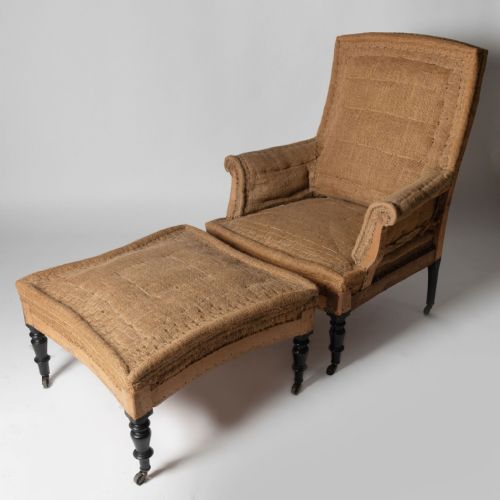
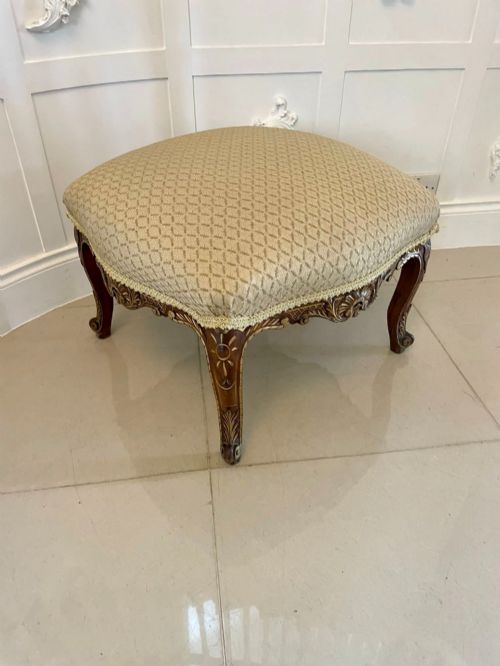
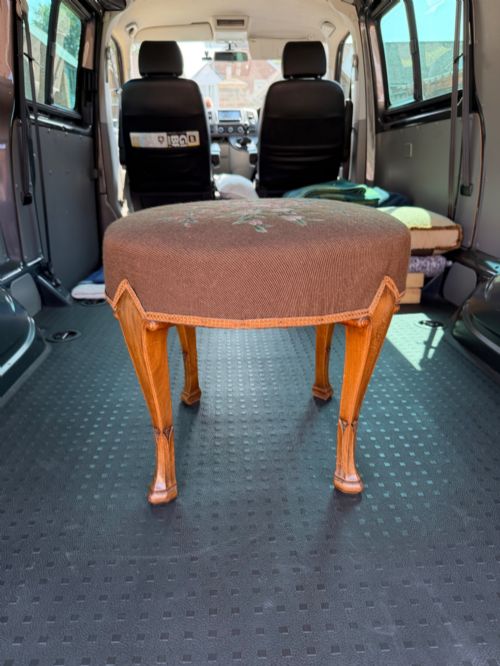
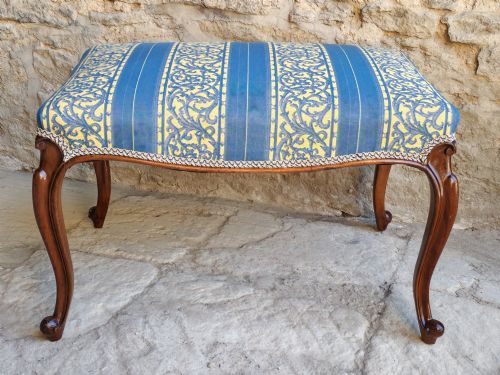
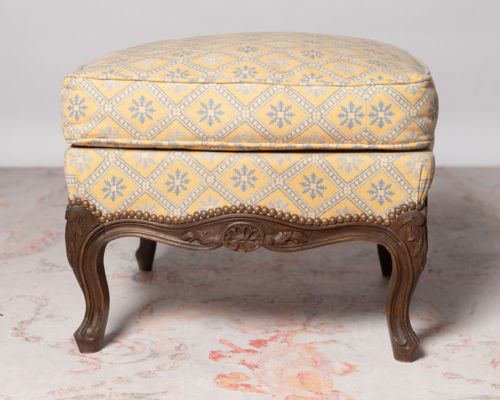
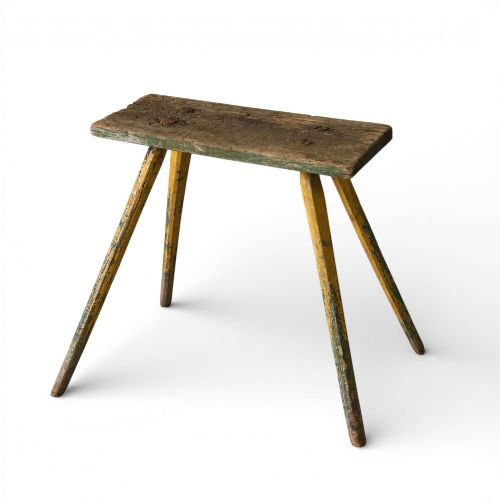
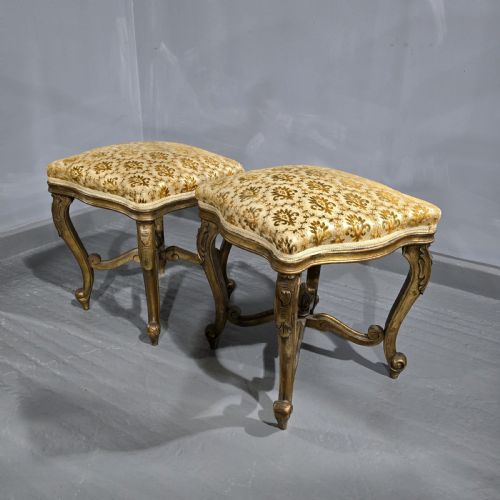
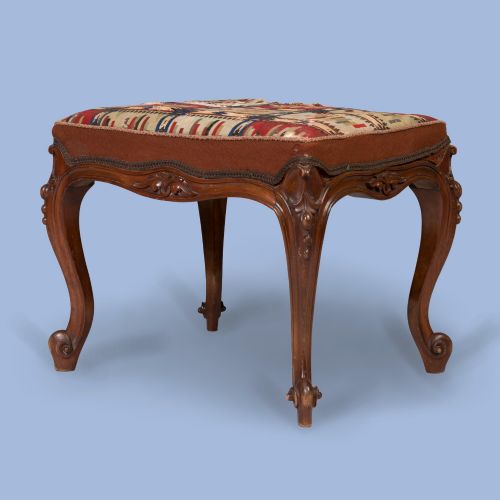
A vintage french footstool is a low seat designed to support the feet or serve as a small perch, appearing in forms such as compact footstools, ottomans, and larger salon benches. When searching for a vintage french footstool, a buyer encounters pieces originating from the nineteenth and early twentieth centuries, spanning the Victorian era through to the 1930s. The selection includes rustic milking stools, carved walnut and giltwood frames, and decorative upholstered poufs.
Most pieces display influences from traditional design movements like Louis XV and Louis XVI styles, alongside French country and provincial aesthetics. These items function equally as standalone decorative objects and as practical furniture paired with matching armchairs. The range includes simple painted wood versions as well as ornate gilt pieces with tapestry or needlework seats.
How they were made
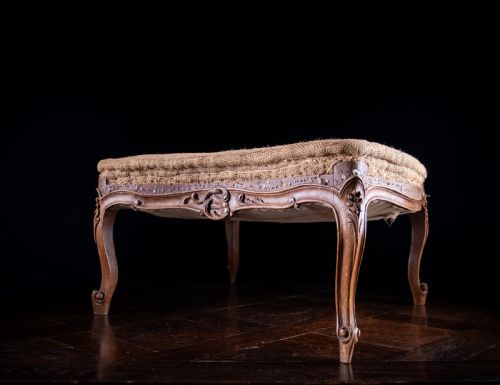
Makers constructed these frames from hardwoods such as walnut, mahogany, and beech, alongside softer painted woods. Artisans shaped structural elements like cabriole legs through hand carving, often applying gilt or decorative paint finishes to the wooden surfaces.
Upholstered components relied on traditional textile coverings including velvet, linen, tapestry, and needlework. Frames frequently feature brass detailing and exposed woodwork to complement the fabric upholstery.
Vintage French Footstool Retail Price Guide 2026
Typical asking prices for vintage french footstool among the pieces listed under this phrase on Sellingantiques today, from the lower quarter to the upper quarter. They describe what is for sale here now, not the wider market.
The listings show nineteenth-century and early twentieth-century pieces utilising walnut, giltwood, and fabric.
What varies in quality
The degree of hand carving on the wooden frames separates standard examples from finer pieces, with intricate floral and scroll motifs indicating higher craftsmanship. The choice of primary material also marks a distinction, where solid walnut and giltwood sit above simpler painted pine or rustic constructions.
The quality of the original upholstery, needlework, or tapestry dictates the overall character of the piece. Well-preserved textile seats and substantial cabriole leg structures denote items produced for formal nineteenth-century salons rather than utility use.
The Vintage French Footstool Glossary
- Cabriole leg
- A furniture leg that curves outward in a convex arc and tapers inward in a concave arc, ending in a pad or scroll foot. This shape derives from animal limbs and appears widely on eighteenth-century and revival seating.
- Giltwood
- Timber that has been coated with a thin layer of gold leaf or gilt paint. It is commonly found on formal nineteenth-century salon furniture.
- Tapestry
- A heavy textile woven with pictorial designs on a vertical loom. These fabrics frequently cover the seats of nineteenth-century footstools.
- Needlework
- Hand embroidery stitched onto a canvas ground, often using wool or silk threads. It provides durable and decorative seat coverings for period stools.
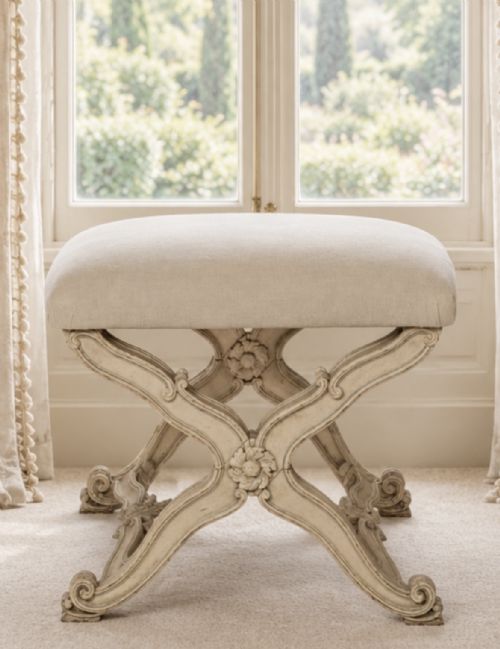
- Curule stool
- An ancient Roman form of folding seat featuring two curved legs that cross in an X shape. Nineteenth-century revival versions adapt this classical outline into rigid wooden frames.
Vintage French Footstool: Frequently Asked Questions
How do I use a footstool in a modern room?
Place a low stool beside an armchair to provide an extra seat or a surface for resting feet. They work well in living rooms and bedrooms as accent pieces that introduce period character.
Because of their compact size, these stools fit easily into corners or beneath console tables when not in use. Their traditional upholstery adds texture and warmth to contemporary interior schemes.
What is the difference between Louis XV and Louis XVI styles?
Louis XV style pieces emphasise asymmetrical curves, flowing natural motifs, and prominent cabriole legs. The overall aesthetic is organic and fluid.
Louis XVI style furniture shifts toward straight lines, symmetry, and classical geometric ornamentation. It reflects a later eighteenth-century return to architectural order and restraint.
Can I reupholster an antique stool?
Many vintage frames are suitable for new fabric upholstery to match interior colour schemes. Some listings explicitly note that pieces arrive ready for new textile coverings.
Retaining original tapestry or needlework preserves historic character, but replacing worn fabric allows the wooden frame to suit modern spaces. Traditional webbing and stuffing methods ensure the longevity of the seat.
How do I date an older wooden stool?
Examine the wood species, joinery methods, and surface finish to determine the period of origin. Walnut and mahogany were favored in the nineteenth century, while painted rustic versions often date from the late nineteenth or early twentieth century.
Stylistic markers like Victorian Rococo Revival carving or French provincial styling provide further clues to the decade of manufacture. Nineteenth-century examples often display hand-cut joinery beneath the upholstery.