




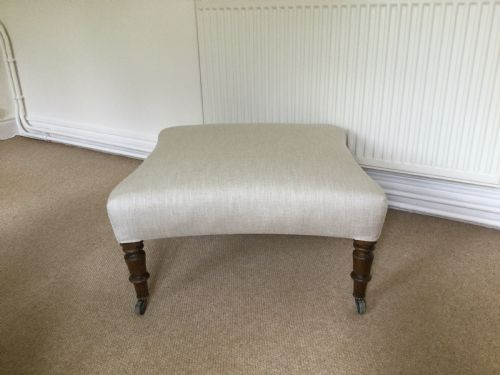


Castor Footstool Seat
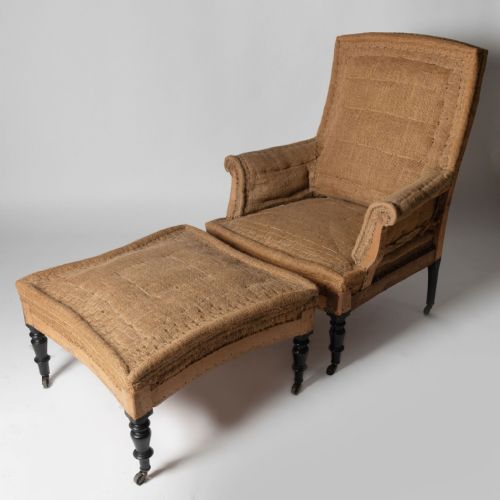
These castor footstool seat examples are practical nineteenth-century and Edwardian resting pieces raised on castors for easy movement across the floor.
Castor Footstool Seat
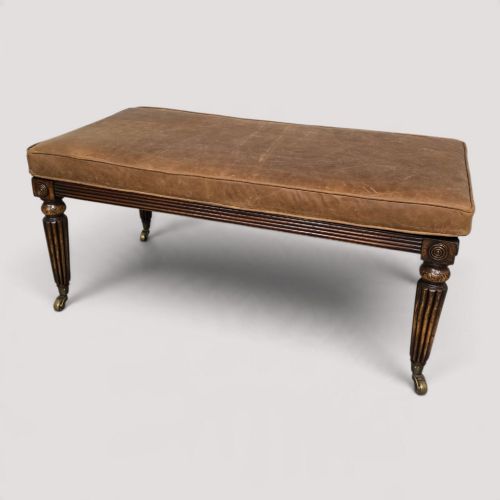
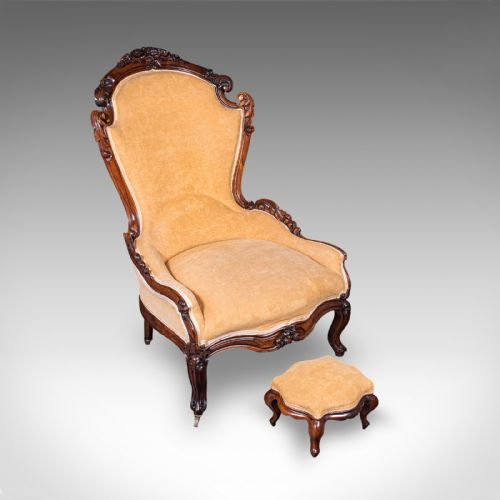
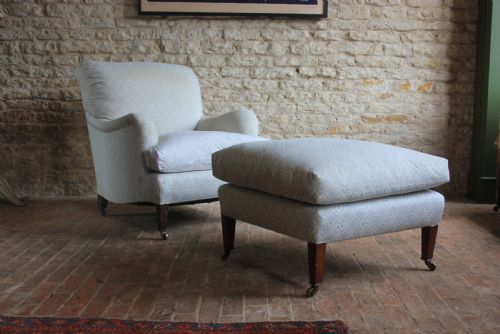
A castor footstool seat brings together low-slung resting forms and supportive seating, appearing across Georgian, Regency, Victorian, and Edwardian periods. Buyers searching this phrase encounter low stools, ottomans, window seats, and armchairs equipped with matching footstools.
The listings show English country house and French styles built for domestic comfort. These pieces function variously as dressing stools, window seats, and bedside foot rests within period interiors.
How they were made
Frames rely on timbers such as mahogany and oak, often turned or shaped to support heavy daily use. Upholstery utilises fabric, calico, hessian, and chenille over supportive foundation webbing.
Metal castors are fitted to the base of the legs to allow smooth rolling across carpets and floorboards. Cane seating also appears on specific nineteenth-century stool variants.
Castor Footstool Seat Retail Price Guide 2026
Typical asking prices for castor footstool seat among the pieces listed under this phrase on Sellingantiques today, from the lower quarter to the upper quarter. They describe what is for sale here now, not the wider market.
Listings feature mahogany, oak, brass, cane, and various upholstery fabrics across nineteenth-century and Edwardian periods.
What varies in quality
Quality rests on the integrity of the timber frame and the precision of the turning. Pieces carrying maker attribution or retaining period upholstery show superior workshop origin.
The sophistication of the timber grain and the original working condition of the brass or metal castors set better examples apart from standard workshop production.
Howard and Sons·James Shoolbred
The Castor Footstool Seat Glossary
- Castor
- A small wheel mounted on a swivel assembly fixed to the bottom of a furniture leg. This allows heavy seating to move smoothly across the floor.
- Chenille
- A fuzzy pile fabric used for soft furnishings and upholstery. It provides a tactile, textured surface to period footstools.
- Hessian
- A coarse woven fabric typically made from jute fibres. It serves as a strong foundation layer beneath top upholstery.
- Regency
- A British design period spanning the early nineteenth century. Furniture from this era often draws on classical Greek and Roman motifs.
Castor Footstool Seat: Frequently Asked Questions
What is a castor footstool seat?
A castor footstool seat is a low resting piece fitted with small wheels on its legs. These wheels let the piece move easily around a room.
Such items appear in various historical periods from the Georgian era through to Edwardian times. They serve as comfortable foot rests or low seats in sitting rooms and bedrooms.
How do I date these pieces?
Dating relies on timber choice, leg turning styles, and construction methods. Mahogany and oak frames shift in profile across Georgian, Regency, and Victorian decades.
Castor design and upholstery materials also help pinpoint the manufacturing era. Comparing construction details against known period pieces confirms the date.
Are these seats comfortable to use daily?
Most of these pieces are built with solid wooden frames and padded upholstery designed for regular support. Their low height makes them suitable for resting feet or casual seating.
Historic padding may require careful maintenance or reupholstery to suit modern seating preferences. The sturdy timber frames remain dependable for daily domestic placement.
Where should I place a footstool seat?
These pieces fit naturally in front of armchairs, beside fireplaces, or beneath windows. Their castors make repositioning them simple when rearranging a room.
Because they take up little floor space, they work well in both large drawing rooms and smaller dressing spaces.