

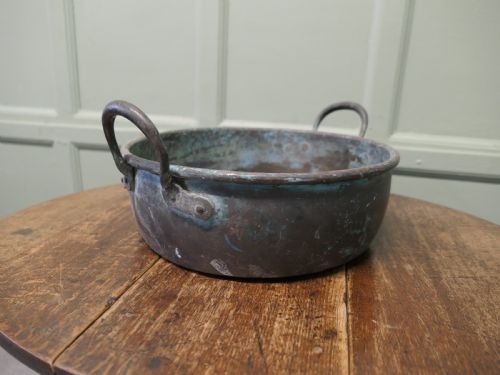


Vintage French Copper Basin
These vintage french copper basin examples bring tangible weight and warmth to a room, valued for their honest metalwork and historical utility.
Vintage French Copper Basin
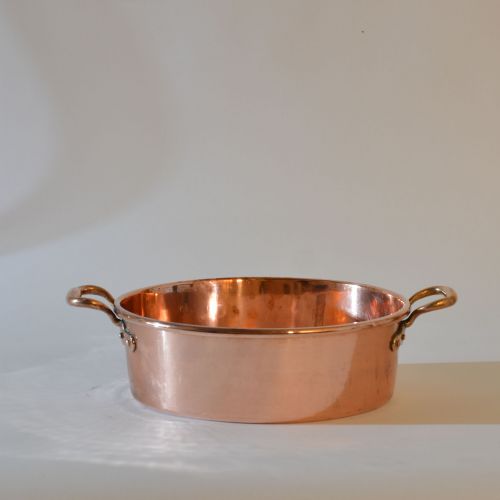
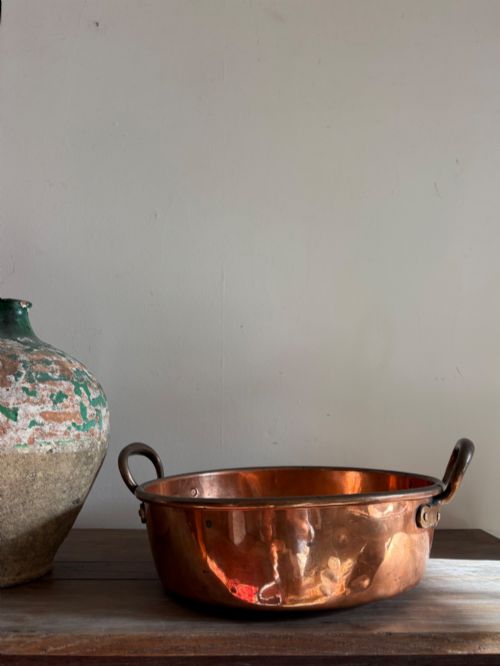
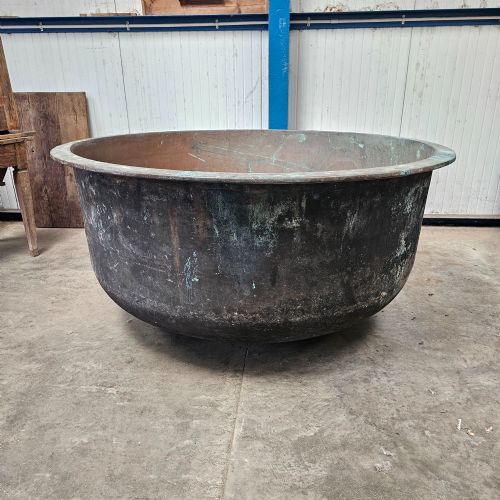
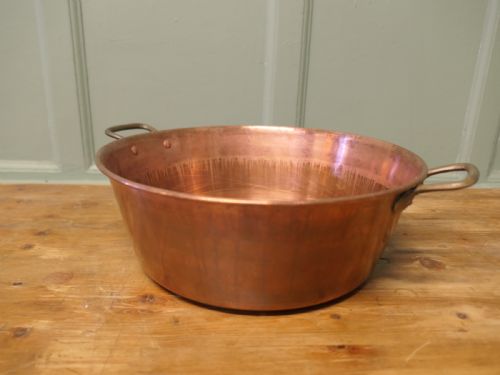
When you search for vintage french copper basin, you are looking at robust metal vessels created for practical daily labour in French kitchens and country houses. The pieces on this page span the nineteenth and early twentieth centuries, taking forms such as cheese vats, jam pans, preserve pans, cauldrons, and ferrats.
You are most likely to meet large, heavy jam or preserve pans featuring rolled rims and iron or brass handles. These robust vessels served for open-fire cooking and preserving before moving into decorative domestic display.
How they were made
These items rely on heavy-gauge copper beaten and formed by hand or early mechanical means to withstand direct hearth heat. Makers combined the primary copper body with sturdy iron or brass handles, securing them with heavy rivets.
Surface treatment involves traditional planishing and hammering marks left visible across the metal body. Some later decorative items utilise dinanderie techniques characteristic of the Art Deco period.
Vintage French Copper Basin Retail Price Guide 2026
Typical asking prices for vintage french copper basin among the pieces listed under this phrase on Sellingantiques today, from the lower quarter to the upper quarter. They describe what is for sale here now, not the wider market.
Several cheese vats bear the physical scars of Franche-Comte farm dairies, having stirred thousands of litres of milk before retiring to the drawing room.
What varies in quality
Quality rests in the thickness of the metal plate and the integrity of the original construction. Heavier gauge copper and well-formed hand-beaten contours distinguish superior vessels from lighter domestic examples.
The character of the patination and the survival of original riveted iron handles elevate certain pieces. Refinished surfaces change the visual weight compared to untouched historical patinas.
The Vintage French Copper Basin Glossary
- Ferrat
- A traditional French copper vessel type used for carrying or holding liquids and materials. These pieces typically display utilitarian handles and heavy bases.
- Preserve Pan
- A wide, open metal basin designed for boiling fruit and sugar evenly over a heat source. The sloping sides allow steam to escape efficiently during long cooking processes.
- Dinanderie
- A term for ornamental brass and copper objects, often associated with the Art Deco period. This work involves decorative surface patterning and shaping.
- Planishing
- A metalworking technique using a smooth hammer to refine the shape and texture of a copper surface. This process hardens the metal while leaving subtle facets.
Vintage French Copper Basin: Frequently Asked Questions
What were vintage french copper basin pieces used for?
These vessels were originally built for heavy kitchen work, including jam making, cheese production, and boiling preserves over open hearths. Their thick walls distributed heat evenly across the base.
Over time, many of these utilitarian pans transitioned into decorative items, serving as planters, log bins, or hearth vessels in country homes.
How do I date a vintage french copper basin?
Dating relies on observing construction methods, handle attachments, and overall form. Nineteenth-century examples often display hand-beaten surfaces and heavy riveted iron fittings.
Later pieces from the twentieth century may incorporate cleaner lines or distinct stylistic elements such as Art Deco dinanderie work.
How do I clean a vintage french copper basin?
Maintenance depends entirely on whether you prefer a bright polished finish or an aged historical patina. Gentle washing with warm soapy water removes dust without disturbing the metal.
Avoid harsh abrasive compounds unless you specifically want to expose the bright pink-orange copper beneath the oxidation.
Are these copper basins safe for cooking?
Historical copper pans often lack modern interior linings such as tin or stainless steel. Unlined copper is generally not recommended for acidic foods.
Most buyers today utilise these pieces for decorative display, indoor planting, or storage rather than active daily culinary work.