

Vintage Floral Marquetry Table
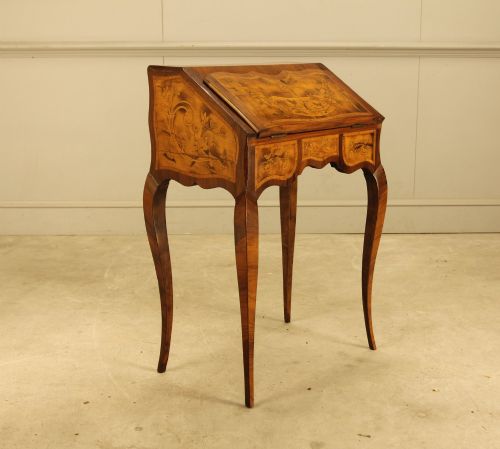
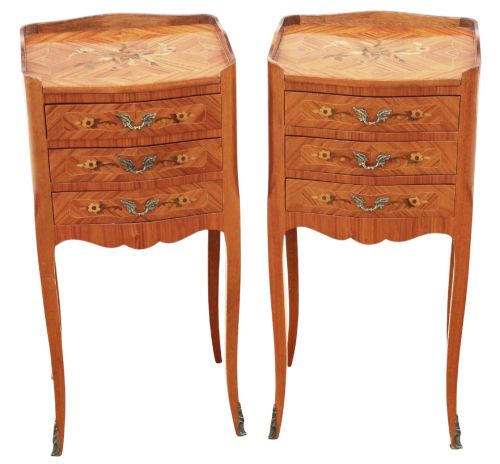
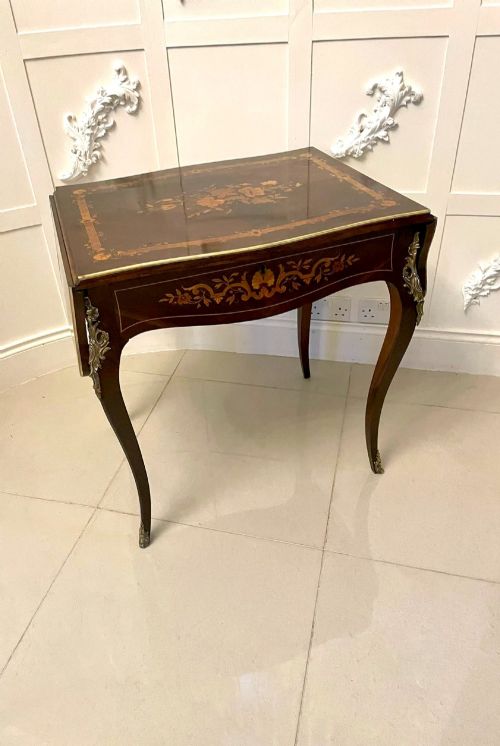
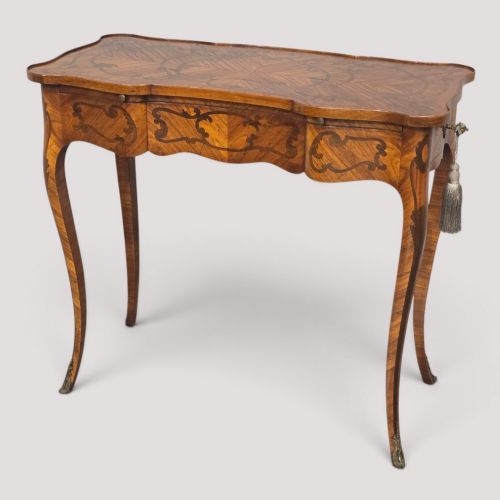
These vintage floral marquetry tables bring intricate wood inlay and period craftsmanship into a room.
Vintage Floral Marquetry Table
A vintage floral marquetry table brings together decorative wood veneers arranged in botanical patterns on surfaces intended for practical daily use. When you search for this phrase, you find a selection spanning the nineteenth century, the Edwardian era, and the early twentieth century.
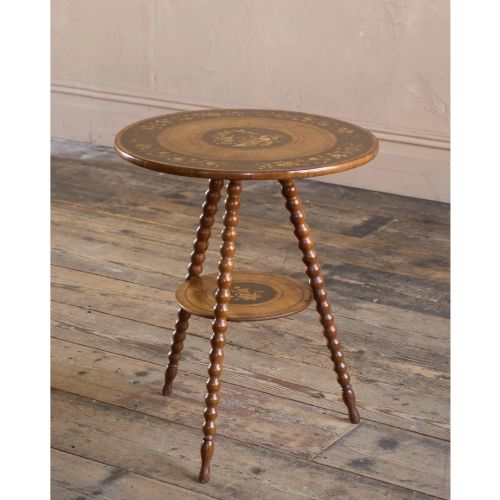
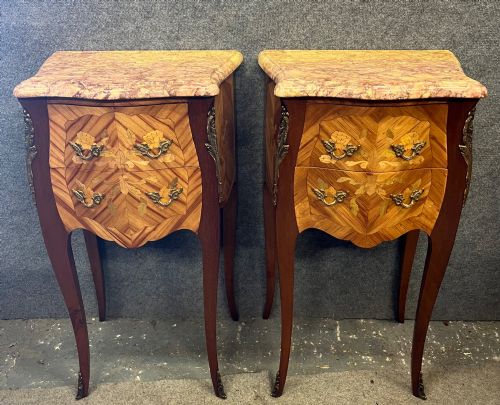
The pieces on this page appear most frequently in forms such as bedside tables, side tables, occasional tables, and coffee tables. French designs strongly influence the selection, often drawing on Louis XV styles and revival periods.
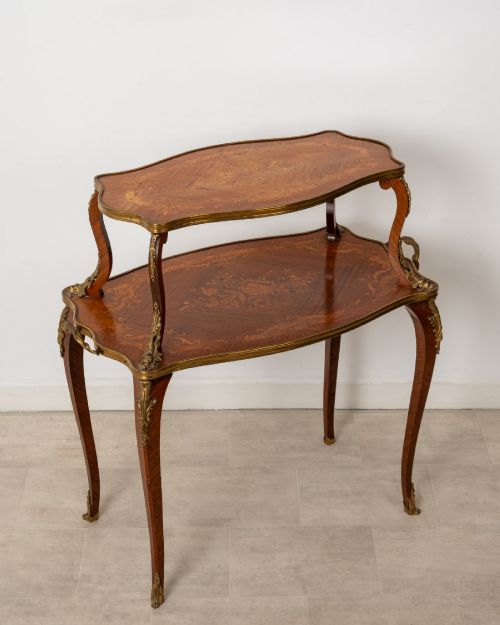
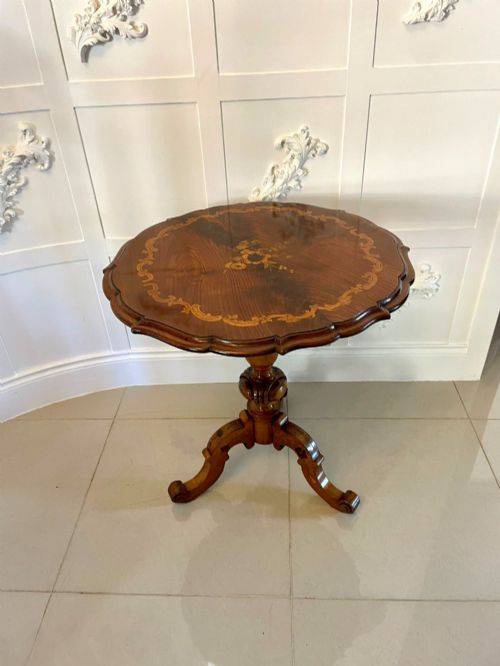
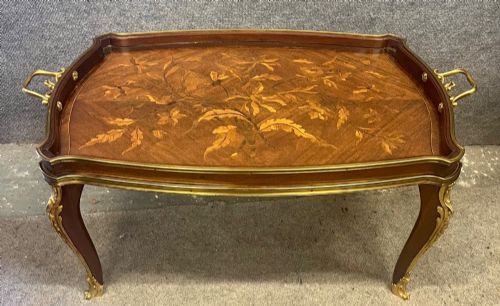
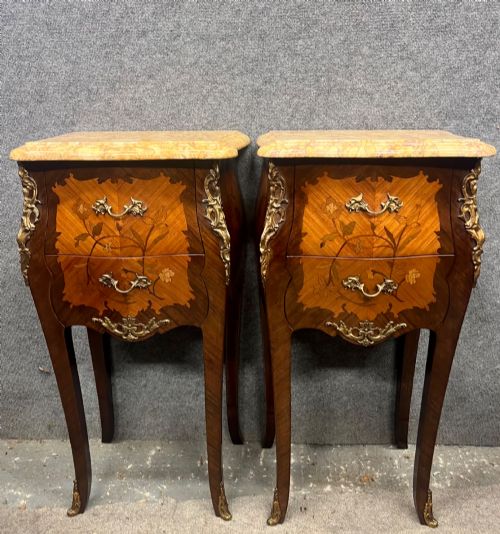
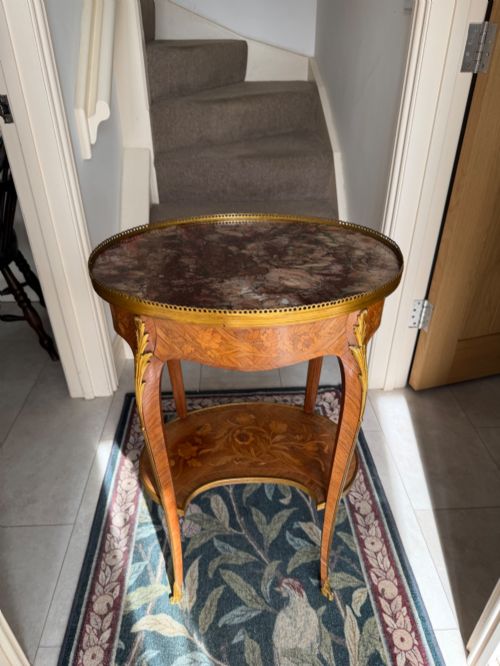
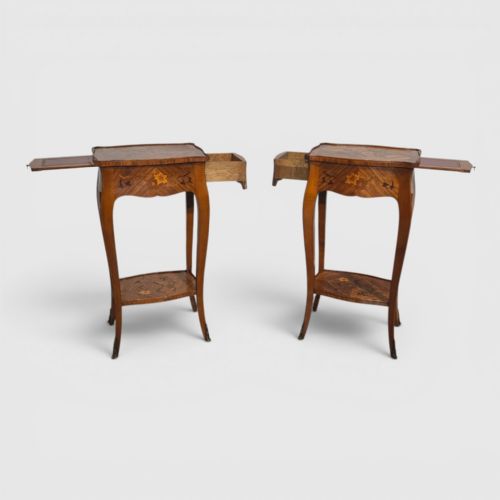
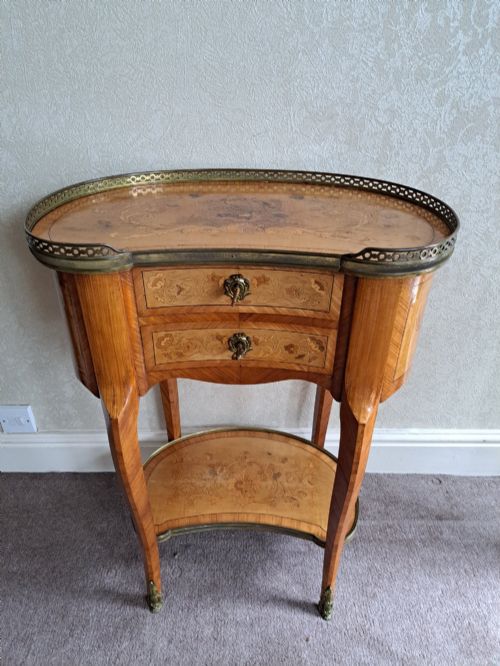
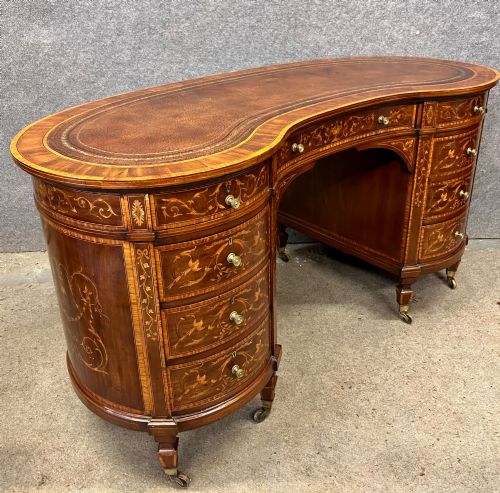
Makers and craftsmen shaped these items from walnut, kingwood, rosewood, and mahogany, frequently incorporating brass and ormolu mounts. The forms range from two-tier étagères and kidney-shaped desks to round coffee tables and pairs of matching nightstands.
How They Were Made
Cabinet makers constructed these tables using a solid carcase of woods like walnut or mahogany, then applied thin veneers of exotic timbers such as kingwood, rosewood, and satinwood to the surfaces. Artisans cut different coloured wood veneers by hand and fitted them together to form floral marquetry patterns before gluing them down.
Workshops added structural and decorative details including brass handles, glass tops, marble slabs, and cast ormolu mounts. Turned bobbin legs, slender cabriole supports, and two-tier frameworks provided the physical support for these veneered tops.
Listings feature walnut, kingwood, rosewood, and mahogany timbers alongside brass and ormolu mounts.
What Varies in Quality
The refinement of the floral marquetry design separates standard examples from exceptional pieces. Finely cut veneers use natural grain variations and subtle colour shifts to give petals and leaves depth, whereas lesser work relies on simpler, blocky shapes.
The choice of underlying timber and secondary materials dictates the grade of the build. Dense woods like kingwood and rosewood combined with chased ormolu mounts and marble inserts indicate higher ambition in the workshop.
Henry Marc
The Vintage Floral Marquetry Table Glossary
- Marquetry
- A technique where pieces of coloured wood veneer are fitted together to form decorative pictures or patterns on a wooden surface. This method decorates tabletops and cabinet doors.
- Kingwood
- A dense, richly grained tropical timber used extensively in French cabinet making during the eighteenth and nineteenth centuries. It provides dark contrasts in floral inlay work.
- Ormolu
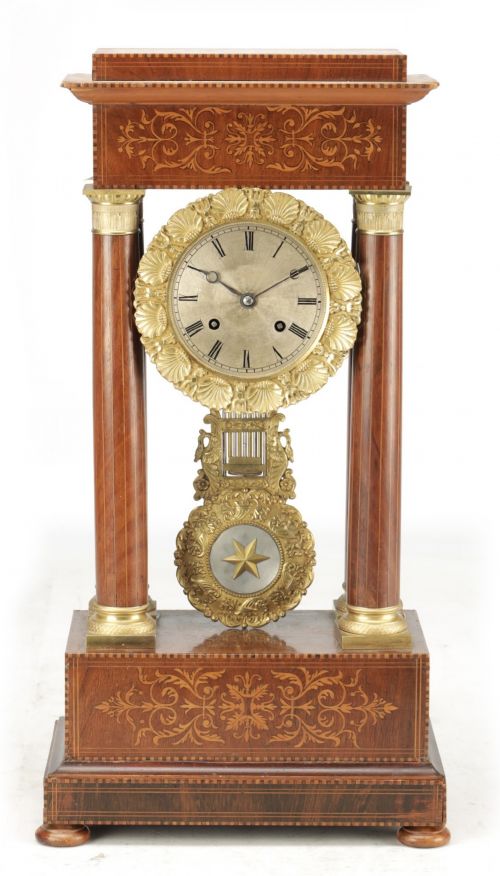
- Gilt bronze mounted onto furniture or clocks for decorative effect. Workshops cast and chased these metal mounts to accent corners and legs.
- Étagère
- A set of open shelves for displaying small objects or holding bedside items. These pieces often feature marquetry surfaces across their multiple tiers.
- Cabriole leg
- A furniture leg that curves out and then in, resembling an animal's leg. This shape appears frequently on revival furniture styles.
Vintage Floral Marquetry Table: Frequently Asked Questions
Where did people use these tables?
These tables served various functions across different rooms, acting as bedside cabinets, side tables, or occasional pieces for holding lamps and small items.
Bedside pairs provided enclosed storage alongside sleeping quarters, while coffee tables and étagères sat in reception rooms for display.
How do I identify French styles?
French revival pieces often display curved cabriole legs, symmetrical ormolu mounts, and elaborate floral marquetry veneers across kidney shapes or serpentine fronts.
Details such as kingwood or rosewood surfaces and Louis XV stylistic cues point directly to continental workshop influences.
What woods appear most often?
Walnut, mahogany, kingwood, and rosewood form the main structural and decorative timbers across these listings. Satinwood also appears for lighter contrasting details.
Craftsmen paired these primary cabinet woods with brass and ormolu hardware.
How should I care for marquetry?
Keep these pieces away from direct sunlight and moisture to protect the delicate wood veneers and glue joints. Regular dusting with a dry cloth maintains the polished surface without harsh chemicals.
Avoid placing damp items directly onto the antique tabletops to prevent staining the grain.