
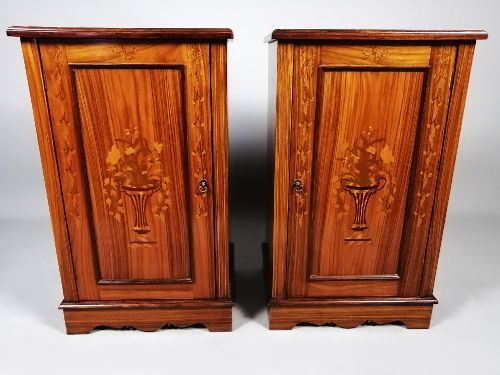
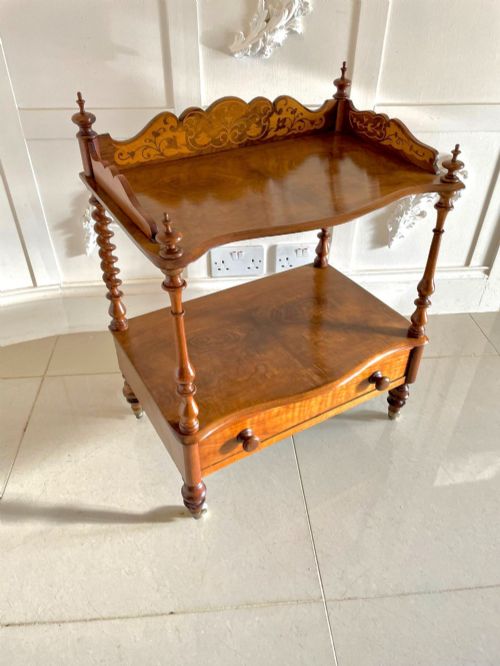
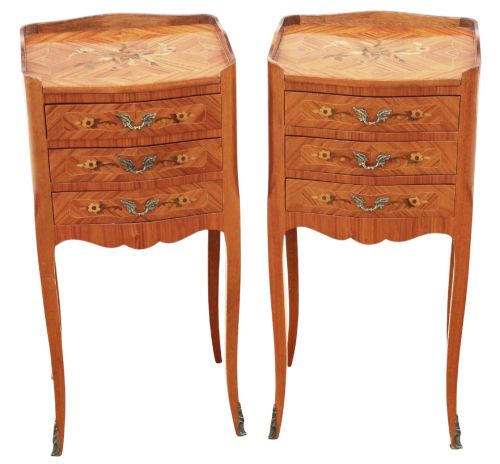
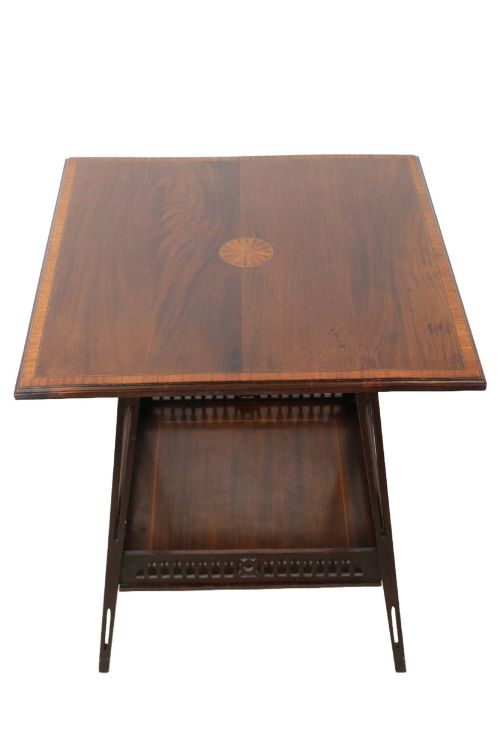
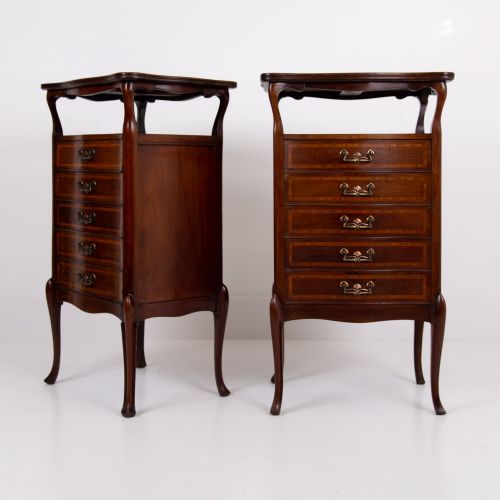
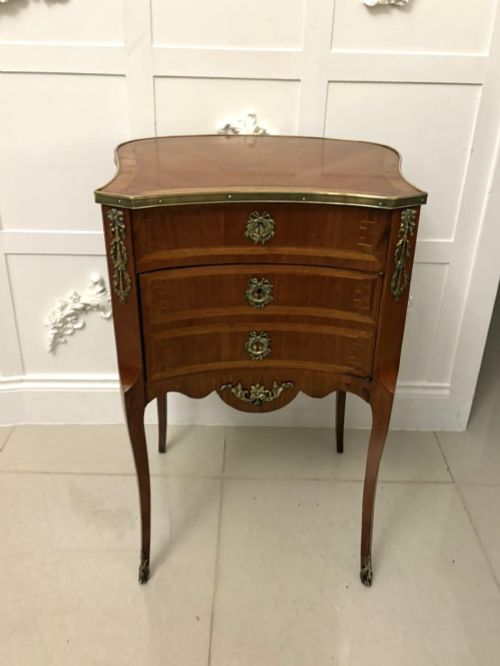
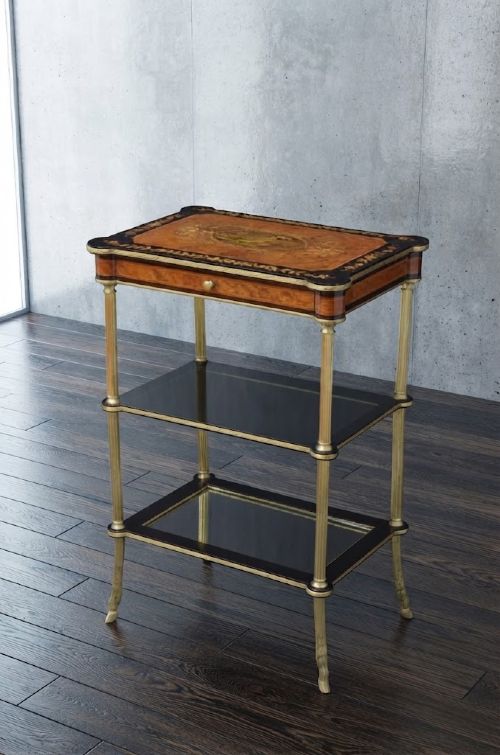
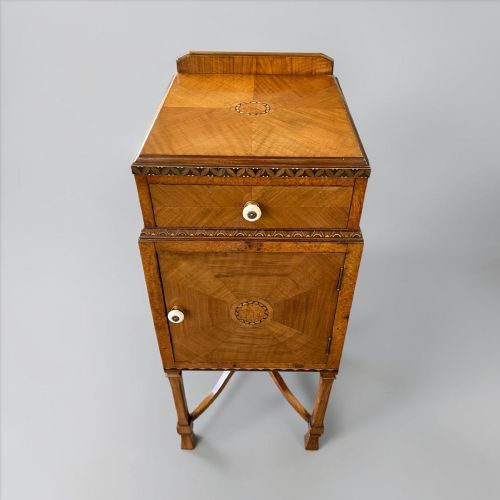
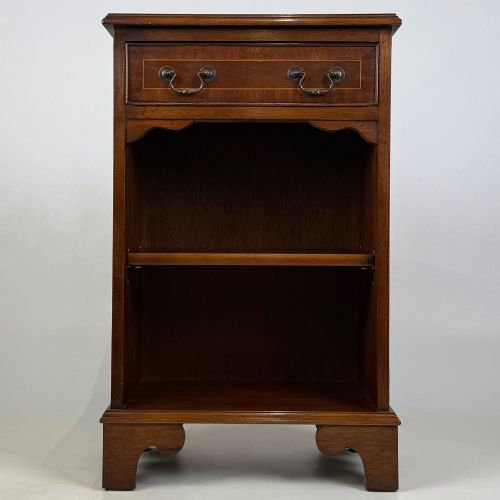
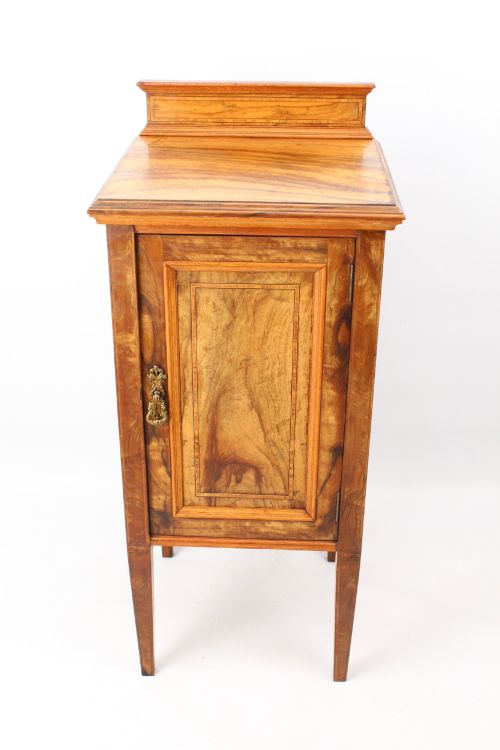
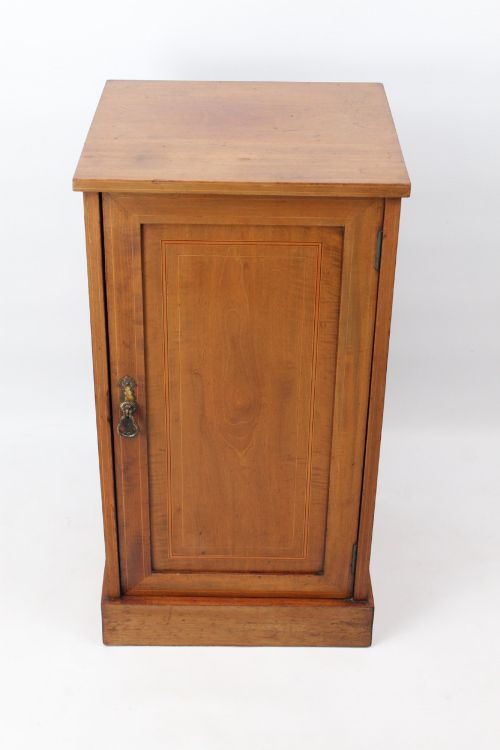
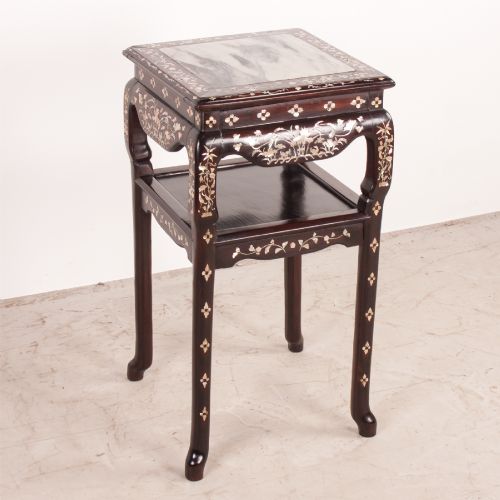
Inlaid Nightstand
An inlaid nightstand brings rich timber and delicate detail beside the bed, offering surface space and concealed storage.
Inlaid Nightstand
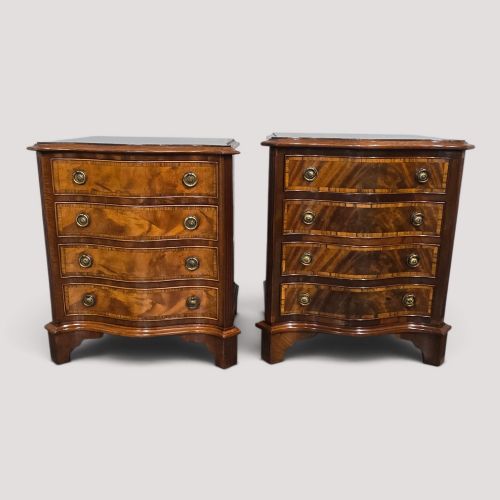
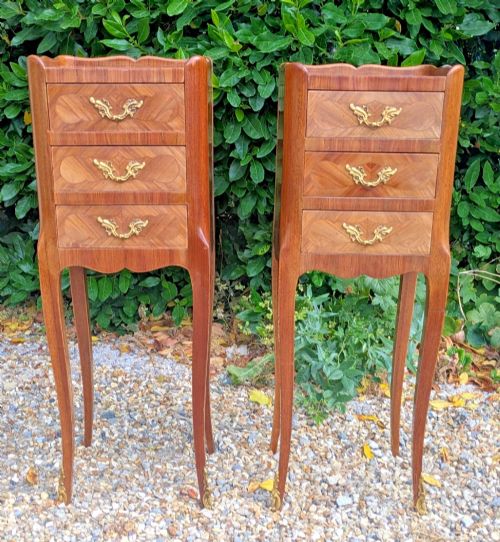
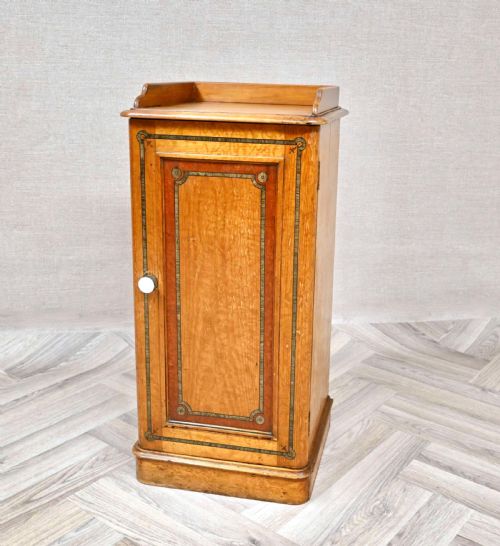
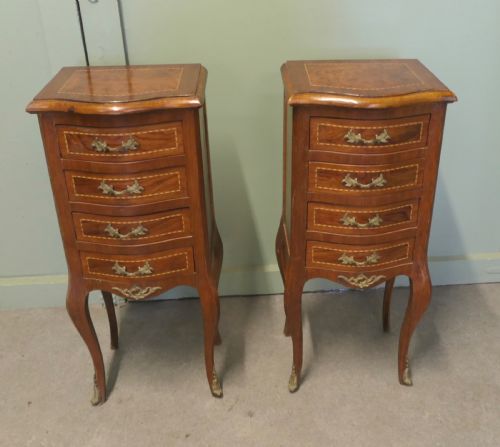
When searching for an inlaid nightstand, buyers encounter a diverse selection of bedside cabinets, lamp tables, and side chests spanning from the eighteenth century through the art deco period.
Victorian and Edwardian mahogany or walnut pieces frequently appear alongside French styles featuring marquetry and marble tops.
Makers such as Trevor Page and Co, Maple and Co, Morant and Co, Walter Carter for Harrods, and Heals represent the cabinet-making tradition found across these items.
Materials and technique
Craftsmen utilised solid foundational timbers like mahogany, walnut, and oak, applying decorative veneers of satinwood, rosewood, and kingwood to the exterior surfaces.
Marquetry and parquetry techniques created intricate geometric or pictorial patterns using contrasting wood types, occasionally enhanced with mother of pearl, brass, or ormolu mounts.
Listings span from the eighteenth century to the art deco era, incorporating mahogany, walnut, satinwood, and marble.
Assessing craftsmanship
Quality rests in the precision of the timber selection and the crispness of the inlay work, where finer pieces display seamless joins and subtle grain matching.
The structural integrity of the carcase, the weight of any marble top, and the refinement of subsidiary materials like brass or ormolu distinguish standard production from exceptional workshops.
Trevor Page and Co·Maple and Co·Morant and Co·Walter Carter·Harrods·Heals
The Inlaid Nightstand Glossary
- Marquetry
- Decorative veneer work forming pictures or designs using various tinted woods. It requires considerable skill to fit the pieces together accurately.
- Parquetry
- Geometric mosaic woodwork used for floors or furniture surfaces. It creates repeating patterns like cubes or chevrons.
- Ormolu
- Gilded bronze mounts applied to furniture. This decorative technique originated in France during the seventeenth century.
- Satinwood
- A durable timber with a natural golden sheen and satin-like lustre. Cabinet-makers favoured it for fine eighteenth and nineteenth-century pieces.
- Kingwood
- A dense, heavy exotic timber featuring dark violet-brown streaks. It was widely used in French furniture of the eighteenth and early twentieth centuries.
Inlaid Nightstand: Frequently Asked Questions
How do I clean an antique inlaid nightstand?
Dust surfaces regularly with a soft, dry cloth to prevent dirt build-up in the wood grain and delicate veneer joins.
Aplying a specialist microcrystalline wax occasionally will nourish the timber without damaging historical finishes.
Can I use a marble top nightstand safely?
Marble tops provide a durable, heat-resistant surface ideal for placing water jugs or bedside lamps without marking the wood.
Take care to wipe spills promptly, particularly acidic liquids, to protect the polished stone from staining.
How do French and English nightstands differ?
French examples often favour serpentine fronts, kingwood veneers, and marble tops with ormolu mounts influenced by Louis styles.
English equivalents tend to rely on figured mahogany or walnut with subtle stringing and functional drawer configurations.
Are these cabinets suitable for modern bedrooms?
Neat proportions and compact footprints allow these pieces to fit comfortably beside contemporary beds of varying heights.
Enclosed cupboards and drawers provide practical storage for modern bedside essentials while maintaining a decorative focal point.