
French Inlaid Nightstands
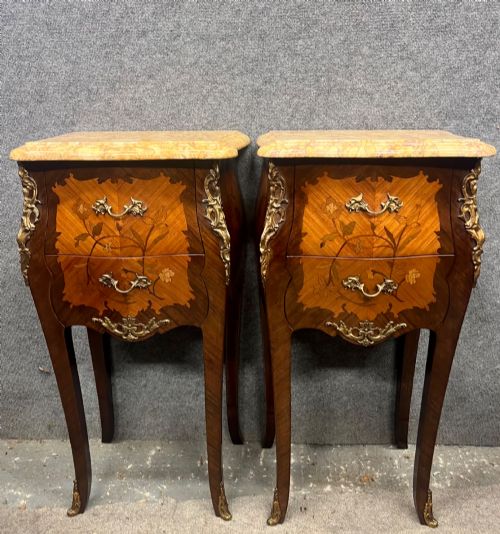
French inlaid nightstands bring together rich woods, delicate marquetry and classic continental forms to anchor a bedroom scheme.

French Inlaid Nightstands
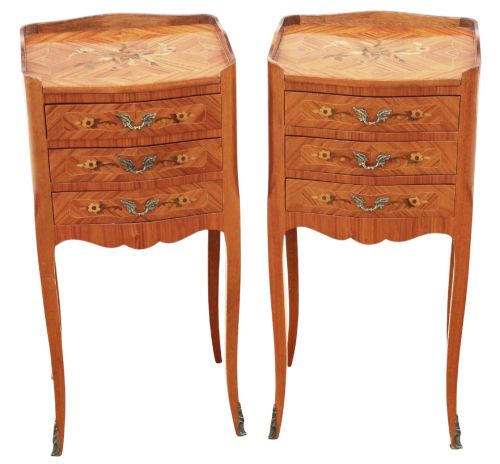
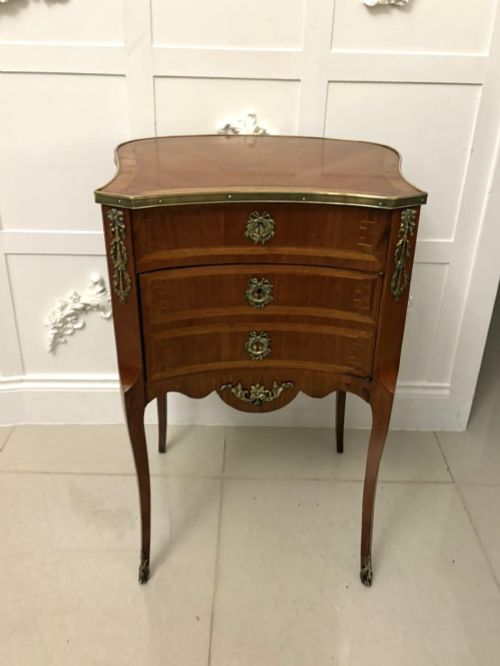
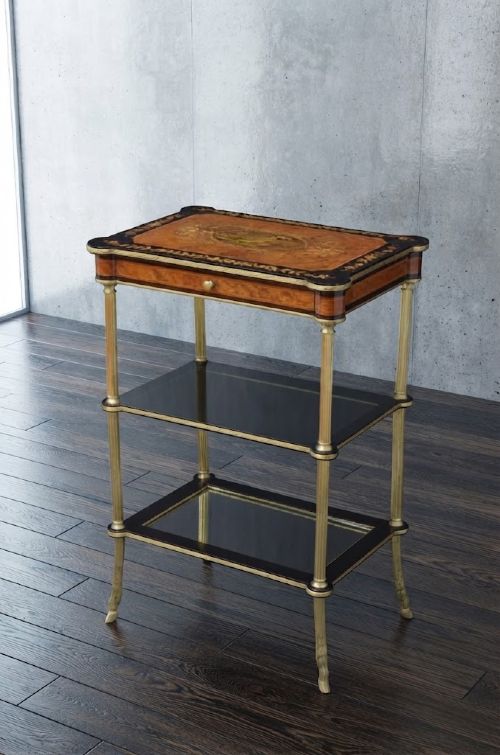
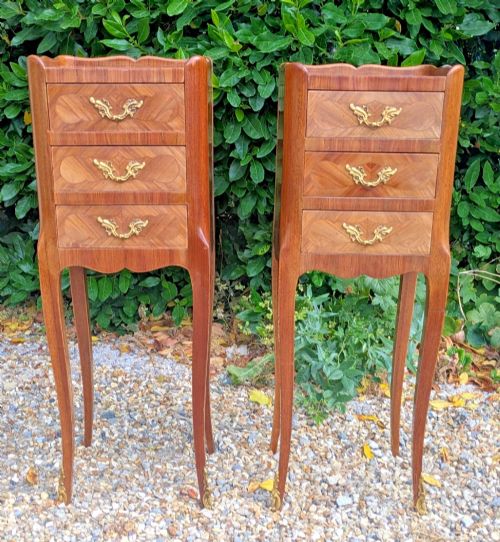
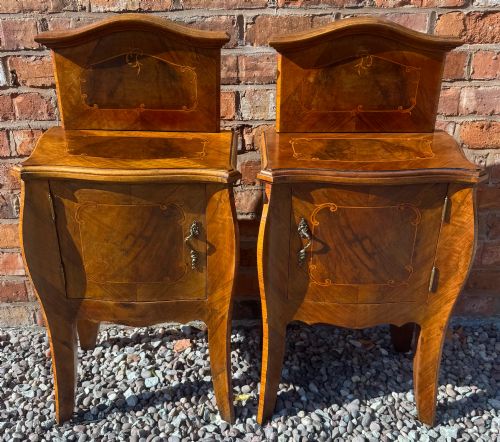
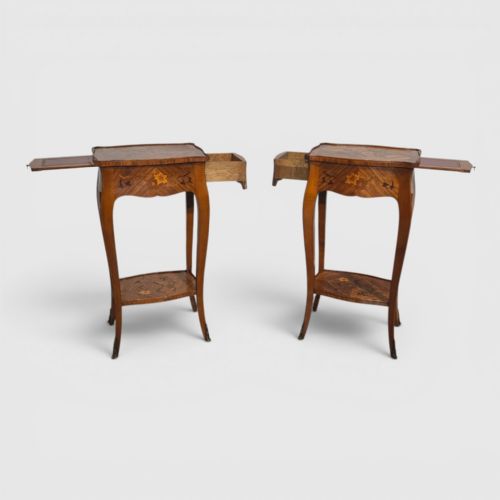
When you search for french inlaid nightstands, you encounter a specialised selection of bedside tables, cabinets and small chests originating from the nineteenth and early twentieth centuries.
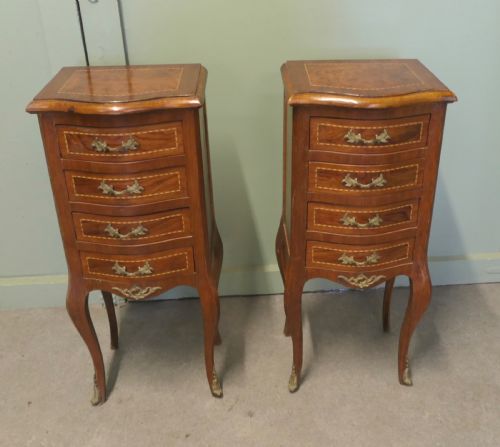
The versions most commonly met on this page date from the nineteen-twenties and nineteen-thirties, often following Louis XV and Louis XVI revival styles.
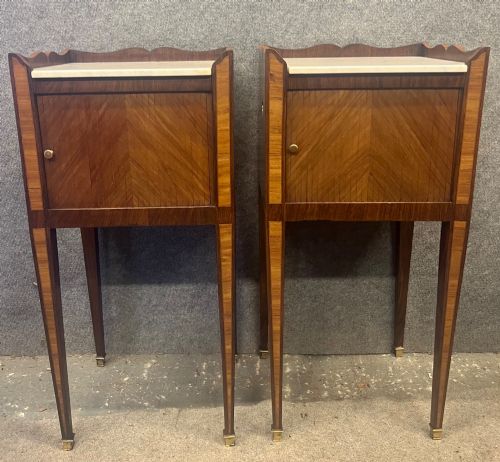
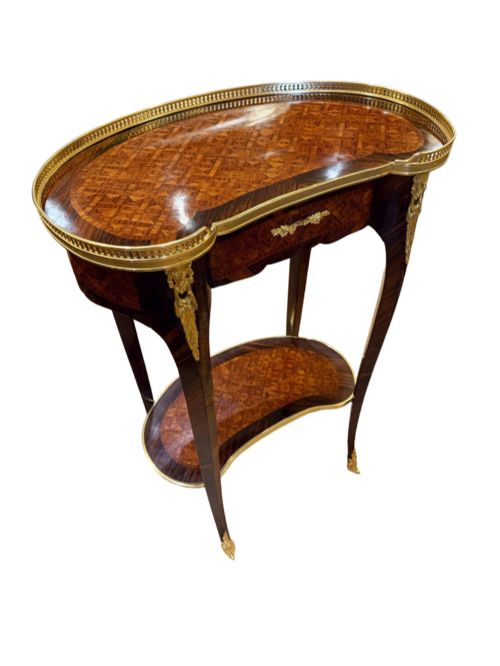
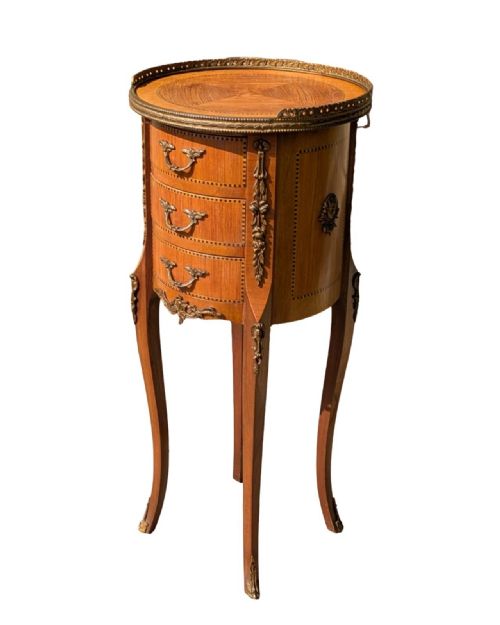
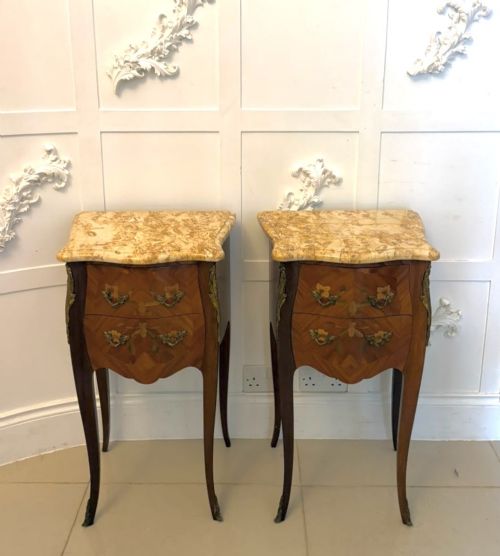
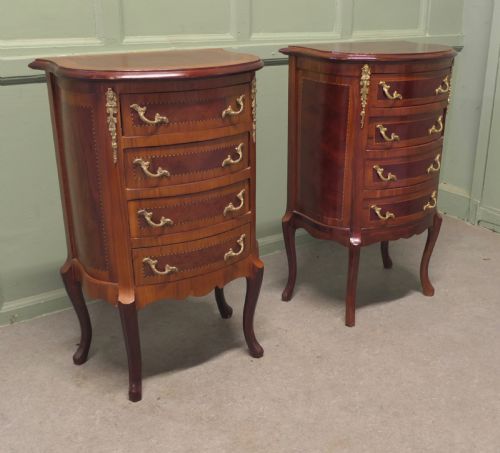
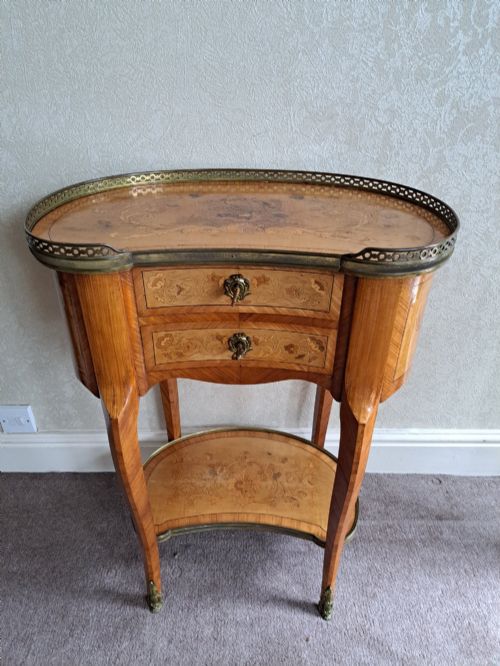
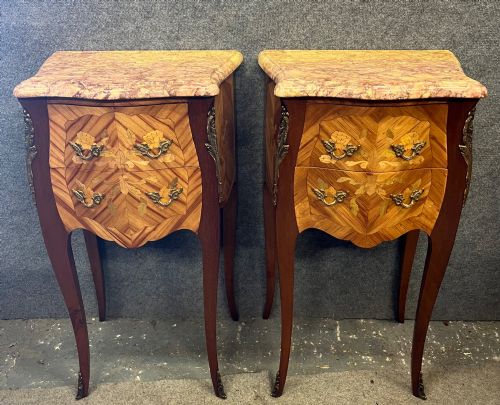
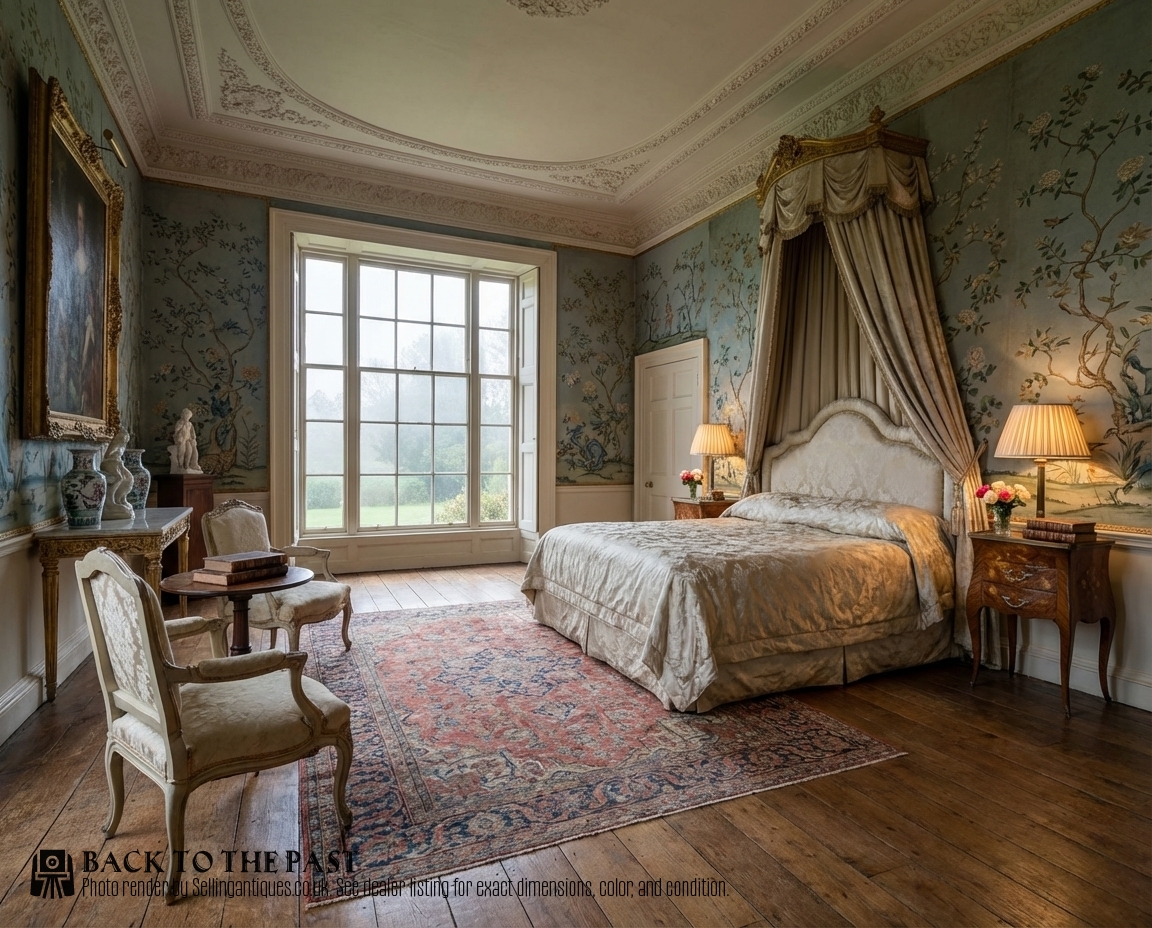
Makers utilised compact forms like kidney-shaped tables, bow-front chests and tall side lockers that served practical purposes beside the bed while displaying intricate decorative surfaces.
Materials and Construction
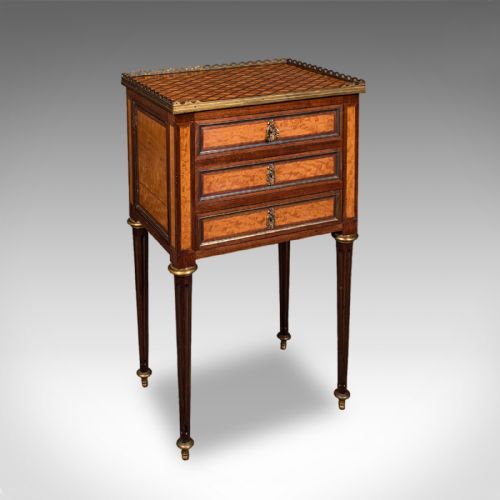
Cabinetmakers built these pieces using supportive carcassing timbers overlaid with choice veneers such as kingwood, walnut, satinwood and rosewood.
Decorative detailing relied heavily on marquetry and parquetry patterns, which arranged contrasting wood strips and floral motifs across the top and drawer fronts.
Metal mounts in brass and ormolu along with shaped marble tops completed the construction, protecting vulnerable edges and adding weight and contrast to the timber.
French Inlaid Nightstands Retail Price Guide 2026
Typical asking prices for french inlaid nightstands among the pieces listed under this phrase on Sellingantiques today, from the lower quarter to the upper quarter. They describe what is for sale here now, not the wider market.
Some tiny bedside lockers include hidden compartments designed for holding midnight reading glasses.
Distinguishing Quality
The standard of execution in the marquetry work divides simpler pieces from the finest examples, where individual wood grains and shading create genuine depth.
Selection of secondary materials matters greatly, particularly the weight of the cast ormolu mounts and the thickness and figure of the marble slabs fitted to the tops.
Proportion and symmetry separate standard production from superior workshops, as seen in the crisp curve of a cabriole leg or the precise alignment of drawer tiers.
Sormani
The French Inlaid Nightstands Glossary
- Marquetry
- The practice of arranging small pieces of veneer to form pictorial or geometric designs on furniture surfaces. It appears widely on the tops and drawer fronts of bedside cabinets.
- Parquetry
- A geometric mosaic of wood pieces used for surface decoration. This technique creates repeating patterns like cubes or chevrons on tabletops.
- Ormolu
- Gilded bronze used for decorative mounts, handles and feet on period furniture. It provides a bright metallic accent against dark timber.
- Kingwood
- A dense, richly figured wood native to South America, prized for its dark purple-brown tones and pale streaks. Cabinetmakers utilised it extensively for high-end French revival pieces.
- Kidney-shaped
- A curved, asymmetrical tabletop form popular in small side tables and bedside chests during the nineteenth and twentieth centuries. It offers a softer silhouette than standard rectangular furniture.
French Inlaid Nightstands: Frequently Asked Questions
What periods do these nightstands come from?
The pieces span the nineteenth and early twentieth centuries, drawing heavily on Victorian and revival aesthetics.
Dates cluster around the eighteen-eighties through to the nineteen-thirties, reflecting shifts in continental taste.
Are marble tops original to the tables?
Marble tops frequently accompany French bedside cabinets, providing a durable surface for lamps and water jugs.
Many period examples retain their fitted stone slabs, though specific edge profiles help confirm authenticity.
What is the difference between a commode and a side cabinet?
A commode generally refers to a larger chest of drawers intended for storage, whereas a side cabinet often combines cupboard doors with compact dimensions.
Both forms appear frequently in bedroom settings.