



French Chiffonniere Table
These french chiffonniere table pieces are refined decorative furnishings valued for their intricate woodwork and elegant proportions.
French Chiffonniere Table
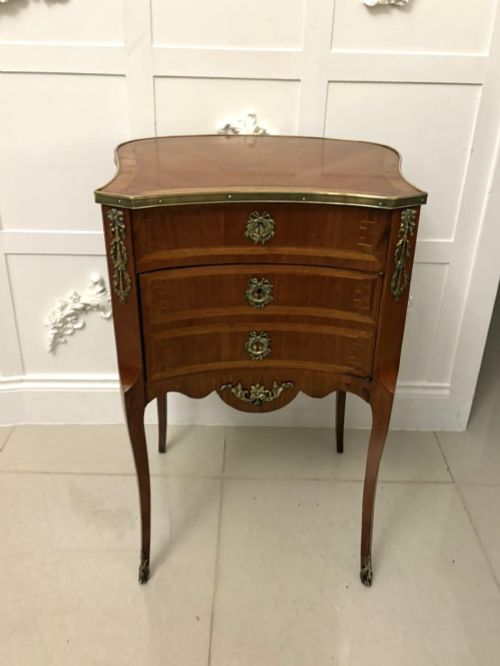
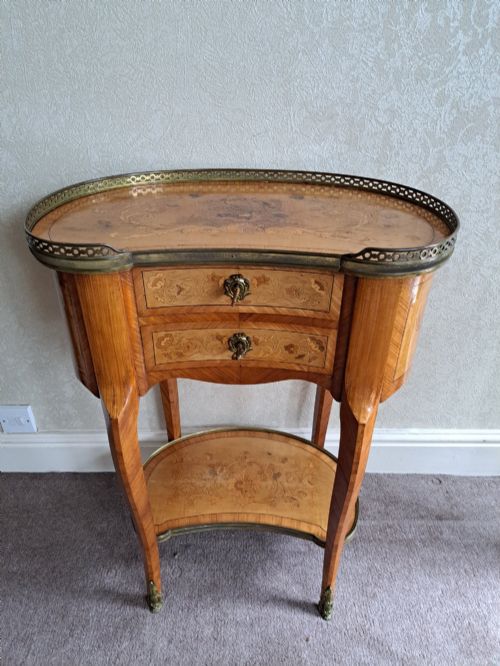
A french chiffonniere table is a specialised piece of antique furniture that functions as a small side table or side cabinet for domestic use.
Most examples found on this page date from the nineteenth century, encompassing periods such as the Victorian era and the years around nineteen hundred.
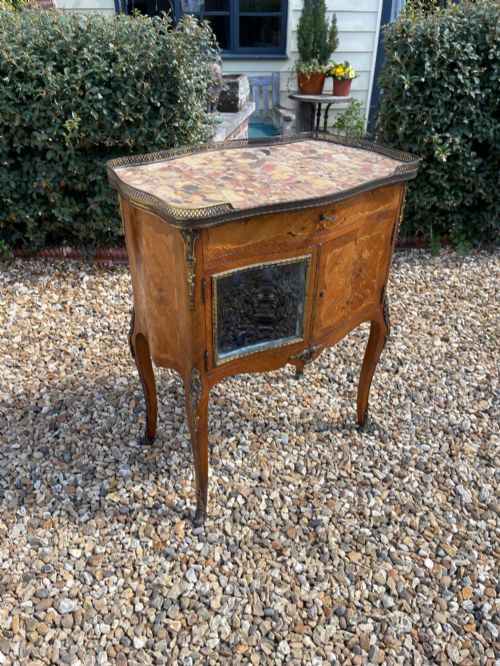
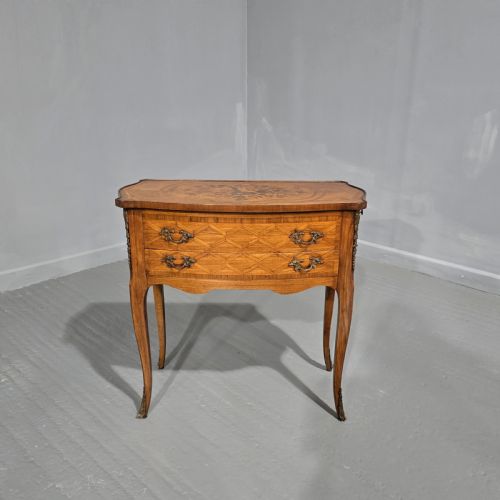
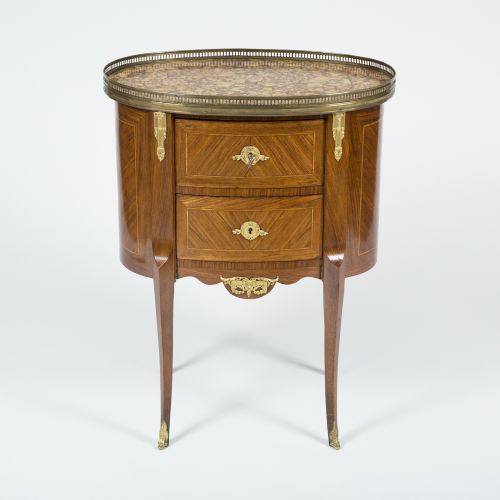
These items frequently display stylistic influences from French Louis the Fifteenth and Louis the Sixteenth designs, often taking the form of side tables, commodes, or side cabinets.
Materials and construction
Cabinetmakers constructed these pieces using fine timbers such as kingwood, walnut, rosewood, and mahogany as a foundation for decorative work.
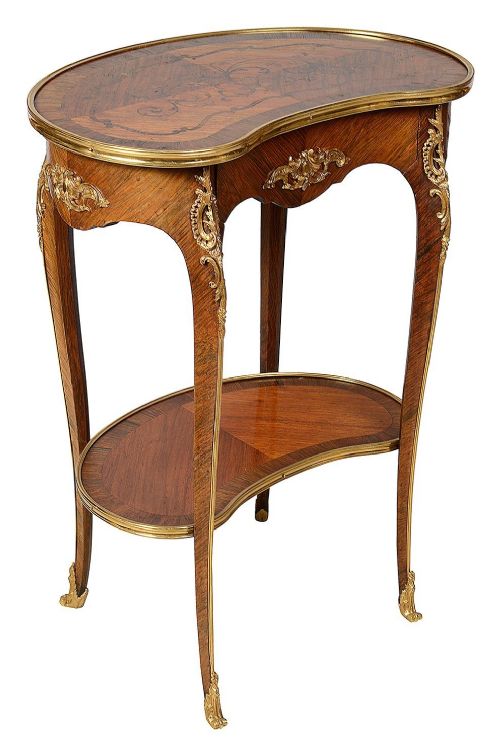
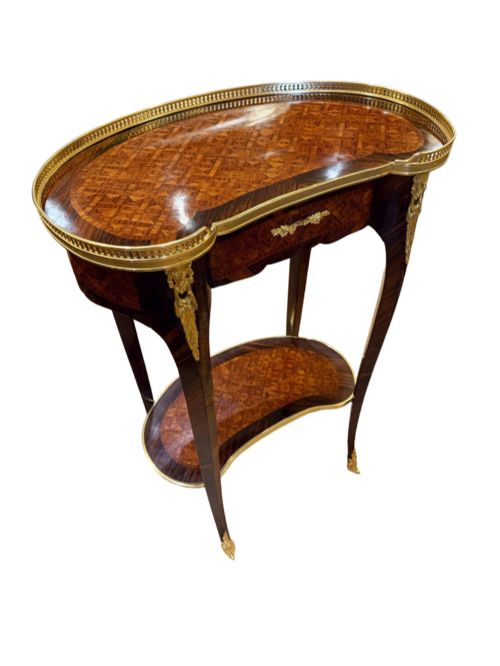
Surfaces frequently feature intricate marquetry and parquetry inlay, combining different wood veneers to create geometric or pictorial patterns.
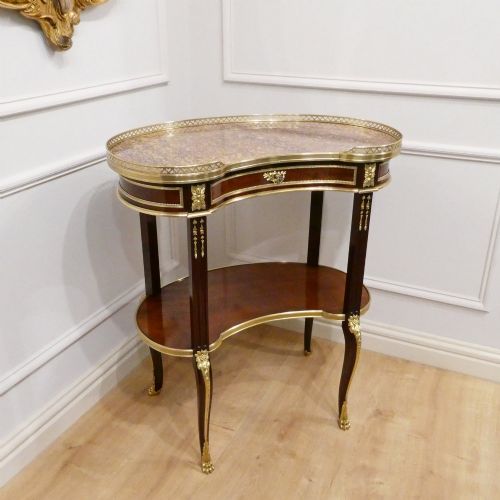
Many examples incorporate cast brass or ormolu mounts alongside fitted marble tops, such as breche d'alep marble, to finish the design.
Maison Millet once marked their furniture with foundry stamps that collectors still hunt for with magnifying glasses.
Assessing quality and craftsmanship
The standard of a french chiffonniere table rests on the precision of its marquetry and the crispness of its parquetry inlay.
Mounts in ormolu and brass show varying degrees of chiselling and weight, distinguishing standard production from finer workshop output.
The selection of timber grain and the overall fluidity of the cabinetwork define the visual distinction of superior examples.
Maison Millet
The French Chiffonniere Table Glossary
- Marquetry
- Decorative veneer work arranged in pictorial or floral patterns across the surface. This technique requires precise cutting of various coloured woods.
- Ormolu
- Gilded bronze mounts applied to furniture for decorative enrichment. The process involves treating the bronze with a mercury and gold amalgam.
- Parquetry
- Geometric patterns formed by small pieces of wood fitted together. It often covers tabletops and cabinet doors.
- Breche d'alep
- A type of variegated marble commonly used for table and cabinet tops. Its distinctive brecciated pattern adds weight and colour to the piece.
French Chiffonniere Table: Frequently Asked Questions
What is a french chiffonniere table used for?
These tables served as versatile small storage pieces and display surfaces in nineteenth-century drawing rooms and boudoirs.
Their compact scale allowed them to sit beside seating or against walls while holding small decorative objects.
How do I identify Louis XV style furniture?
Louis the Fifteenth style pieces are characterised by curved lines, asymmetrical details, and floral marquetry motifs.
Cabriole legs and flowing bronze mounts frequently accompany this particular design vocabulary.
What woods were used in these tables?
Craftsmen utilised exotic and native timbers including kingwood, walnut, rosewood, and mahogany.
Veneers from these woods formed the elaborate patterns seen on the top and sides.
Are marble tops original to these cabinets?
Many nineteenth-century side cabinets and commodes were manufactured with fitted marble tops, such as breche d'alep.
These stone surfaces provided a durable and decorative finish suited to everyday use.