


French Inlaid Console Table
A French inlaid console table brings Continental surface work and gilt mounts into a room through walnut, kingwood and ormolu.
French Inlaid Console Table
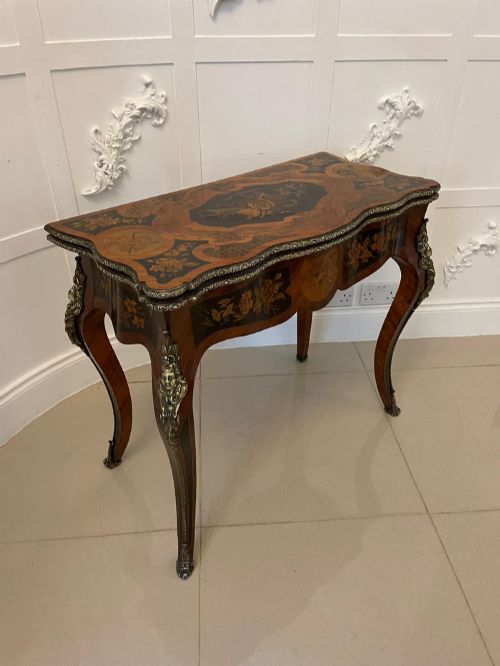
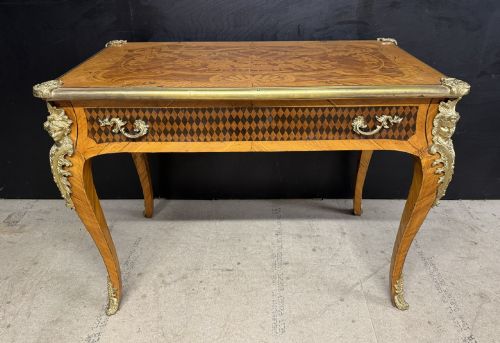
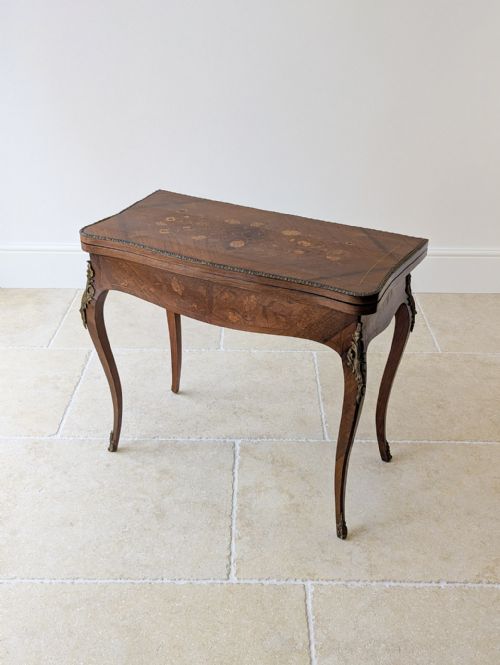
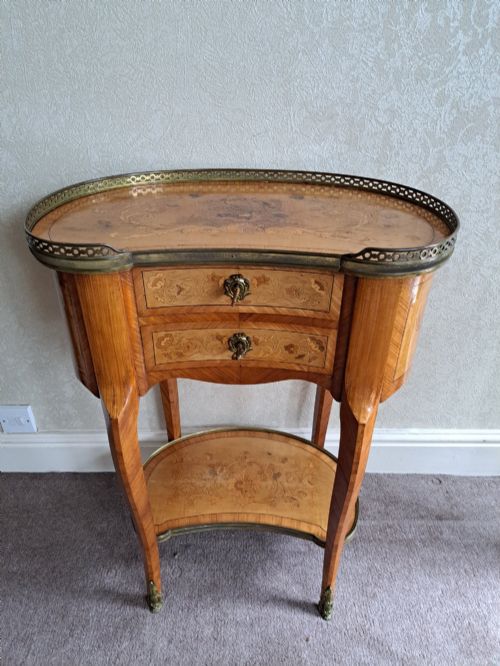
A french inlaid console table is primarily encountered as a nineteenth-century piece reflecting Louis XV and Louis XVI revivals, alongside Napoleon III and Victorian interpretations. These tables frequently appear in forms that combine surface decoration with structural utility, such as card tables, side tables, and bureau plats.
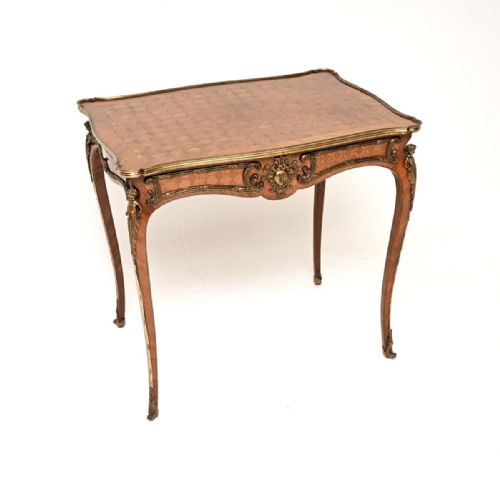
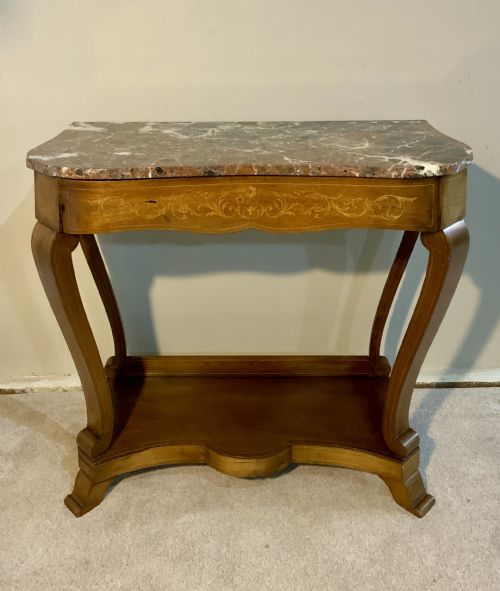
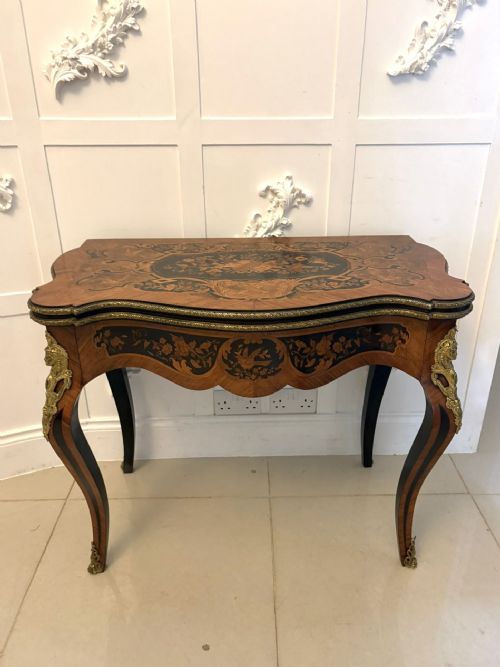
The selection ranges from demi-lune console formats with marble tops to fold-over games tables and centre tables. Walnut, kingwood, rosewood, and ebonised wood form the primary carcasses, decorated with floral marquetry or geometric parquetry patterns.
Origins span nineteenth-century workshops producing neo-classical and rococo revival furniture for domestic interiors. Makers working in the manner of established cabinet-makers are represented alongside documented makers of the period.
Materials and Construction
Cabinet-makers constructed carcasses using native and exotic hardwoods like walnut, mahogany, and satinwood, veneered with kingwood, rosewood, and ebonised timber. Marquetry designs employ contrasting wood cuts to picture floral motifs, while parquetry arranges geometric tiles.
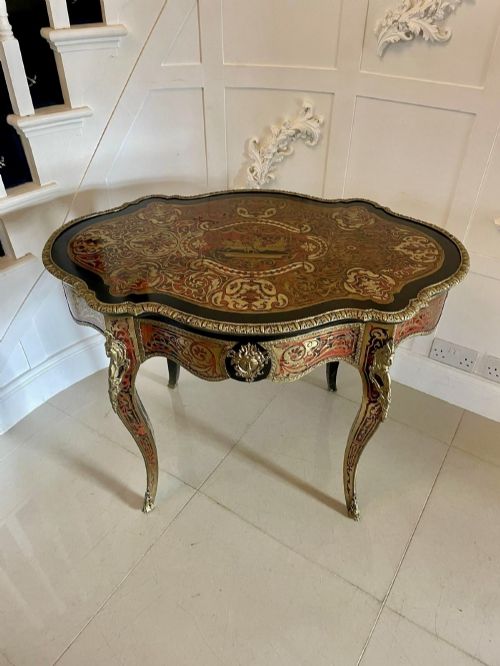
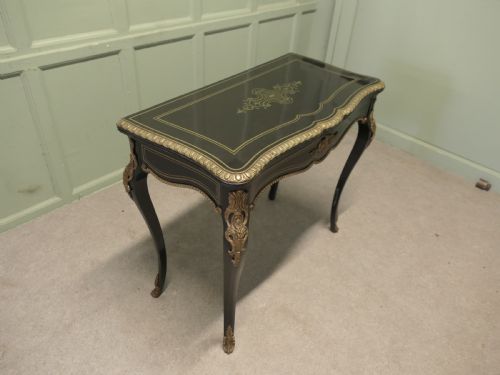
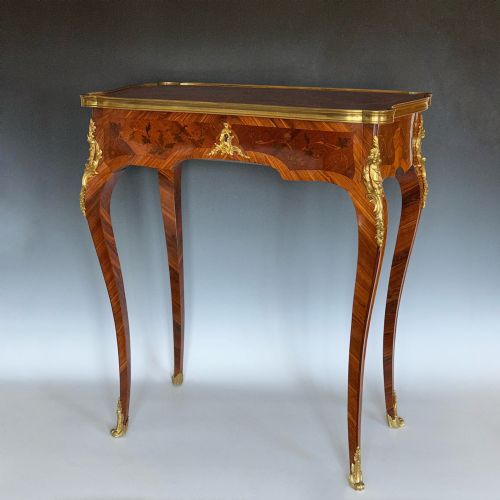
Cast ormolu mounts and chased brass stringing reinforce structural corners and frame the timber panels. Mother-of-pearl details occasionally accent ebonised surfaces alongside brass inlay work on Boulle revival pieces.
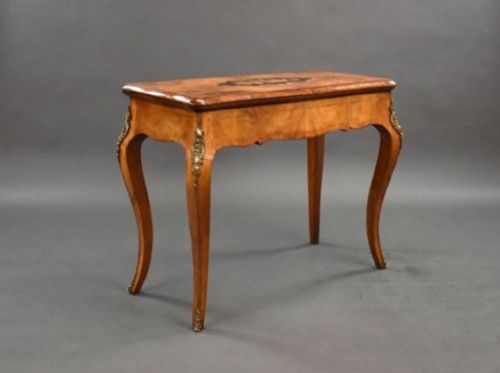
Marble tops, particularly on demi-lune console formats, rest directly upon the timber framing above frieze drawers and cabriole or tapered legs.
Revival periods represented on this page include Louis XV, Louis XVI, Napoleon III, and Victorian aesthetics.
Evaluating the Pieces
Quality rests in the crispness of the ormolu mounts and the precision of the wood inlay. Finer marquetry utilises varied natural timber tones rather than surface staining to create depth in floral and geometric designs.
The integration of the hardware, including the weight of the cast bronze or ormolu mounts and the joinery of the carcase timbers, separates standard production from exhibition pieces. Secondary timbers inside drawers and beneath marble slabs reveal the standard of workshop execution.
Millet·Edwards and Roberts·Francoise Linke
The French Inlaid Console Table Glossary
- Marquetry
- The art of forming decorative patterns by fitting together small pieces of wood veneer. It creates pictorial designs across table tops and friezes using contrasting timbers.
- Parquetry
- Geometric mosaic woodwork used for repeating patterns on floors and table tops. It relies on angled veneer segments to form cubes or squares.
- Ormolu
- Gilt-bronze mounts applied to furniture edges and legs. This technique adds metallic highlights and protects vulnerable corners.
- Boulle
- A form of marquetry using brass and tortoiseshell or ebonised wood. Developed in seventeenth-century France, it reappeared in nineteenth-century revivals.
- Bureau Plat
- A kneehole writing desk with a flat top and leather writing surface. These tables typically feature three frieze drawers and cabriole legs.
- Demi-Lune
- Half-moon shaped furniture designed to sit flat against a wall. This profile is common for marble-topped console tables.
French Inlaid Console Table: Frequently Asked Questions
What is a console table?
A console table is designed to stand against a wall, traditionally supported by two legs and fixed to the wall or standing independently on four legs. Nineteenth-century examples often feature marble tops and gilt mounts.
These pieces served ornamental purposes in reception rooms and hallways, providing a surface for lamps, clocks, and decorative objects.
How do I identify Louis XV style?
Louis XV style furniture is characterised by asymmetrical curves, cabriole legs, and floral marquetry. It avoids straight lines in favour of flowing rococo contours.
In nineteenth-century revivals, this style incorporates rich kingwood veneers and chased ormolu mounts.
What is Boulle work?
Boulle work is an inlay technique combining brass and tortoiseshell or ebonised wood. It produces contrasting metallic and dark patterns across the surface.
Tables featuring this technique date to Napoleon III and Victorian revival periods.
Where should I place a console table?
Console tables suit entrance halls, living rooms, and dining rooms against flat wall spaces. Models with marble tops resist everyday wear from decorative items.
Fold-over card tables can sit closed against a wall and open when needed for games or writing.
How do I care for inlaid wood?
Inlaid wood requires stable room humidity and protection from direct sunlight to prevent veneer lifting and fading. Regular dusting with a dry cloth maintains the polished surface.
Avoid liquid cleaners and silicone polishes, using traditional beeswax sparingly instead.