
Vintage Equestrian Artwork
Vintage equestrian artwork brings the energy of the stable, the hunt and the racecourse directly to the wall through paintings, prints and watercolours.
Vintage Equestrian Artwork
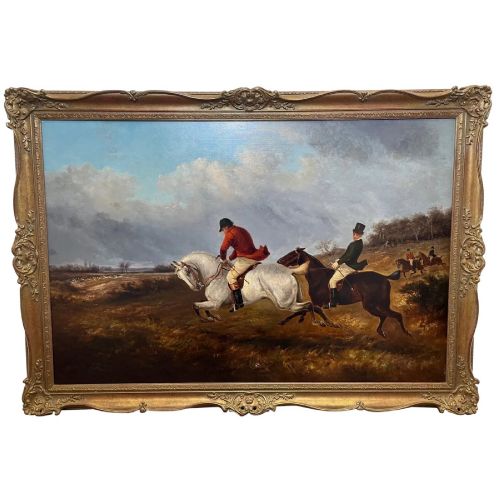
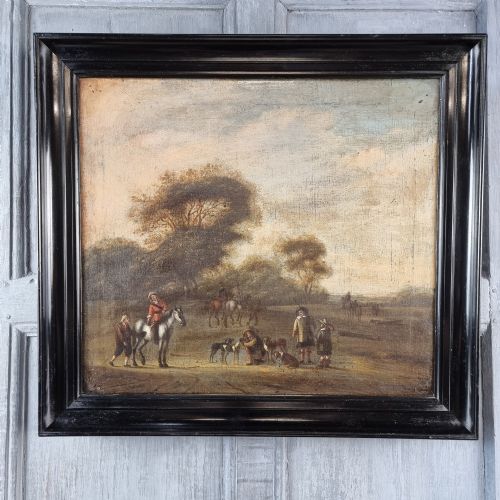
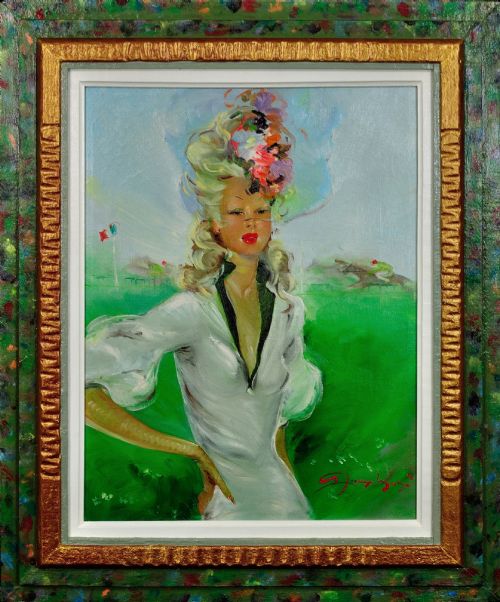
Vintage equestrian artwork encompasses oil paintings, watercolours, pastels and framed prints depicting horses, riders, hunting scenes and racing moments. Pieces range from Victorian sporting art to mid-century depictions of horses, capturing both individual portraits of famous thoroughbreds and dynamic field sports.
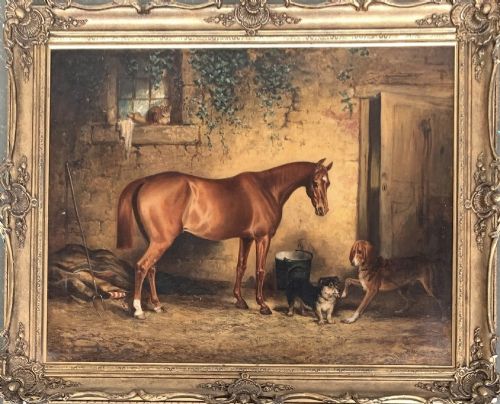
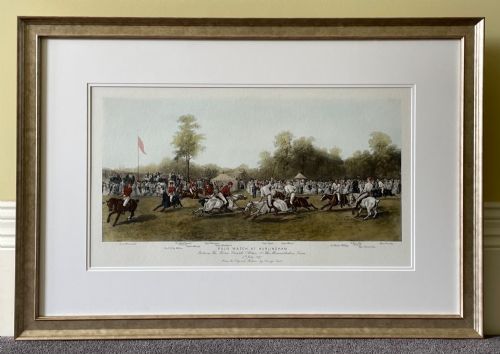
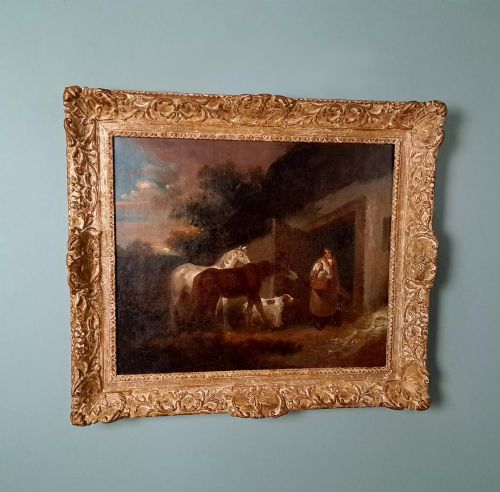
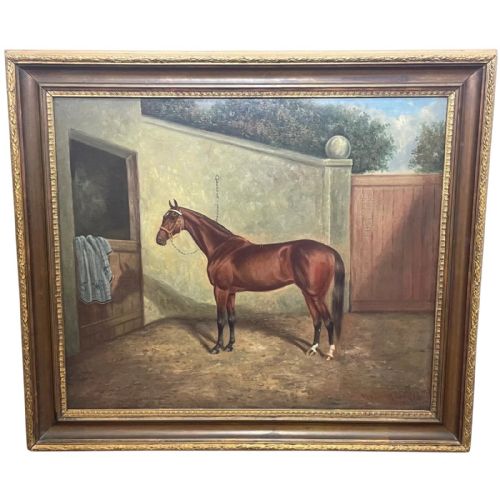
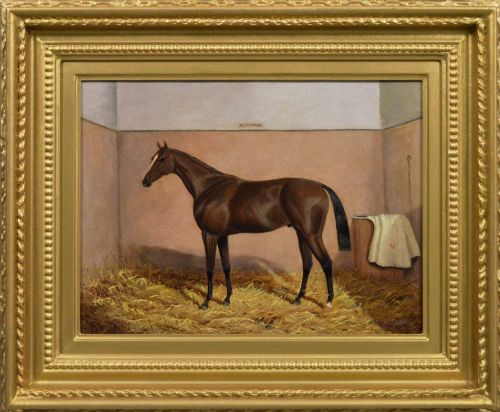
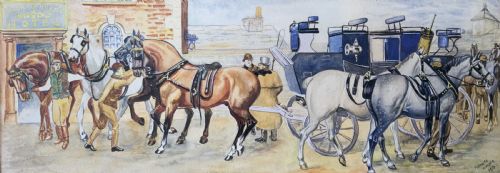
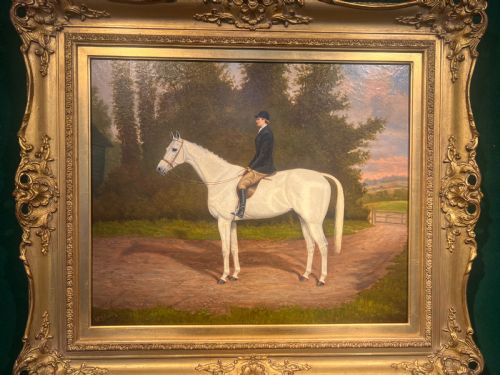
The most common pieces met on this page span the nineteenth and twentieth centuries, produced by British and European artists working in oil, paper and canvas. These range from detailed oil portraits of hunters in stables to lively watercolours of coaching scenes and polo matches.
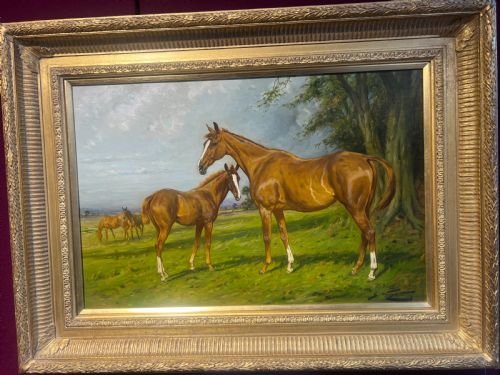
Collectors encounter works featuring named racehorses like Spion Kop and Flying Fox alongside anonymous studies of grey mares, bay hunters and foals. The physical forms vary from large giltwood-framed canvases to modest oak-framed watercolours and printed lithographs.
How they were made
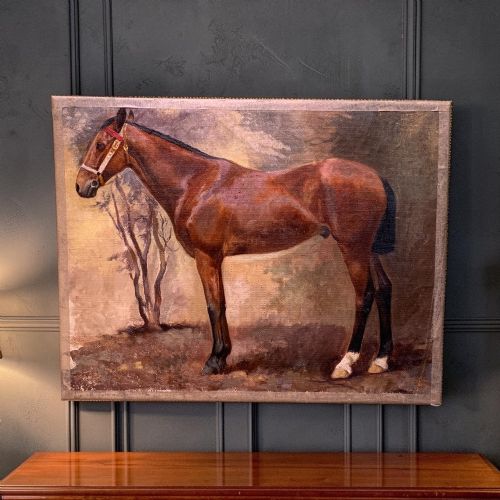
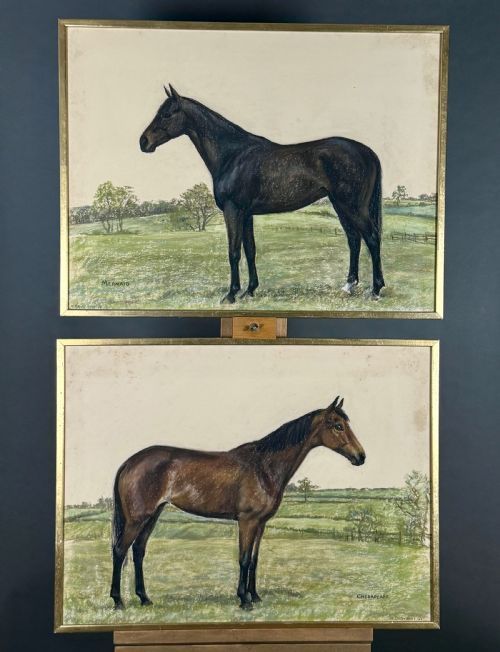
Painters applied oil paint to canvas or wood panels, building up layers of pigment to capture the gloss of a horse's coat and the textures of leather tack. Watercolour and pastel on paper were utilised for lighter, more immediate studies, often mounted behind glass.
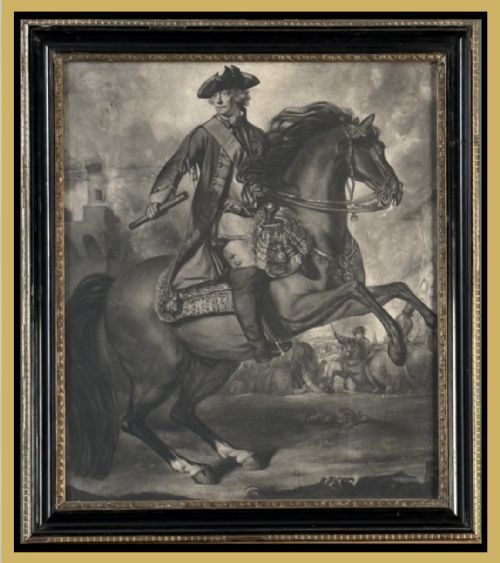
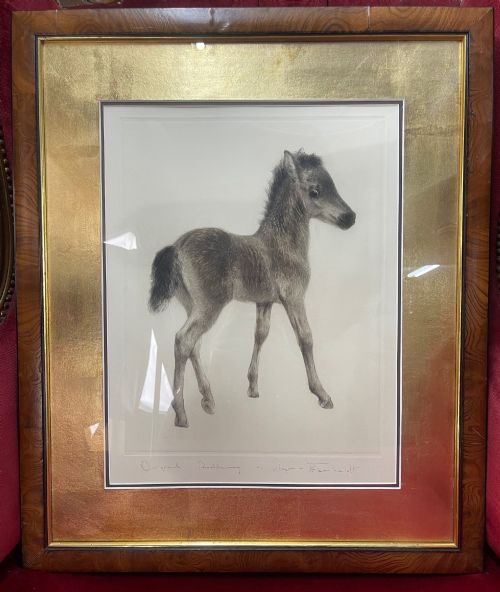
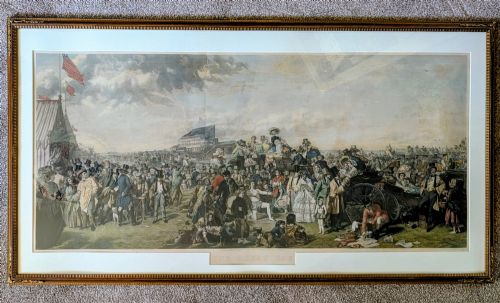
Printmakers employed lithography, mezzotint and drypoint to reproduce popular sporting scenes after artists like Sir Joshua Reynolds and William Powell Frith. These printed works were frequently housed in traditional wooden frames, sometimes accented with giltwood mouldings.
Listings feature works spanning the seventeenth century through to the mid-twentieth century, executed in oil, canvas, paper and giltwood.
What varies in quality
The ability of the artist to render the anatomy, musculature and movement of the horse dictates the visual success of the piece. Superior works display a precise understanding of equine conformation and posture, whereas lesser examples rely on stiff or generic representations.
The depth of provenance and the association with known sporting artists or documented racing events elevate certain pieces above standard decorative works. Original hand-painted oils and pastels naturally command greater artistic consideration than mass-produced prints.
Edward Fisher·Sir Joshua Reynolds·William Joseph Shayer Senior·Kurt Meyer-Eberhardt·William Powell Frith·Thomas Smythe·Frederick Albert Clark·Albert Clark·Jean-Gabriel Domergue·Philip Rideout·Edwin Henry Landseer·Dame Laura Knight·Herman S Melville·Henry Barraud·Fred Fitzpatrick·C. H. Weigall·Ernest Payne·Vernon DeBeauvoir Ward·C R Breytle
The Vintage Equestrian Artwork Glossary
- Mezzotint
- A printmaking process of the intaglio family where the plate is roughened to allow half-tints to be produced. This technique enables subtle tonal variations particularly suited to dramatic portraits.
- Drypoint
- A printmaking technique in which an image is scratched directly into a metal plate with a sharp needle. The resulting burr holds ink to create velvety lines.
- Lithography
- A planographic printing process based on the repulsion of oil and water. It was widely used in the nineteenth century for mass-producing coloured sporting prints.
- Giltwood
- Wood that has been treated with a thin layer of gold leaf or gilt paint. Frames finished in this manner frequently accompany nineteenth-century oil paintings.
- Pastel
- A dry painting medium consisting of powdered pigment and a binder. Artists use pastel sticks to achieve soft, blended textures well suited to animal portraits.
Vintage Equestrian Artwork: Frequently Asked Questions
What subjects appear in vintage equestrian art?
The works depict a wide variety of equine subjects, including racehorses, hunters in stables, polo matches and fox hunting scenes. Portraits of individual prize-winning horses also feature prominently alongside coaching and field sports.
Artists captured these animals in diverse settings, from quiet pastoral landscapes to the dynamic movement of the racecourse and the hunt.
How do I identify the age of a piece?
Dating relies on stylistic clues, framing materials and recorded artist lifespans noted in the listings. Victorian and Edwardian works often display specific framing techniques and painterly conventions typical of those eras.
Signatures, dates inscribed on the canvas or paper, and historical provenance records further help pinpoint the period of creation.
Are these pieces original paintings or prints?
The listings contain a mixture of original hand-painted works in oil, watercolour and pastel, alongside historical prints. Mediums such as oil on canvas and pastel on paper represent unique artistic creations.
Other listings feature lithographs, mezzotints and engravings published after well-known painters like William Powell Frith and Sir Joshua Reynolds.
How should I display equestrian art at home?
These framed paintings and prints suit traditional living spaces, studies and hallways, echoing classic country house aesthetics. Pairing larger oil canvases with smaller framed watercolours or drawings creates a balanced gallery wall.
Protecting the works from direct sunlight preserves the pigments in watercolours, pastels and oil paints over time.