



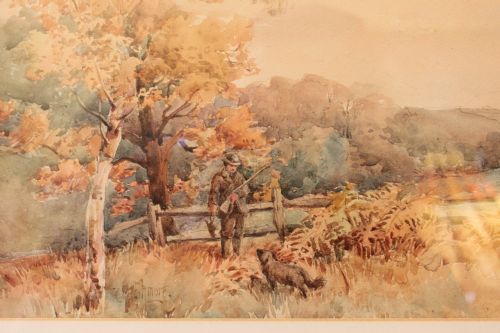


Traditional British Hunting Scene
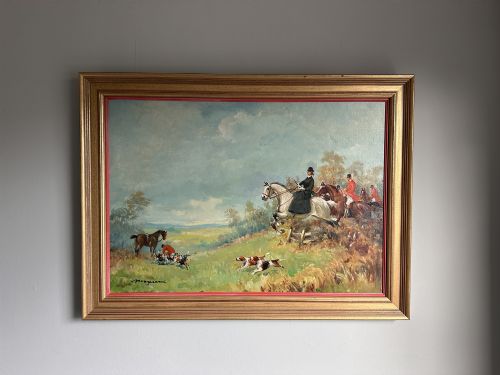
A traditional british hunting scene captures the atmosphere of the countryside through canine pursuit and equestrian sport.
Traditional British Hunting Scene
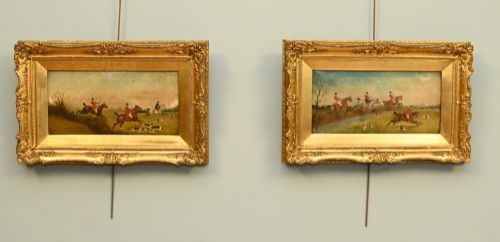
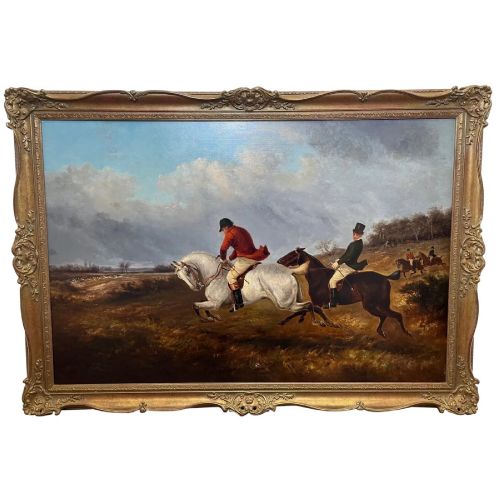
A traditional british hunting scene depicts mounted riders, hounds, and sporting pursuits across rural landscapes. These artworks document historical field sports through various interpretations of the chase.
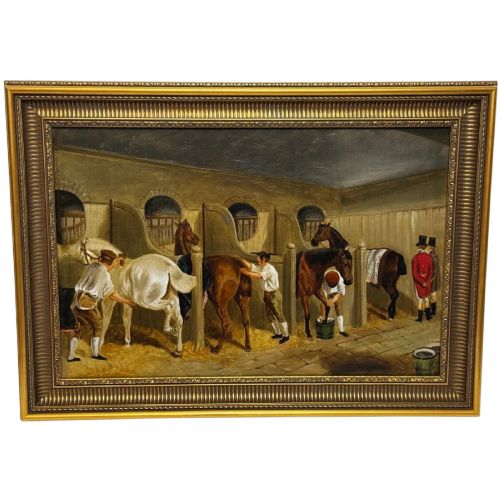
The pieces on this page appear primarily in oil paint on canvas and watercolour on paper, framed in wood and gilt. Subjects range from individual spaniels and woodcocks to large gatherings of hounds and horses.
Victorian and Edwardian periods dominate the selection, alongside pieces from the early and mid twentieth century. Works vary from intimate watercolours to large oil paintings set in country landscapes.
Materials and technique
Artists utilised oil paint on canvas or watercolour on paper to capture the movement of horses and hounds in open fields. Pigments are applied with varying brushwork to render the texture of coats and the depth of country landscapes.
Framing forms an integral part of these pieces, utilising wood, gilt wood, and gold leaf to house the paintings and watercolours securely behind glass where appropriate.
Traditional British Hunting Scene Retail Price Guide 2026
Typical asking prices for traditional british hunting scene among the pieces listed under this phrase on Sellingantiques today, from the lower quarter to the upper quarter. They describe what is for sale here now, not the wider market.
Canine subjects range from focused spaniels hunting woodcock to whole packs chasing foxes across fields.
Assessing quality
Quality rests upon the artist's ability to render the anatomy of horses and hounds with convincing movement and proportion within the landscape. The handling of light and atmospheric depth separates proficient sporting art from standard works.
Condition of the canvas, paper, and original framing contributes significantly to the overall integrity of the piece. Signatures from established sporting artists elevate individual works within the genre.
Thomas Smythe·John Arthur Lomax·George Wright·Philip Henry Rideout·George Armfield·John Sanderson Wells·Thomas Ivester Lloyd·George Goodwin Kilburne·Godfrey Douglas Giles·Frank Dadd·Charles Ashmore
The Traditional British Hunting Scene Glossary
- Oil on Canvas
- Pigment mixed with drying oil applied to a stretched woven fabric support. This medium allows for rich colour depth and detailed texture in traditional sporting art.
- Watercolour
- A painting method in which the paints are made of pigments suspended in a water-based solution. These works on paper offer a lighter, more translucent quality than oil paintings.
- Gilt Wood
- Wood that has been treated with a thin layer of gold leaf or metallic powder. Frames finished in this manner complement the warm tones of equestrian scenes.
- Victorian Sporting Art
- Artwork produced during the reign of Queen Victoria that focuses on field sports, horses, and hounds. This genre reflects the cultural importance of hunting in the nineteenth century.
Traditional British Hunting Scene: Frequently Asked Questions
What subjects appear in these hunting scenes?
The artworks display foxes, stags, wild boar, spaniels, horses, and hounds actively engaged in field pursuits. Country landscapes and coaching scenes also feature prominently across the collection.
Compositions range from single animal studies to vast packs of hounds surrounding riders in open countryside.
Which periods do these artworks represent?
The pieces span from the Victorian era through the Edwardian period into the twentieth century. Dates stretch from the late nineteenth century up to nineteen sixty.
Victorian and Edwardian sporting art forms the core of the available selection.
Are these artworks signed by the artists?
Several pieces feature signatures from known sporting artists of the nineteenth and twentieth centuries. These signatures help attribute the work to specific painters and watercolourists.
Attributions are supported by documented periods and stylistic characteristics.