
Framed Equestrian Canvas Painting
A framed equestrian canvas painting brings the energy of the turf, the hunting field, and the stable directly into a room.
Framed Equestrian Canvas Painting
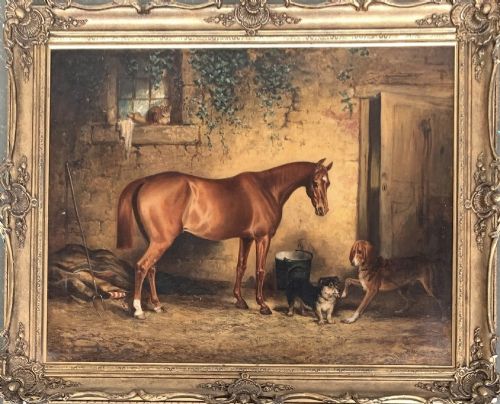
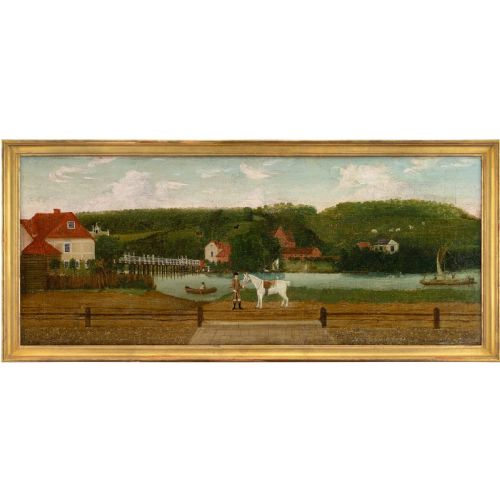
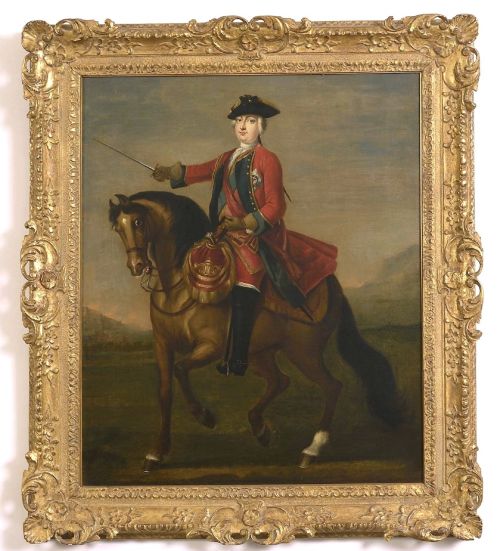
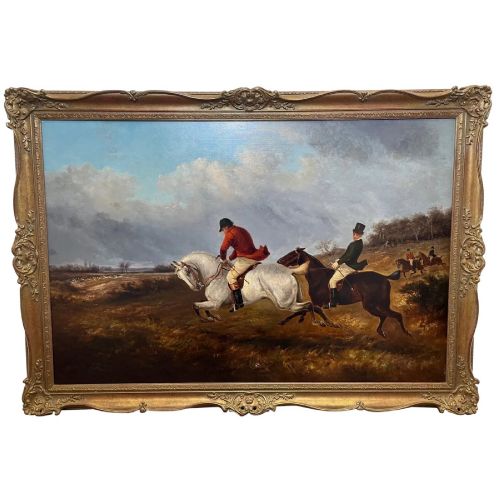
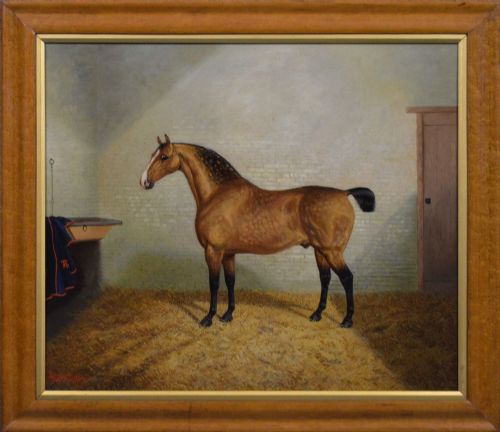
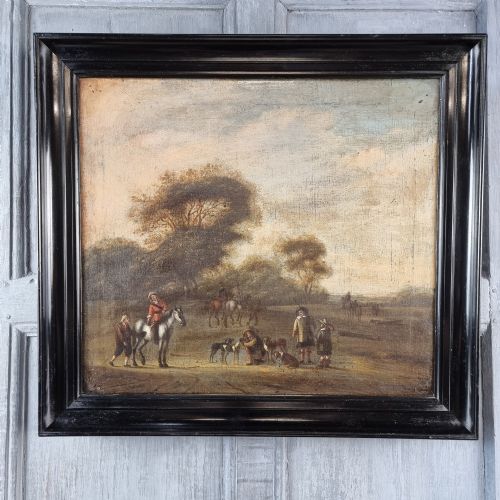
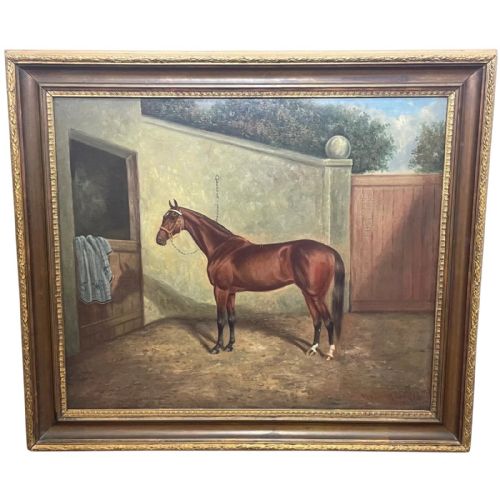
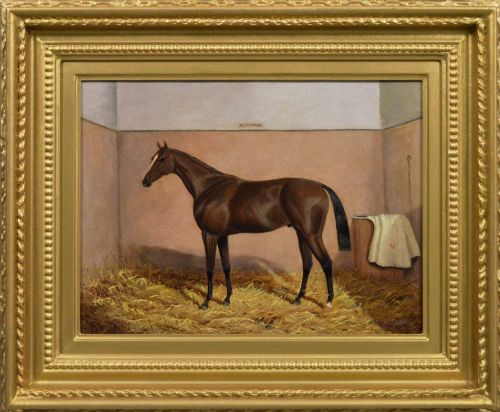
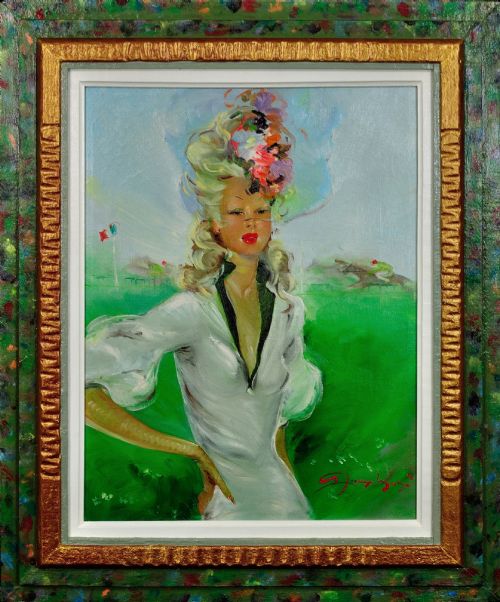
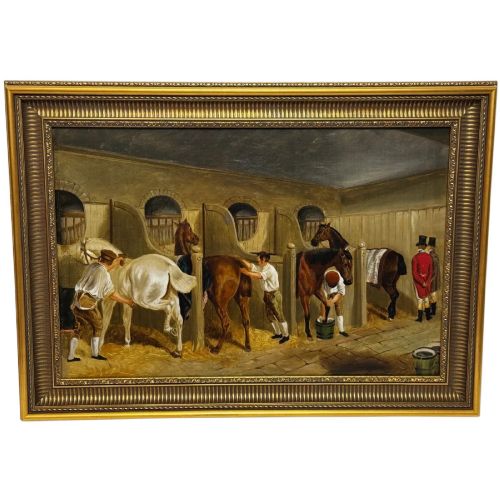
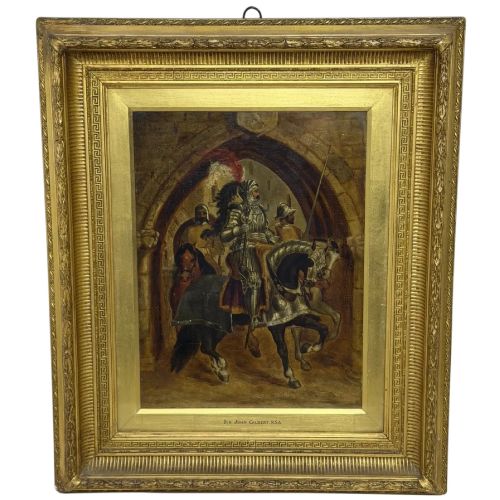
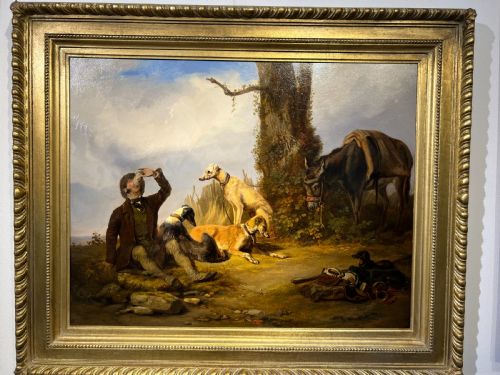
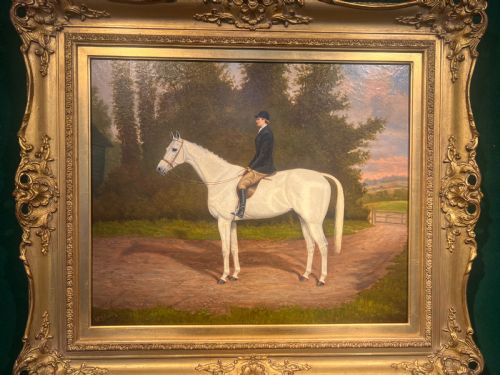
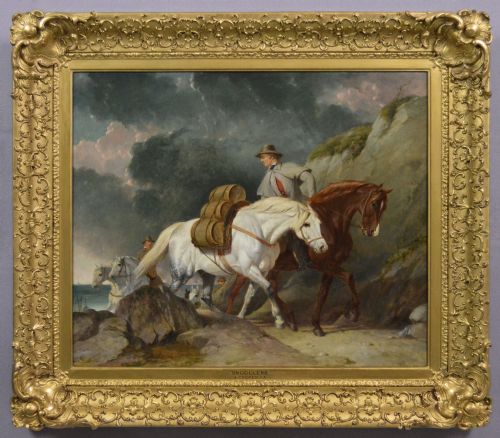
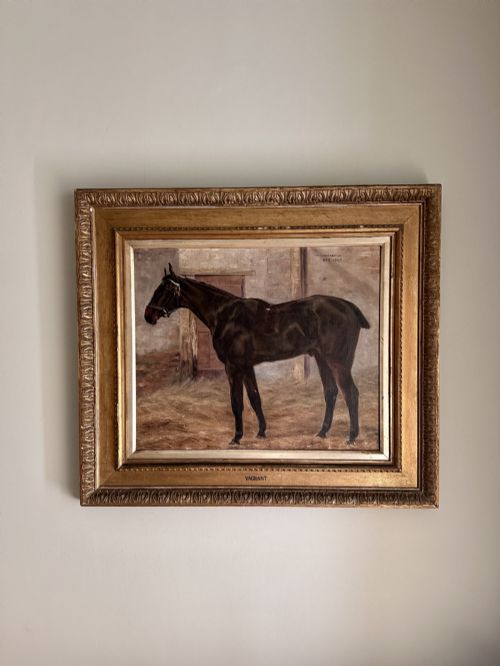
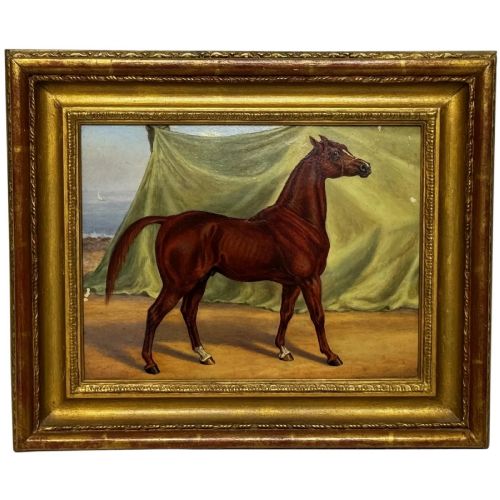
A framed equestrian canvas painting depicts horses, riders, and racing scenes executed in oil paint upon stretched fabric. The subjects range from celebrated racehorses and hunting portraits to working animals in rural landscapes.
Most examples encountered here originate from the nineteenth and early twentieth centuries, reflecting a period when equine art documented prized bloodstock and sporting achievements. Victorian and Edwardian canvases predominate, often presented in period wood and gilt frames.
The selection encompasses intimate horse portraits alongside dynamic depictions of fox hunting, racing derbies, and coastal scenes with horses. Each piece captures the physical proportions and character of the animal through traditional painting techniques.
Materials and construction
These works utilise oil paint applied to woven canvas stretched over wooden stretcher frames. The medium allows for subtle blending of tones to render the musculature and coats of horses with realism.
Frames are constructed from wood, frequently enhanced with giltwood mouldings or decorative plasterwork to complement the artwork. The combination of oil pigments and sturdy timber supports ensures longevity when properly maintained.
Several canvases capture horses sharing the landscape with early steam locomotives, recording the awkward meeting of muscle and machine.
Markers of distinction
Quality rests in the anatomical accuracy of the horse and the handling of light across the coat and landscape. Superior works convey movement and individual character rather than a rigid template.
The preservation of the original canvas and the integrity of the frame contribute significantly to the standing of a piece. Skilled brushwork in the rendering of backgrounds and secondary figures elevates the overall composition.
Thomas Smythe·Albert Clark·Sir Edwin Henry Landseer·Abraham Cooper·Fred Fitzpatrick·Ernest Payne·John Alfred Wheeler·Thomas Walker Bretland·John Ferneley Senior·Charles Walter Simpson
The Framed Equestrian Canvas Painting Glossary
- Canvas
- A heavy woven fabric used as a surface for oil painting. It is typically stretched tightly over a wooden frame before work begins.
- Giltwood
- Timber that has been coated with a thin layer of gold leaf or gilt powder. It is commonly found on traditional picture frames from the nineteenth century.
- Equine portrait
- A painting specifically focused on recording the likeness of an individual horse. These works frequently document named racehorses, hunters, or prize-winning studs.
- Stretcher
- The internal wooden frame that holds the painted canvas taut. Traditional frames allow for minor adjustments using corner keys.
Framed Equestrian Canvas Painting: Frequently Asked Questions
How do I date an equestrian painting?
Dating relies on stylistic clues within the painting, the costume of any riders, and the construction methods of the canvas and stretcher. Reference materials and artist signatures further help narrow the period of creation.
Framing styles also provide helpful indicators, as original frames frequently match the era when the artwork was first produced.
Where should I hang a large horse painting?
These works command attention and suit principal reception rooms, hallways, or libraries where wall space allows the composition to breathe. Placing the canvas away from direct sunlight protects the oil pigments from fading over time.
Ensure the wall fixings are robust enough to support the combined weight of the heavy canvas and its wooden frame.
What is the difference between a portrait and a sporting scene?
An equine portrait concentrates entirely on the individual horse, often standing in a stable or paddock with a calm demeanor. A sporting scene places the animals into action, such as a hunt, race, or working environment.
Both categories share technical methods but serve different visual purposes within a collection.