
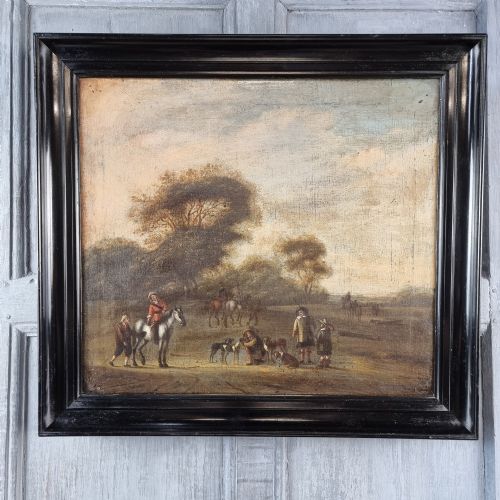
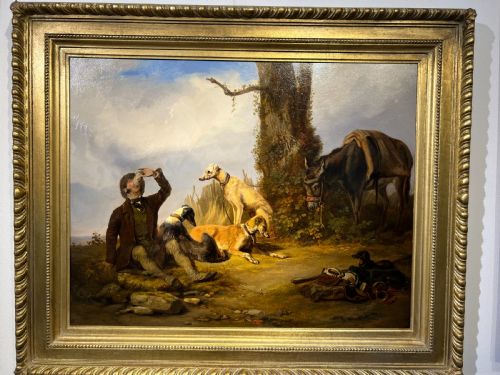


Antique Hound Painting
An antique hound painting captures the stamina and spirit of the chase in oils and watercolours, bringing historic sporting life straight into a room.
Antique Hound Painting
When you search for an antique hound painting, you encounter centuries of equestrian and sporting art dedicated to working dogs, packs, and rural pursuits. The pieces span Georgian, Victorian, and later eras, created by artists who recorded the precise anatomy and character of hounds in the field or the kennel.
The most common examples on this page are nineteenth-century oil paintings on canvas and wooden panels, alongside watercolours. These works range from intimate canine portraits to sweeping hunting scenes featuring packs in winter snow or resting in stables.
How They Were Made
These works rely primarily on oil paint applied to stretched canvas or wooden boards, utilising rich pigments to build depth in landscapes and animal coats. Artists also worked in watercolour and pastel on paper, capturing fine linear detail in feathered coats and expressive eyes.
Many canvases are housed in their original giltwood frames, which use heavy moulding and gold leaf to complement the dark, atmospheric tones of the painted scenes.
Antique Hound Painting Retail Price Guide 2026
Typical asking prices for hound painting among the pieces listed under this phrase on Sellingantiques today, from the lower quarter to the upper quarter. They describe what is for sale here now, not the wider market.
Sir Edwin Landseer's famous canine portraits proved so popular in the nineteenth century that artists made a thriving trade in painted copies.
What Varies in Quality
The standard of an antique hound painting rests on the artist's command of anatomy and movement. Finer works render the muscular tension of a leaping hound or the individual personality of a retriever with anatomical precision, whereas lesser pieces rely on stiff, formulaic representations of packs.
Depth of composition and handling of light also distinguish the range. Master painters orchestrate complex hunting scenes with balanced lighting across horses, hounds, and rolling landscapes, while simpler pictures present flat backdrops and static groupings.
Sir Edwin Henry Landseer·Arthur Wardle·Samuel Raven·Colin Graeme Roe·Fannie Moody·John Sanderson Wells·Henri Schouten·Guillaume Urban Régamey·Thomas Blinks·Philip Eustace Stretton·Richard Waitt·Henry Frederick Lucas-Lucas
The Antique Hound Painting Glossary
- Oil on Canvas
- Pigment mixed with drying oil applied to a woven fabric support. This combination allows for rich blending and textured brushwork.
- Giltwood
- Wood carved and coated with gold leaf or metallic powder. It provides a bright, reflective border that enhances darker oil paintings.
- Sporting Art
- Genre of fine art depicting rural sports, horses, and hounds. It gained immense popularity during the Georgian and Victorian periods.
- Watercolour
- Paint made with water-soluble pigments on paper. It offers translucent washes and delicate detail favoured by nineteenth-century illustrators.
- Oil on Board
- Pigment applied to a rigid wooden panel or stiff card rather than stretched fabric. This substrate provides a firm, stable surface for detailed brushwork.
Antique Hound Painting: Frequently Asked Questions
What periods do these paintings come from?
The works span from the late seventeenth century through the Georgian and Victorian eras up to the mid-twentieth century. Most examples date from the nineteenth century, reflecting the peak of British sporting art.
Collectors will find that earlier pieces often focus on single portraits or rustic interior scenes, while nineteenth-century works frequently capture dynamic full-pack hunting expeditions.
How do I identify the subject of the painting?
Subjects range from individual named pets, such as a curly-coated retriever or a specific foxhound, to large commissioned hunting scenes. Look for clues in the background landscape, clothing styles, and dog breeds depicted.
Inscriptions on the reverse or contemporary framing details often record the name of the hound, the hunt pack, or the estate where the scene took place.
How should I display an antique oil painting?
Display these works away from direct sunlight and fluctuating heat sources to protect the canvas and the delicate oils. Stable indoor humidity prevents the wooden stretchers and panels from warping over time.
Pairing the canvas with its period frame helps distribute weight evenly and maintains the historical integrity of the piece on the wall.
What is the difference between an oil and a watercolour?
Oils utilise thick, slow-drying pigments on canvas or board that allow for deep layering and textured brushwork. Watercolours use transparent washes on paper, resulting in lighter, more delicate compositions.
Watercolours are typically mounted behind glass for protection, whereas traditional oil paintings remain exposed to the air.