
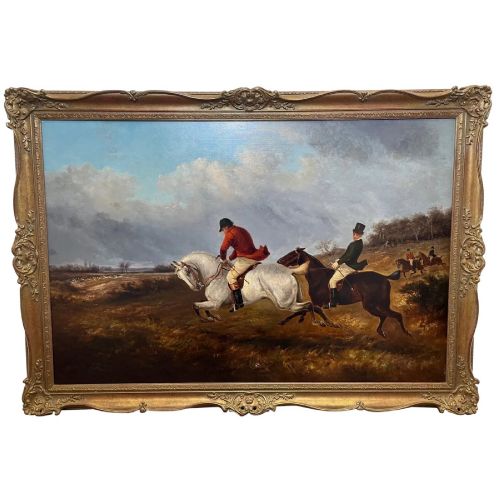
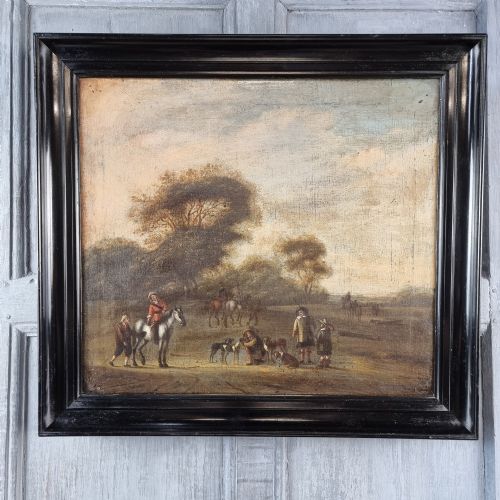
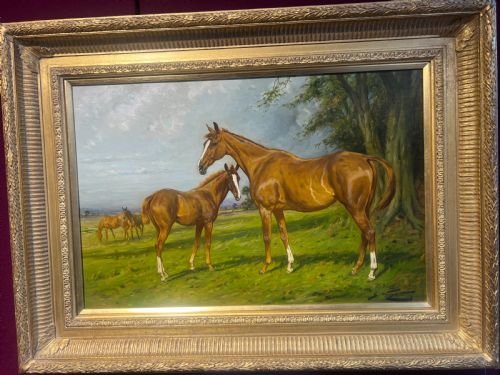
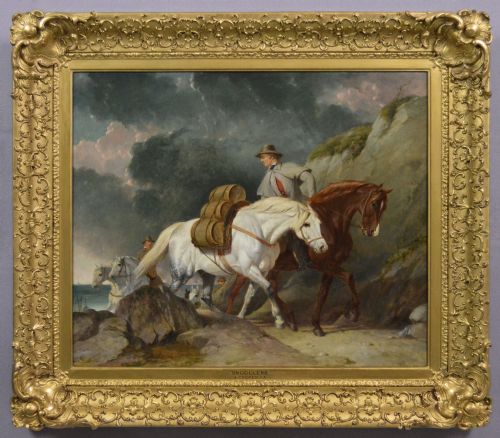

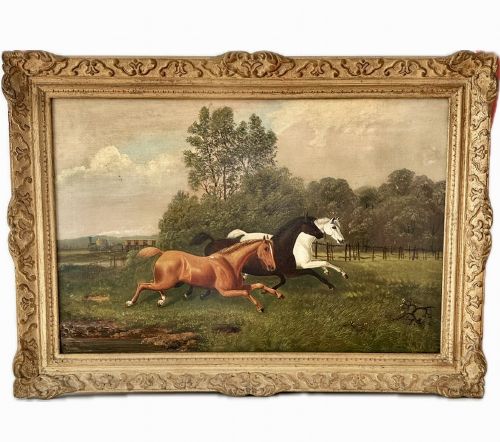
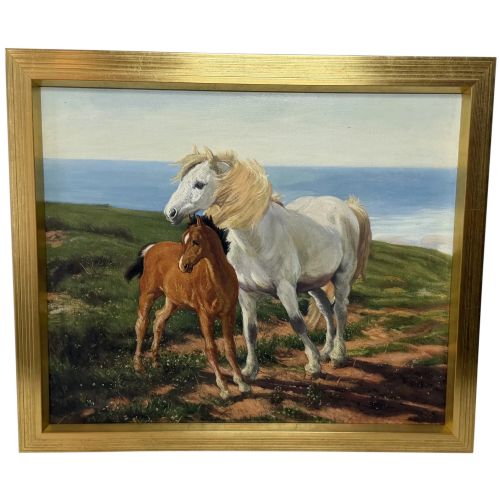
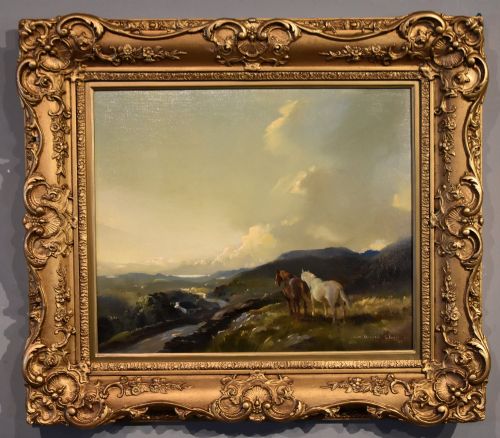
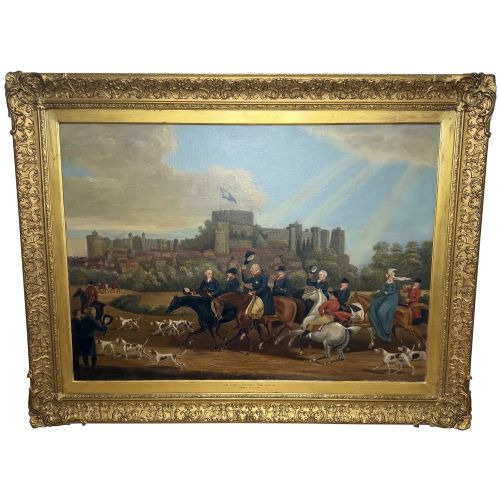

Antique Horse Landscape Painting
An antique horse landscape painting captures rural and sporting life across the centuries, bringing historical rural charm and equine character directly into a room.
Antique Horse Landscape Painting
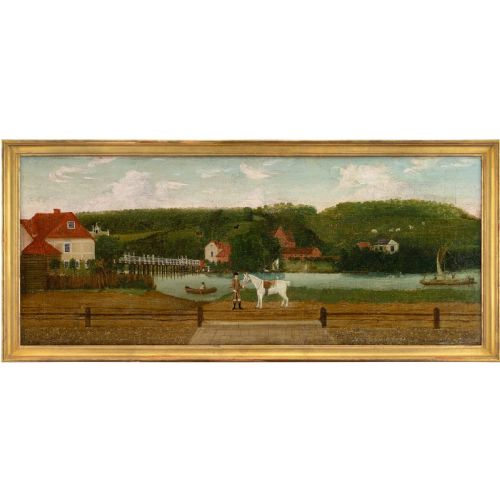
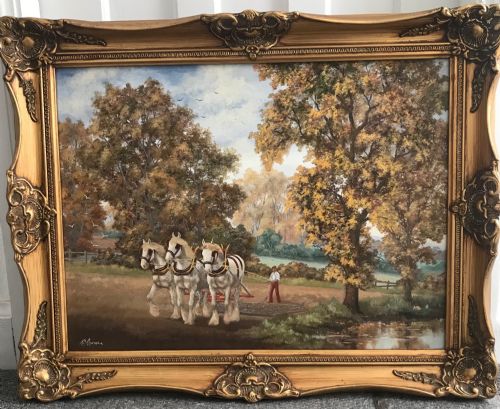
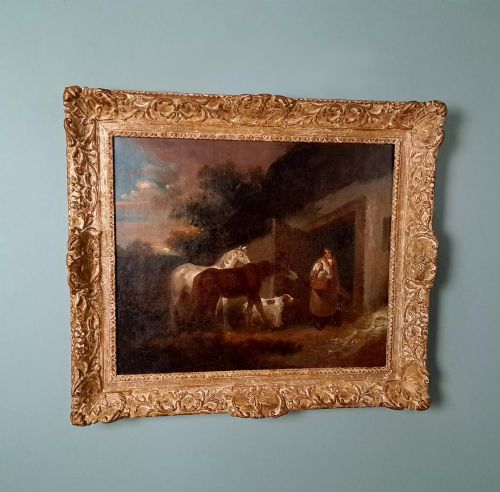
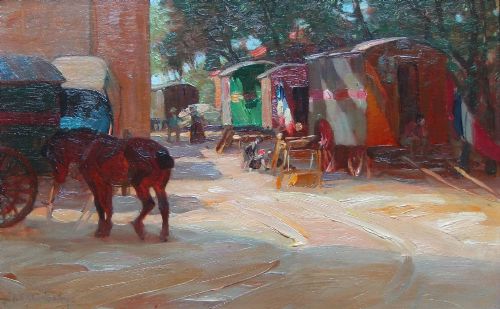
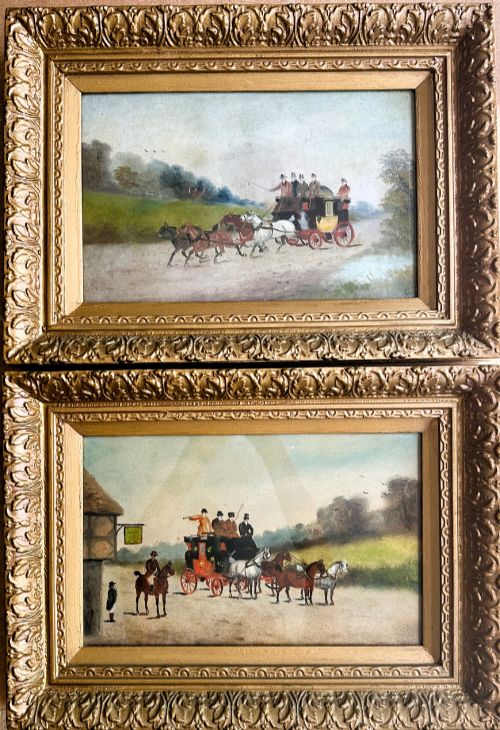
An antique horse landscape painting depicts equines within pastoral, coaching, agricultural or sporting settings, reflecting the central role of horses in past daily life. These works range from intimate country watercolours to large canvases showing hunting scenes, farm work, and roadside inns.
The selections span several periods, most notably the nineteenth century, alongside Edwardian and Georgian examples, reflecting shifting artistic approaches to British and European rural subjects. Painters recorded working shires, coaching inns, hunting meets, and quiet river banks with careful observation.
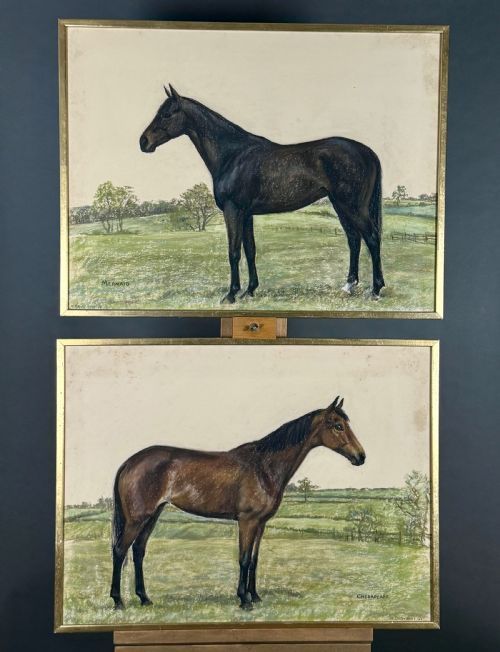
Buyers encounter diverse formats, including oil on canvas, panels, and watercolours on paper, often housed in period giltwood frames. Whether focusing on a solitary bay horse or bustling harvest carts, these pieces document historical landscapes populated by animals and workers.
How They Were Made
Artists painted primarily with oil paint on stretched canvas, wooden panels, or prepared boards, building rich layers of pigment to capture light on animal coats and open skies. Watercolours on paper offer a lighter, more transparent medium frequently employed for detailed countryside studies.
Gilt wood and giltwood frames completed the works, utilising carved and gilded mouldings that matched the aesthetic standards of Georgian, Victorian, and Edwardian domestic interiors.
Listings feature works from the nineteenth century alongside Georgian, Edwardian, and later periods, rendered in oil and watercolour.
What Varies in Quality
Quality rests significantly upon the anatomical accuracy and expressive vitality of the horses, where skilled draughtsmanship separates lifelike renderings from stiff depictions. Master artists captured muscle structure, movement, and mood with precision.
The rendering of the surrounding landscape and atmospheric light also differentiates works, with superior examples integrating animals harmoniously into detailed botanical and topographical backgrounds rather than treating scenery as a mere backdrop.
William Joseph Shayer Senior·Thomas Smythe·George Wright·Abraham Cooper·John Ferneley Senior·John Frederick Herring Jnr·John Linnell
The Antique Horse Landscape Painting Glossary
- Oil on Canvas
- A traditional painting medium where pigment mixed with drying oil is applied to stretched woven fabric. This combination allows for rich blending and textured brushwork.
- Giltwood
- Wood that has been coated with a thin layer of gold leaf or gilt powder. It is commonly found on period decorative frames.
- Watercolour
- A painting method where water-soluble pigments are applied to paper. It creates luminous, translucent washes of colour.
- Equestrian
- Pertaining to horses and horseback riding. This term often describes art centred specifically on horses.
- Provenance
- The documented history of ownership of an artwork. It helps establish authenticity and historical origin.
Antique Horse Landscape Painting: Frequently Asked Questions
What periods do these paintings come from?
The available works primarily date from the nineteenth century, with additional examples spanning the Georgian, Edwardian, and early twentieth eras.
These dates reflect the periods when equine and landscape painting flourished across Britain and Europe.
How should I hang an oil painting?
Oil paintings on canvas require stable indoor environments away from direct sunlight and sudden temperature shifts to protect the canvas and frame.
Using secure picture hooks rated for the weight of the giltwood frame ensures safe wall mounting.
What subjects appear alongside the horses?
Common companion subjects include farm workers, hunting dogs, coaching inns, hay wagons, and river landscapes.
These elements provide historical context about rural labour and transport before the dominance of mechanized engines.
How do I identify a watercolour from an oil painting?
Watercolours are executed on paper, typically displayed under glass, showing translucent washes and delicate brush marks.
Oil paintings utilise textured canvas or wood panels with heavier, opaque paint layers that do not require glass protection.