


Victorian Fox Hunting Painting
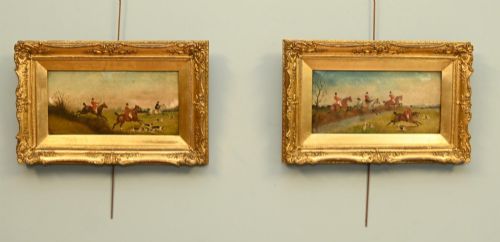
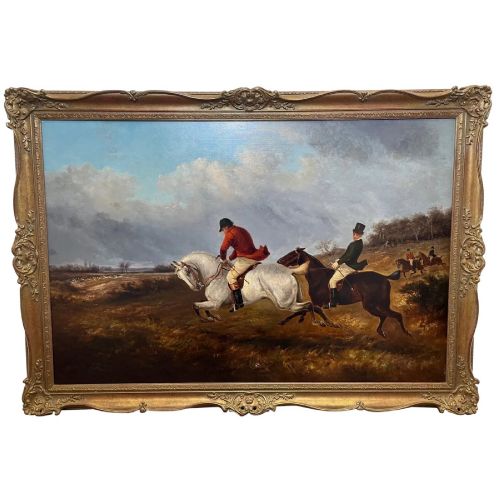
A victorian fox hunting painting captures the thunder of hooves, the pack in full cry and the crisp air of the English countryside.

Victorian Fox Hunting Painting
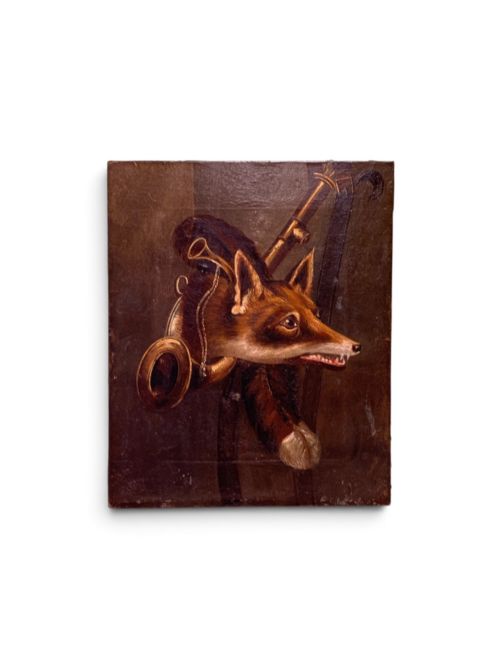
A victorian fox hunting painting brings the drama of the field directly to the wall through oils on canvas, watercolours on paper and painted decorative objects.
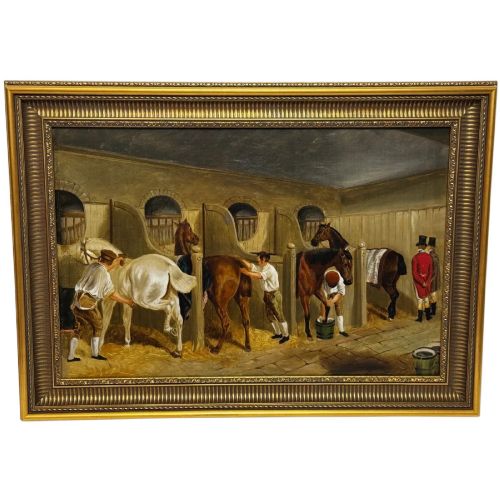
The subjects range from sweeping landscapes showing the meet, the gallop and the death to intimate portraits of hounds, horses and huntsmen.
Most examples date from the nineteenth century, often framed in gilt wood or gold leaf, though occasional related pieces extend into the early twentieth century.
How they were made
Artists worked primarily in oil on canvas or board, applying pigments to capture the light on coats, horses and winter landscapes.
Watercolours on paper offer a more delicate execution, while specialist craftsmen painted scenes onto papier-mâché trays and enamled card cases.
Finished works found their homes within heavy timber frames, frequently enhanced with gilt wood and gold leaf.
Listings feature works spanning the nineteenth century alongside early twentieth-century examples up to nineteen twenty.
What varies in quality
The success of a piece rests upon the painter's grasp of equine and canine anatomy, where proper muscle structure and movement distinguish skilled hands from stiff convention.
Compositional energy separates standard topographical records from works that place the viewer directly in the rush of the chase across the landscape.
The treatment of light and atmosphere, from winter snow to the grey skies of a morning meet, dictates the overall depth of the work.
Thomas Smythe·Basil Nightingale·Charles Faulkner·Fannie Moody·John Frederick Herring Jnr·Heywood Hardy·George Goodwin Kilburne·William J Hodgson·Frank Dadd·Edward B Herberte·Jennens & Bettridge
The Victorian Fox Hunting Painting Glossary
- Canvas
- The woven fabric support stretched across a wooden frame for oil paintings. It provides a textured surface that holds thick applications of pigment.
- Giltwood
- Timber carved and coated with a thin layer of gold leaf or metallic paint. This finish adds bright reflective warmth to picture frames.
- Papier-mâché
- A composite material made from paper pulp mixed with glue and resin, pressed into moulds and dried. It forms sturdy trays and cases suitable for detailed painted scenes.
- Watercolour
- A paint consisting of water-soluble pigments applied to paper. It allows for translucent washes and fine linear detail.
- Essex crystal
- A convex rock crystal backing a reverse-painted miniature. The carved domed lens magnifies the tiny painted subject beneath.
Victorian Fox Hunting Painting: Frequently Asked Questions
Where were these paintings hung?
These works traditionally hung in country houses, estate libraries and dining rooms where rural sports formed the central focus of daily life.
Today they suit studies, hallways and reception rooms, bringing a strong sense of nineteenth-century sporting heritage to traditional and modern interiors alike.
How do I identify a nineteenth-century canvas?
Examinations of the stretcher frames, canvas weave and the ageing of the oil paint help determine the period of creation. Nineteenth-century stretchers often show hand-planed timber and old wedge keys.
The style of the clothing, tack and horse conformation also align with Victorian sporting traditions and artistic conventions of the era.
Can I hang oil paintings in direct sunlight?
Direct sunlight accelerates the fading of pigments and causes organic binding media in oil paint to dry out and crack over time. Placing works away from bright windows preserves the colours.
Proper placement away from heat sources also protects the wooden stretchers and the gesso on gilt frames from warping.
What is a meet?
The meet represents the initial gathering of riders, hounds and followers at a designated location before the hunt commences. Paintings depicting this moment focus on the social interaction and anticipation.
Artists frequently use the gathering to portray specific horses, local characters and the structured order of the field before the hounds pick up the scent.