





Vintage Enamel Pill Box
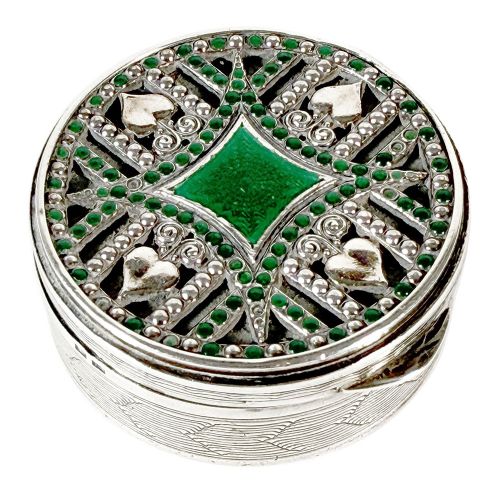
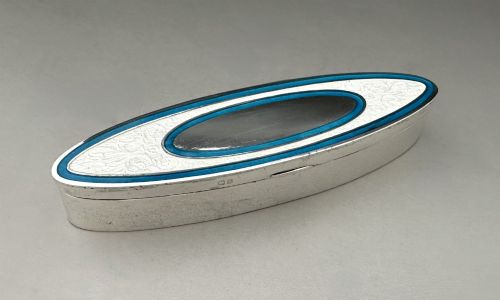
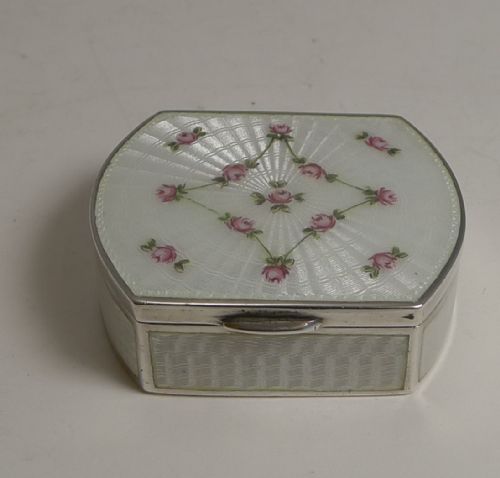
These vintage enamel pill box examples are compact treasures combining bright metalwork and colourful vitreous glass, prized for their intricate detail.
Vintage Enamel Pill Box
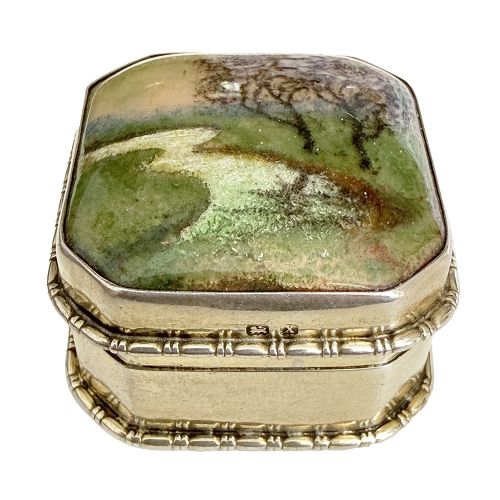
When you search for a vintage enamel pill box, you encounter small decorative containers intended for personal use, spanning periods from the eighteenth century through the Edwardian era and the Art Deco years. The selection includes pill boxes, trinket boxes, patch boxes, and snuff boxes shaped from silver, sterling silver, brass, copper, and gilded metal.
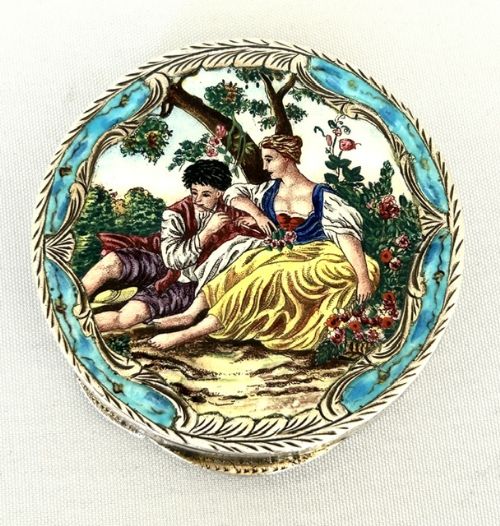
The forms range from simple rectangular and oval receptacles to intricate scenic compacts and floral jewellery boxes. Pieces originate from diverse workshops in Britain, Austria, France, Russia, Italy, Japan, and Sweden, reflecting distinct regional metalworking and enamelling traditions.
Edwardian and early twentieth-century guilloche enamel pieces appear frequently alongside Georgian and eighteenth-century examples. Buyers find both British provincial items and continental European silver-gilt imports within the overall range.
How they were made
Maker utilise vitreous enamel fused to metal bases such as silver, sterling silver, brass, copper, and gilt surfaces through high-temperature firing. This process creates a smooth, glass-like coating that resists tarnishing and holds vibrant colour.
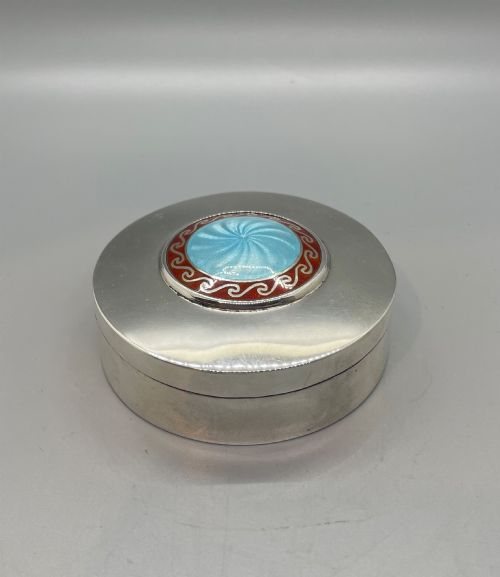
Techniques like guilloche involve machining precise geometric patterns into the underlying metal before applying translucent enamel, allowing light to reflect through the coloured layers. Cloisonné methods employ thin wire partitions to contain distinct compartments of enamel paste prior to kiln firing.
Some tiny compartments once held scented patches designed to mask eighteenth-century city odours.
What varies in quality
The sophistication of the metal engraving beneath translucent enamel dictates the visual depth of the piece. Superior examples display crisp, uniform engine-turning that creates lively optical effects under light.
The precision of the hinged closure and the alignment of the lid against the base indicate the maker's skill. Finer boxes maintain a tight, flush fit without exposing gaps or stress fractures within the vitreous glass surface.
Fleetwood Varley·George Adam Scheid
The Vintage Enamel Pill Box Glossary
- Guilloche
- A decorative engraving technique where a mechanical lathe cuts precise, repeating geometric patterns into a metal substrate. Translucent enamel applied over this pattern creates shifting patterns of reflected light.
- Cloisonne
- An enamelling method where thin metal wires are soldered onto a metal base to form enclosed cells, which are then filled with coloured glass paste and fired. The resulting design shows distinct outlines between each colour.
- Vitreous Enamel
- A material made by fusing powdered glass to a metallic substrate through high-heat firing, forming a durable and glossy coloured coating. It provides a permanent, hard-wearing surface across antique boxes.
- Silver-Gilt
- Silver that has been coated with a thin layer of gold on its surface, often called vermeil. This treatment combines the structural strength of silver with the warm hue of gold.
- Patch Box
- A small container originally designed to hold cosmetic patches worn on the face during the Georgian and eighteenth centuries. These boxes frequently feature fitted mirrors inside the lid.
Vintage Enamel Pill Box: Frequently Asked Questions
What were antique enamel pill boxes used for?
These small containers originally served to hold medicinal pills, breath fresheners, or small cosmetics like beauty patches in waistcoat pockets and reticules.
Today, collectors use them to store contemporary medications, small keepsakes, or display them within cabinet collections due to their miniature scale.
How do I distinguish eighteenth-century boxes?
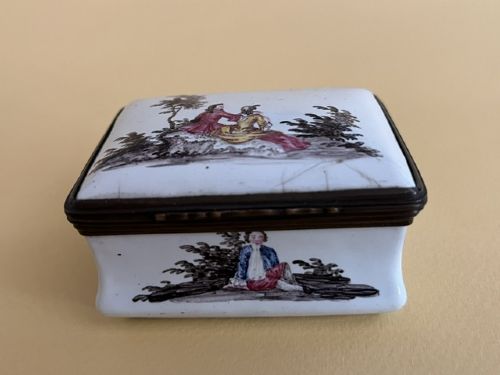
Eighteenth-century examples, such as South Staffordshire or Bilston pieces, typically employ copper bases with opaque white or painted enamel surfaces rather than machine-engraved silver guilloche.
They often feature hand-painted floral or scenic motifs beneath a softer, thicker glaze that differs from the precise mechanical patterns of later periods.
What is guilloche enamel?
Guilloche is a decorative technique where a machine cuts intricate geometric patterns into a metal base before translucent enamel is applied over the top.
The underlying engraved lines show through the coloured glass, creating a shimmering effect that shifts as the light moves across the surface.
How should I clean my enamel box?
Enamel surfaces require gentle cleaning with a soft, damp cloth and mild soap to avoid scratching the glass or wearing away the metal gilding.
Harsh chemical dips and abrasive metal polishes will damage the vitreous coating and ruin the delicate finish of the antique metalwork.