
Vintage Dining Table Set
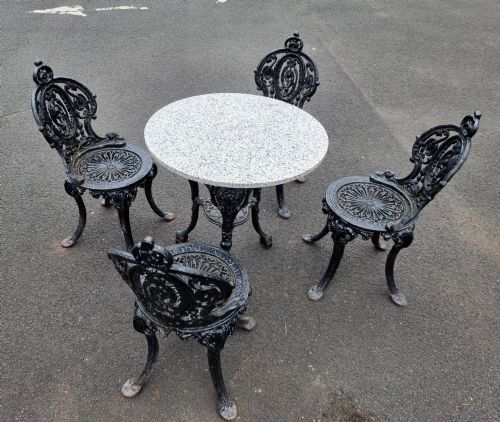
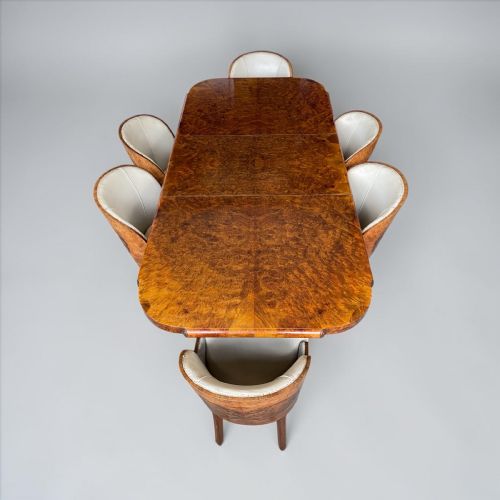
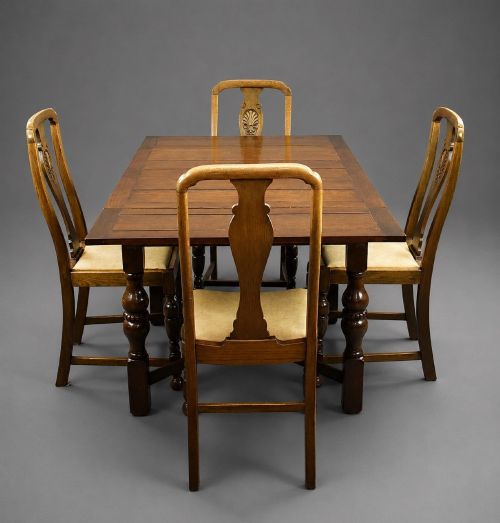
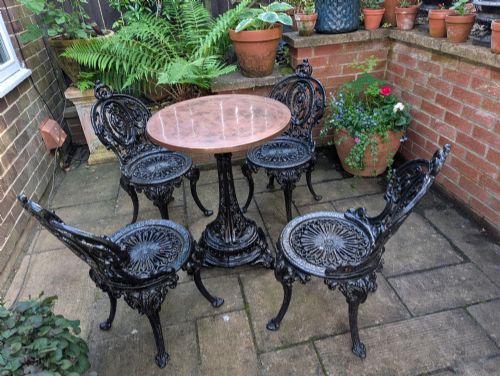
These vintage dining table set options range from heavy cast-iron garden furniture to Art Deco suites with matching chairs.
Vintage Dining Table Set
A vintage dining table set brings together matching or coordinated tables and chairs for interior or garden use. When exploring a vintage dining table set, buyers meet everything from compact bistro groups to large dining suites intended for six or more people.
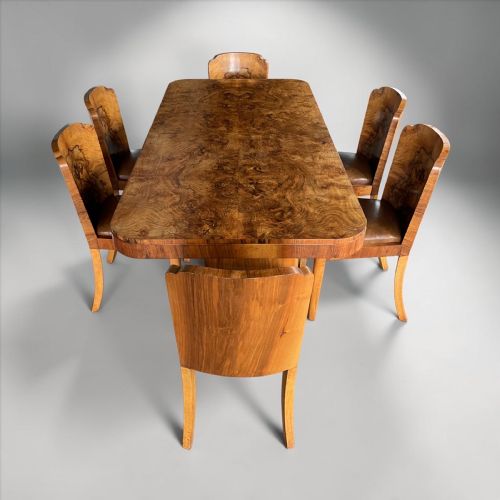
The selections span distinct periods, drawing heavily on Art Deco, Edwardian, and Victorian eras alongside occasional Georgian and Regency examples. Interior versions often pair a dining table with leather-seated chairs, while outdoor groups utilise cast iron, zinc, and wood.
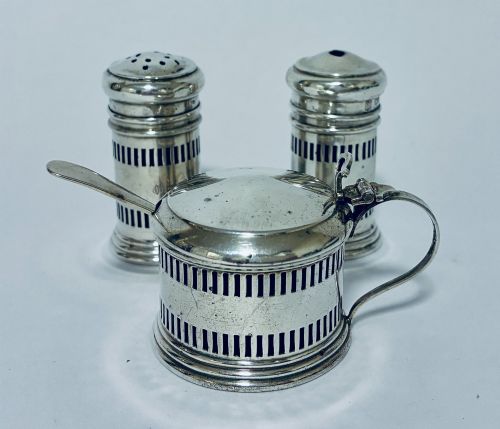
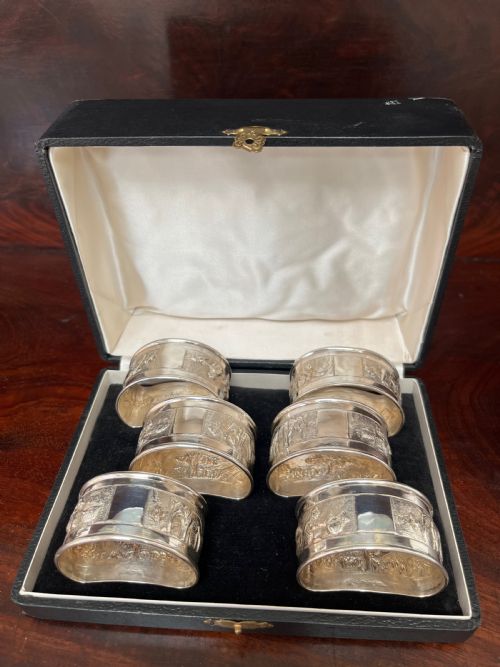
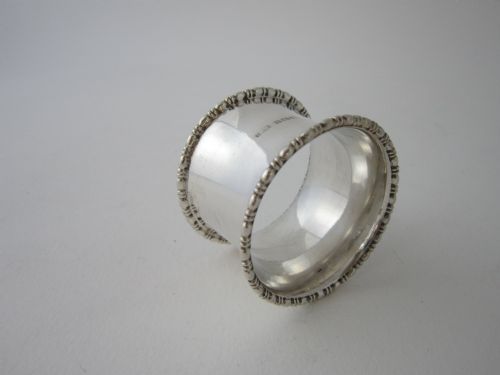
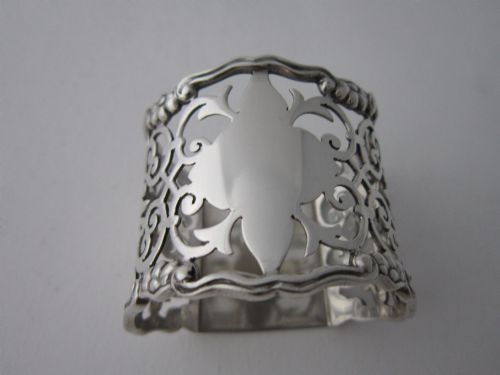
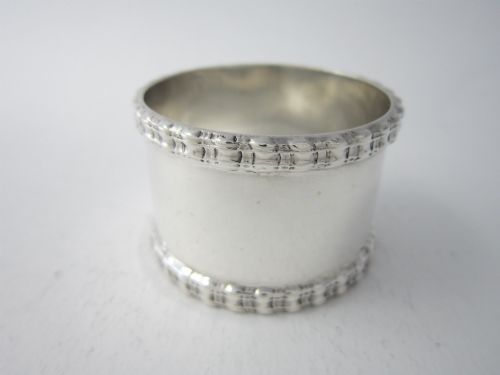
Beyond complete dining groups, related table groupings appear under this heading, including cruet sets, napkin rings, and canteens of cutlery in silver and silver plate. These smaller table sets share the period characteristics of the larger furniture pieces.
Materials and construction
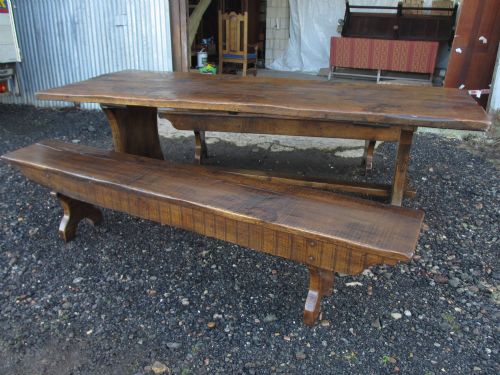
Makers utilised robust timbers such as oak, mahogany, satinwood, maple, and burr or black walnut for indoor dining tables and suites. These woods were often shaped into refectory, draw-leaf, or extending forms matched with upholstered leather chairs.
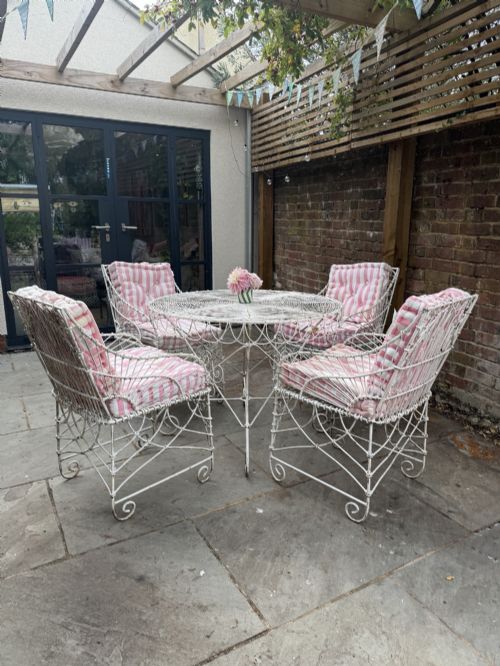
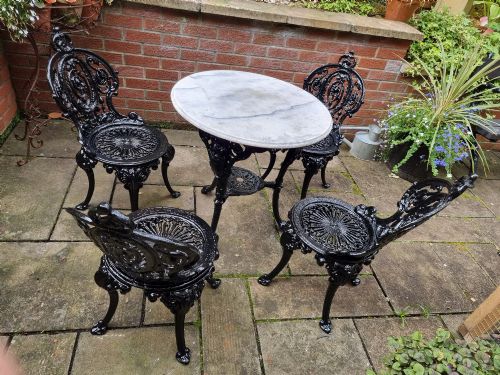
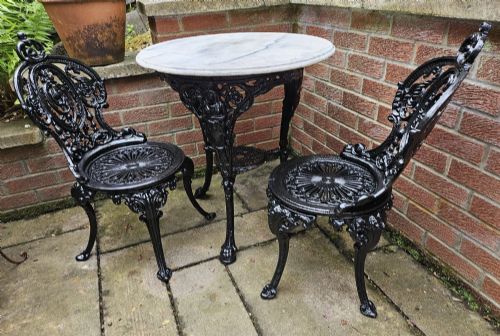
Outdoor sets rely on heavy cast iron and iron combined with wood, marble tops, or zinc. Foundry work produced intricate garden tables and chairs, sometimes bearing specific maker attributions.
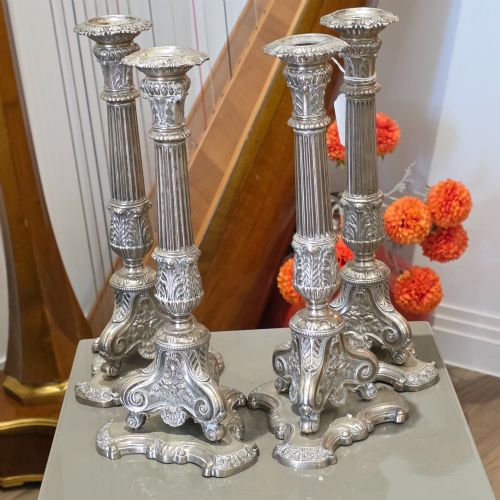
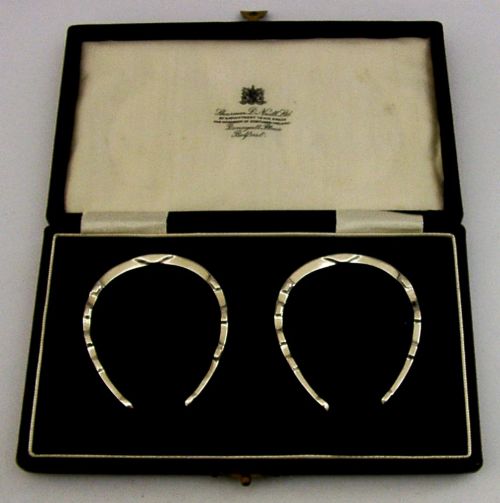
Metalware sets involve sterling silver, German silver, and silver plate shaped into candlesticks, cruet sets, and flatware. Cut glass and velvet additionally appear in fitted condiment cruets and cased napkin rings.
Lucky horseshoe napkin rings let diners argue over who gets the horseshoe.
Judging the quality
Quality rests on the integrity of the materials and the standing of the maker or foundry. Pieces produced by known designers such as Maurice Adams, Harry and Lou Epstein, Hille, or Christopher Dresser carry distinct design execution.
The coherence of the set dictates its standing, whether dealing with a matched suite of chairs and table or a uniform grouping of silver napkin rings in an original silk-lined box. Surviving original finishes on woods and patinated surfaces on cast iron separate standard items from superior examples.
Maurice Adams·Conrad Eduard Mappe·Christopher Dresser·Harry and Lou Epstein·Smith & Sissons & Co·Hille
The Vintage Dining Table Set Glossary
- Art Deco
- A design style prominent in the 1920s and 1930s characterised by clean geometric lines and exotic woods like satinwood and black walnut. It defines many of the dining suites on this page.
- Refectory table
- A long, narrow dining table originally used in monastic dining halls and later adopted in Edwardian homes. These tables typically feature sturdy trestle ends and matching benches.
- Cruet set
- A matched collection of small glass or silver bottles and containers for holding condiments and sauces at the table. They frequently sit on silver-plated stands.
- Draw-leaf table
- An extendable dining table with pull-out leaves stored beneath the main surface. This mechanism allows the table length to increase without removing the central top.
Vintage Dining Table Set: Frequently Asked Questions
What periods do these dining sets cover?
The listings span from the nineteenth century through the Edwardian era up to the Art Deco period of the 1920s and 1930s. Earlier Georgian and Regency examples also appear.
Materials and forms shift across these decades, moving from heavy oak refectory tables to streamlined walnut Art Deco dining suites and cast-iron garden furniture.
Are all the chairs included with the tables?
Many listings provide complete sets comprising a dining table and a specific number of chairs, such as four or six chairs. Garden sets similarly group a table with matching seating.
Individual listings for tables, chairs, or smaller table accessories like cruet sets and napkin rings also exist separately under the same category.
How do I identify Art Deco dining furniture?
Art Deco dining sets from the 1920s and 1930s often utilise dark woods like black walnut or lighter veneers such as satinwood and maple. The forms favour geometric shapes and clean, unadorned surfaces.
Maker attributions to designers like Hille or Harry and Lou Epstein frequently accompany pieces from this era.