


Art Deco Chair Set
An art deco chair set brings together matching seating, most frequently found in dining suites and lounge arrangements from the 1920s and 1930s.
Art Deco Chair Set
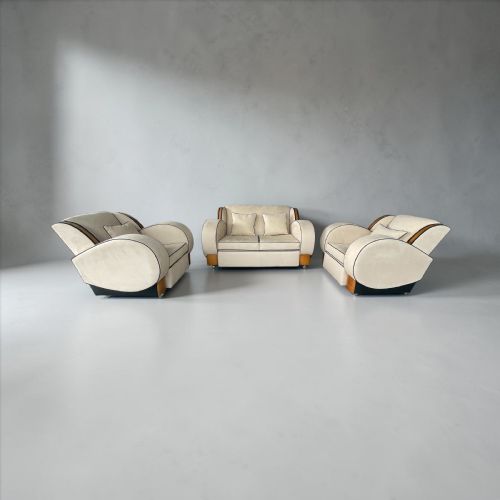
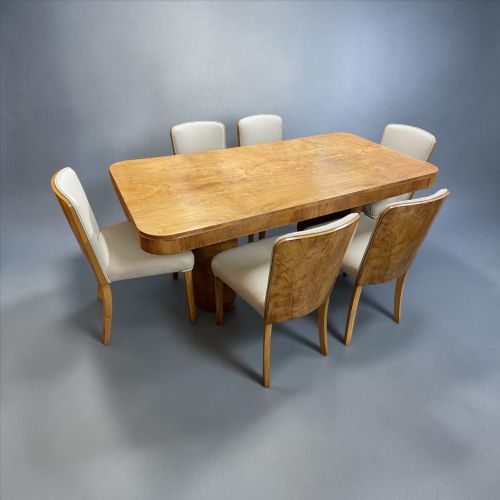
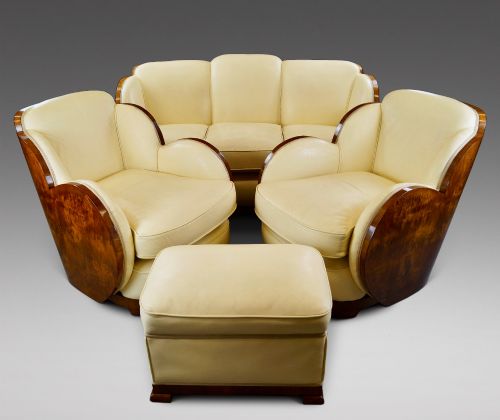
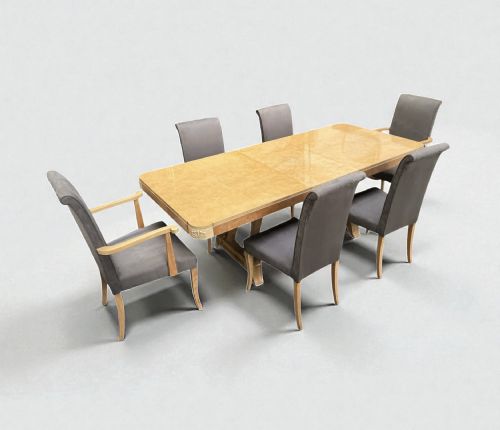
An art deco chair set comprises matched groupings of seating, most commonly encountered as sets of four, six, or eight dining chairs accompanying a dining table. Buyers searching this phrase also meet lounge suites, comprising a sofa and matching armchairs designed as a unified group.
The material record shows production concentrated in the 1920s and 1930s, utilising robust timbers like oak and walnut alongside exotic veneers such as burr walnut, burr maple, and calamander. These sets originate from British workshops as well as continental makers.
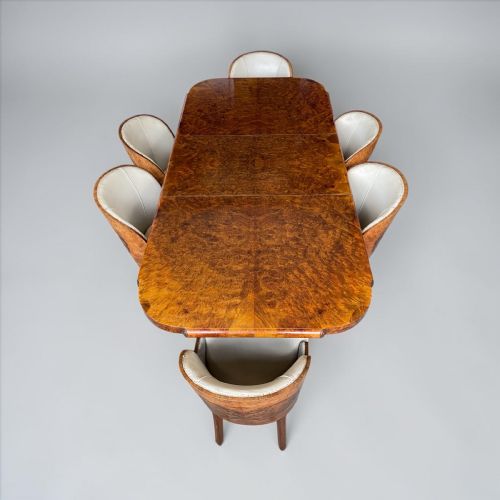
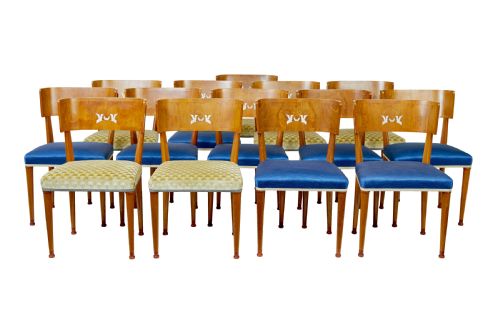
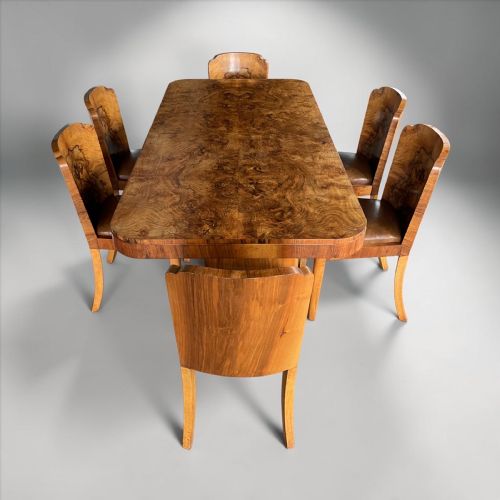
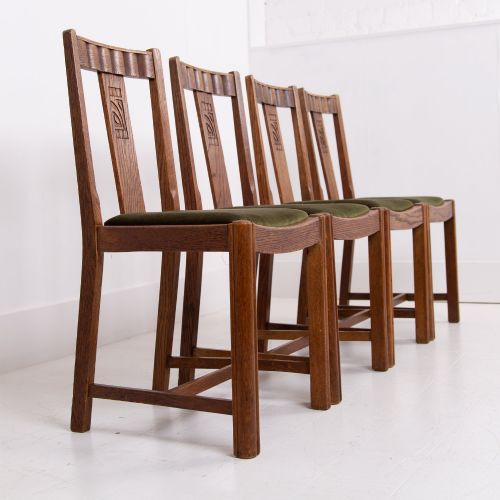
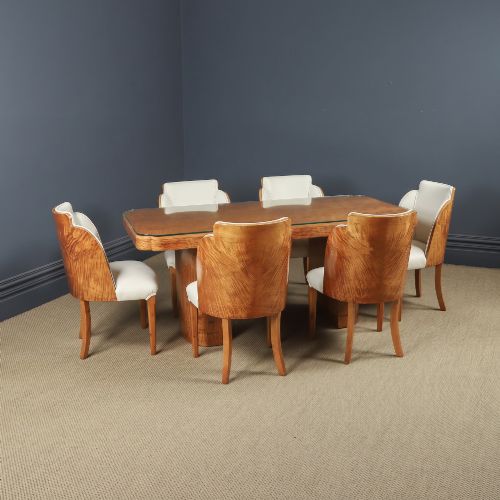
Dining chairs dominate the listings, frequently displaying distinct design characteristics such as cloud backs or simplified klismos silhouettes. Smaller sets of four appear regularly alongside larger dining suites accommodating eight or more diners.
Materials and construction methods
Cabinet makers built the frames from solid hardwoods like oak, walnut, and mahogany, often applying figured veneers such as burr walnut, bird's eye maple, and macassar ebony to visible surfaces. These veneers display symmetrical grain patterns characteristic of the period's cabinet work.
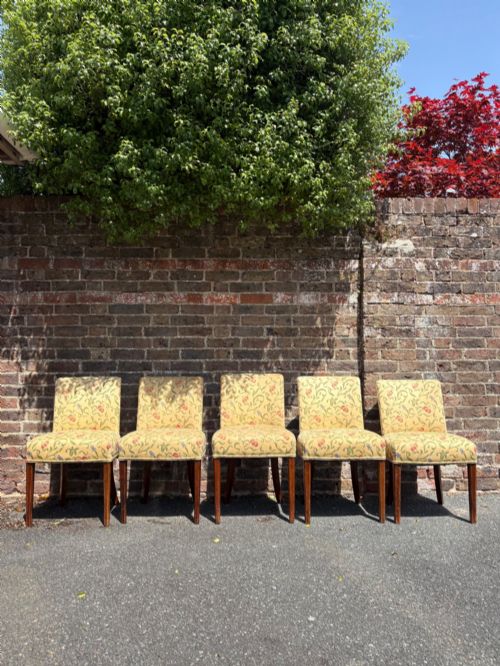
Upholstery formed an integral part of the construction, employing traditional materials like leather, velvet, and fabric to cover sprung or padded seats and backs. Metal components, including cast iron, appear in specific garden and patio sets from the era.
The listings demonstrate a strong preference for walnut and oak frames, supplemented by exotic veneers including calamander and macassar ebony.
Distinctions in craftsmanship
The choice of surface timber dictates much of the visual hierarchy, distinguishing plain oak frames from elaborately figured burr walnut, calamander, and zebrawood veneers. Selected exotic veneers require superior skill to cut, match, and apply smoothly across multiple chairs in a suite.
Construction integrity sets apart standard production seating from pieces originating in known workshops or bearing maker stamps. The complexity of the frame design, particularly on cloud backs and carved armrests, reveals the level of labour invested by the maker.
Maurice Adams·Harry and Lou Epstein·Hille·Ebenezer Gomme·G Norman
The Art Deco Chair Set Glossary
- Cloud Back
- A characteristic upholstered chair back shape resembling a stylised cloud, frequently seen on walnut lounge and dining suites.
- Klismos
- An ancient Greek chair form reinterpreted by modern designers with sweeping curved legs and a concave backrest.
- Veneer
- A thin layer of figured wood applied over a stable secondary timber base to create decorative geometric patterns.
- Bergere
- An enclosed upholstered armchair with wooden framing and woven cane panels on the sides and back.
Art Deco Chair Set: Frequently Asked Questions
How many chairs came in a typical set?
Dining sets most frequently comprise four or six chairs, though larger arrangements seating eight, ten, or twelve diners do appear.
Lounge seating typically consists of a three-piece suite containing a sofa and two matching armchairs.
What woods were used for these chairs?
Makers utilised solid timbers like oak, walnut, and mahogany for structural frames and legs.
Figured veneers such as burr walnut, burr maple, ebony, and calamander were applied to create decorative surfaces on the backs and rails.
Are these chairs suitable for daily use?
Most dining and lounge seating from this era was constructed for domestic living using sturdy timber frames and traditional upholstery techniques.
Upholstered components and leather finishes respond well to standard maintenance and gentle cleaning suited to antique furnishings.
How do I identify the manufacturing period?
Stylistic indicators point heavily toward production during the 1920s and 1930s, aligning with the height of the modern decorative arts movement.
Maker stamps, structural framing methods, and characteristic veneer choices help narrow down the decade of origin.