
Vintage Dining Room Art
Vintage dining room art brings together period paintings and fitted storage to anchor the room, moving from oil on canvas to carved oak sideboards.
Vintage Dining Room Art
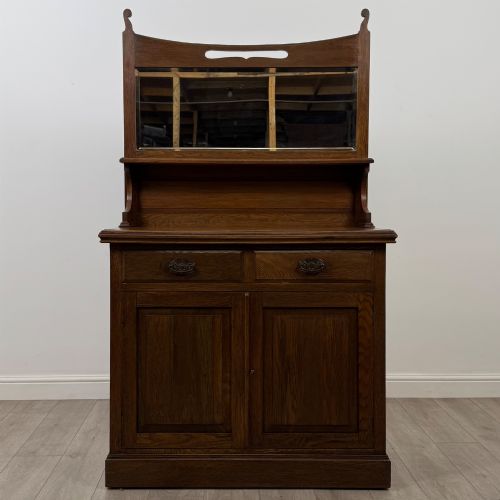
When you search for vintage dining room art, you encounter oil paintings depicting still life subjects alongside large wooden sideboards and dining suites designed to furnish the room. The selection spans the Victorian era through the 1940s, capturing shifts in domestic taste from heavy carved wood to clean geometric lines.
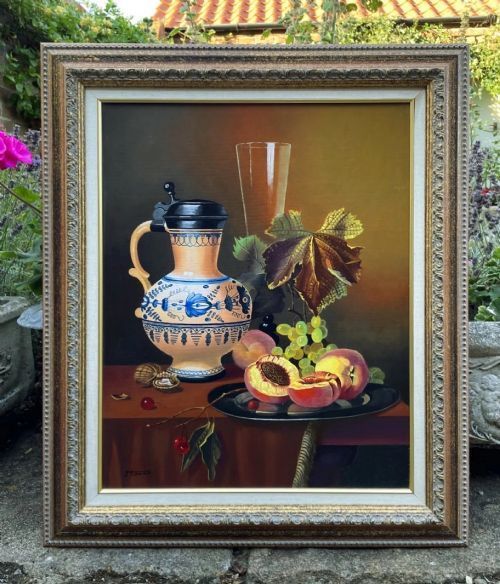
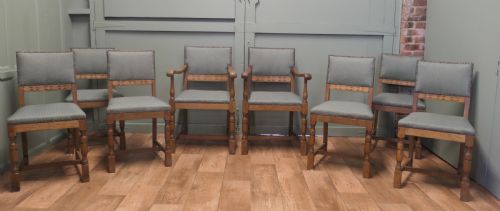
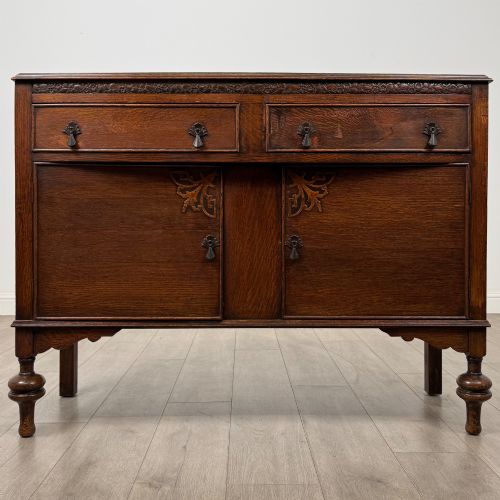
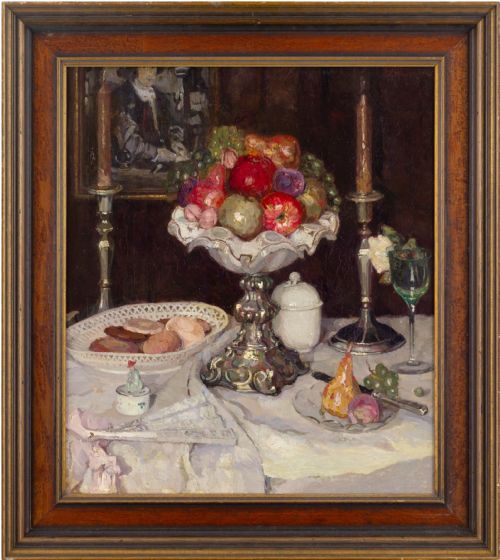
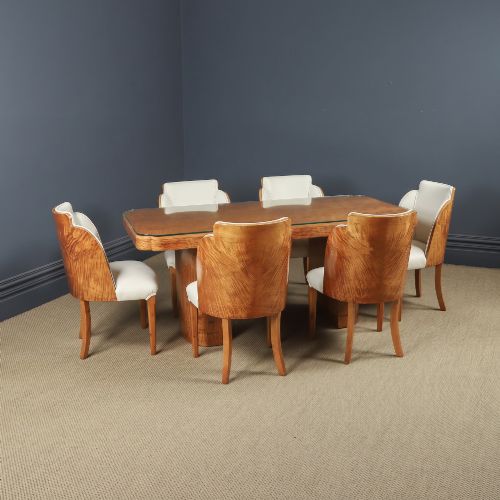
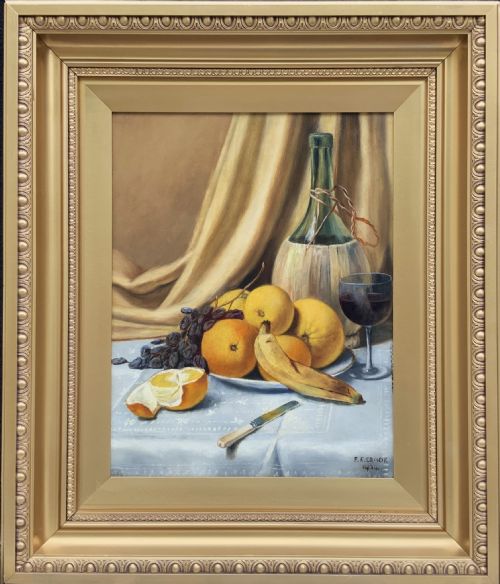
Oil paintings on canvas featuring fruit, tableware and still life compositions form the pictorial side of this category. These sit alongside substantial sideboards, buffets and full dining sets constructed from oak, walnut and exotic veneers.
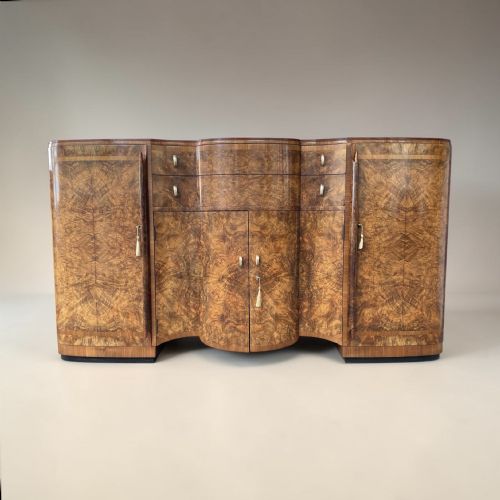
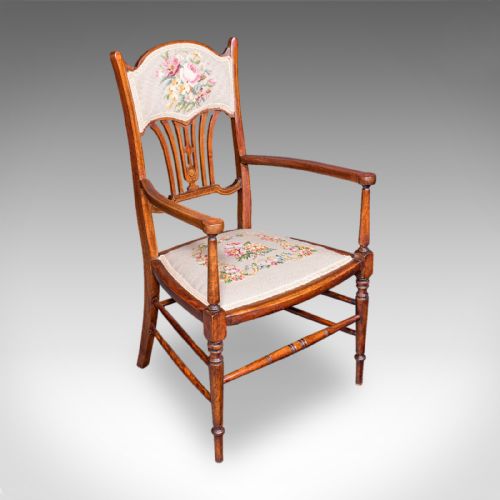
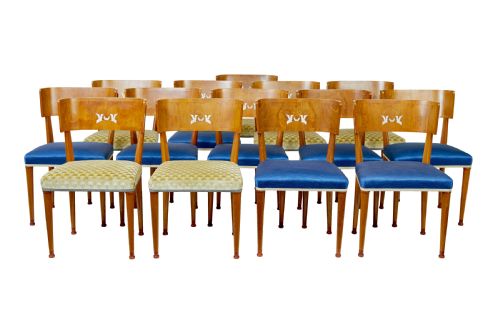
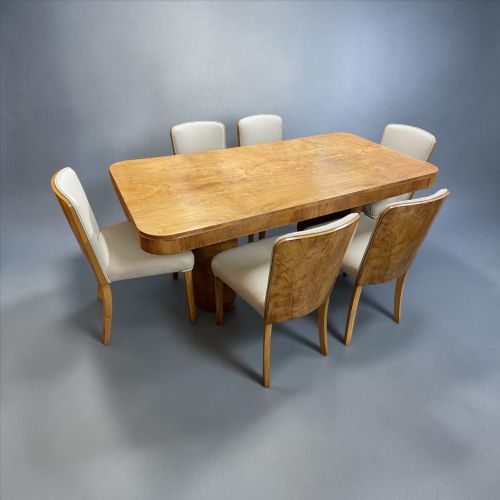
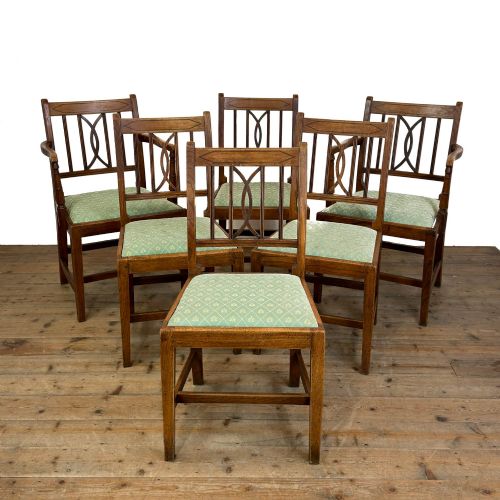
You meet pieces from defined historical movements, including Art Deco, Arts and Crafts, Art Nouveau and Edwardian production. Sideboards and dining chairs dominate the physical forms, complemented by framed canvases intended for dining space walls.
Materials and construction methods
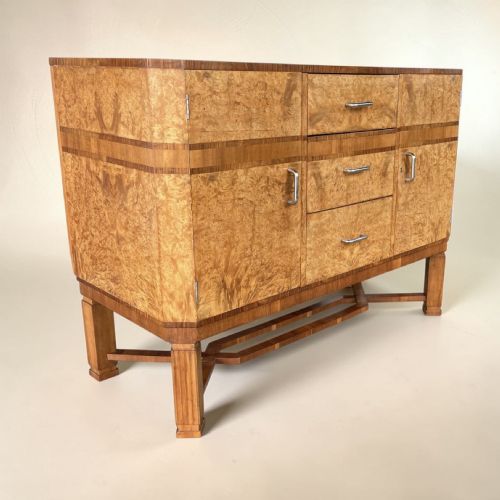
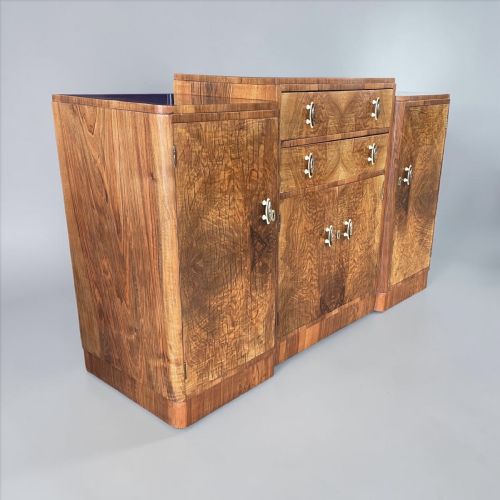
Cabinet makers utilised solid oak, walnut and burr walnut alongside specialist veneers such as calamander, macassar and satinwood. Frames and carcases relied on traditional joinery techniques, while decorative sideboards incorporated carved details, brass fittings and glass elements.
Paintings in this group are executed in oil on canvas, employing rich colour palettes to render still life scenes of fruit, candlesticks and vessels. Furniture surfaces received polished finishes that highlighted the natural grain patterns of the timber.
Several still life canvases focus specifically on biscuits sitting alongside fruit and candlesticks.
Distinctions in craftsmanship
The standard of a piece rests on the selection of timber veneers and the precision of its construction, distinguishing mass production from workshop output. Matched burr walnut grains and complex veneering on Art Deco cabinets indicate superior execution.
Artistic skill in the oil paintings dictates their standing, where detailed brushwork and balanced composition separate accomplished works from decorative pictures. Maker attribution, such as pieces originating from recognised workshops, also shapes the standing of furniture items.
Maurice Adams·Harry and Lou Epstein·Hamptons of Pall Mall London·Else Preußner
The Vintage Dining Room Art Glossary
- Art Deco
- A design style from the early twentieth century characterised by streamlined geometric forms, stylised motifs and luxurious veneers such as burr walnut and macassar. It replaced the ornate curves of earlier periods with symmetry and modernism.
- Arts and Crafts
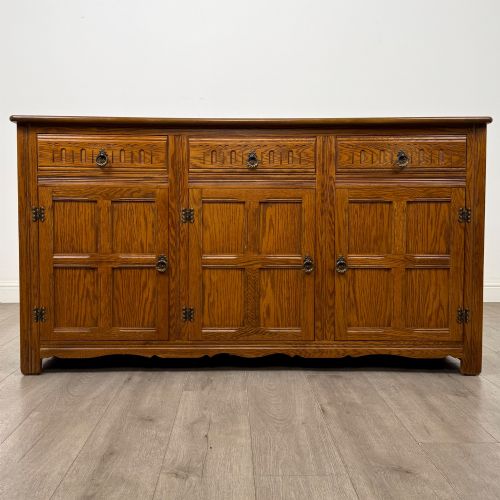
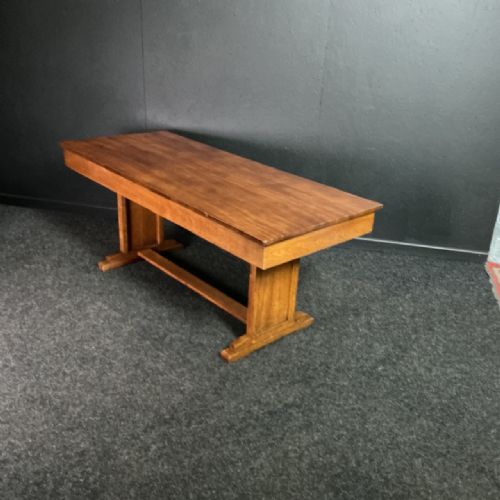
- A movement prioritising visible handcraftsmanship, simple construction and natural materials, predominantly solid oak. Items from this tradition reject industrial ornament in favour of honest utility.
- Sideboard
- A large dining room cabinet used for storing tableware and serving food, featuring cupboards, drawers and sometimes an raised back or dresser top. They appear in styles from Jacobean Revival to Art Deco.
- Still life
- An artwork depicting inanimate subject matter, typically everyday items such as fruit, vessels, biscuits and candlesticks. These paintings provided traditional decorative focus for dining spaces.
- Veneer
- A thin layer of decorative timber applied to a secondary wood carcase to create patterned surfaces. Burr walnut and satinwood veneers typify high-grade cabinet making.
Vintage Dining Room Art: Frequently Asked Questions
What defines art deco dining room pieces?
Art deco items from the 1930s utilise sleek geometric designs and figured veneers like burr walnut and calamander. They reflect a shift towards modernism in domestic interior decoration.
These pieces include streamlined sideboards, dining tables and matching chair sets designed to coordinate the entire room aesthetic.
How do arts and crafts sideboards differ?
Arts and crafts sideboards emphasise solid construction in oak, showcasing traditional joinery and unadorned surfaces rather than applied veneers. They date from the late nineteenth and early twentieth centuries.
Such items often display hammered brass hardware and understated carved details that highlight the material quality.
What subjects appear in vintage dining art?
Paintings from this category predominantly feature still life compositions. Common motifs include fruit, jugs, bowls, candlesticks and biscuits arranged on tabletops.
These oil paintings on canvas were created to complement the domestic function of the dining room.
Which woods were used in these cabinets?
Cabinet makers worked with a range of timbers depending on the period and style. Oak predominated in Victorian and Arts and Crafts pieces, while walnut and burr walnut defined later Art Deco furniture.
Exotic timbers such as satinwood, ebony and macassar also appear on high-end suites.