
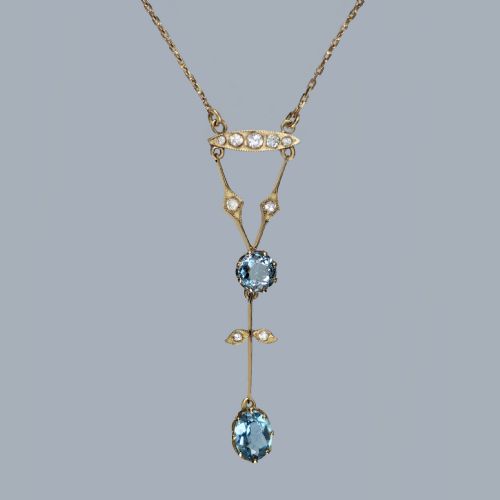


Vintage Diamond Lavalier
A vintage diamond lavalier is a drop necklace suspended from a delicate chain, offering an exquisite focal point for the neckline.
Vintage Diamond Lavalier
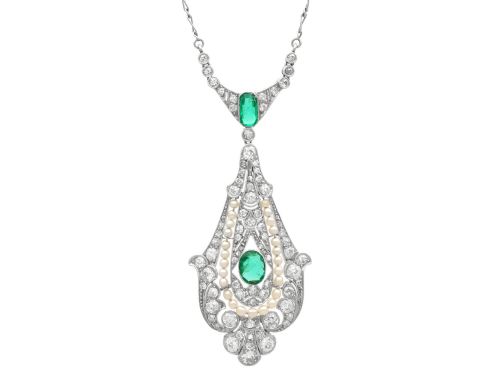
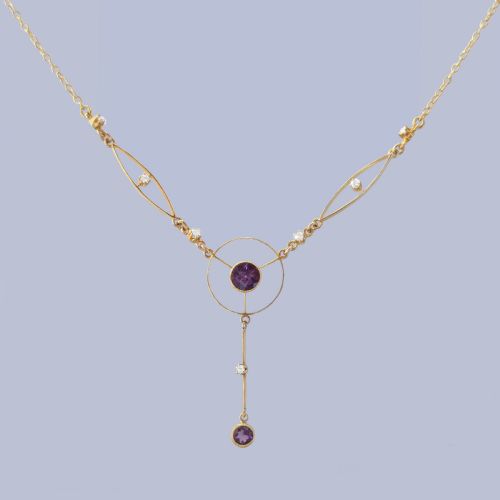
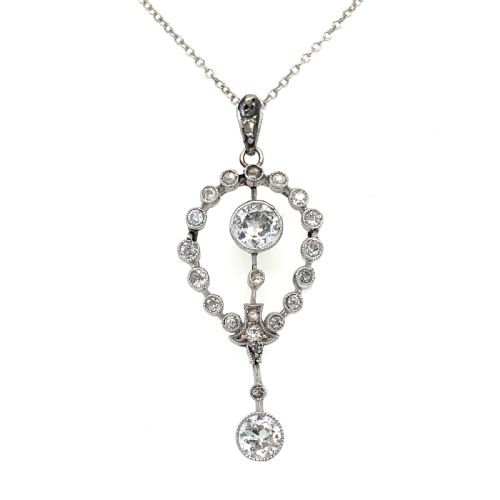
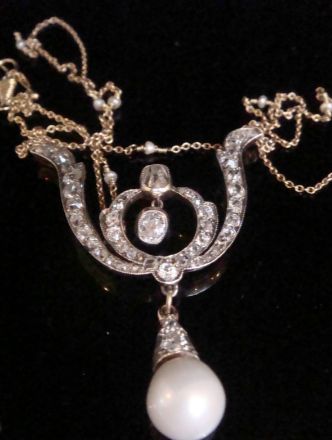
A vintage diamond lavalier necklace combines a central pendant drop with delicate chainwork, often incorporating floral or flowing motifs typical of early twentieth-century design. You will frequently encounter Edwardian and Art Nouveau examples on this page, alongside pieces from the 1920s and 1930s.
The characteristic drop design typically suspends a sparkling diamond or a coloured gemstone flanked by diamonds from a central swag or knot. These necklaces range from restrained platinum and diamond creations to ornate yellow gold pieces featuring pearls, amethysts, and aquamarines.
Makers of these pendant necklaces utilised the prevalent styles of their decades, moving from flowing organic lines to geometric precision as tastes shifted toward Art Deco and mid-century aesthetics. This evolution ensures that each period brings distinct proportions and stone arrangements to the genre.
Materials and Craftsmanship
Goldsmiths worked with platinum, 18ct white and yellow gold, and 9ct or 15ct gold to construct the lightweight frameworks that held the stones securely. Platinum gained favour for its strength, allowing intricate openwork galleries without adding excessive weight to the neck.
Old cut, rose cut, and brilliant cut diamonds were set alongside natural pearls, amethysts, aquamarines, sapphires, rubies, and tourmalines. Master jewellers hand-set these gems into delicate bezels, grain settings, and claw mounts to maximise light entry through the pendant.
Listings feature pieces spanning from the Victorian and Edwardian eras through the Art Nouveau, Art Deco, and mid-century periods.
Assessing Quality and Execution
The fineness of the metalwork distinguishes superior pieces, particularly where hand-pierced platinum or gold creates lace-like openwork patterns. Superior examples display meticulous attention to the reverse of the pendant, ensuring the metalwork is finished with the same care as the front.
Stone matching and cutting style also dictate the calibre of a piece, with well-matched old cut diamonds demonstrating deliberate lapidary skill. The integration of the pendant drop with its suspension bail shows whether the jewel was conceived as a harmonious whole or assembled from disparate elements.
The Vintage Diamond Lavalier Glossary
- Lavalier
- A pendant necklace featuring one or more suspended drops hanging from a central chain or motif. This style gained immense popularity during the Edwardian era.
- Old Cut
- A precursor to the modern brilliant cut diamond, characterised by a smaller table, higher crown, and open culet. These stones catch candlelight and lower lighting conditions particularly well.
- Rose Cut
- A vintage diamond cut featuring a flat base and a domed crown with triangular facets arranged in a symmetrical pattern. This cut resembles an unopened rosebud.
- Platinum
- A dense, strong, and ductile white metal widely used in fine jewellery from the Edwardian period onward. Its strength permits exceptionally delicate wirework and secure prong settings.
Vintage Diamond Lavalier: Frequently Asked Questions
How do I wear a lavalier necklace?
These drop necklaces sit high on the collarbone, making them well-suited for open necklines and evening wear where the central drop can fall freely.
Pair them with simple garments to allow the delicate metalwork and stones to remain the focal point of your outfit.
Are these necklaces fragile?
While the Edwardian and Art Nouveau settings often feature fine wirework, platinum and gold offer durability when handled with reasonable care during daily wear.
Store them flat in a dedicated jewellery box to prevent the delicate chains from tangling or kinking.
How do I identify an Edwardian pendant?
Edwardian pieces typically employ platinum or white gold alongside yellow gold backing, featuring garlands, bows, and openwork floral motifs set with diamonds and pearls.
The lightness of the mount and the use of old cut stones serve as reliable indicators of this period's output.
Can I convert a pendant brooch?
Many early pieces left the workshop designed to function as both a pendant and a brooch, featuring a hidden folding bail and pin mechanism on the reverse.
You can wear these versatile jewels on a chain or fasten them directly to clothing depending on the occasion.