



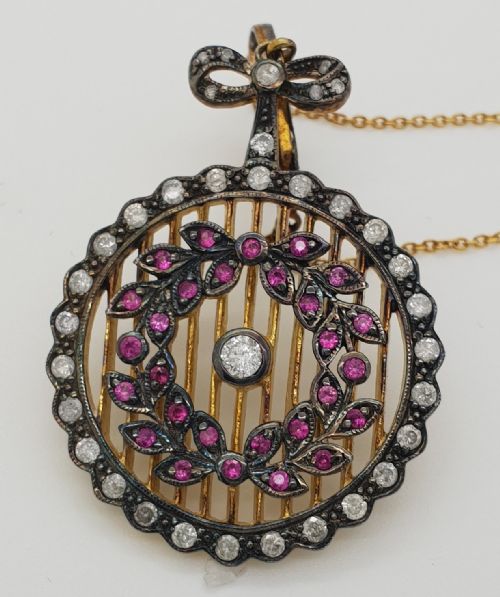


Edwardian Ruby Necklace
An edwardian ruby necklace brings together crimson stones and delicate metalwork, offering the fine craftsmanship that collectors seek for evening wear and special occasions.
Edwardian Ruby Necklace
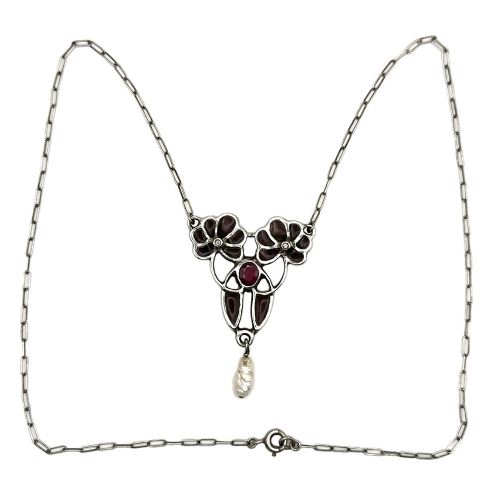
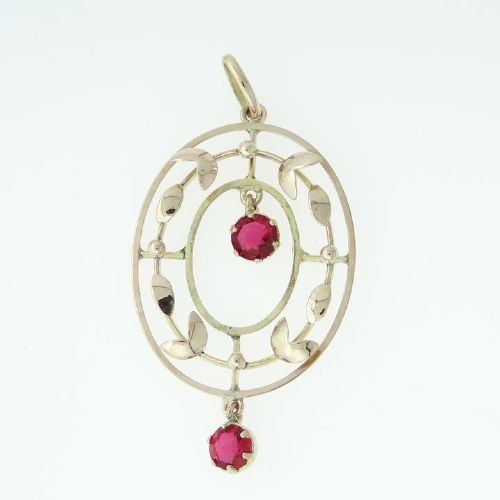
When you search for an edwardian ruby necklace, you enter a field defined by delicate platinum settings, yellow and rose gold mounts, and vibrant red stones. The pieces available here span several decades, crossing from late Victorian designs into the Edwardian era.
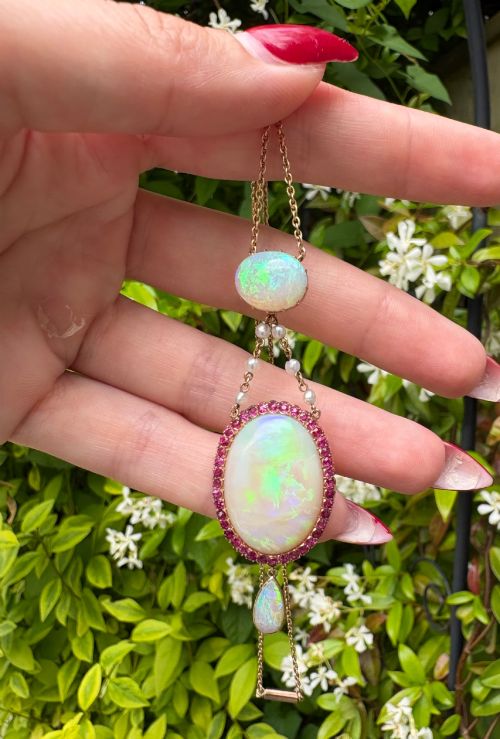
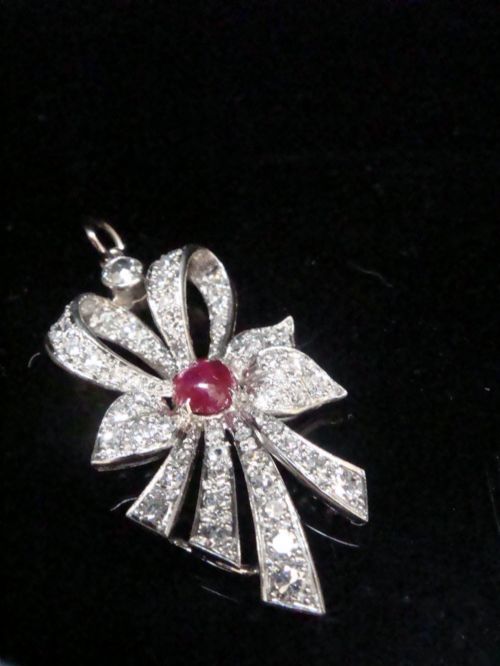
The forms on this page include fine pendant necklaces, convertible pendant brooches, multi-strand pearl chokers with ruby clasps, and riviere arrangements. You will frequently encounter combinations of rubies paired with diamonds, seed pearls, opals, or emeralds.
While the search specifies the Edwardian period, the listings also encompass Victorian examples and pieces dated around nineteen hundred. These jewels demonstrate the transition from heavier nineteenth-century designs to the lighter, lace-like platinum work of the early twentieth century.
Materials and Construction
The construction of these pieces relies on precious metals such as nine-carat and fifteen-carat gold, silver gilt, and platinum. Platinum emerges strongly in Edwardian work, allowing goldsmiths to form intricate bows and slender mounts that hold rubies and diamonds securely.
Gemstones are integrated with pearls, seed pearls, and opals, often arranged in floral, snake, or double heart motifs. Metal is shaped into fine chains, riviere links, and multi-strand configurations that drape smoothly around the neck.
Listings span the Victorian and Edwardian periods, featuring nine-carat gold, fifteen-carat gold, platinum, rubies, diamonds, opals, and seed pearls.
Factors That Influence Quality
Quality in these jewels rests on the finesse of the metalwork and the integration of the stones. Finer examples show precise platinum piercing, balanced gemstone proportions, and secure setting of rubies alongside diamonds or pearls.
The choice of base materials also distinguishes the range, moving from nine-carat and fifteen-carat gold up to platinum and silver gilt mounts. The complexity of the design, whether a simple riviere or an intricate bow pendant, shapes the character of each piece.
The Edwardian Ruby Necklace Glossary
- Riviere necklace
- A necklace composed of a continuous line of gemstones of similar cut and graduated size, usually set in individual collets.
- Pendant brooch
- A versatile piece of jewellery designed with both a pin and a loop, allowing it to be worn either on clothing or suspended from a chain.
- Seed pearl
- A very small, naturally occurring pearl, often drilled and used in clusters or fringes in historic jewellery.
- Silver gilt
- Silver that has been coated with a thin layer of gold on its surface, combining the appearance of gold with a silver base.
Edwardian Ruby Necklace: Frequently Asked Questions
How do I wear these necklaces?
These pieces suit formal occasions and evening wear, where their fine gold and platinum settings catch the light. They pair well with historic clothing or simple modern necklines that highlight the pendant or choker.
Take care to store each necklace separately to prevent delicate chains and seed pearls from tangling or rubbing against other items.
Can I convert a pendant brooch?
Pendant brooches feature integrated loops and pin mechanisms, letting you switch between wearing them on a chain or pinning them to fabric. This dual function was common in the period.
Ensure the clasp and pin mechanism remain secure when wearing the piece as a brooch on heavier fabrics.
What metals are most common?
Gold in nine-carat and fifteen-carat purities appears frequently, alongside silver gilt and platinum. Platinum became prominent during the Edwardian era for its strength and white lustre.
Yellow and rose gold tones often feature in the earlier Victorian pieces on this page.