
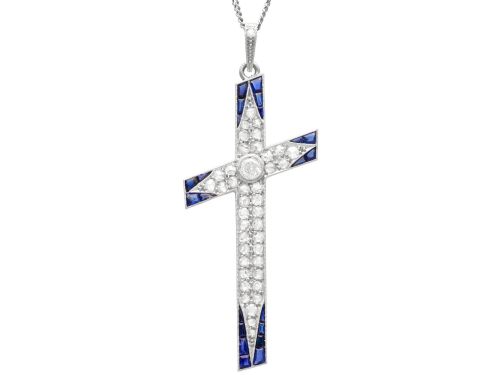
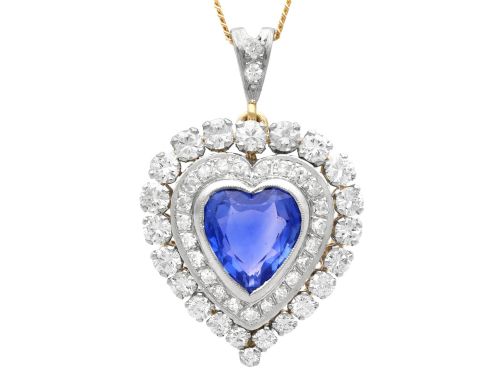
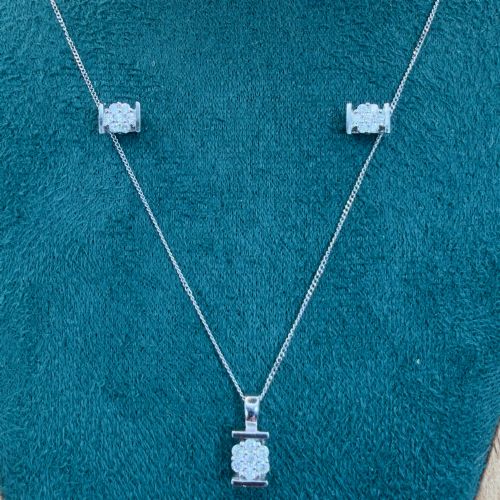
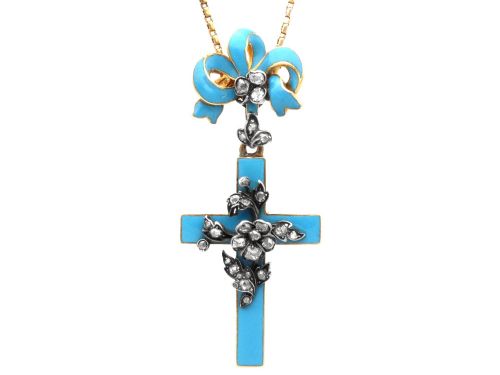
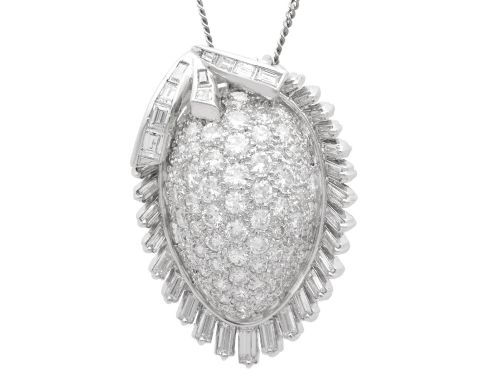
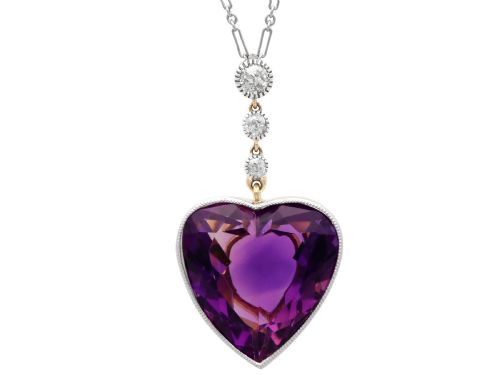
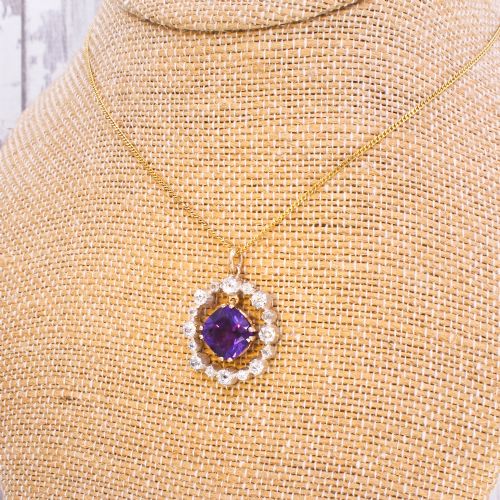
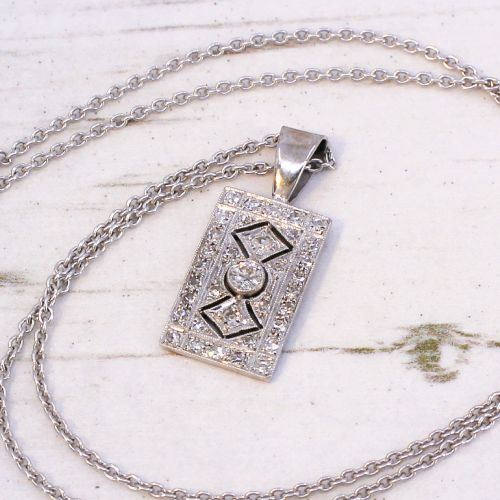
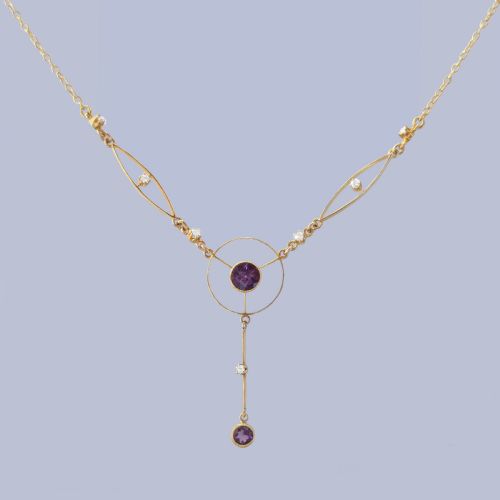
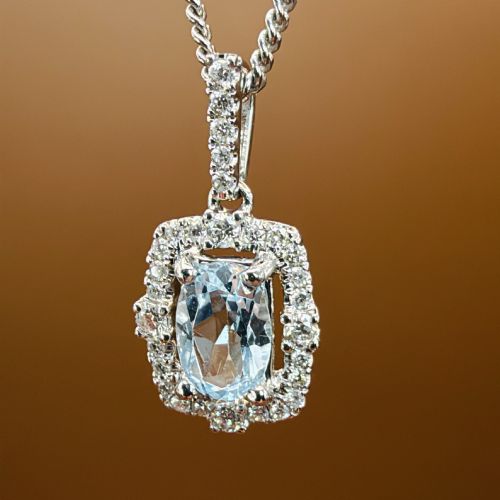
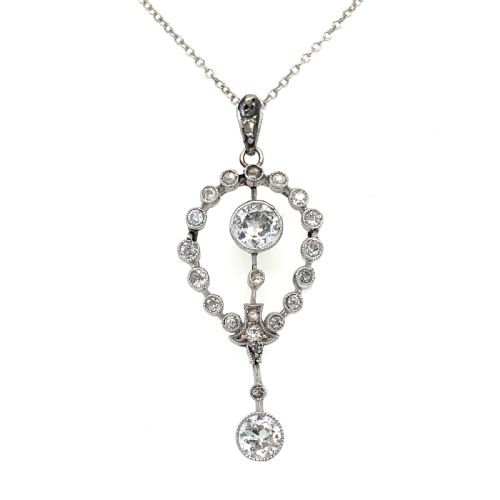
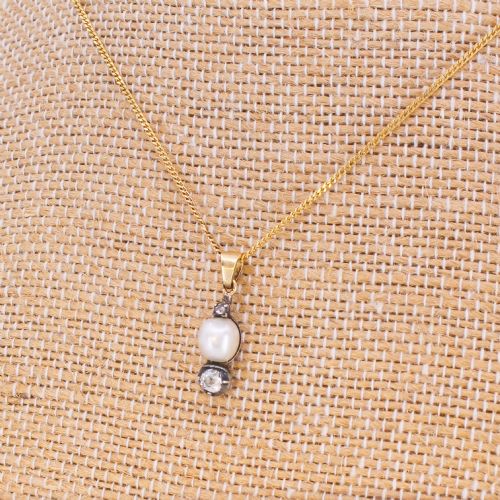
Gold Diamond Pendant Necklace
Discover the enduring charm of a gold diamond pendant necklace, bringing together precious metals and sparkling gemstones across centuries of design.
How they were made
Goldsmiths utilised varying purities of gold, including 9ct, 14ct, 15ct, and 18ct, alongside platinum and silver to form the structure of each pendant and mount. Metal was beaten, cast, or drawn into delicate wires and decorative motifs like bows, hearts, and serpents.
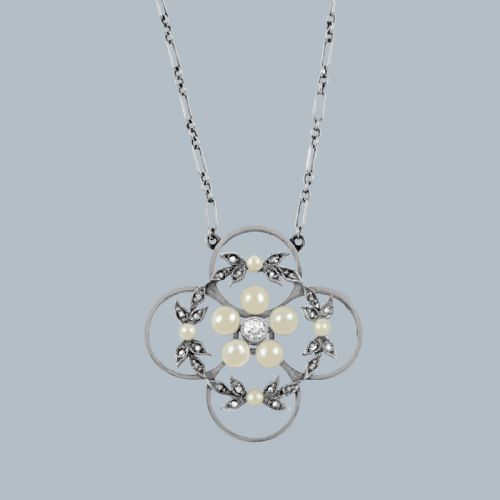
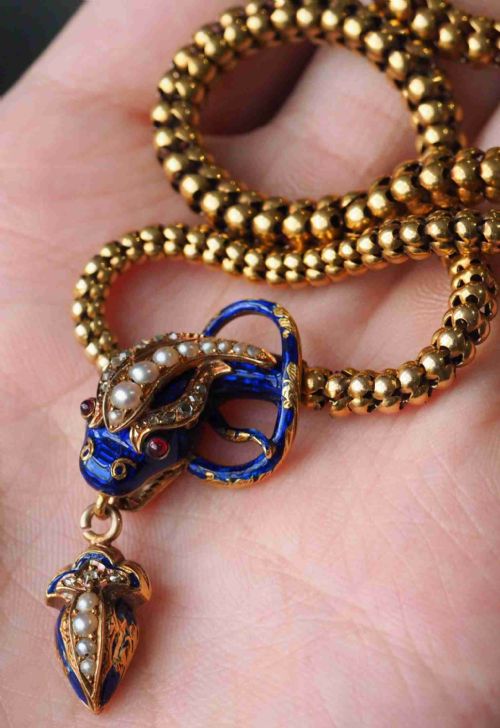
Gemstones such as diamonds, pearls, and opals were secured using claw settings, bezel mounts, or flush settings tailored to the stone's cut. Older pieces often incorporated old-cut diamonds alongside natural pearls and coloured enamel details applied by hand.
What varies in quality
The standard of a piece rests upon the harmony of its design, the precision of the metalwork, and the quality of the stones selected by the maker. Superior examples exhibit well-matched gemstones, secure and refined settings, and intricate detailing that survives intact.
Age and period-specific craftsmanship also influence the character of the jewellery, with hand-cut old diamonds and balanced proportions distinguishing finer historical works from standard production.
The Gold Diamond Pendant Necklace Glossary
- Old Cut Diamond
- A historical diamond cutting style characterised by a small table, high crown, and deep pavilion, designed to catch candlelight.
- Lavalier Necklace
- A drop necklace featuring a prominent pendant suspended below the main chain, popular during the Edwardian period.
- Cluster Pendant
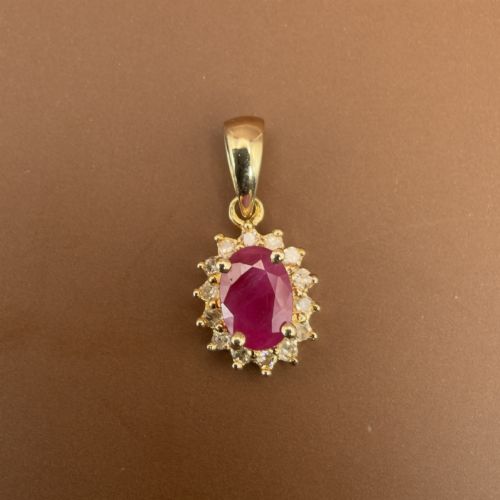
- A central gemstone surrounded by a ring of smaller stones, typically diamonds, forming a floral or geometric pattern.
- Cabochon
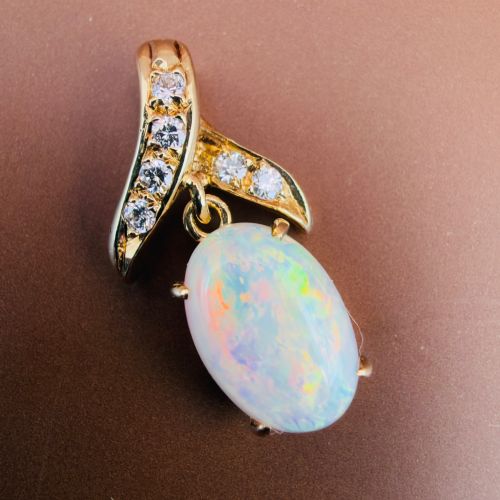
- A gemstone shaped and polished with a smooth, convex surface rather than faceted faces, frequently seen on opals and garnets.
- Platinum
- A dense, durable, and white precious metal utilised in fine jewellery manufacture for its strength in secure stone settings.
Gold Diamond Pendant Necklace: Frequently Asked Questions
How do I date a pendant necklace?
Dating relies on stylistic clues, mounting techniques, and hallmarks stamped onto the metal. Victorian and Edwardian pieces often display distinct motifs like snakes, bows, or seed pearls.
Later mid-century designs shift towards cleaner geometric lines or solitaire settings in white gold. Examining the cut of the diamonds also helps indicate the era of manufacture.
What is an old cut diamond?
An old cut diamond is a historical stone shape cut by hand rather than modern machinery. These diamonds typically feature smaller tops and deeper bases.
They display a distinctive soft sparkle under indoor lighting compared to modern brilliant cuts.
Are coloured gemstones common in these pieces?
Coloured gemstones appear frequently alongside diamonds in antique and vintage pendants. Common stones include aquamarine, opal, ruby, sapphire, emerald, and amethyst.
These are often arranged in clusters or drop formations set in yellow or white gold.
How should I care for antique jewellery?
Antique pendant necklaces require gentle handling due to their age and delicate settings. Cleaning should be done with a soft cloth, avoiding harsh chemical dips that can damage pearls, opals, or enamel.
Storage in individual lined boxes prevents scratching between pieces.