




Yellow Gold Ruby Necklace
A yellow gold ruby necklace brings together rich red gems and warm metal, spanning periods from Victorian work to mid-century vintage.
Yellow Gold Ruby Necklace
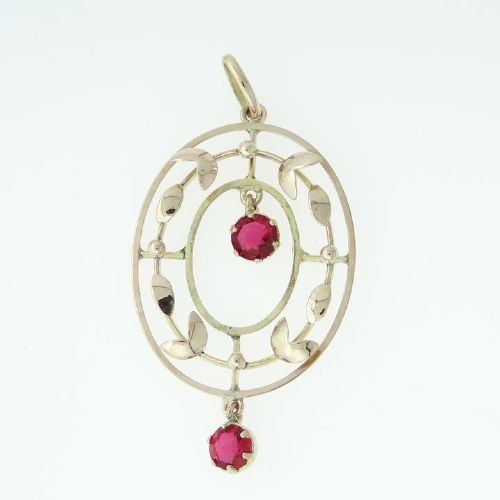
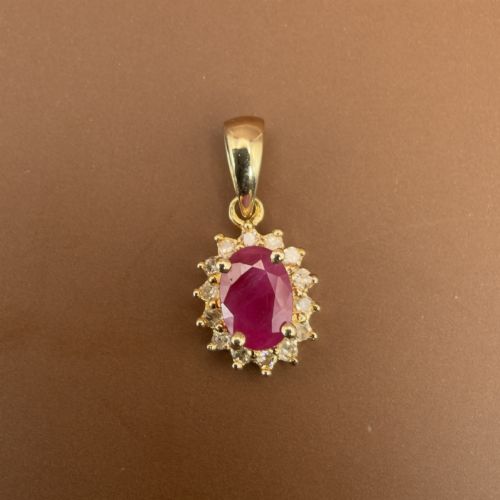
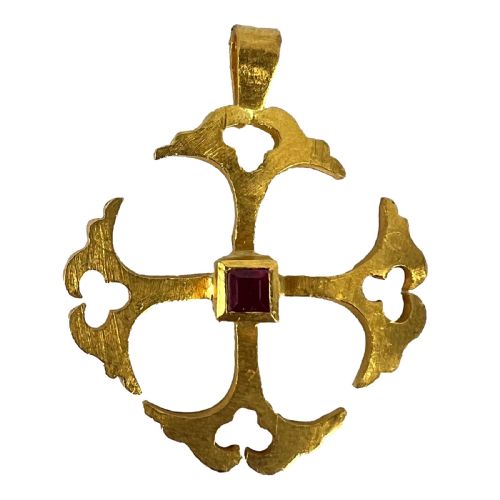
A yellow gold ruby necklace centres on red corundum set within gold mountings, appearing across styles from Victorian to mid-century vintage. These pieces range from delicate pendants and crosses to elaborate cluster necklaces and convertible brooch pendants.
The selections on this page draw heavily from the Victorian, Edwardian, and 1950s periods, showing diverse forms including double heart motifs, crescent shapes, and classic cluster designs. Buyers meet both straightforward gemstone drops and complex multi-stone configurations incorporating diamonds, pearls, and citrine.
How they were made
Goldsmiths utilised varying purities of yellow gold, ranging from 9ct and 14ct up to 18ct, 22ct, and 24K, frequently combining the metal with platinum settings for diamond work. Gemstones including rubies, diamonds, sapphires, and pearls are secured in claw, bezel, or cluster arrangements.
Construction techniques span hand-fabricated antique mountings and detailed wirework to mid-century casting. Many antique examples incorporate rose-cut diamonds and natural rubies paired with rose gold accents or platinum tops to enhance the brilliance of the stones.
Listings feature yellow gold purities ranging from 9ct and 15ct antique standards to modern 14ct, 18ct, and 22ct gold.
What varies in quality
Quality rests in the depth of colour and clarity of the rubies, the weight and purity of the gold, and the precision of the stone setting. Pieces featuring matched natural stones and well-balanced proportions command greater attention.
The integrity of the original mount, the subtlety of period detailing such as hand engraving or millegrain work, and the harmonious integration of secondary gems like diamonds or pearls further distinguish finer examples from standard production.
The Yellow Gold Ruby Necklace Glossary
- Cluster pendant
- A central gemstone surrounded by a border of smaller stones, typically diamonds or pearls. This arrangement maximises visual impact and light reflection.
- Millegrain
- A decorative technique featuring a row of tiny raised metal beads along the edges of a setting. It adds a refined, softened border to Edwardian and Victorian pieces.
- Rose-cut
- An antique diamond cut featuring a flat base and a domed crown with triangular facets. This historic style produces a gentle, understated shimmer rather than modern brilliance.
- Negligee necklace
- A drop necklace style popular in the Edwardian era featuring asymmetrical pendants suspended from a fine chain. They often incorporate delicate bars and dangling gemstone drops.
Yellow Gold Ruby Necklace: Frequently Asked Questions
Are the rubies natural or treated?
The pieces span various periods, meaning gemstone treatments depend entirely on the specific era of manufacture. Antique pieces from the Victorian and Edwardian eras typically feature natural stones characteristic of those periods.
Examining individual descriptions clarifies the gem details recorded for each piece. Reviewing the listed materials gives a clear indication of what is set in the mounting.
Can I wear these necklaces every day?
Gold and rubies are durable materials well-suited for regular wear when handled with reasonable care. Antique pieces, particularly those from the nineteenth century, benefit from gentle treatment and safe storage away from harder jewellery.
Checking the security of the settings and the condition of the chain ensures the necklace remains safe during daily use. Regular gentle cleaning maintains the brightness of both the gold and the stones.
What is a pendant brooch?
A pendant brooch is a versatile historic piece designed to function either as a necklace pendant or pinned directly to clothing. They feature a hidden or hinged loop on the reverse alongside a secure pin fastening.
This dual functionality was particularly popular during the Victorian and Edwardian periods. It allowed owners to display the same jewellers' work in multiple ways.