


Vintage Diamond Clasp
A vintage diamond clasp secures multi-strand pearl necklaces, bracelets, and brooches, offering both functional closure and principal ornamentation.
Vintage Diamond Clasp
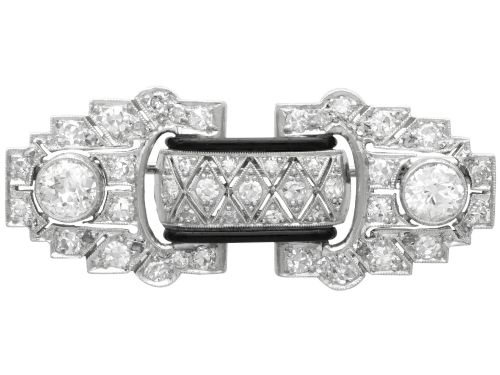
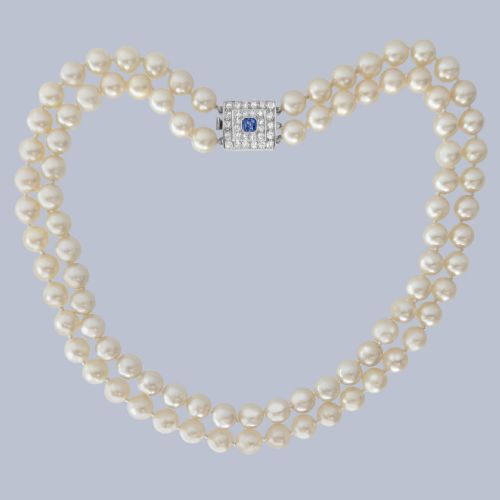
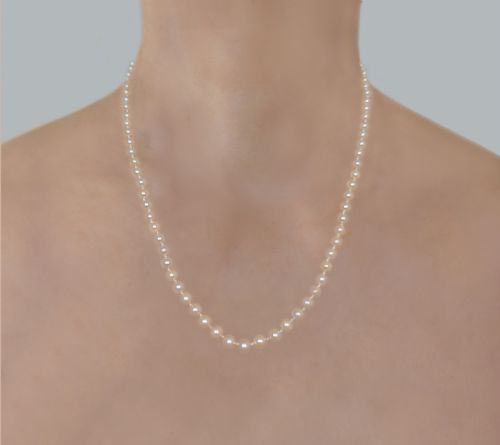
A vintage diamond clasp typically functions as the decorative centrepiece on multi-strand pearl necklaces, though similar gem-set mechanisms secure bracelets, brooches, and pendants. These items emerge from periods spanning the Victorian era through the mid-twentieth century, capturing shifts in design from delicate Edwardian motifs to bolder twentieth-century styles.
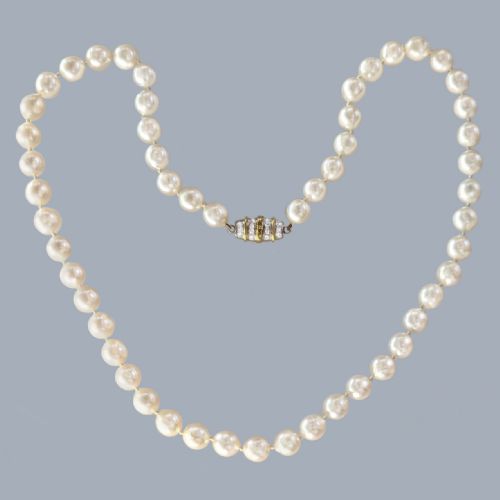
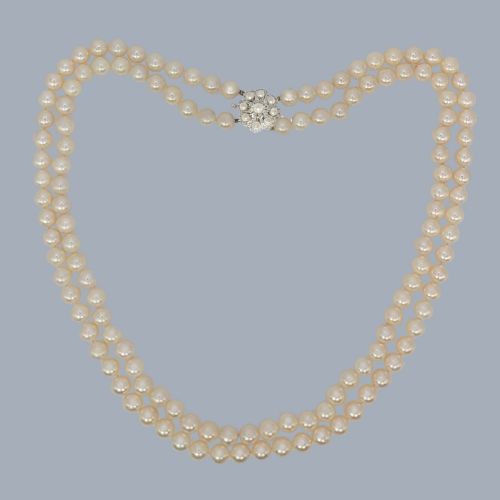
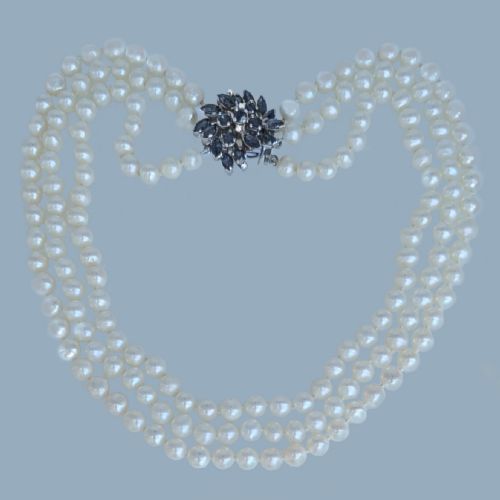
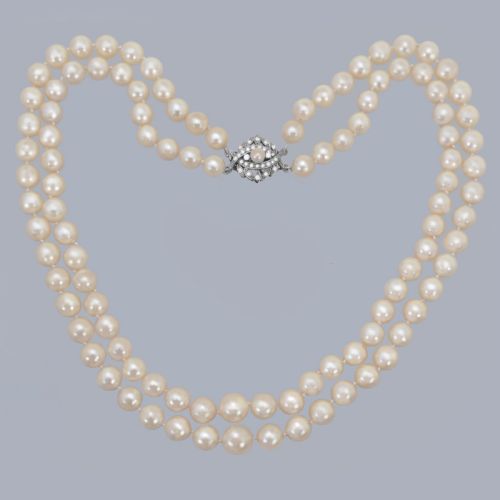
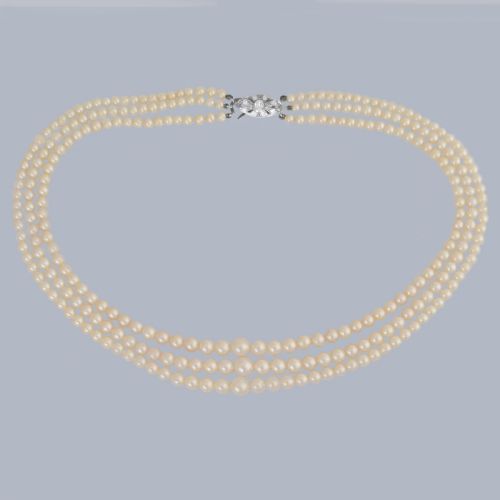
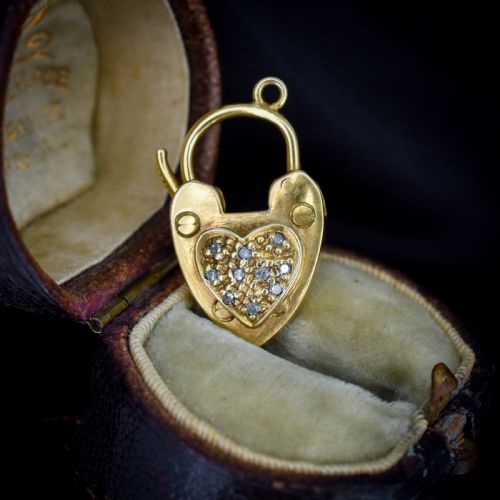
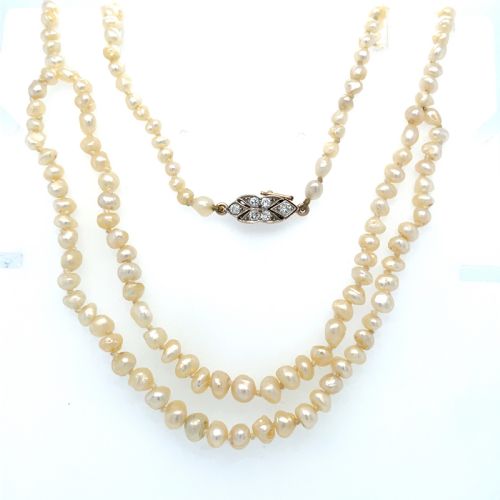
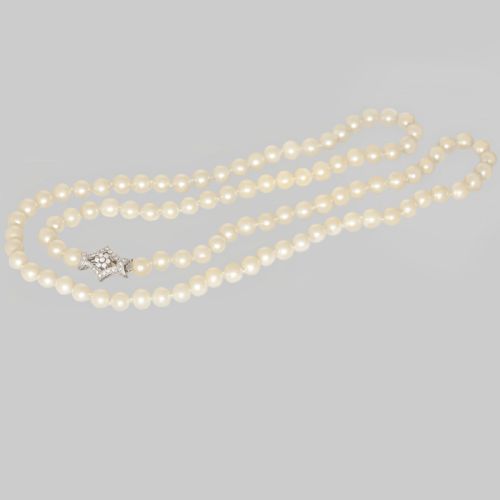
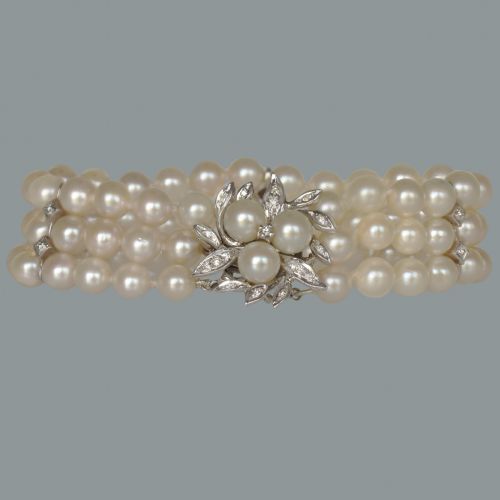
Pearl necklaces dominate this selection, featuring single, double, triple, or multiple strands paired with platinum or gold clasps set with diamonds alongside sapphires, emeralds, or rubies. Buyers also encounter standalone brooches, heart padlock charms, and cigarette cases where diamonds provide the primary sparkle against gold, silver, or platinum settings.
Origins stretch from British workshops bearing assay office hallmarks to French ateliers producing refined platinum and white gold mountings. Pieces range from natural saltwater pearls of the early twentieth century to cultured varieties popularised across the nineteen-fifties.
How they were made
Goldsmiths and platinum-smiths constructed these clasps using durable precious metals capable of securing intricate gemstone arrangements without adding excessive weight to the neckline or wrist. Platinum and eighteen-carat white gold provide the cooler tones characteristic of Art Deco pieces, whilst nine-carat and eighteen-carat yellow gold support warmer floral and foliate motifs from the nineteen-fifties.
Diamonds appear in various historic cuts, including old cuts, rose cuts, and brilliant cuts, hand-set into claw, bezel, or pavé settings that maximise light return. Sapphires, emeralds, rubies, and turquoise frequently accompany the diamonds, forming geometric patterns or naturalistic floral clusters.
Pearl necklaces incorporate silk threading, often restrung to maintain structural integrity, whilst clasps utilise box mechanisms, safety catches, or padlock designs to ensure secure fastening during wear.
Several nineteen-fifties clasps transform functional closures into tiny diamond daisy gardens resting softly against the back of the neck.
What varies in quality
The sophistication of the metalwork and the precision of the stone setting dictate the distinction between standard production and superior craftsmanship. Master jewellers employed hand-pierced gallery work and secure grain or bezel settings that held small diamonds firmly while creating seamless geometric or organic shapes.
Gemstone selection plays a decisive role, separating uniform, certified natural saltwater pearls and high-colour diamonds from more modest cultured pearls and lower-grade stones. Hallmarks, maker marks, and independent laboratory certificates provide documentary evidence of origin and material authenticity that elevates a piece's standing.
The Vintage Diamond Clasp Glossary
- Old cut
- A traditional diamond cutting style characterised by a high crown, small table, and deep pavilion, common in antique and early twentieth-century jewellery. This cut creates distinctive broad facet reflections under candle or low light.
- Saltwater pearl
- Organic pearls formed in marine pearl oysters, highly valued in Edwardian and antique pieces before the widespread cultivation of freshwater or cultured pearls. These gems often possess superior natural lustre and depth.
- Padlock clasp
- A fastening shaped like a miniature padlock, frequently utilised on Victorian and Edwardian charms, bracelets, and chains. It combines secure mechanical closure with symbolic decorative meaning.
- Art Deco
- A design style spanning the nineteen-twenties and nineteen-thirties, defined by geometric symmetry, stylised motifs, and strong contrasts between platinum and gemstones. Pieces from this era favour clean lines and streamlined elegance.
- Foliate clasp
- A jewellery clasp shaped to resemble leaves, petals, or botanical sprays, popular during the mid-twentieth century. This design integrates the mechanical hinge and tongue into naturalistic sculptural contours.
Vintage Diamond Clasp: Frequently Asked Questions
Are these pearls natural or cultured?
The selection includes both natural saltwater pearls found in earlier twentieth-century pieces and cultured pearls common in nineteen-fifties designs.
Independent gemmological reports accompanying specific items confirm the exact origin and formation method of the pearls.
Can I wear these pieces every day?
Whilst precious metals and diamonds withstand regular wear, delicate pearl strands and vintage silk threading require careful handling and occasional restringing.
Limit exposure to cosmetics, perfumes, and water to preserve the natural lustre of the pearls over time.
How do I identify the period of a clasp?
Stylistic cues such as platinum geometric filigree indicate Art Deco origins, whereas yellow gold floral motifs typically point to nineteen-fifties production.
Assay office hallmarks stamped on the metal provide official date letters and geographic markers for British items.