
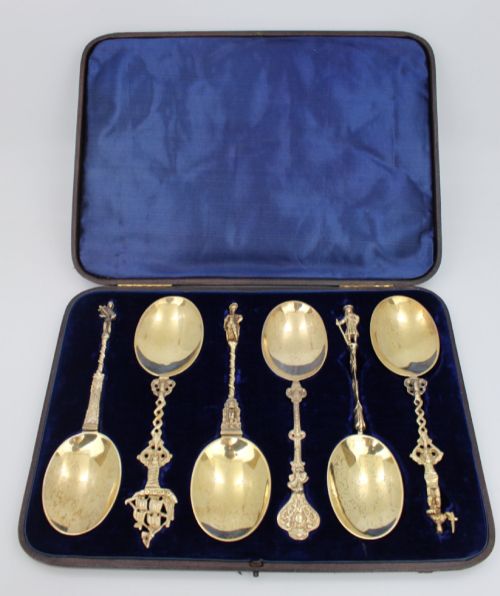
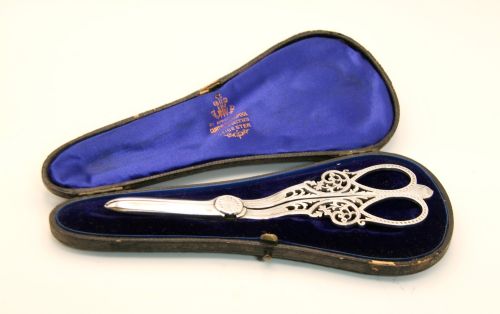
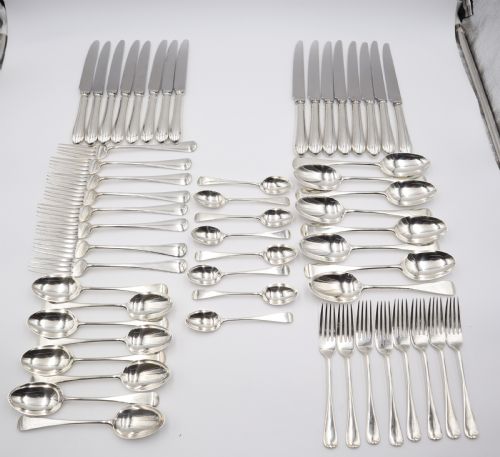
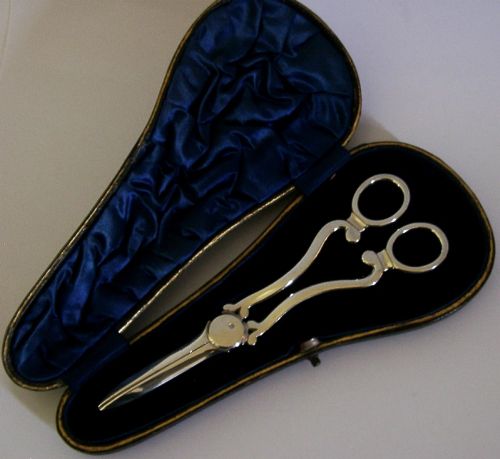



Vintage Dessert Cutlery
These vintage dessert cutlery sets, grape shears and fruit knives bring period elegance to the dining table.
Vintage Dessert Cutlery
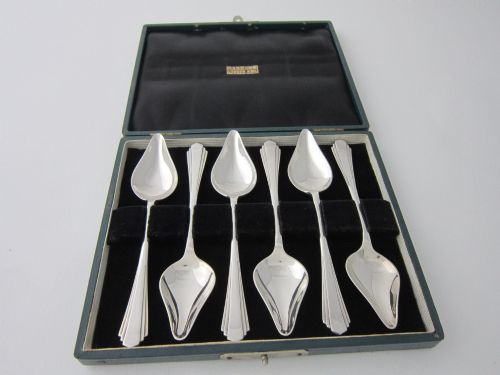
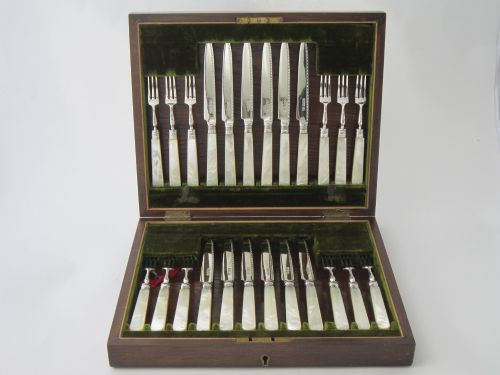
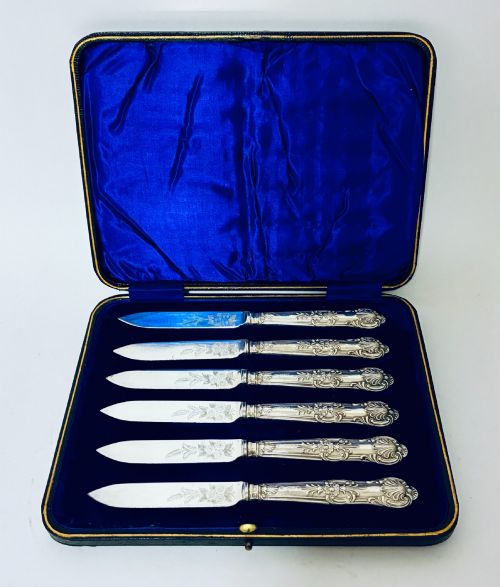
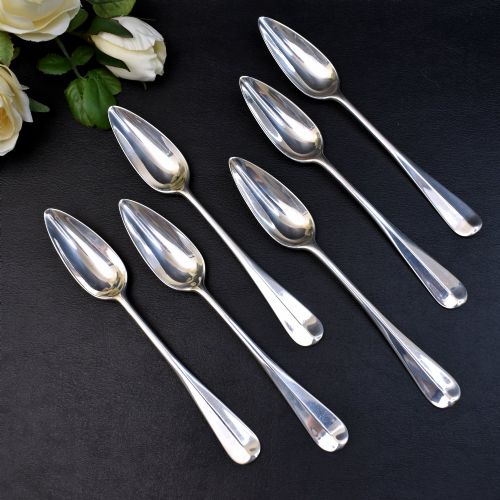
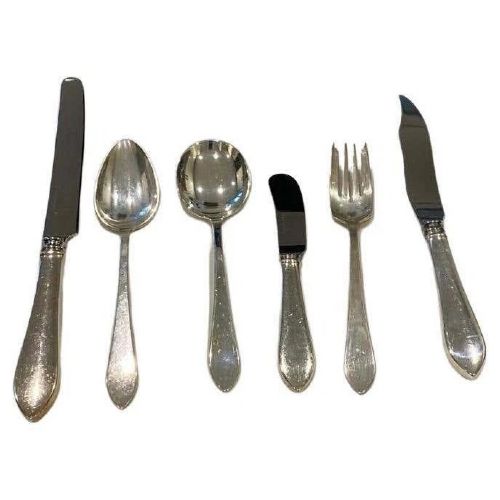
When you search for vintage dessert cutlery, you encounter specialised implements designed for the final courses of a meal, spanning periods from the nineteenth century through the Victorian, Edwardian and Art Deco eras. The selection on this page ranges from single serving pieces and grapefruit spoons to cased sets for twelve persons housed in fitted boxes.
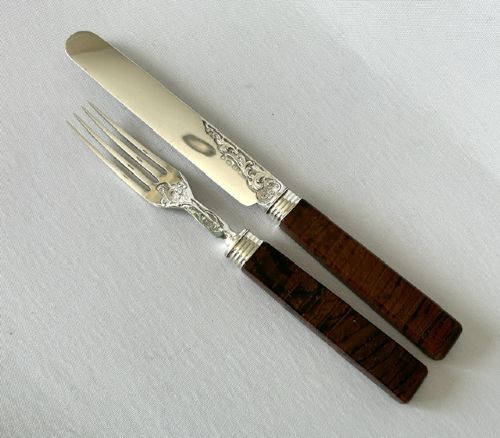
The most common forms include fruit knives and forks with mother-of-pearl handles, silver grape shears, and cake forks paired with matching servers. Materials run from sterling silver and silver plate to steel blades, agate, and enamel details.
Materials and construction
The construction of these pieces relies heavily on sterling silver and silver plate for blades, bowls and tines, often paired with natural organic materials for handles such as mother-of-pearl, agate, and velvet or satin linings inside fitted boxes.
Makers utilised techniques including cast silver blades, ornate engraving, and solid silver gilt work, alongside steel for durable cutting edges and enamel for decorative colour accents.
The listings span multiple decades and styles, featuring sterling silver, silver plate, mother-of-pearl, and steel across Victorian, Edwardian, and Art Deco periods.
Distinctions in quality
Quality in these implements rests on the weight of the silver, the crispness of any cast or engraved decoration, and the integrity of natural handle materials like mother-of-pearl.
Cased sets complete with original oak boxes and matching interior velvet or satin linings command attention for their preservation, whereas individual odd pieces rely entirely on the calibre of their maker and the depth of their ornamentation.
Hamilton and Inches·Georg Jensen·Christofle·Reilly and Storer·Hukin and Heath
The Vintage Dessert Cutlery Glossary
- Grape shears
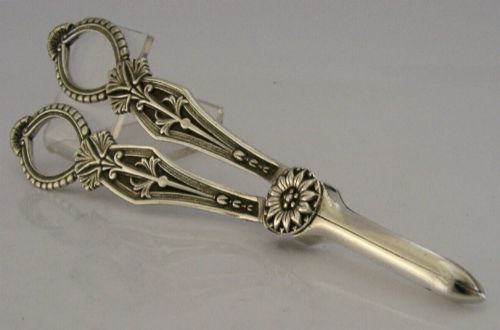
- Specialised scissors used for cutting clusters of grapes at the table without bruising the fruit. They often feature ornate cast silver handles and curved blades.
- Sterling silver
- An alloy containing 92.5 percent silver by mass, widely utilised across British and international flatware for its durability and lustre.
- Silver plate
- A base metal coated with a thin layer of pure silver through electroplating or older mechanical methods, offering the appearance of solid silver.
- Mother-of-pearl
- The iridescent inner layer of mollusc shells, carved into scales to form tactile, decorative handles for fruit knives and dessert sets.
- Canteen
- A fitted box, chest or case designed to securely store a complete set of cutlery or flatware in dedicated slots.
Vintage Dessert Cutlery: Frequently Asked Questions
What is vintage dessert cutlery used for?
These implements were specifically fashioned for eating fruit, cakes, desserts and grapefruit at the conclusion of a formal meal. They include smaller knives, forks, spoons and shears that differ in scale from standard dinner service.
Today, they find practical use during dinner parties, festive gatherings or afternoon tea, adding a layer of period charm to the table setting.
How can I tell Victorian pieces from Art Deco ones?
Victorian examples frequently display heavy cast ornamentation, natural motifs like leaves and flora, or engraved blades paired with organic materials such as agate and mother-of-pearl. They reflect a more ornate and historicist design language.
Art Deco pieces, by contrast, favour geometric lines, streamlined forms, and occasionally vibrant enamel work or modernist French styling typical of the interwar decades.
Why do some fruit knives have mother-of-pearl handles?
Acidic fruits such as citrus and apples react chemically with traditional steel blades, causing discolouration and imparting a metallic taste to the food. Mother-of-pearl and silver or silver-gilt offered a non-reactive alternative that preserved the flavour of the dessert.
Beyond practical utility, the lustrous sheen of pearl provided a tactile, decorative contrast to polished metal on the dining table.