





Vintage Desk Telescope
These vintage desk telescope pieces are optical instruments designed for desktop use, offering a blend of scientific heritage and period charm that collectors desire.
Vintage Desk Telescope
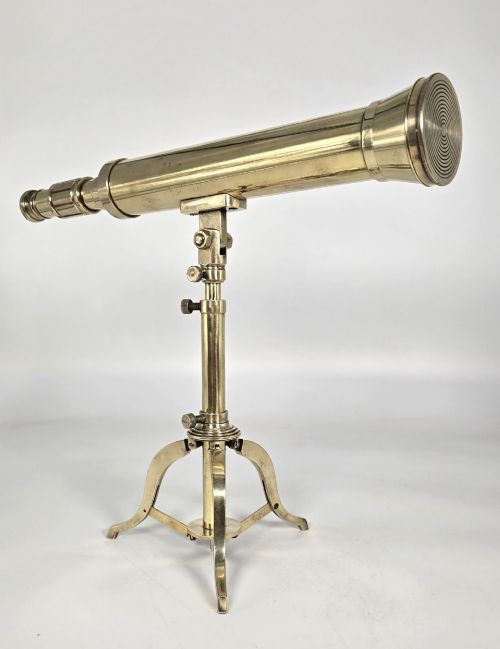
A vintage desk telescope is an optical instrument designed for terrestrial viewing, often mounted on a sturdy stand or kept in a library setting. When searching for a vintage desk telescope, buyers encounter scientific instruments originating from periods like the Georgian, Regency, and Victorian eras.
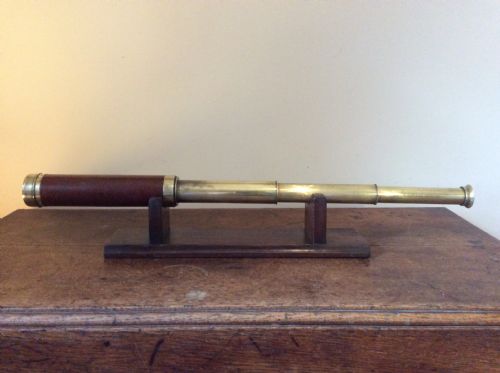
The most common forms on this page include library telescopes, single draw marine telescopes, and pocket telescopes adapted for display. These pieces frequently utilise materials such as brass, glass, and wood, reflecting their origins in English optical manufacture.
How they were made
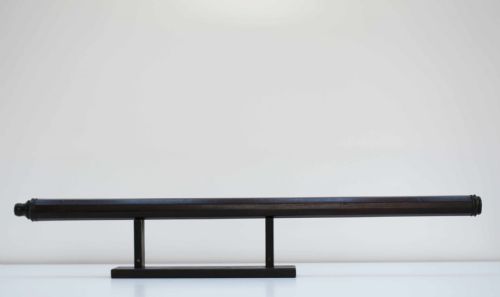
Maker workshops constructed these optical instruments primarily from polished brass, paired with glass lenses and optical glass for magnification. Tubing was often formed in multiple draws, sometimes featuring unusual multi-sided geometries such as hexagonal, nine-sided, or decagonal shapes.
Wooden components, including mahogany, oak, and fruitwood, frequently appear in the construction of barrels, bodies, or dedicated storage boxes. Leather wrapping was also utilised on select terrestrial and marine pieces to improve handling and protect the metal tubing.
Vintage Desk Telescope Retail Price Guide 2026
Typical asking prices for vintage desk telescope among the pieces listed under this phrase on Sellingantiques today, from the lower quarter to the upper quarter. They describe what is for sale here now, not the wider market.
Some eighteenth century makers could not resist showing off their geometry, offering nine-sided and decagonal telescope barrels just to prove they could.
What varies in quality
Quality in these instruments depends upon the precision of the maker and the clarity of the optical glass. Signed works by established London makers demonstrate superior mechanical execution in the sliding draws and focusing mechanisms compared to unsigned or generic workshop output.
The sophistication of the mounting hardware also dictates the standing of a piece, with original folding brass tripods and specialised library stands elevating the object. Additionally, unusual geometric body forms, such as decagonal or reverse taper designs, represent a higher tier of period craftsmanship.
Ross of London·Cary London·John Gilbert
The Vintage Desk Telescope Glossary
- Single draw
- An optical tube comprising one extending section that slides within a main barrel to adjust focus. This simple mechanism is common in compact marine and pocket telescopes.
- Terrestrial telescope
- An optical instrument designed for viewing land objects rather than astronomical bodies. These instruments incorporate erecting lenses so the image appears right side up.
- Library telescope
- A larger scientific instrument intended for use indoors on a desk or table rather than portability at sea. They usually sit upon dedicated wooden or brass stands.
- Non achromatic
- An optical lens construction that does not correct for colour fringing around high contrast subjects. This optical characteristic is typical of mid eighteenth century instruments.
- Draw
- A sliding tube section that extends from the main body of a telescope to alter focal length. Multiple draws allow a longer instrument to collapse into a shorter physical length.
Vintage Desk Telescope: Frequently Asked Questions
What is a library telescope?
A library telescope is a larger optical instrument intended for indoor use on a desk or table rather than portability at sea. These pieces were designed to sit steadily upon dedicated wooden or brass stands.
Such instruments allowed owners to examine distant terrestrial objects from the comfort of a study or library. They combine scientific utility with decorative presence.
How do single draw telescopes work?
A single draw telescope operates through an optical tube comprising one extending section that slides within a main barrel. The user pulls the inner tube outward to achieve the correct focal length for viewing.
This simple mechanism is particularly common in compact marine and officer of the watch telescopes. It provides a reliable method for quick deployment.
What materials were used?
Makers constructed these optical instruments primarily from polished brass, paired with glass lenses and optical glass for magnification. Tubing was often formed in multiple draws and fitted with metals like nickel.
Wooden components, including mahogany, oak, and fruitwood, frequently appear in the construction of barrels and bodies. Leather wrapping was also utilised on select terrestrial pieces to protect the metal.
How do I date an antique telescope?
Dating an antique telescope involves examining the construction methods, materials, style signatures, and any maker inscriptions on the brass barrel. Georgian and Regency pieces often feature simpler brass and wood configurations, while Victorian examples introduce varied multi-sided geometries.
Makers' signatures, such as those from London workshops, provide a precise historical anchor. Comparing the draw count and optical configuration helps place the instrument within its proper era.