

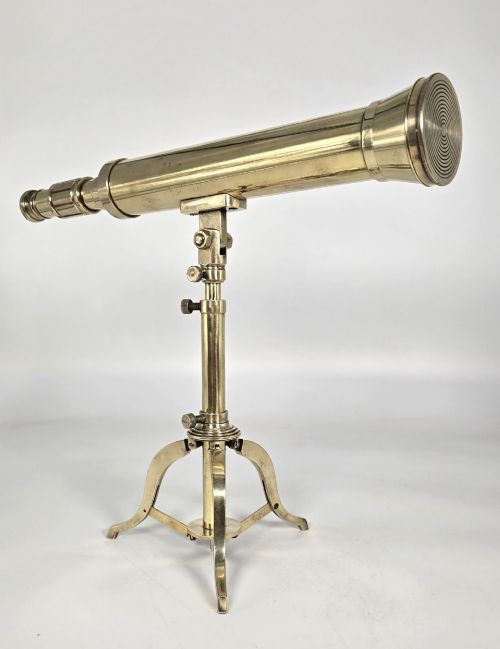


Tabletop Brass Spyglass
A tabletop brass spyglass is a sturdy optical instrument mounted for desk use, prized for bringing distant views into sharp focus.
Tabletop Brass Spyglass
A tabletop brass spyglass takes the form of a library telescope or scientific instrument intended for interior use rather than handheld travel. These instruments appear across periods spanning the eighteenth century through the early twentieth century, including Georgian and Victorian eras.
Most examples found here rest on folding brass tripod stands or dedicated desk stands designed to support the weight of the brass barrel and optical glass lenses. Library telescopes often feature multi-draw configurations enclosed in wooden cases or mounted for stationary viewing.
The materials recorded in these pieces combine polished brass with glass, mahogany, leather, and occasional nickel plating or iron fittings. English manufacture dominates the selection, reflecting historical hubs of optical instrument making.
Materials and construction methods
Makers constructed the primary barrels from turned and polished brass, pairing them with internal optical glass lenses to achieve magnification. Wooden components such as mahogany provide sturdy housings or casing elements.
Collapsible draw tubes slide smoothly within one another, maintained by careful tolerance fitting in metalwork. Tripod stands utilise hinged folding brass legs that secure the instrument for stable tabletop use.
Tabletop Brass Spyglass Retail Price Guide 2026
Typical asking prices for tabletop brass spyglass among the pieces listed under this phrase on Sellingantiques today, from the lower quarter to the upper quarter. They describe what is for sale here now, not the wider market.
Some nineteenth century astronomers reportedly forgot the stars entirely while gazing at passing horse carriages from their library desks.
Assessing quality in optical instruments
Quality rests upon the clarity of the optical glass and the precision with which the brass draw tubes engage and hold their position. Signed instruments bearing maker details demonstrate a higher level of workshop provenance.
The integrity of the original stand, whether a folding brass tripod or a fitted wooden case, distinguishes fine library instruments from incomplete setups. Superior finishing on the brasswork and retained original surface patination indicate careful historical preservation.
Chadburn Brothers of Sheffield·S & B Solomons·Matthew Berge London·G.adams of london
The Tabletop Brass Spyglass Glossary
- Library telescope
- A large optical instrument designed for stationary indoor use on a desk or table rather than field carriage. These pieces typically require a dedicated stand for support.
- Draw
- An individual sliding tube segment that extends from the main barrel to adjust focus. Multi-draw configurations allow the telescope to collapse into a shorter overall length.
- Terrestrial
- An optical system configured to show upright images for land viewing rather than inverted celestial views. This design suits landscape observation from a window or library.
- Tripod stand
- A three-legged support structure, often folding, that elevates and steadies the telescope on a flat surface. Brass stands provide rigid mounting for heavier instruments.
Tabletop Brass Spyglass: Frequently Asked Questions
How do I use a tabletop brass spyglass?
Mount the telescope securely on its stand and extend the sliding draw tubes until distant objects come into sharp focus. Adjust the final draw slowly while looking through the eyepiece.
Keep the optical lenses clean using appropriate specialist cloths to maintain a clear field of view during use.
Where were these telescopes placed historically?
Owners positioned these instruments in libraries, drawing rooms, or studies near large windows overlooking gardens or streets. They served as both decorative furnishings and practical tools for observing distant scenery.
Many remained stored in fitted mahogany or leather cases when not mounted on their desks for display.
How do I date a brass spyglass?
Examine the style of the mounting stand, the number of draw tubes, and any engraved signatures or workshop addresses on the brass barrel. Georgian and Victorian examples often display distinct finishing techniques and proportions.
Maker signatures referencing London or Sheffield workshops help narrow the production period to active operational dates.
What maintenance do these brass instruments require?
Dust the exterior brass and wooden surfaces gently with a dry, soft cloth to prevent particulate accumulation. Avoid harsh chemical polishes that can strip historical patination from the metal.
Store the instrument in a stable indoor environment away from excessive moisture to protect both the glass optics and the metal fittings.