
Vintage Cut Crystal Bottle
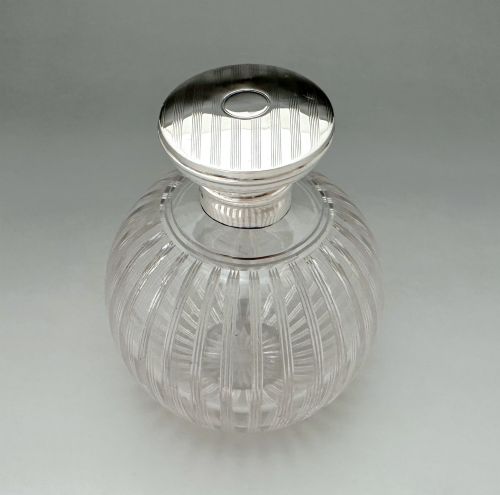
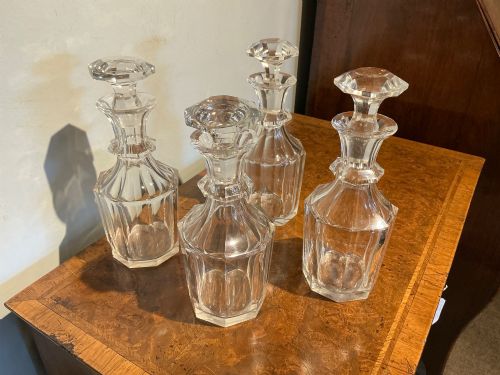
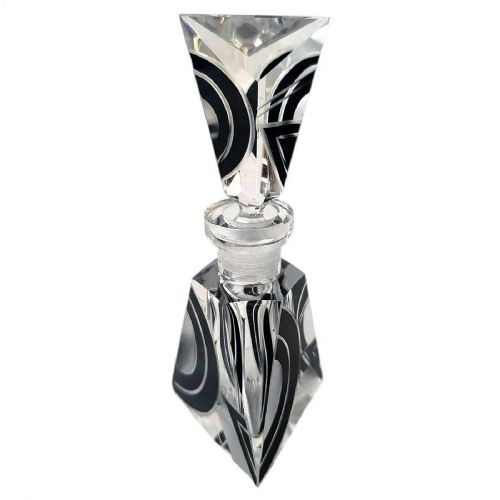
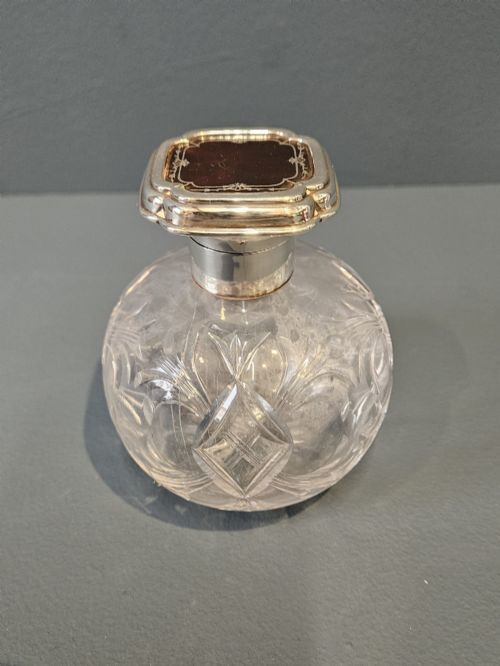
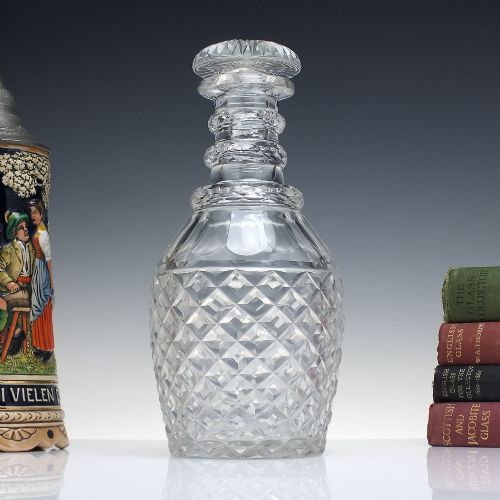
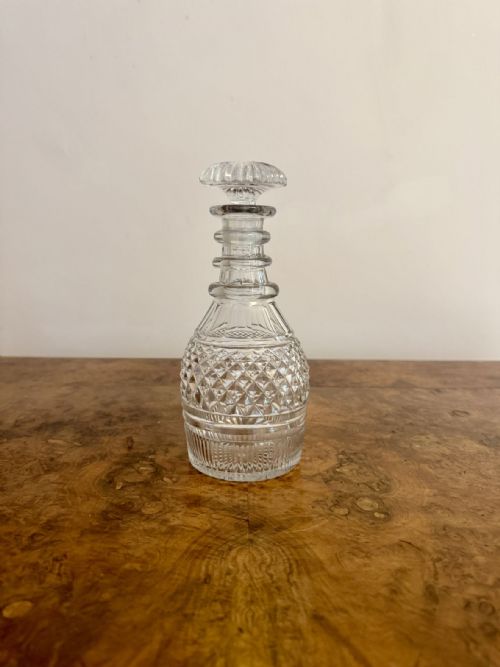
These vintage cut crystal bottles bring heavy refractive weight and sharp facets to a drinks tray or dressing table.
Vintage Cut Crystal Bottle
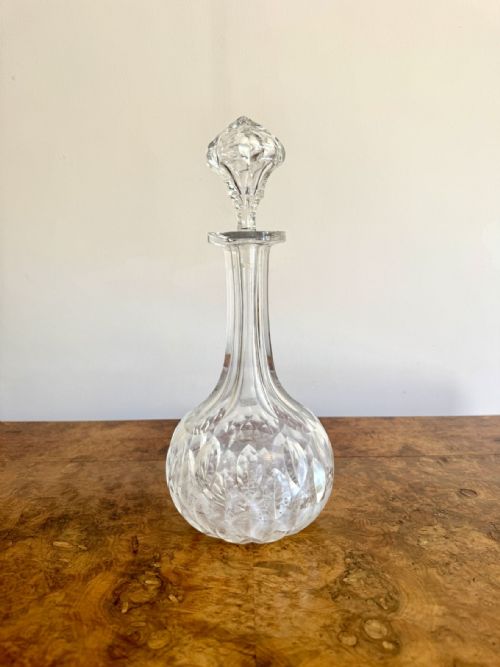
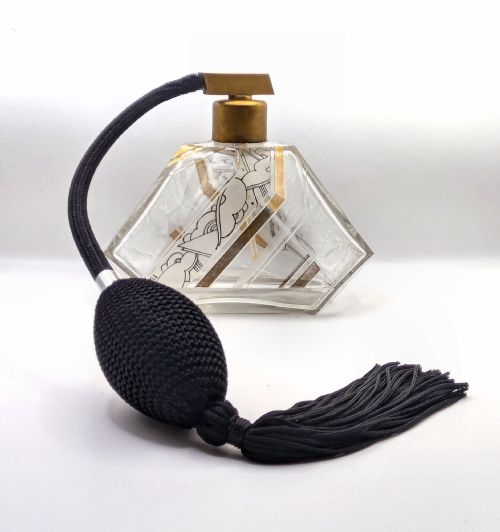
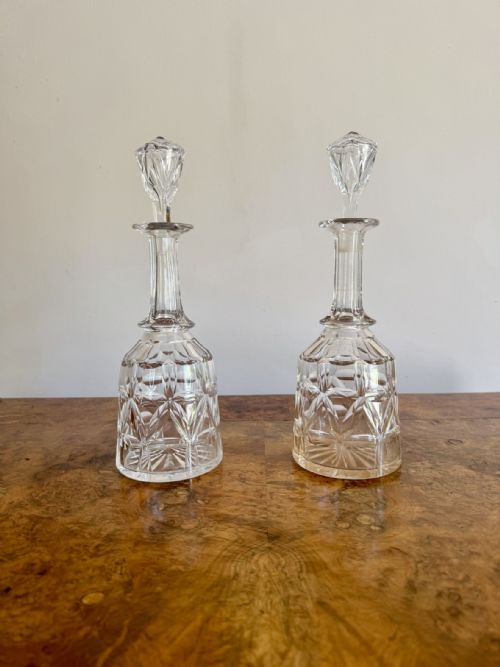
A vintage cut crystal bottle encompasses functional vessels designed for the dressing table and the dining room. Decanters, perfume bottles, and cruet sets dominate the forms encountered in these listings.
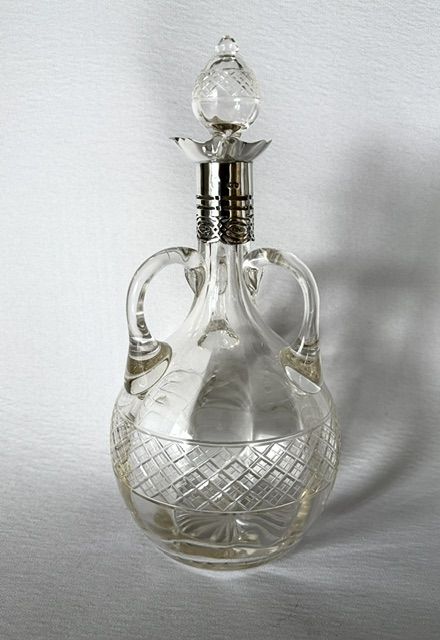
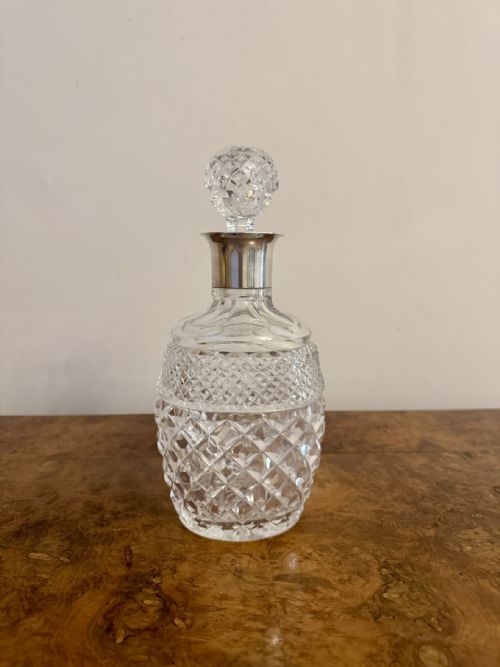
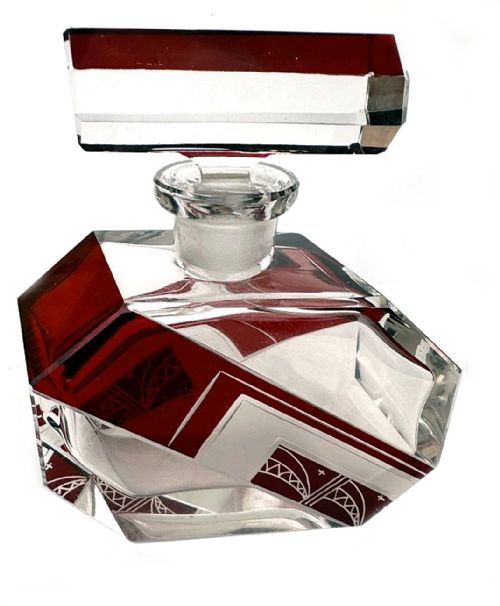
Edwardian and Victorian examples appear frequently, alongside Art Deco geometric pieces from the 1930s. Buyers will regularly find heavy glass decanters fitted with sterling silver collars, alongside smaller scent bottles topped with tortoiseshell or enamel.
Origins span English, Bohemian, and French workshops, encompassing Georgian through to mid-century periods. Carafes, inkwells, and tantalus sets round out the diverse domestic functions these items served.
Crystal, silver and coloured glass
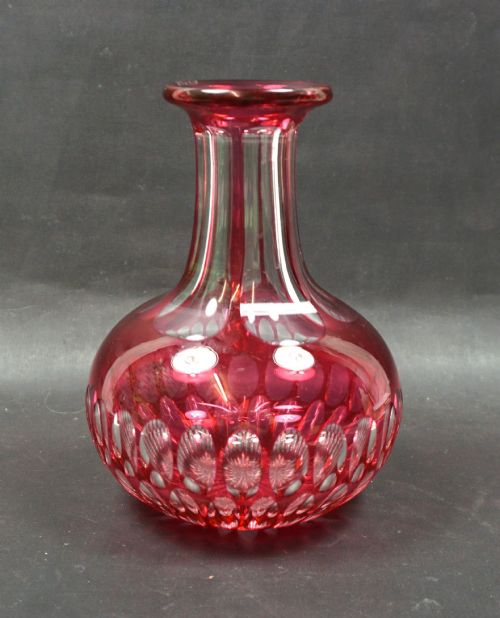
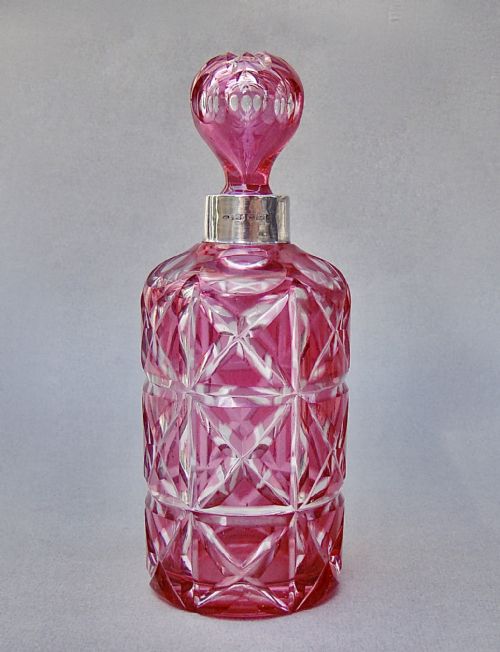
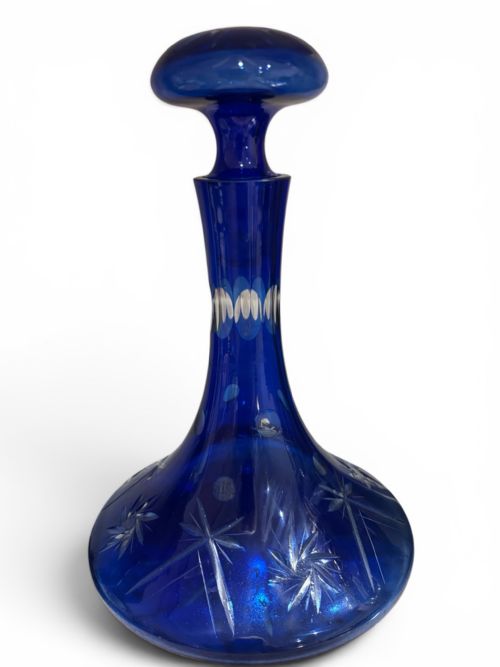
Makers shaped these pieces from lead crystal, cut glass, and cranberry or cobalt coloured glass. Deep geometric or linear facets were ground and polished into the surface to catch the light.
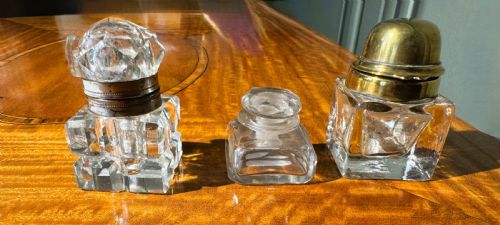
Mounts and collars utilised sterling silver, silver plate, brass, and guilloche enamel. Tortoise shell and satin wood occasionally supplemented the metalwork on dressing table bottles and tantalus frames.
Listings feature lead crystal, cut glass, sterling silver, and brass across Victorian, Edwardian, and Art Deco periods.
Depth of cutting and mount integrity
The precision and depth of the wheel-cutting separate standard vessels from finer examples. Crisp, sharp facets demonstrate superior hand-craftsmanship compared to shallow or moulded impressions.
The quality of the secondary materials also dictates the standing of a piece. Substantial sterling silver collars, intact guilloche enamel, and well-fitted stoppers elevate the overall execution.
Harold Bushell and Co·Karl Palda
The Vintage Cut Crystal Bottle Glossary
- Lead crystal
- Glass containing lead oxide which increases weight, clarity, and refractive brilliance. This material allows for deeper and sharper facet cutting.
- Tantalus
- A locked wooden frame holding decanters securely while displaying them to guests. The locking mechanism prevents unauthorized access to the contents.
- Guilloche enamel
- Decorative mechanical engraving underneath translucent enamel. This technique creates repeating geometric patterns on silver bottle caps.
- Cruet set
- A matched group of glass bottles or cruets held in a stand for condiments and oils. These sets frequently appear from the Georgian and Edwardian periods.
Vintage Cut Crystal Bottle: Frequently Asked Questions
How do I clean inside a cut crystal decanter?
Residue and staining inside old decanters require gentle methods rather than harsh abrasives. Warm water combined with specialised cleaning beads or rice lifts sediment from the base.
After rinsing thoroughly, invert the bottle on a dedicated drying rack to allow air circulation. Avoid placing cold crystal into hot water to prevent thermal shock.
How do I date a silver mounted perfume bottle?
Assay office marks and date letters stamped onto the silver collars provide the exact year of manufacture. British hallmarks indicate the city of testing and the specific reigning period.
Stylistic cues such as Edwardian floral chasing or Art Deco geometric enamel offer secondary clues when hallmarks are rubbed or absent.
Are stoppers original to the bottles?
Matching the grinding marks on the stopper peg to the interior neck helps determine if a stopper is original. Hand-ground stoppers often feature an identifying number corresponding to the base of the bottle.
Even if a stopper is a later replacement, a secure fit ensures the contents remain sealed. Minor variations in glass tone can sometimes indicate a marriage of parts.
How do I display a tantalus safely?
A tantalus requires a stable surface away from direct sunlight and heavy foot traffic. Placing the heavy oak or mahogany frame on a sideboard supports its considerable weight.
Ensuring the locking mechanism functions correctly keeps the decanters secure during household movement. Regular dusting maintains the condition of both the wood and the metal mounts.