
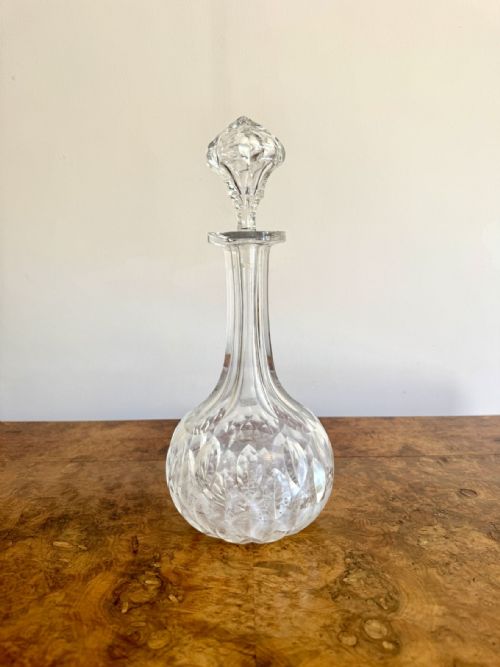
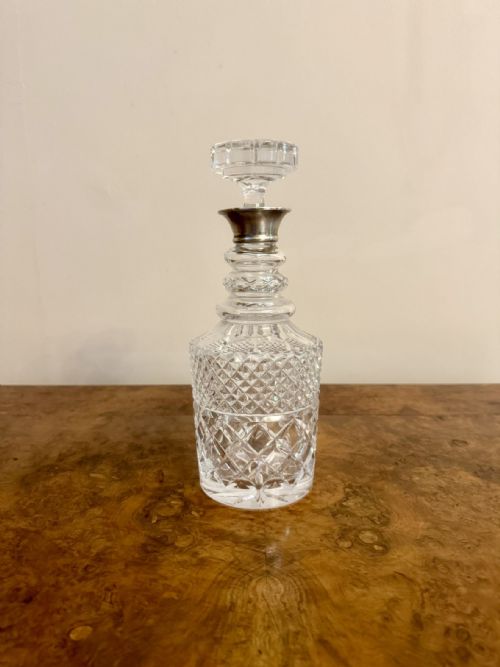
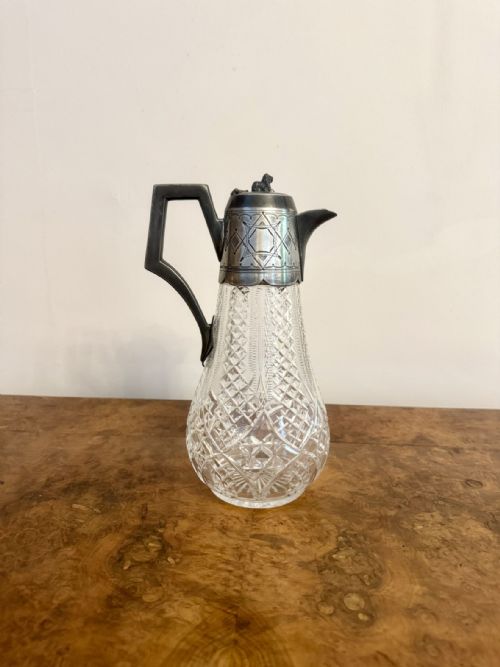
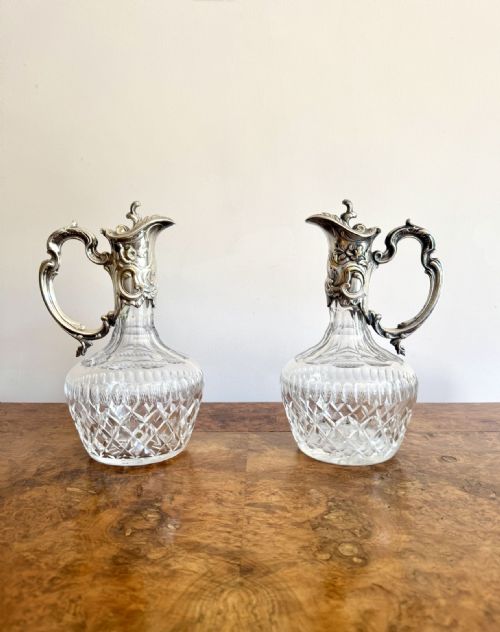
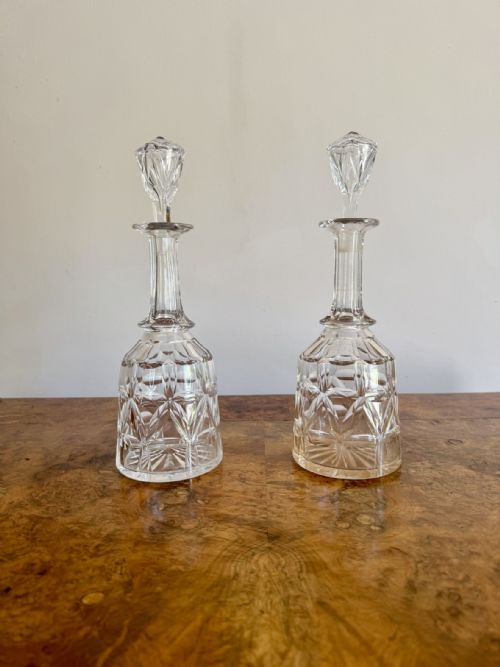
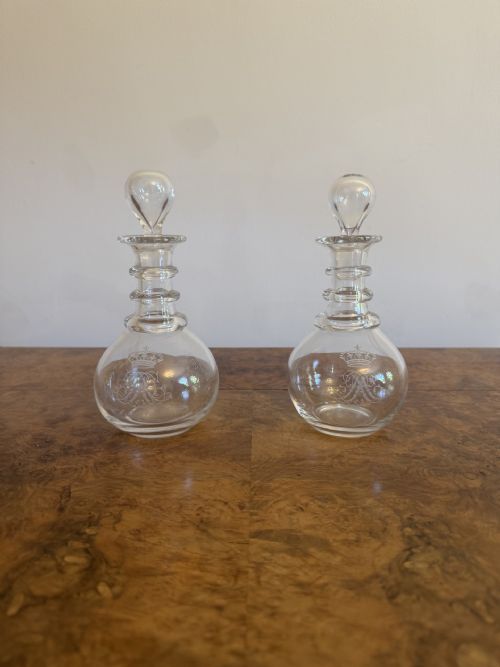


Edwardian Cut Glass Carafe
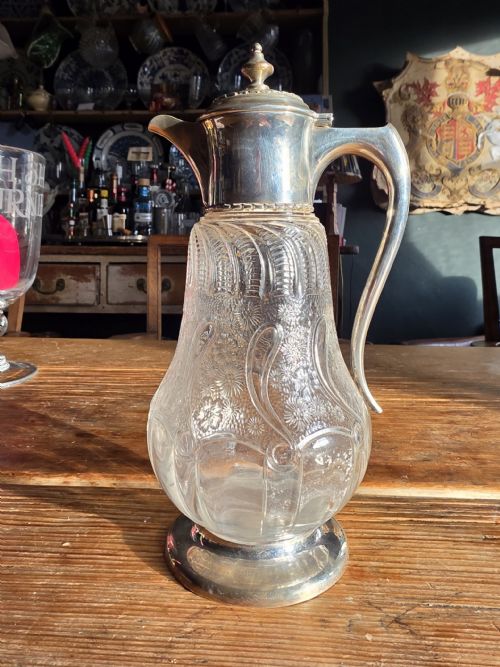
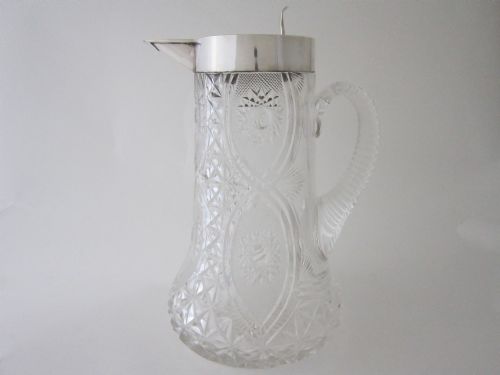
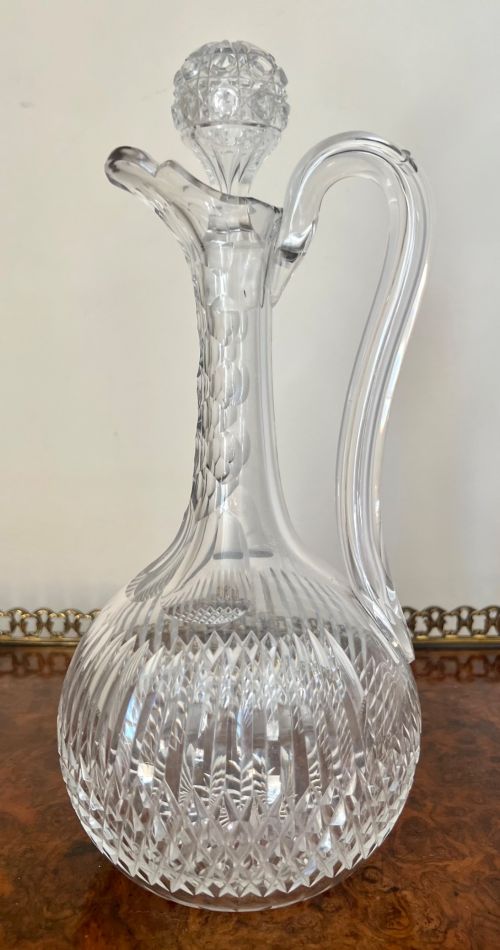
These edwardian cut glass carafe examples combine heavy faceted crystal with bright silver mounts for serving wine and spirits.
Edwardian Cut Glass Carafe
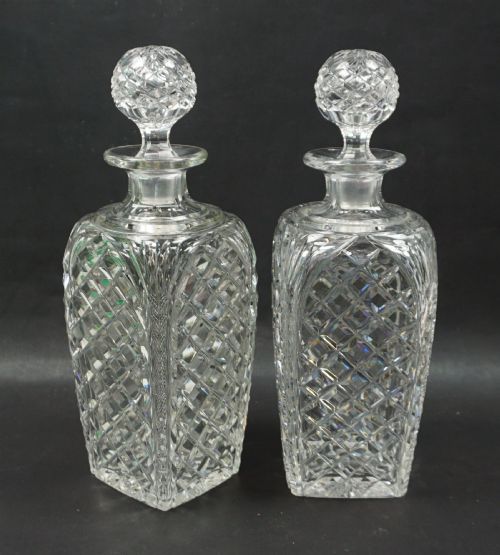
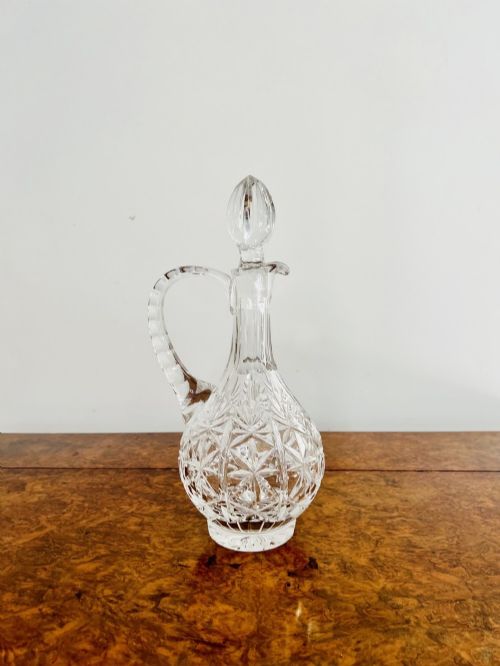
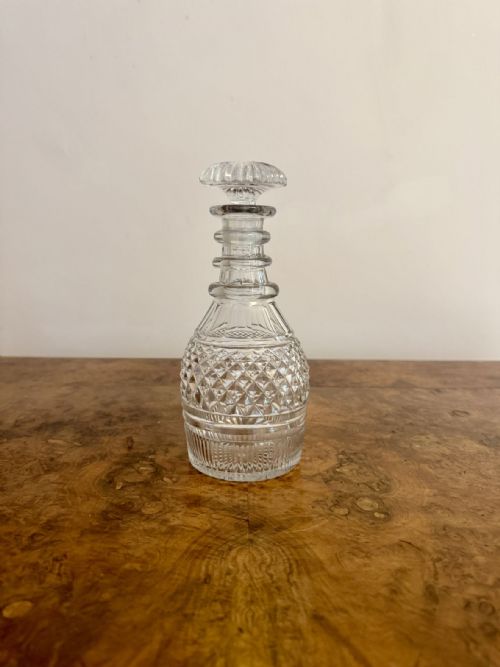
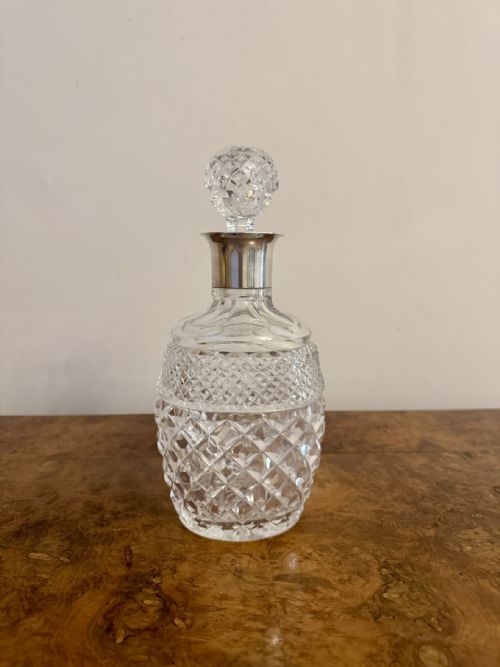
An edwardian cut glass carafe takes the form of decanters, claret jugs, ewers, and spirit bottles originating primarily from the Edwardian era alongside Victorian and George V periods. The most common iteration met on this page is the bell-shaped or square-section decanter featuring deep surface cuts and fitted with a sterling silver collar or silver plated mount.
Makers and workshops utilised clear glass, crystal, and lead crystal, occasionally adding amethyst glass or engraved decorations denoting specific spirits like brandy and whisky. These vessels served wine, sherry, port, and whisky at formal dining tables and sideboards.
While the search specifies an edwardian cut glass carafe, listings encompass related vessels such as whiskey noggins, pitchers, and jugs in styles ranging from Arts and Crafts and Art Nouveau to Regency and Art Deco.
Materials and production techniques
Production relies heavily on clear glass, cut crystal, and lead crystal shaped by blowing and pressing, followed by intensive hand-cutting to create geometric facets and optical patterns across the body.
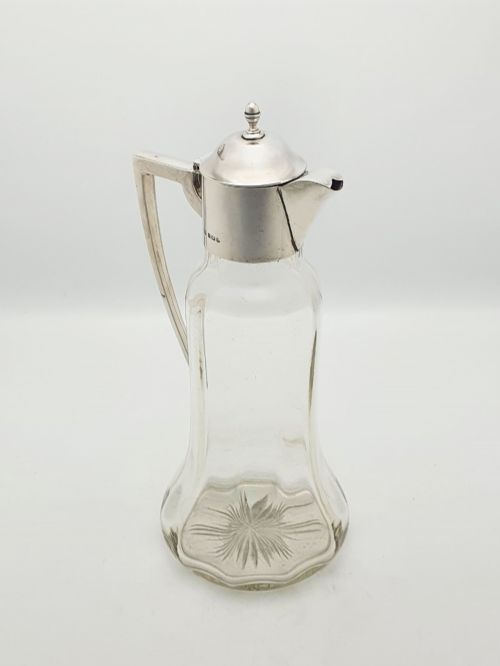
Mounts, collars, and handles incorporate sterling silver and silver plate, often hallmarked and attached securely to the glass neck to support hinged lids and spouts on claret jugs and ewers.
Certain spirit decanters arrive with permanently engraved labels for brandy and whisky, ensuring nobody confuses their morning medicine.
Distinctions in craftsmanship and materials
The distinction between tiers rests upon the crispness of the glass cutting, the weight and clarity of the lead crystal, and the substance of the silver collars or plate.
Subtleties such as optically blown bodies, finely engraved labels, and balanced proportions distinguish finer examples from standard production pieces.
James Powell·Hukin and Heath
The Edwardian Cut Glass Carafe Glossary
- Decanter
- A vessel used for holding and serving wine or spirits, typically fitted with a stopper. These pieces often feature heavy cut glass bodies.
- Claret Jug
- A specialised pouring jug designed specifically for red wine, usually combining a glass body with a silver or silver-plated handle, mount, and hinged lid.
- Whiskey Noggin
- A small spirit decanter or measure, frequently supplied with a sterling silver top and a small pouring lip.
- Lead Crystal
- Glass containing lead oxide, which increases weight, brilliance, and the clarity required for deep cutting.
- Silver Plate
- A base metal coated with a thin layer of silver, commonly utilised for the collars and mounts of Edwardian serving vessels.
Edwardian Cut Glass Carafe: Frequently Asked Questions
What is an edwardian cut glass carafe?
An edwardian cut glass carafe is a heavy glass serving vessel produced around the early twentieth century, characterised by deep geometric facet cutting and often finished with a silver collar or mount.
These pieces were designed to hold and pour wine, port, sherry, or spirits at the dining table.
How do I tell an Edwardian piece from a Victorian one?
Edwardian vessels tend to exhibit lighter, more refined proportions and brighter cutting styles compared to heavier Victorian counterparts, though overlapping design trends occurred.
Examining hallmarks on the silver mounts often provides the exact year of manufacture to confirm the period.
How were these vessels used originally?
They stood on dining tables and sideboards to hold and decant alcoholic beverages before pouring them into drinking glasses.
Claret jugs served red wine, while smaller spirit bottles and noggins held whisky, brandy, or sherry for guests.
How should I clean and maintain cut glass?
Wash the glass gently in warm water with mild detergent, avoiding harsh abrasives that can scratch the crystal surface and dull the clarity.
Polish the silver mounts separately with an appropriate cloth to prevent tarnish from accumulating near the glass.