




Facet Cut Stopper Decanter
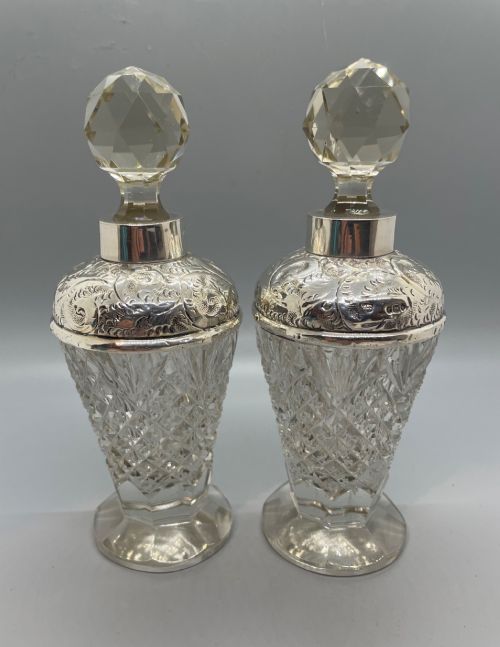
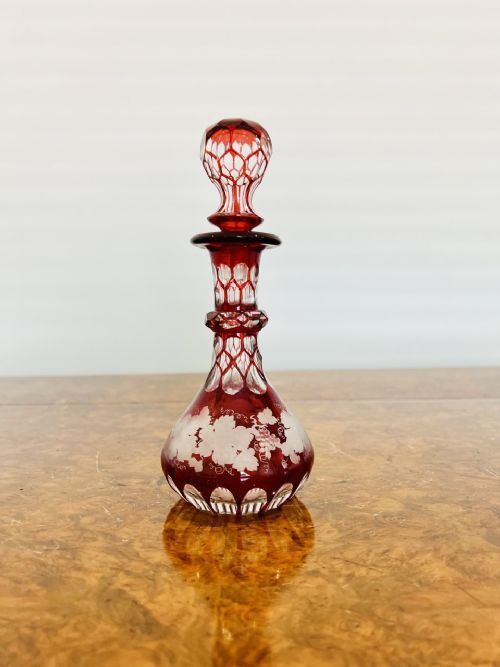
These facet cut stopper decanters bring brilliant refraction and crisp geometric handling to the table, offering both decorative presence and functional barware.
Facet Cut Stopper Decanter
A facet cut stopper decanter combines heavy glass or crystal vessels with sharply polished stoppers designed to seal spirits, wine, or perfume. The pieces span periods from the eighteenth century through the Victorian and Edwardian eras, with many examples originating around nineteen hundred.
Buyers meeting this phrase on this page will frequently encounter Victorian and Edwardian bell shaped or panel cut designs alongside English barware and scent bottles. Pairs and trios surface regularly alongside individual vessels fitted with silver collars or locking mechanisms.
Distinctions in glass and metal work
Quality rests in the crispness of the cutting and the clarity of the metal. Superior examples display deep, sharp facets that refract light cleanly without distortion, paired with well proportioned stoppers that sit flush in the neck.
The integration of sterling silver mounts, such as collars or locking hardware by known makers, elevates the piece. Weight and balance in the hand further distinguish the finer vessels from simpler production.
Some Edwardian drinkers required a locked decanter to keep the household butler away from the scotch.
Betjemann Brothers·Hukin and Heath
The Facet Cut Stopper Decanter Glossary
- Facet cut
- A surface worked with flat polished planes that catch and reflect light. This technique defines the visual character of the stoppers and bodies.
- Lead crystal
- Glass containing metal oxide that increases weight, brilliance, and workability for deep cutting. It forms the heavy fabric of many Edwardian pieces.
- Sterling silver collar
- A band of silver fitted around the neck of a decanter or scent bottle. It often bears hallmarks indicating the assay office and date.
- Locking decanter
- A vessel secured with a metal framework and lock to prevent unauthorized access to the contents. These mechanisms typically require a key to release the stopper.
- Bell shaped decanter
- A profile widening gracefully toward a stable base, common in Edwardian tablewares. This form optimizes the display of cut patterns.
Facet Cut Stopper Decanter: Frequently Asked Questions
What holds the stopper securely in place?
The ground glass neck and the matching ground stopper create a tight seal through precision fitting. Each stopper is ground individually to match its specific decanter.
This method ensures minimal evaporation of spirits or perfume without needing cork or rubber gaskets.
How do I distinguish Victorian from Edwardian pieces?
Victorian examples often favour heavier, deeply incised cutting and robust proportions. Edwardian items frequently display crisper, lighter geometric patterns and sometimes clearer lead crystal.
Silver mounts and hallmarks help confirm the exact decade of manufacture.
Were these vessels meant for wine or spirits?
The listings include both whiskey decanters intended for heavy barware use and delicate scent bottles or ewers. Larger forms served the dining table, while smaller bottles held perfume on a dressing table.
The presence of locking hardware suggests storage for costly spirits.
How should I clean a cut glass decanter?
Wash the vessel by hand using warm water and mild detergent, avoiding sudden temperature changes that can crack old glass. A bottle brush helps reach internal surfaces safely.
Dry the silver mounts promptly to preserve the polish and hallmarks.