


Lead Crystal Wine Bottles
Lead crystal wine bottles are heavy, brilliant vessels that hold your table liquor with proper historic weight.
Lead Crystal Wine Bottles
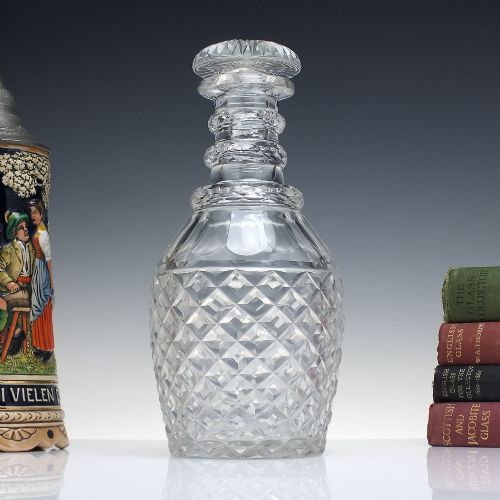
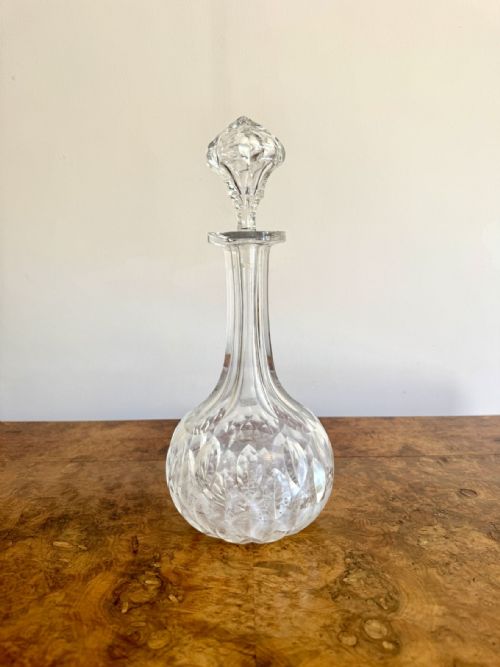
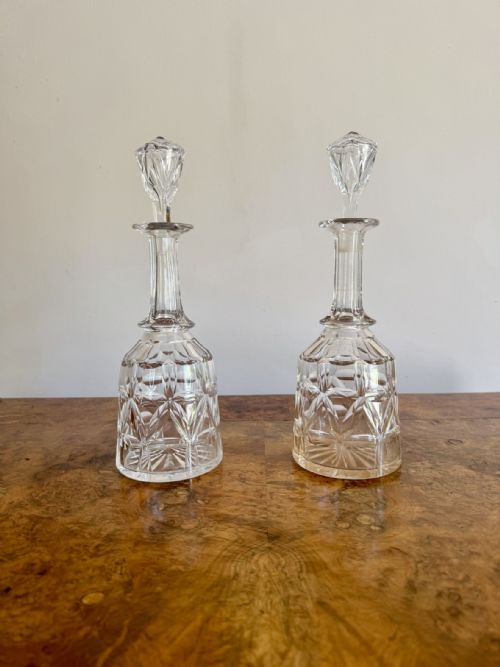
Lead crystal wine bottles appear in forms ranging from Georgian three ring carafes to Victorian and Edwardian decanters and ewers. Buyers seeking lead crystal wine bottles encounter heavy glassware shaped with shoulders, panels, and stoppers designed to hold and serve vintage drink. These pieces span periods from the eighteenth century through the Regency era and into the Victorian and Edwardian years.
The selections on this page lean heavily toward Victorian and Edwardian examples alongside Georgian and Regency specimens. You will find single bottles, pairs, and the occasional unusual trio or set. Each piece shows the characteristic heavy handleless bottle form intended for the dining table or sideboard.
Materials and construction
Makers formed these vessels using lead glass, clear cut glass, and heavy crystal glass melted and blown into moulds or free-blown before cooling. The high lead content in the material allowed artisans to achieve deep, clear refractive facets that catch the light. Skilled hands then applied wheel-cutting techniques to carve geometric patterns, flutes, and neck rings directly into the surface.
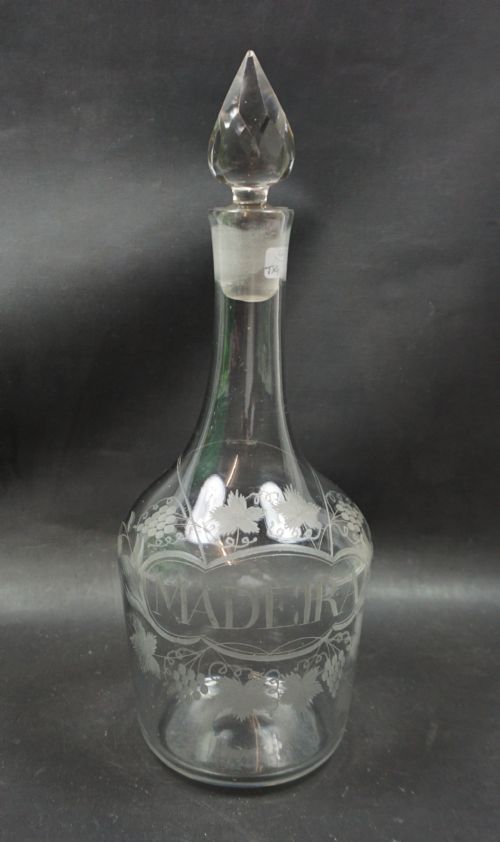
Details such as engraved labels like Madeira and applied three ring collars on the necks required precise manipulation while the metal was hot or during the cold-cutting stage. Heavy stoppers were ground by hand to fit individual bottlenecks, ensuring an airtight seal for the contents.
Judging the quality
Quality rests in the weight, the crispness of the wheel-cut facets, and the clarity of the crystal itself. Superior vessels possess a deep resonant ring when struck lightly and show sharp, clean cutting rather than soft or smoothed edges.
The balance of the vessel, the precise matching of stoppers in pairs, and the absence of cloudiness in the glass distinguish the finest examples. Early pieces show hand-finished pontil marks on the base, while later production incorporates more uniform machine pressing and polishing.
The Lead Crystal Wine Bottles Glossary
- Decanter
- A vessel designed to hold and serve wine, typically featuring a stopper and a decorative body. These pieces allow wine to breathe before serving.
- Carafe
- An open-topped glass container used for serving wine or water at the table. Unlike decanters, they traditionally lack stoppers.
- Pontil mark
- The rough scar left on the base of blown glassware where the pontil rod was snapped away after shaping. Its presence indicates traditional hand-blown manufacturing methods.
- Neck rings
- Raised glass bands encircling the neck of a decanter, often numbering two or three. They provided a secure grip for pouring when hands were damp or greasy.
- Cut glass
- Glassware decorated by holding the vessel against a rotating abrasive wheel to carve patterns into the surface. This technique creates sharp facets that enhance the material's brilliance.
Lead Crystal Wine Bottles: Frequently Asked Questions
Can I use these for daily dining?
These vessels were built for practical use at the table and handle wine service admirably today. Their sturdy lead glass construction makes them durable enough for regular gatherings.
Hand-washing immediately after use ensures the glass remains bright and prevents stubborn wine stains from settling inside.
How do I date a glass decanter?
Examine the shape, the presence of neck rings, and the style of the cutting to determine the period. Georgian and Regency pieces often feature three distinct rings and simpler, heavier proportions.
Victorian and Edwardian items frequently display denser, more complex hobnail or fan cutting alongside machine-polished brilliance.
Why do some decanters have engraved labels?
Engraved titles like Madeira identified the specific fortified wine or spirit intended for the bottle before paper labels became common. Artisans cut these names directly into the glass shoulder.
Such inscriptions help modern collectors understand the original function and contents of the vessel.