
Vintage Crystal Wine Decanter
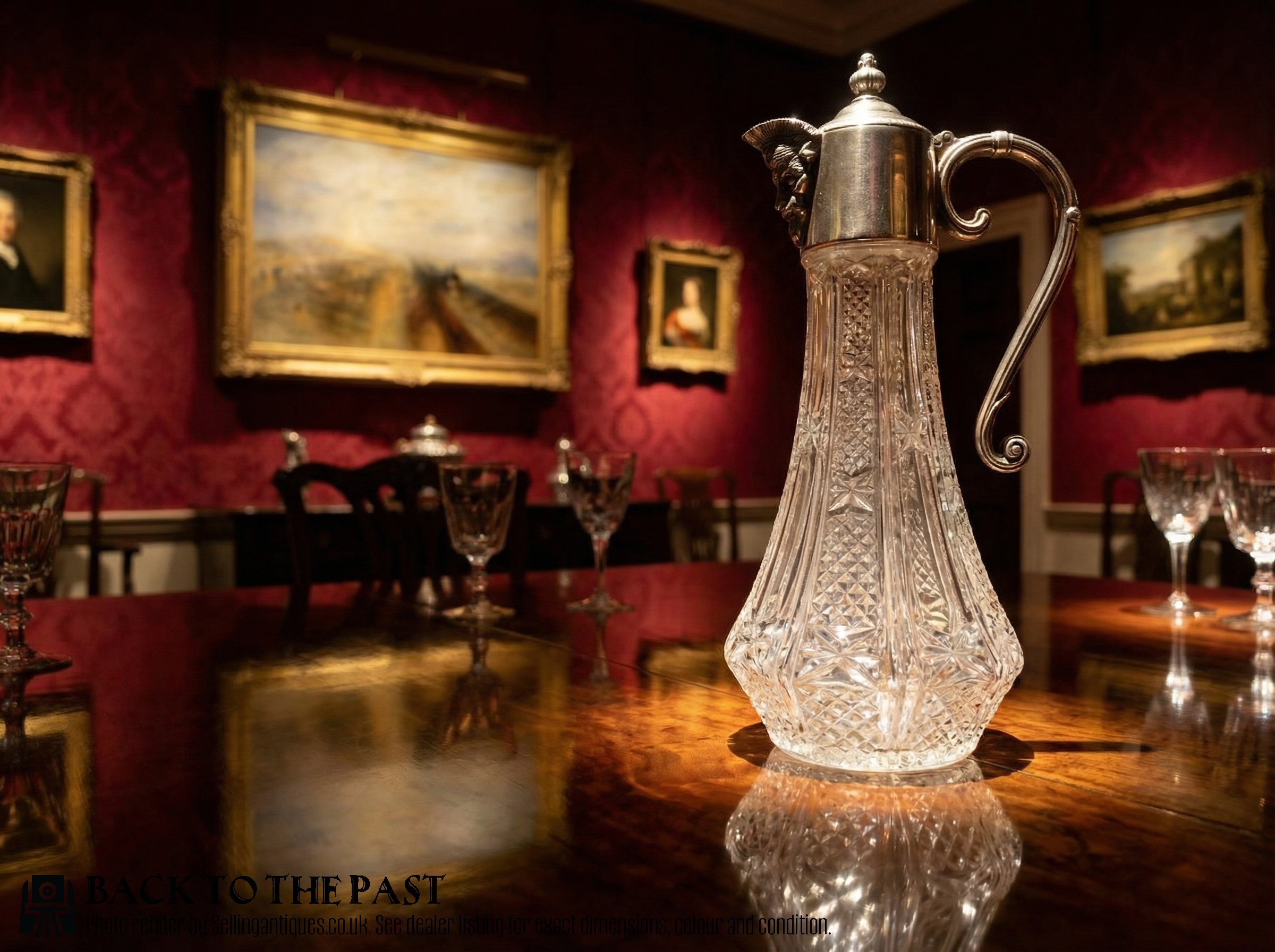
A vintage crystal wine decanter brings weight and brilliant refraction to the table, and Edwardian and Victorian examples dominate.
Vintage Crystal Wine Decanter
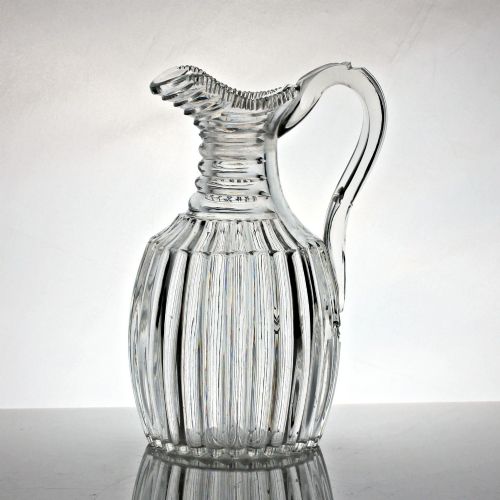
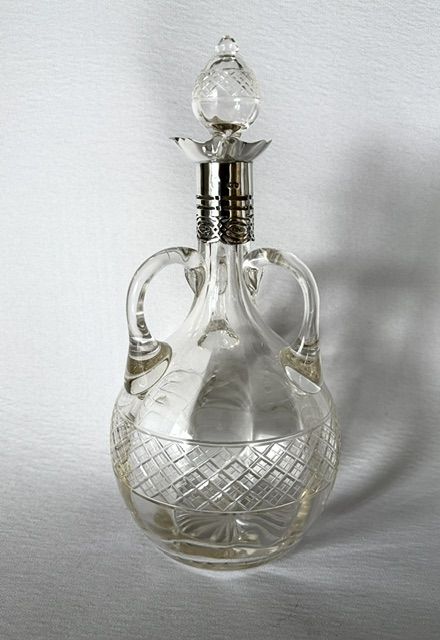
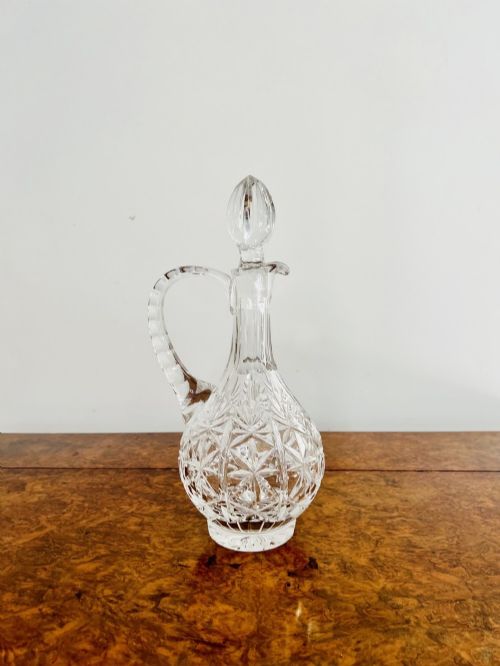
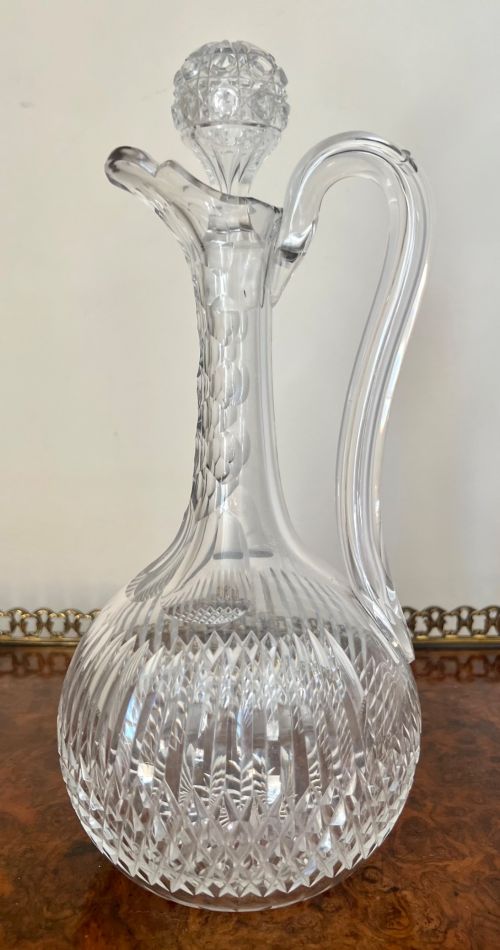
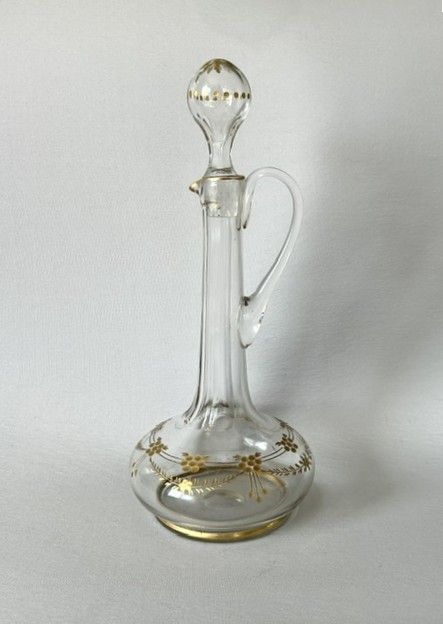
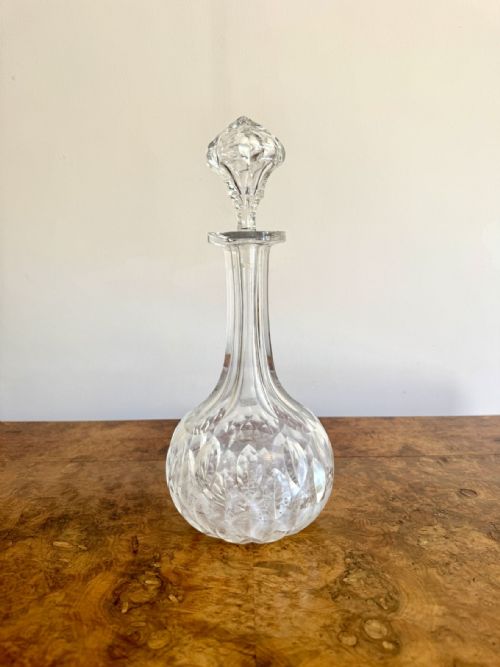
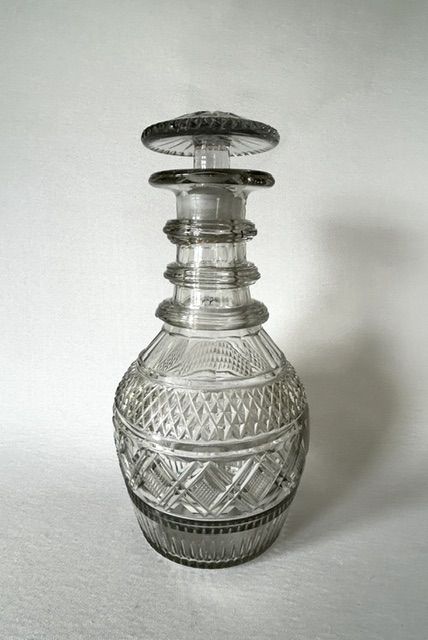
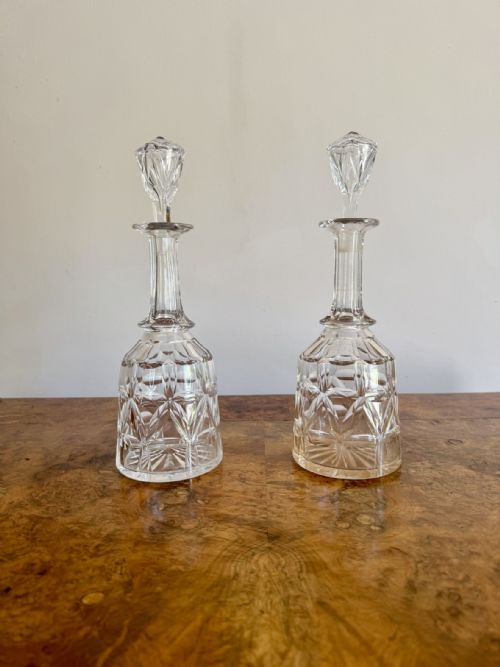
A vintage crystal wine decanter is a heavy vessel designed to hold and aerate wine, appearing on this page mostly in Victorian and Edwardian iterations. Buyers searching this phrase encounter bell shaped bodies, shaft and globe profiles, and tall ewers alongside claret jugs.
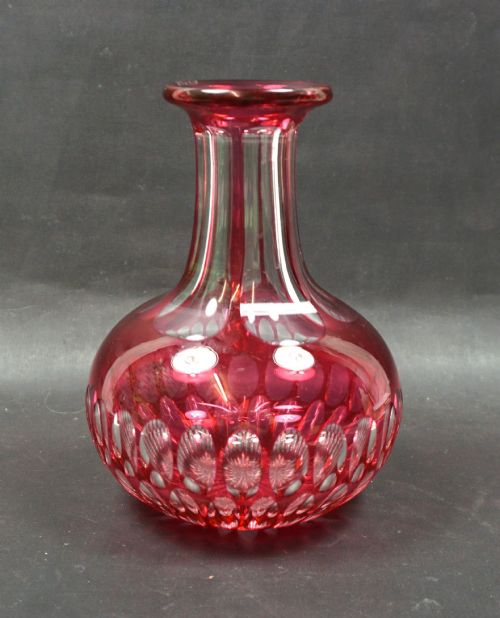
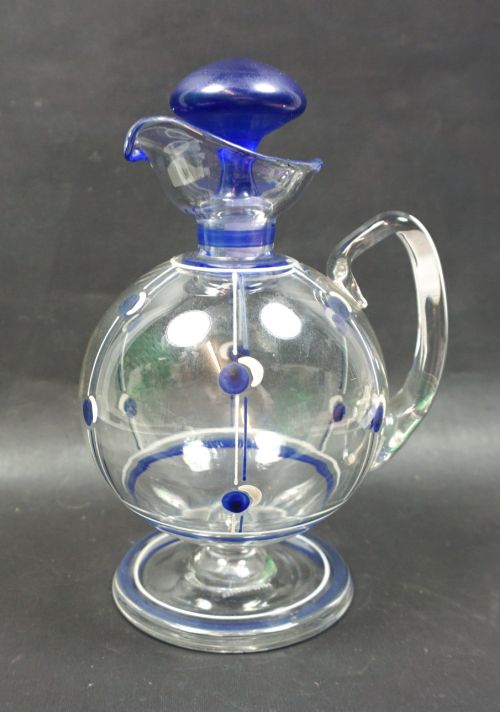
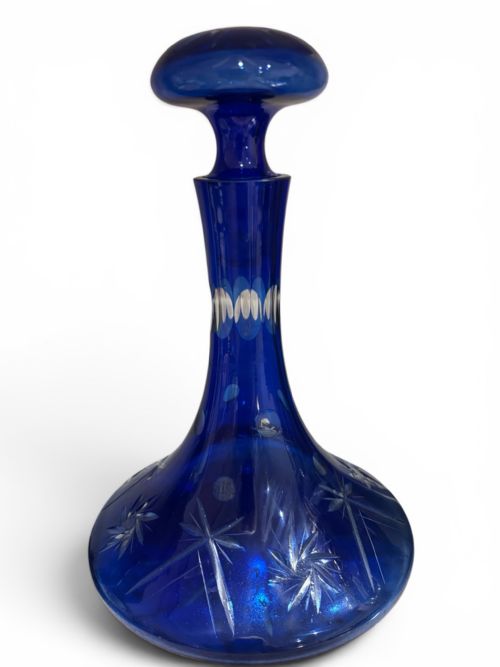
Vessels range from straightforward clear glass to cranberry over crystal carafes, cobalt crystal, and intricately engraved or gilded surfaces. Many examples integrate functional pouring spouts and handles while others rely on classic stoppers.
Materials and construction
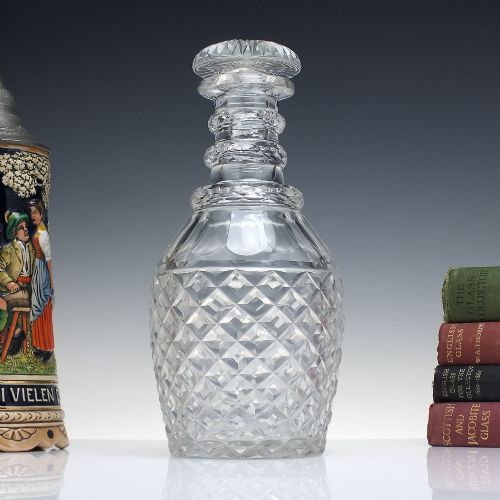
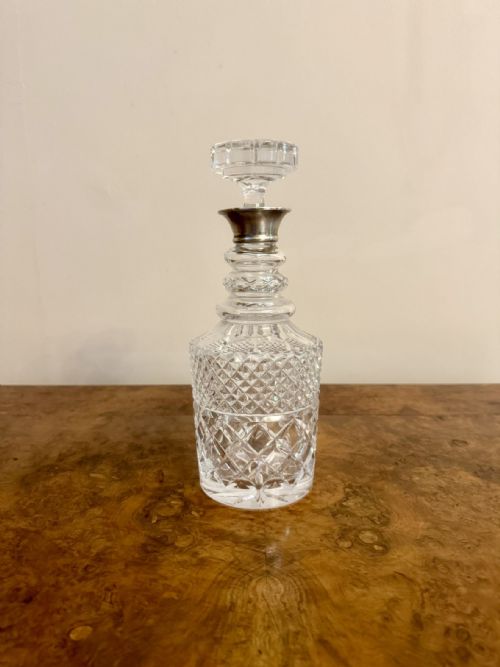
Makers utilised clear glass, lead crystal, and cut crystal, shaping vessels through heavy blowing and deep wheel cutting. This process produces sharp facets that catch ambient light across the body and neck.
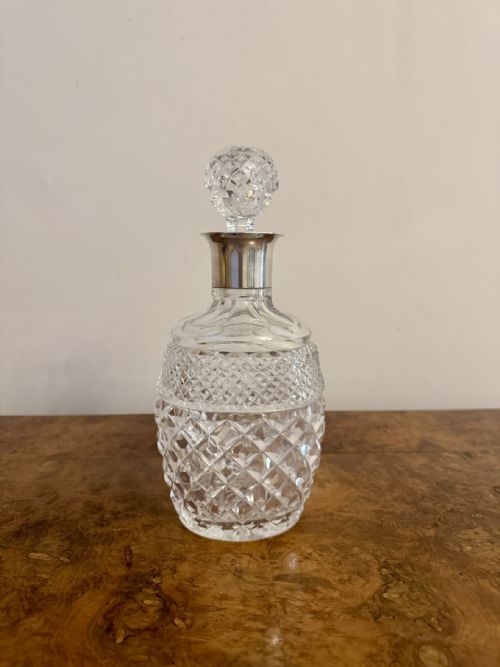
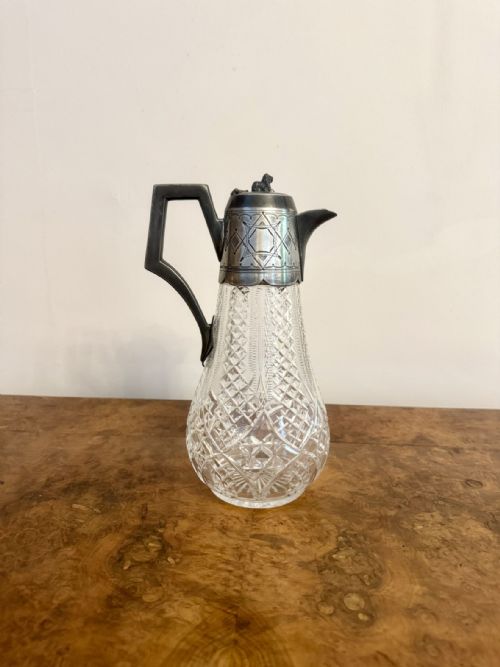
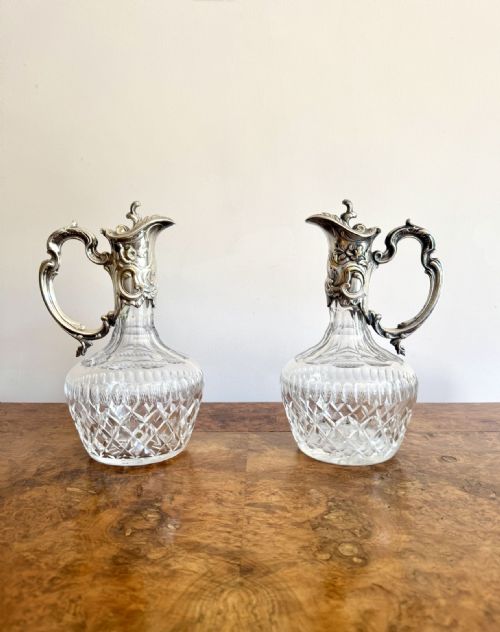
Mounts introduce sterling silver and silver plate, forming collars and hinged lids that secure the neck and aid pouring. Artisans also applied blue enamel decoration and gilding directly onto the crystal surface.
Listings feature lead crystal and cut glass alongside sterling silver and silver plate mounts across Victorian and Edwardian periods.
Assessing quality
Quality rests upon the crispness of the cutting and the weight of the metal content in the crystal. Deep, sharp facets create distinct optical refraction, whereas softer surface marks indicate hurried execution.
The integration of silver collars and mounts marks higher grades of production. Snug fitting stoppers and balanced handles demonstrate careful original assembly.
The Vintage Crystal Wine Decanter Glossary
- Lead crystal
- Glass containing metal oxides that increases refractive index and weight. This material allows for deeper and sharper cutting without losing structural integrity.
- Claret jug
- A specialised pouring vessel with a handle and hinged mount, designed specifically for serving red wine. These often feature silver plate or sterling silver hardware.
- Ewer
- A pitcher with a wide spout and scroll handle, often rendered in cut glass. The form derives from ancient vessels adapted for formal dining.
- Pillar and prism cut
- A decorative cutting technique featuring vertical flat planes and geometric prisms. It maximises light reflection across the body of the vessel.
- Intaglio
- A design carved into the surface of the glass rather than raised in relief. This technique requires steady hand wheel engraving.
Vintage Crystal Wine Decanter: Frequently Asked Questions
How do I clean inside a vintage decanter?
Residue and staining inside narrow necks require gentle mechanical action rather than harsh abrasives. Warm water combined with non-scratch beads or specialised cleaning tablets lifts sediment effectively.
After washing, invert the vessel on a specialised drying rack to allow air circulation without trapping moisture inside the base.
Can I use these decanters for daily dining?
Heavy lead crystal construction makes these vessels robust enough for regular service. Hand washing protects both the crystal brilliance and any attached silver mounts from detergent damage.
Thermal shock remains a risk, so avoid pouring boiling liquids into cold glass containers.
How do I distinguish Victorian from Edwardian decanters?
Victorian examples frequently display heavier pillar cutting, shaft and globe silhouettes, and robust proportions. Silver mounts from this era often carry heavier embossing and dark patina.
Edwardian pieces lean toward slimmer bell shapes, refined engraving, and brighter silver collar work that reflects changing dining fashions.
What is the purpose of a silver collar?
Silver collars reinforce the rim against chipping during pouring and provide a secure seating point for stoppers or hinged lids. They also add structural balance to top heavy forms like claret jugs.
These mounts frequently bear hallmarks that help date the metal components of the piece.