
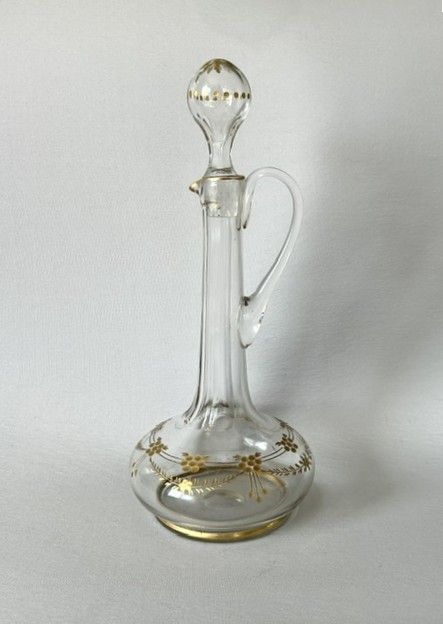
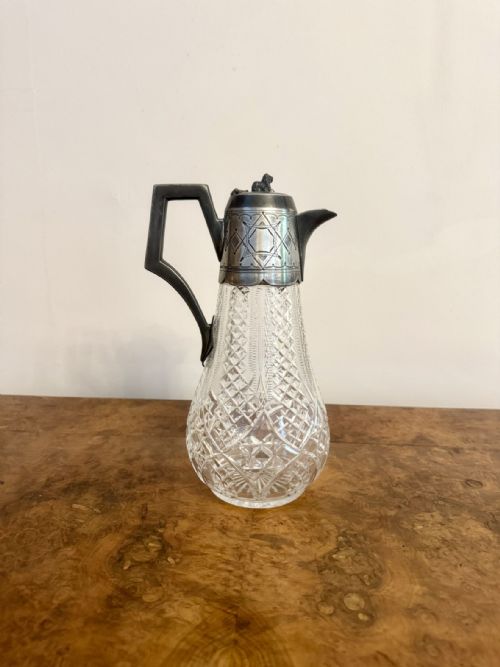


Clear Crystal Wine Pitcher
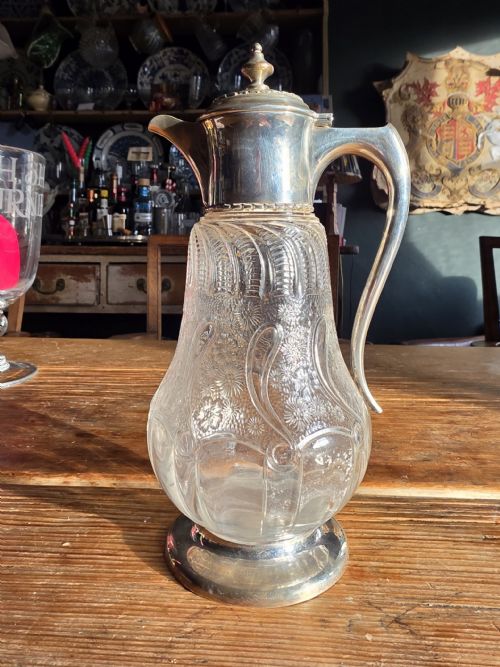
A clear crystal wine pitcher brings weight and brilliance to the table, uniting cut glass vessels and silver mounts from the Victorian and Edwardian eras.
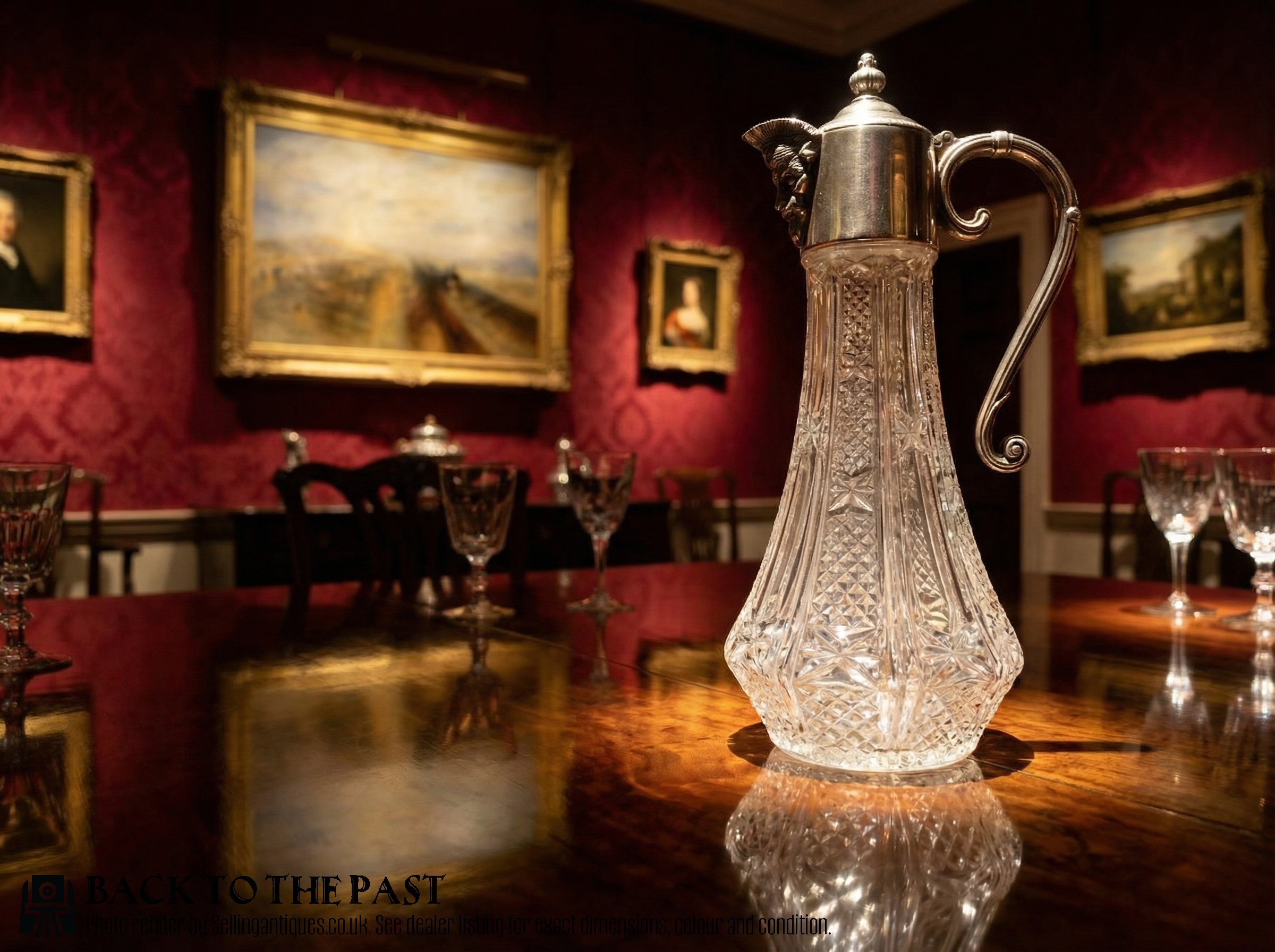
Clear Crystal Wine Pitcher
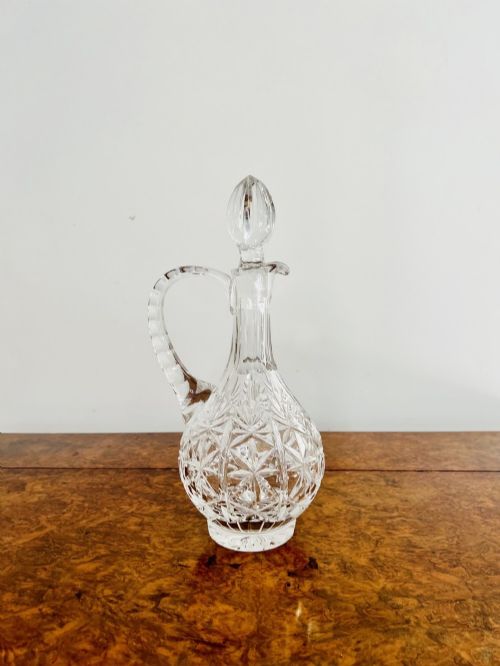
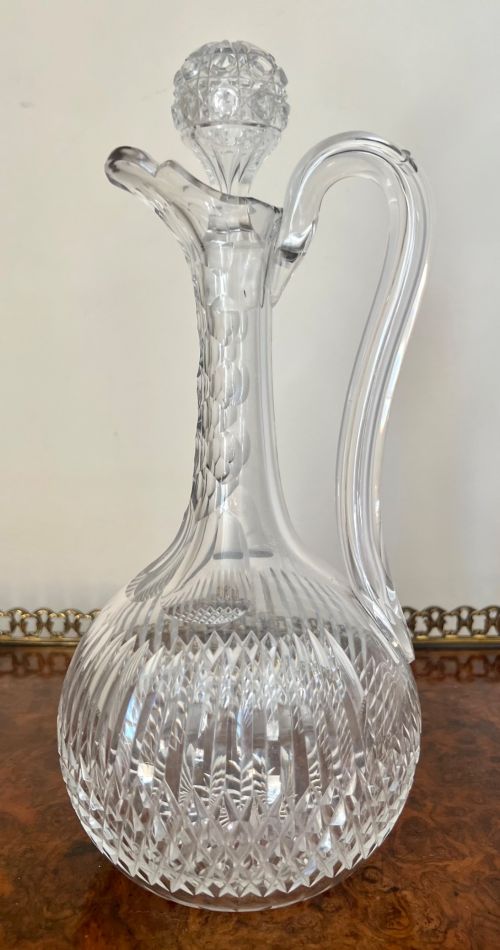
A clear crystal wine pitcher takes many forms across the Victorian, Edwardian and nineteenth-century periods, appearing as claret jugs, ewers, decanters and serving vessels. Buyers searching for a clear crystal wine pitcher encounter heavy cut glass bodies paired with metal mounts, often designed for pouring claret, dessert wine or water at the dining table.
Most examples found here date from the late nineteenth century through to the early twentieth century, spanning Victorian and Edwardian workshops. These pieces combine transparent glass with silver, silver plate or sterling mounts, sometimes featuring specialised spouts or novelty shapes like ducks.
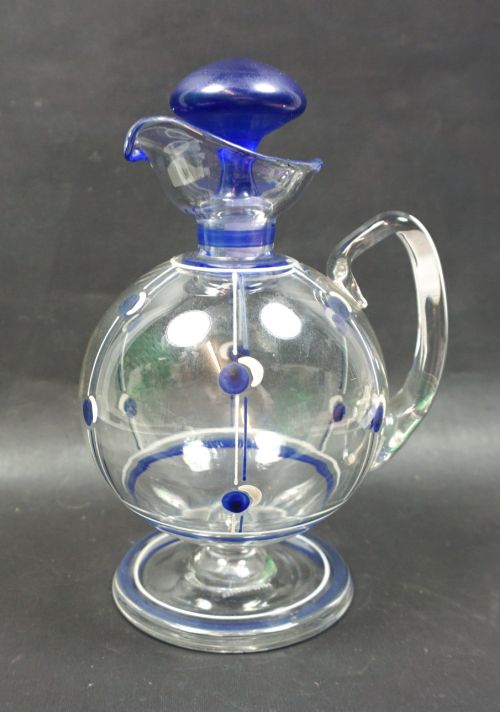
Alongside standard English cut glass, this category includes continental pieces such as Bohemian gilded vessels and French or Czech examples decorated with enamel or latticinio threads. Forms range from simple pillar and prism cut water jugs to elaborate silver-mounted claret jugs bearing London hallmarks.
Materials and construction
Makers shaped these vessels using heavy lead crystal and clear glass, applying deep cutting techniques like hobnail, pillar and prism patterns to refract light. The glass bodies were then fitted with cast and chased mounts in silver, sterling silver or silver plate, secured around the neck and lip.
Specialist decoration varied by origin, with English pieces relying on brilliant wheel-cut facets while continental makers utilised blue enamel, gilding or delicate white latticinio glass threads. Mounts often incorporated hinged lids, thumbpieces and integral spouts, including unusual face spouts cast by silversmiths.
Duck-shaped decanters prove that nineteenth-century hosts took their table wine with a distinct touch of ornithological whimsy.
Assessing quality and execution
Quality rests in the crispness of the glass cutting and the weight of the metal mount, where deeper facets and thicker lead crystal produce a clearer ring and greater brilliance. Superior vessels display precise geometric alignment across the body and heavy gauge silver mounts that fit securely to the glass collar.
The sophistication of the design further distinguishes standard serving jugs from exceptional pieces, particularly where silversmiths applied figural elements, novelty animal forms or intricate hand-engraved grape and vine motifs. Maker attribution also plays a role, with documented workshops commanding greater attention for their metalwork and glass provenance.
William Comyns·Webb Corbett·Hukin and Heath·Baccarat
The Clear Crystal Wine Pitcher Glossary
- Claret jug
- A specialised pouring vessel designed for serving red wine, typically featuring a glass body and a metal hinged lid. These pieces were standard on Victorian and Edwardian dining tables.
- Ewer
- A large jug with a wide spout and a looped handle, rooted in classical forms but adapted in the nineteenth century for water or wine service.
- Latticinio
- A decorative glass technique involving opaque white or coloured glass threads embedded within clear crystal, often seen in mid-nineteenth-century continental pieces.
- Hobnail cut
- A raised, diamond-shaped geometric pattern cut into the surface of crystal glassware, creating a textured exterior that catches the light.
- Silver plate
- A layer of silver fused to a base metal foundation, widely utilised for the mounts and handles of serving jugs during the Victorian and Edwardian eras.
Clear Crystal Wine Pitcher: Frequently Asked Questions
How do I clean an antique crystal wine pitcher?
Wash the vessel by hand using warm water and a mild detergent, avoiding harsh abrasives that might scratch the crystal or damage silver mounts.
Dry the glass immediately with a lint-free cloth and leave the lid open to allow air circulation inside the neck.
Were these pitchers only used for claret?
While frequently termed claret jugs, these vessels served water, dessert wine, champagne and whisky across nineteenth-century dining rooms.
Different forms accommodated specific beverages, from tall decanting jugs to smaller cordial ewers.
How can I tell a Victorian pitcher from an Edwardian one?
Victorian examples often display heavier, more ornate silver mounts and deeply engraved naturalistic motifs like grapes and vines.
Edwardian pieces frequently lean towards lighter structural profiles, crisper geometric cutting and sleeker silver-plated collars.
What is the difference between glass and lead crystal?
Lead crystal contains added lead oxide which increases the weight, refractive index and overall brilliance of the material.
This composition allowed nineteenth-century cutters to execute deeper, sharper facets than standard soda-lime glass permitted.