



Cut Glass Stopper Decanter
A cut glass stopper decanter brings heavy weight and deep facet cutting to the sideboard, serving spirits and wine with period elegance.
Cut Glass Stopper Decanter
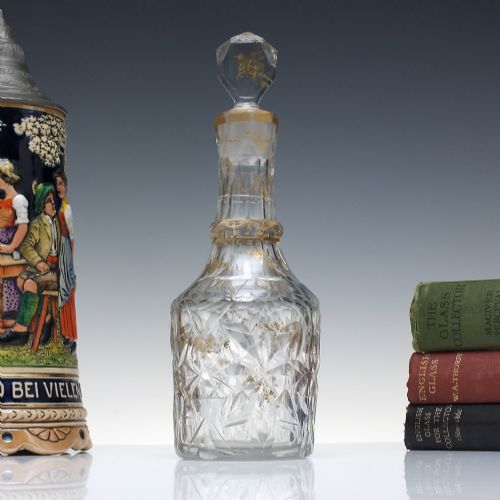
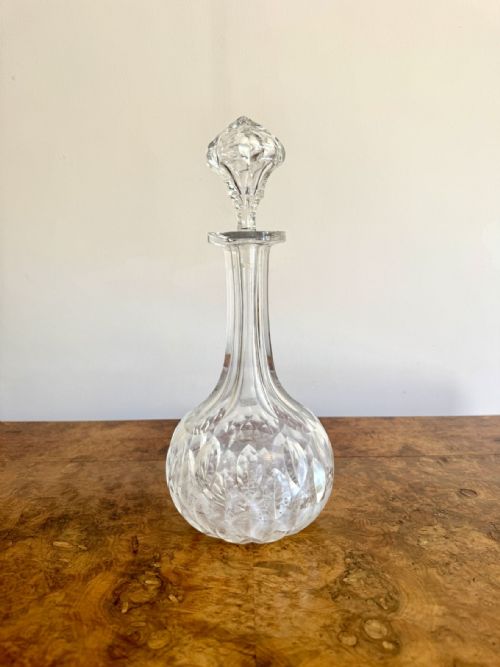
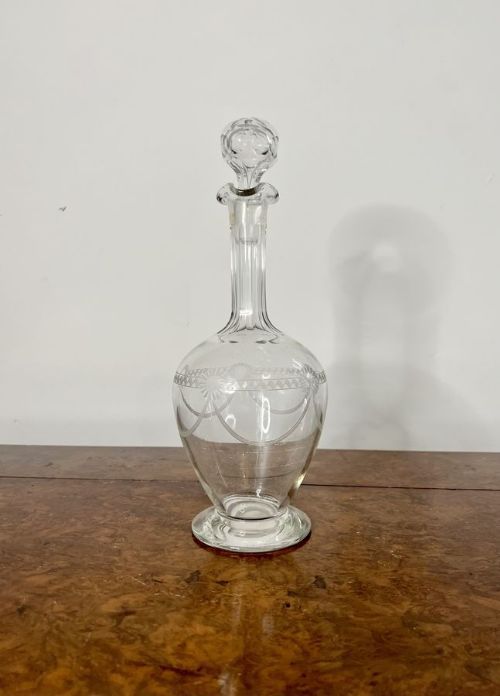
A cut glass stopper decanter is a vessel designed to hold wine, port, sherry, whisky, or spirits while sealing them with a matching glass stopper. These pieces range from tall nineteenth-century forms to broad-based ship's decanters and smaller perfume or spirit bottles.
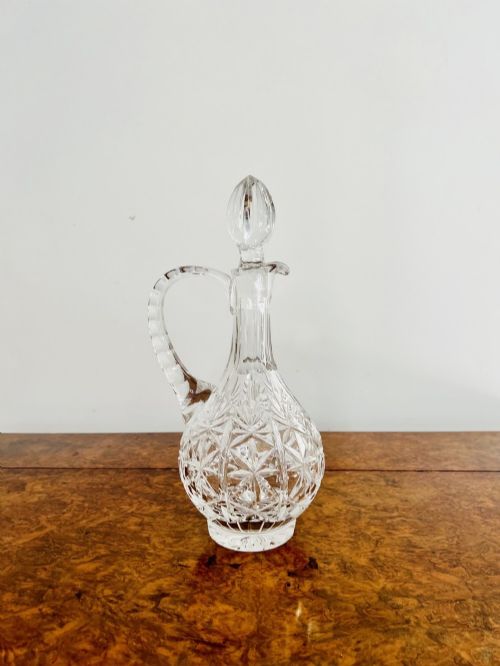
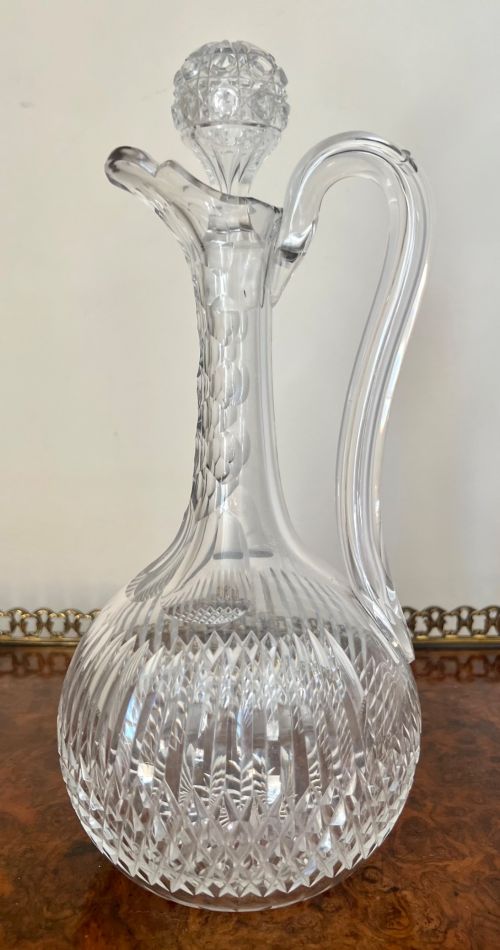
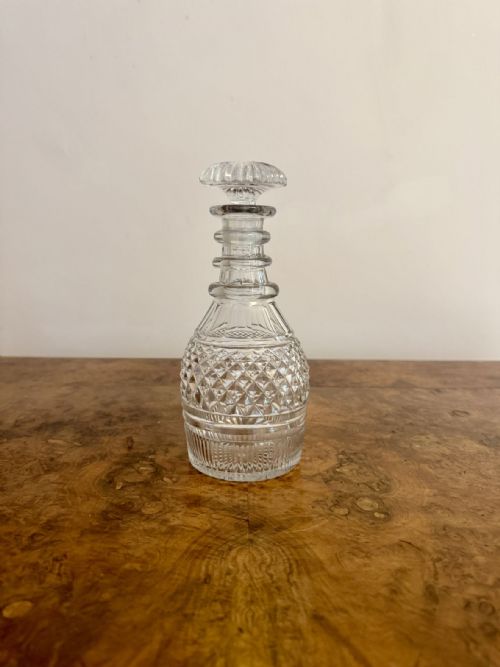
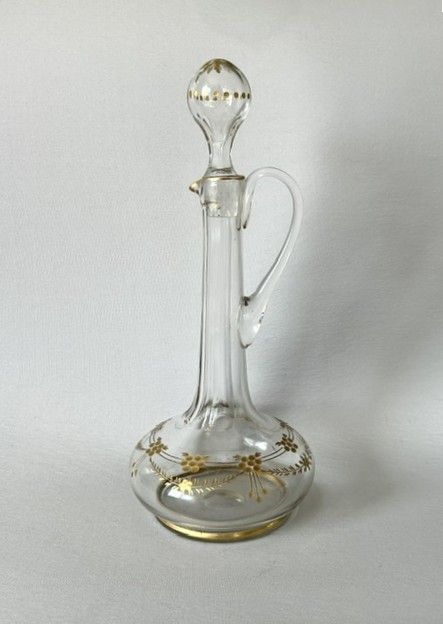
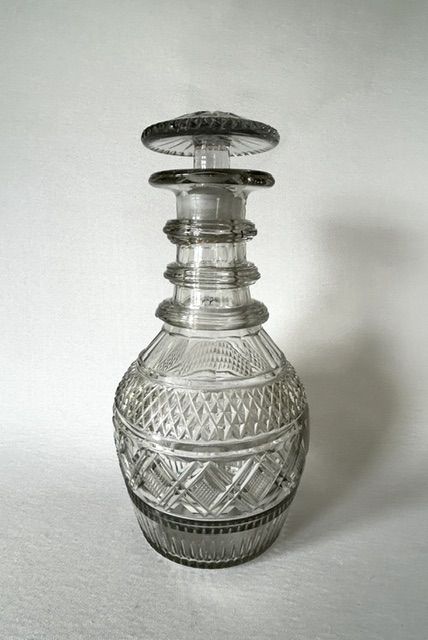
Edwardian and Victorian examples dominate the selection, alongside Georgian and Regency specimens that show earlier cutting styles. Forms vary from bell shapes and ewers to shaft and globe profiles.
Many incorporate precious metal mounts such as sterling silver collars, silver plate mounts, or matching silver labels. Others rely entirely on the brilliance of clear, crystal, or coloured glass.
How they were made
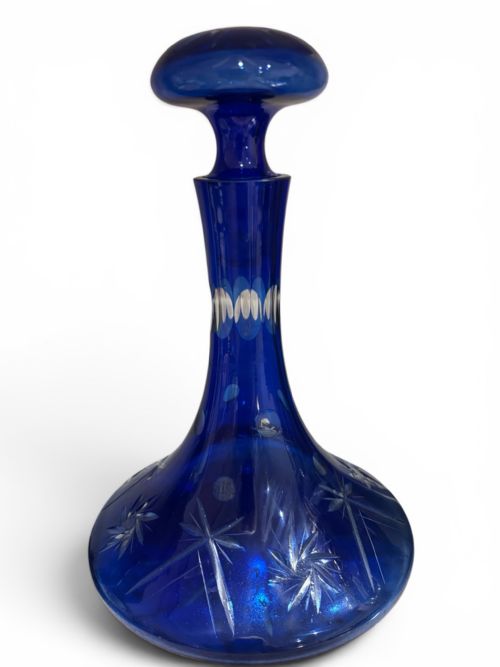
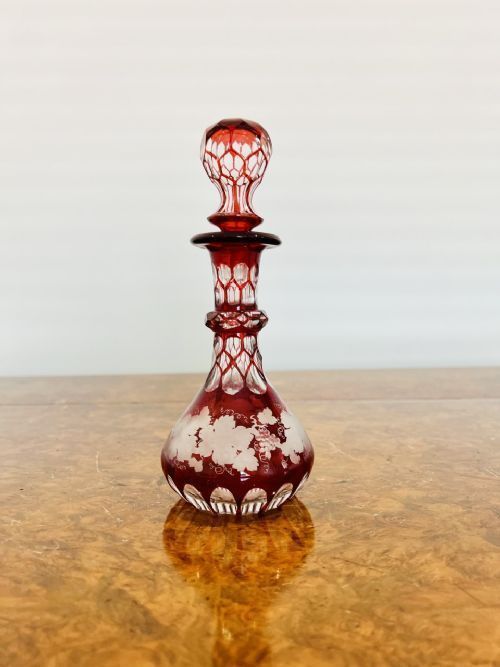
These vessels are shaped from heavy lead crystal or clear glass, often utilising techniques like deep wheel cutting, diamond faceting, and surface engraving. Workshops also produced ruby overlay and gilded glass, combining coloured casing with intricate cut patterns.
Stoppers are ground by hand to fit individual necks, ensuring an airtight seal for the contents within. Mounts in silver or silver plate are fitted securely around the upper collar to reinforce the rim and add functional weight.
Cut Glass Stopper Decanter Retail Price Guide 2026
Typical asking prices for cut glass stopper decanter among the pieces listed under this phrase on Sellingantiques today, from the lower quarter to the upper quarter. They describe what is for sale here now, not the wider market.
Some Victorian decanters feature star-cut bases designed to leave brilliant geometric patterns on the mahogany dining table.
What varies in quality
The clarity and thickness of the glass set the foundation, with heavier lead crystal yielding sharper refraction and a deeper ring when struck. Deep, crisp wheel cutting demonstrates greater skill than shallow machine stamping.
Proportion and the matching of the stopper to the body distinguish standard vessels from finer workshop outputs. Superior examples maintain balance in their profiles, whether formed as straight-sided pillars, ewers, or broad ship's decanters.
Atelier of James Giles
The Cut Glass Stopper Decanter Glossary
- Cut Glass
- Glass shaped and decorated by abrasive wheels to create facets, flutes, and geometric patterns. This technique produces the characteristic sparkle and heavy weight found in quality tablewares.
- Ship's Decanter
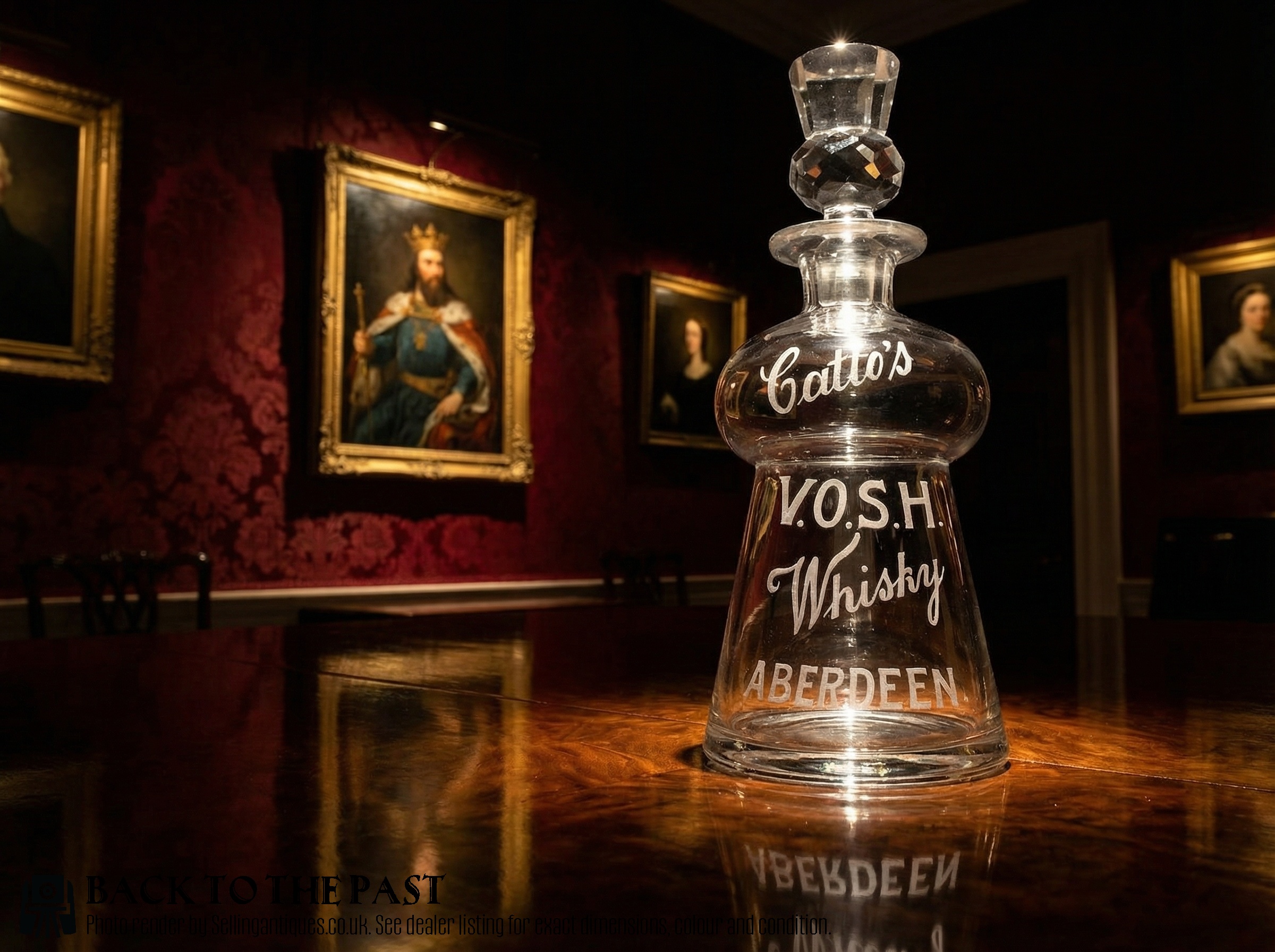
- A vessel with a wide, stable base and a conical body designed to prevent tipping at sea. These practical pieces were heavily utilised on board vessels during the Georgian and Victorian eras.
- Stopper
- A ground glass plug designed to seal the neck of a bottle and preserve the contents. Matching stoppers are turned specifically to fit each individual decanter.
- Lead Crystal
- Glass containing lead oxide, which increases density, weight, and light dispersion. It allows for deeper, sharper facet cutting than standard soda-lime glass.
- Ewer
- A pitcher or jug with a wide spout and a handle, often utilised for serving wine or water. Victorian and Edwardian makers adapted this traditional form into cut glass.
Cut Glass Stopper Decanter: Frequently Asked Questions
How do I clean inside a cut glass stopper decanter?
Residue and staining inside narrow necks require gentle cleaning methods rather than abrasive tools. Warm water combined with mild agents and soft beads can lift old wine sediments safely.
Avoid sudden temperature changes to protect the heavy lead crystal from thermal shock. Rinsing thoroughly and allowing the vessel to air dry upside down preserves the interior finish.
Can I use these decanters for daily dining?
Regular use remains entirely practical for serving wine, port, or spirits at the dining table. The thick lead crystal and sturdy bases are built to withstand careful handling and pouring.
Hand washing is essential to protect silver collars and prevent chemical damage from modern dishwashers. Keeping the matching stopper clean ensures a proper seal for stored liquids.
How do I know if the stopper belongs to the decanter?
Original stoppers are ground to fit the specific neck of that vessel during manufacture. Examining the pattern of the cut facets across both pieces often reveals whether the design flows continuously.
Hand-ground glass joints frequently show minor irregularities unique to the pairing. A secure, flush fit indicates a matched or original component.
What is the difference between a spirit decanter and a wine decanter?
Spirit decanters often feature smaller capacities and tighter stoppers to preserve high-proof liquids over long periods. They frequently appear alongside matching spirit labels or silver collars.
Wine decanters tend to have broader bodies to allow aeration, or stable low profiles like ship's decanters. The evidence includes specialised claret jugs, whisky decanters, and port bottles.