


Victorian Silver Plated Decanter
When you search for a victorian silver plated decanter, you are looking at nineteenth-century table vessels combining heavy glass bodies with plated metal mounts.
Victorian Silver Plated Decanter
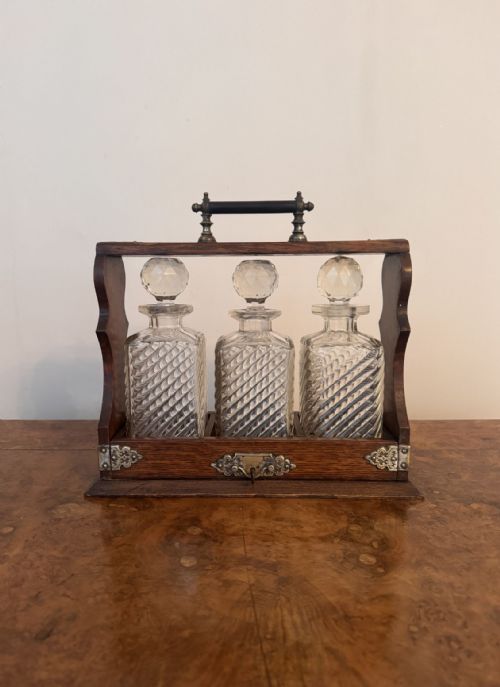
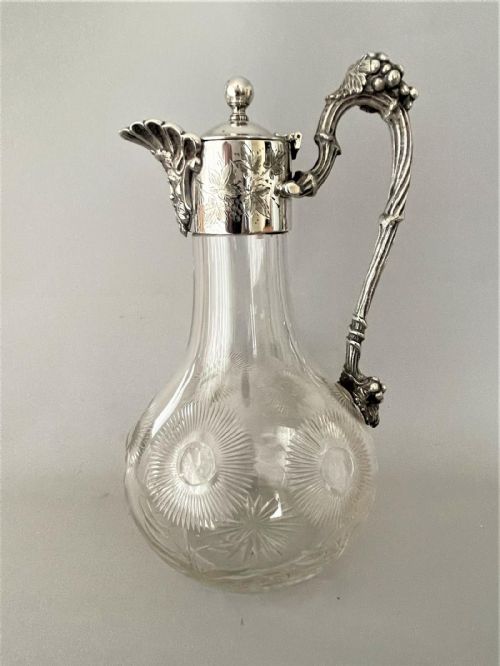
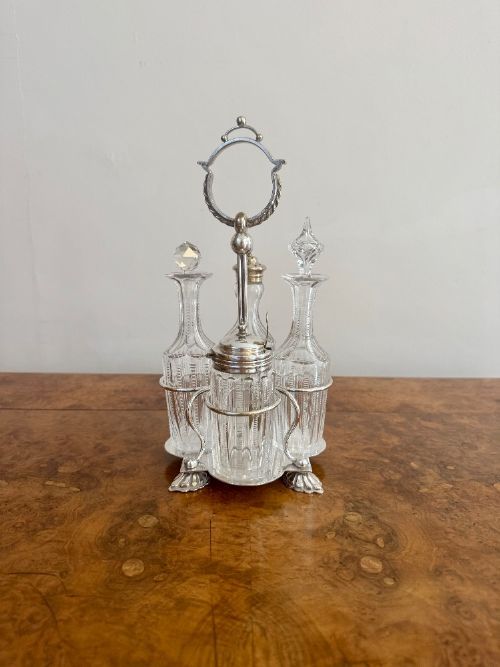
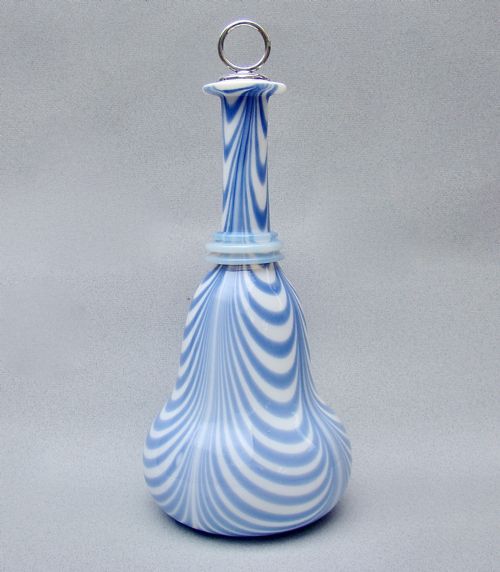
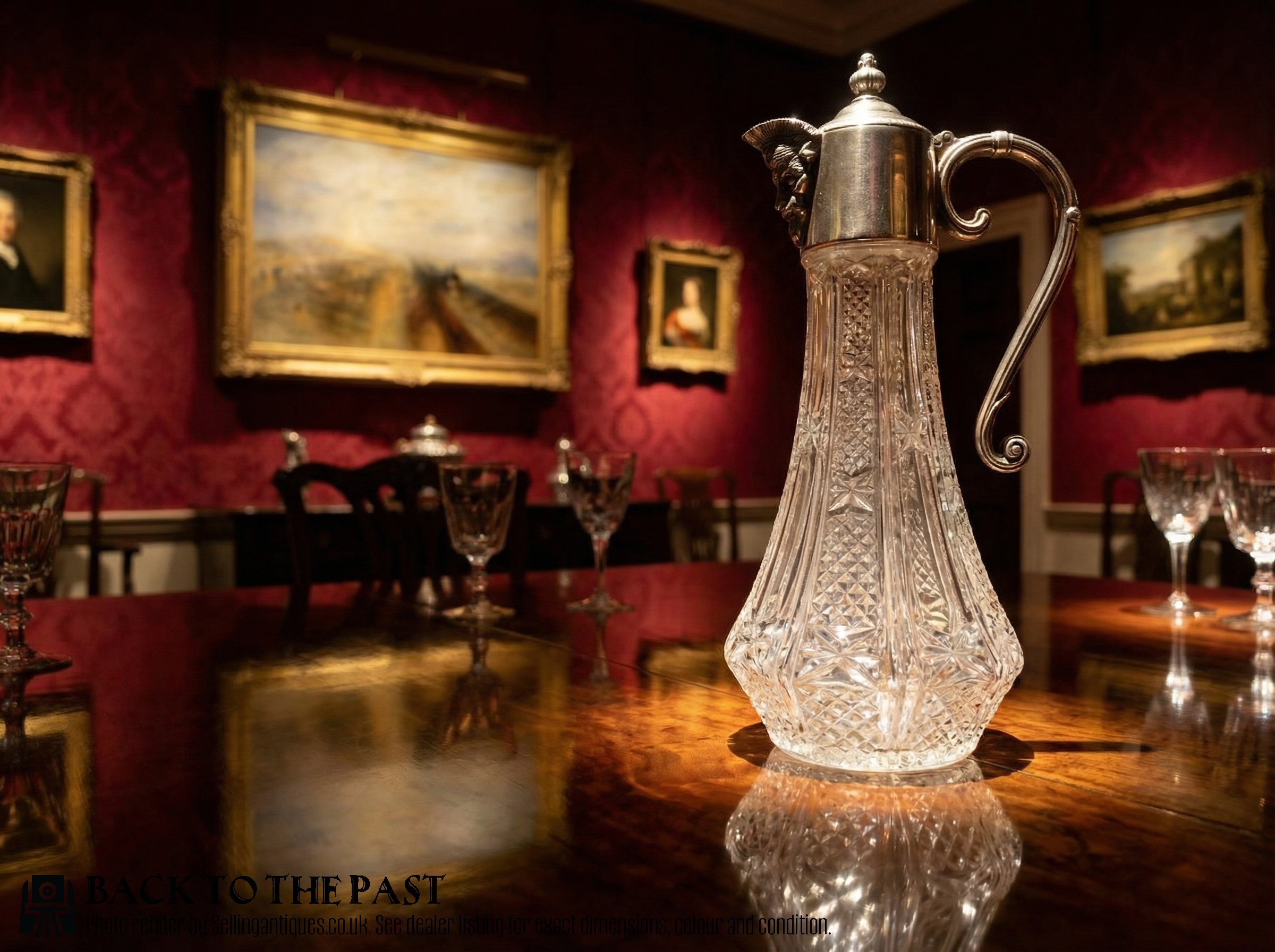
A victorian silver plated decanter usually appears on this page in the form of a claret jug, a tantalus, or a bottle set within a metal stand. The glass bodies range from clear cut crystal to coloured Nailsea, cranberry, and Bristol blue glass. Many examples feature etched botanical patterns, floral motifs, or fruiting vines upon the glass.
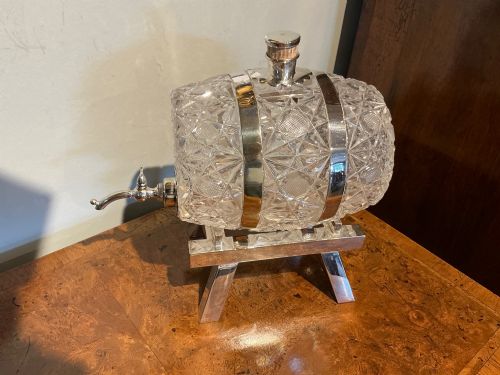
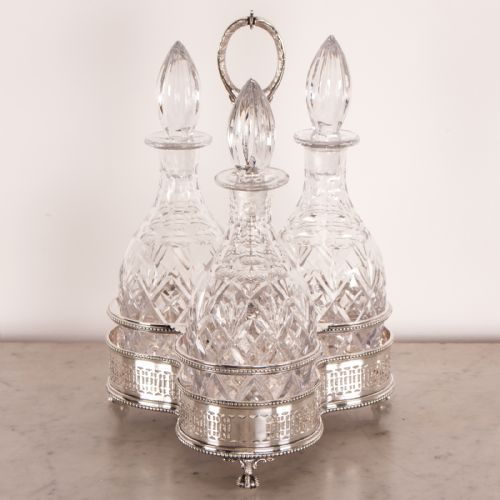
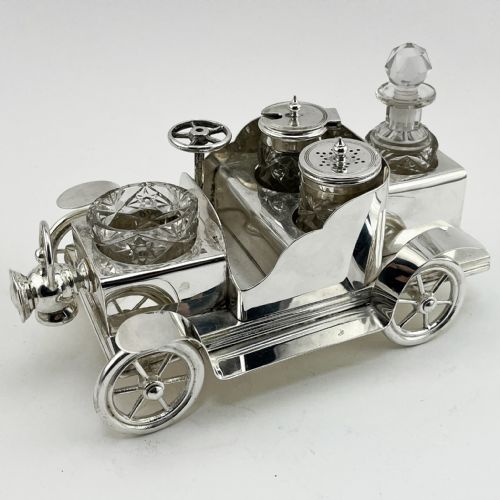
Makers housed these vessels in silver plated frames, carriage coasters, and locking tantalus frames designed to secure spirits on the sideboard. Cruet sets and spirit barrels also appear frequently alongside traditional single bottle decanters. The forms span the Victorian and Edwardian periods, utilising styles from plain functional designs to elaborate Arts and Crafts and Art Nouveau interpretations.
Silver Plate and Cut Glass
The manufacturing process combined traditional glassblowing and wheel-cutting with metal plating techniques developed across the nineteenth century. Glass bodies were hand-blown, sometimes utilising coloured metals like cranberry and blue glass, then shaped and deeply faceted by hand. Mounts, handles, and hinges were cast or stamped in base metals before undergoing silver plating.
Many early pieces rely on Old Sheffield Plate, where a thin layer of silver was fused to a copper base, whilst later items utilised electroplating. Mounts were then fitted securely to the bottle necks and bases, often incorporating hinged lids and thumb-pieces for pouring.
Some nineteenth-century spirit barrels rolled about on miniature wheeled carriages so guests could shunt whiskey down the dinner table with ease.
Hand-Cut Detail and Metal Preservation
Quality in these pieces rests upon the crispness of the glass cutting and the thickness of the silver plating. Superior examples exhibit deep, sharp facets on the crystal and delicate, well-defined etching rather than shallow surface scratching. The weight and balance of the piece, particularly in claret jugs and tantalus frames, indicate higher standards of production.
The condition of the silver plate over the underlying base metal forms another differentiator. Pieces retaining their original cast frames, matching stoppers, and unrubbed plating sit at the higher end of the range, whereas thin plating worn down to the base metal alters the character of the object.
Walker & Hall·Mappin & Webb·Elkington·Hukin & Heath·Henry Wilkinson & Co
The Victorian Silver Plated Decanter Glossary
- Tantalus
- A locking frame that holds decanters securely to prevent access to the contents without a key. The wooden or metal framework exposes the bottles while keeping the stoppers locked in place.
- Claret Jug
- A pouring vessel specifically designed for serving red wine, typically featuring a glass body with a hinged silver plated lid and handle. They often incorporate star-cut bases and elaborate spout designs.
- Old Sheffield Plate
- An early plating method created by fusing a sheet of silver to a copper core before shaping. This technique often reveals a thin line of copper along exposed edges.
- Nailsea Glass
- A style of glasswork characterised by looped or trailed decorations in contrasting colours embedded within the body. These pieces originate from the Nailsea glassworks and surrounding nineteenth-century factories.
- Cruet Set
- A collection of small glass bottles or jars mounted in a portable metal frame for holding condiments, oils, or vinegars at the dining table.
Victorian Silver Plated Decanter: Frequently Asked Questions
How do I clean antique silver plate?
Silver plate requires gentle cleaning with a soft cloth and a specialised silver polish that does not contain harsh abrasives. Rubbing too hard can wear through the thin silver layer and expose the base metal underneath.
Avoid immersing pieces with wooden bases or fitted mechanical locks in water. Wipe metal mounts carefully and dry them immediately after cleaning.
Are original stoppers important?
Original stoppers that match the cut and colour of the glass body are significant for completeness and value. Decanters were individually ground to fit their specific necks during manufacture.
Replacement stoppers often fit loosely or show subtle differences in glass tint and cutting style. Inspecting the ground glass joint helps confirm whether a stopper belongs to the bottle.
How do I date these pieces?
Dating relies on a combination of maker marks, manufacturing techniques, and stylistic clues like the shift from Old Sheffield Plate to electroplating. Victorian items often feature registration marks or specific maker stamps stamped onto the metal mounts.
Glass manufacturing traits, such as pontil marks on the base and the depth of the hand-cutting, also help narrow down the period of production.