
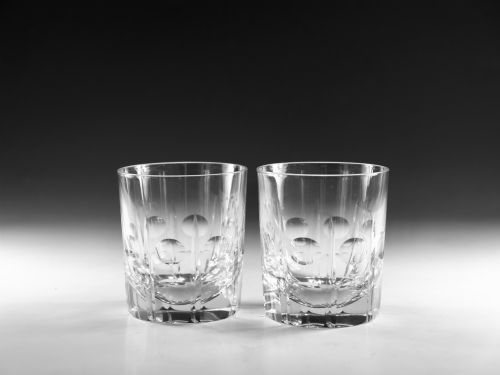
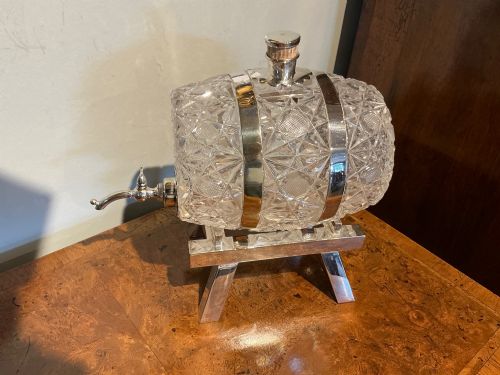
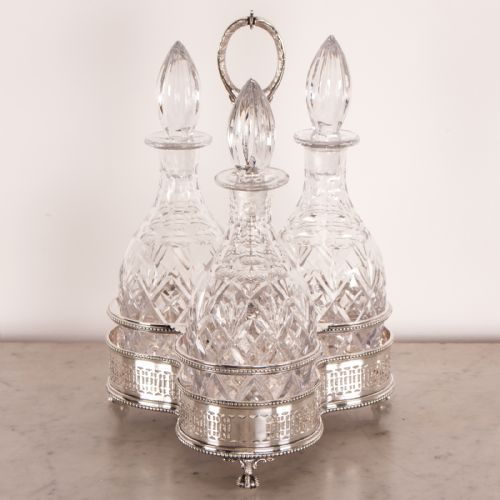
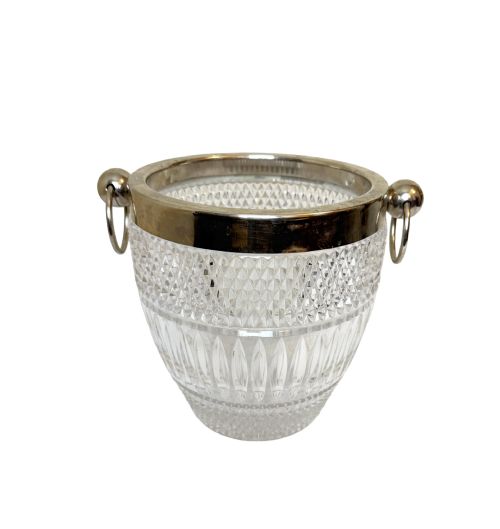

Cut Crystal Barware
Cut crystal barware brings tactile weight and sparkle to a room, offering vessels designed for serving spirits and wine with period character.
Cut Crystal Barware
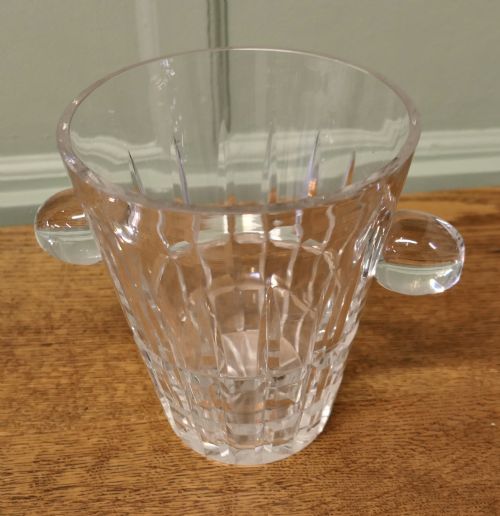
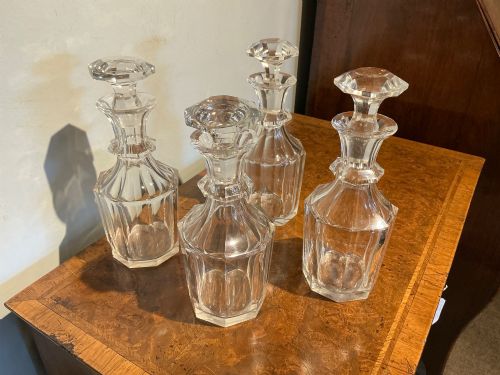
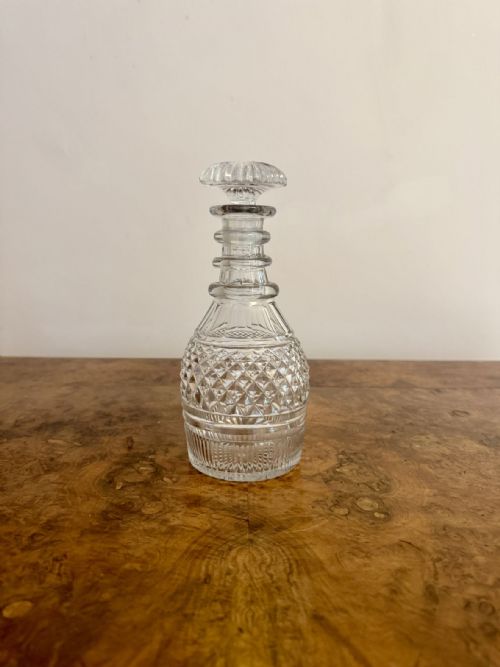
When you search for cut crystal barware, you encounter pieces that span the nineteenth and early twentieth centuries, encompassing the Victorian, Edwardian, and Art Deco eras. Decanters, tantaluses, champagne coupes, claret jugs, and ice buckets form the core of what appears in this category.
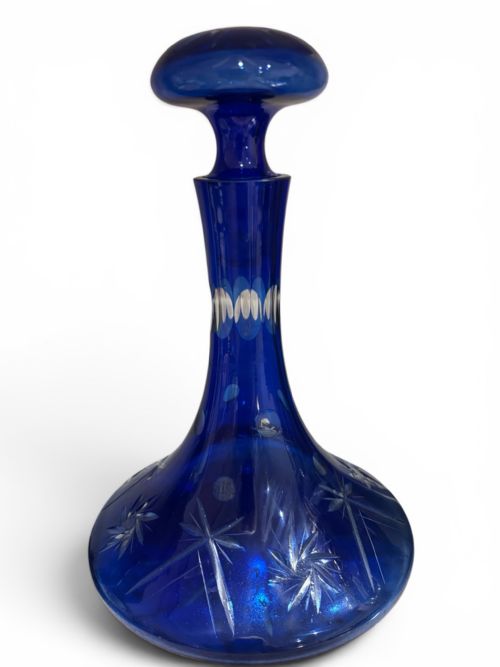
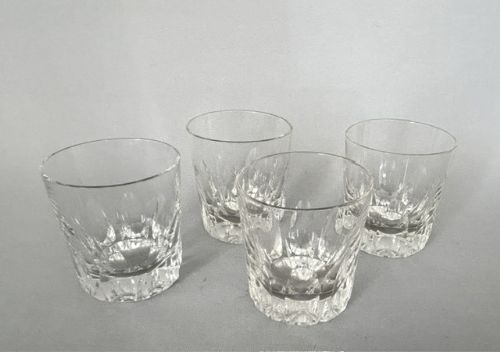
The English and French examples dominate, alongside Bohemian items, ranging from spirit barrels and whisky tumblers to complex locking tantaluses with silver-plate or sterling silver mounts. These functional objects reflect the drinking habits and social entertaining customs of past decades.
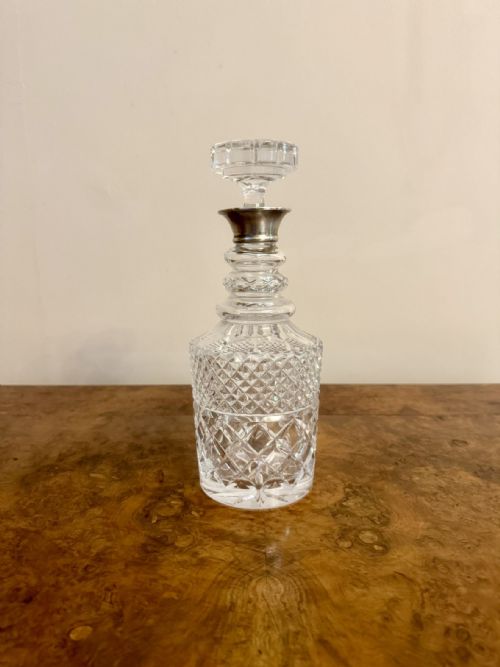
You are most likely to meet decanters and tantaluses dating from the late nineteenth century and the Edwardian period, often outfitted with silver collars or housed in oak and coromandel frames. Drinking vessels such as champagne coupes and tumblers from the 1920s also appear frequently.
Evaluating Quality
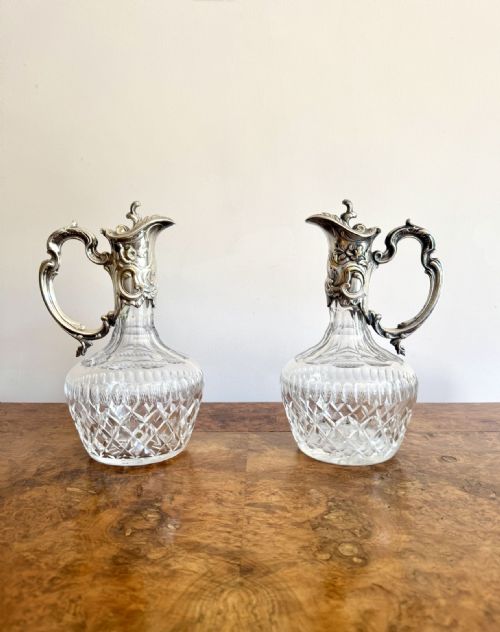
The clarity and weight of the crystal set the foundation, where denser lead content produces sharper light refraction and a clearer ring when struck. Precision in the wheel-cut facets - their depth, crispness, and alignment - distinguishes standard production from finer workshop output.
The integration of metal mounts matters greatly, distinguishing solid sterling silver or well-cast silver plate from lighter alternatives. Fitted wooden cases with intact locking mechanisms, original keys, and undamaged inlay represent higher levels of original craftsmanship.
Some nineteenth-century decanters bear engraved labels for brandy and whisky so nobody had to guess the contents.
Walker and Hall·James Powell·Saint Louis
The Cut Crystal Barware Glossary
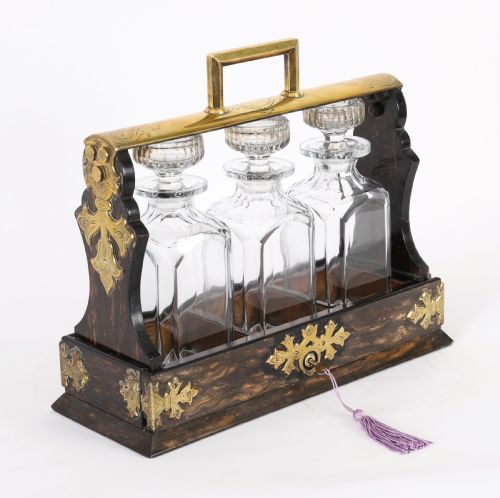
- Tantalus
- A locking wooden frame that holds decanters securely while displaying their contents behind a security bar. The name derives from the mythological figure Tantalus, as the drinks are visible yet physically out of reach until unlocked.
- Claret Jug
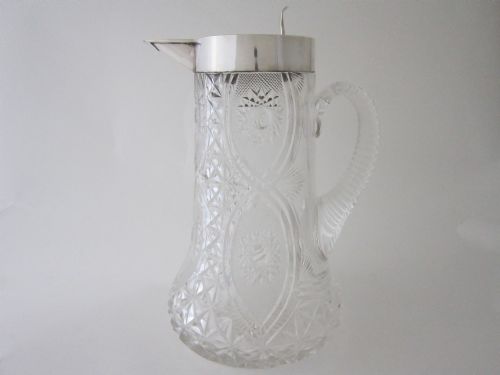
- A specialised pouring vessel designed for red wine, usually combining a cut crystal body with a hinged metal lid, handle, and collar. These jugs date frequently from the Victorian and Edwardian periods.
- Champagne Coupe
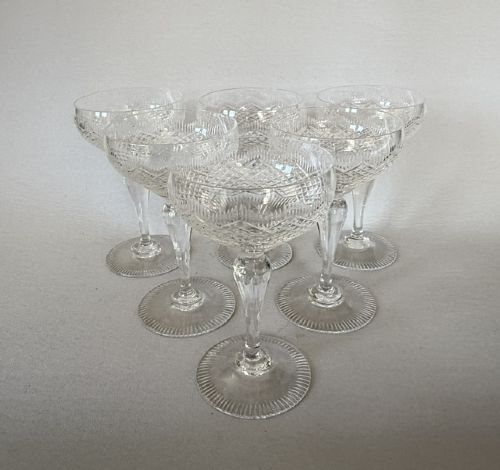
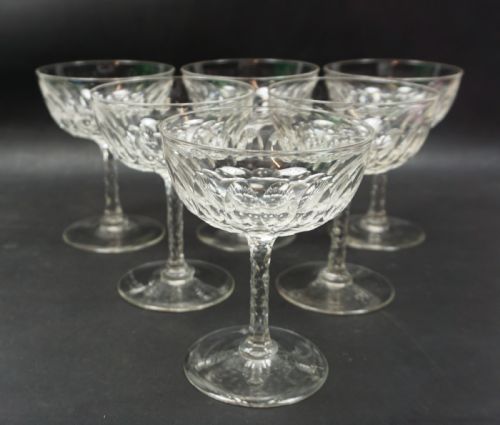
- A broad, shallow-bowled glass on a stem used for sparkling wines. The examples found here often feature facet cut stems and date to the late nineteenth and early twentieth centuries.
- Blaze Cut
- A specific deep, wide linear cutting technique used on glass and crystal. It creates broad facets that reflect light dramatically, often seen on Regency and early nineteenth-century decanters.
- Spirit Barrel
- A horizontal cylindrical vessel mounted on a stand, designed for holding and dispensing spirits. These barrels typically incorporate a small tap and a cut glass or crystal body.
Cut Crystal Barware: Frequently Asked Questions
What is a tantalus used for?
A tantalus secures alcoholic beverages in locked decanters to prevent unauthorized access by household staff or guests. The wooden frame holds the bottles firmly in place beneath a metal bar.
Once locked with a key, the stoppers cannot be removed and the decanters cannot be lifted out. They served as decorative and practical security measures in Victorian and Edwardian dining rooms.
Are these decanters safe for daily use?
Most antique cut crystal decanters remain structurally sound for holding and serving liquids today. Historic crystal manufactured in the nineteenth century can contain lead, so storing spirits in them for extended periods is generally discouraged.
They work well for serving drinks during an evening, provided you empty and wash them afterward. Inspect the interior for staining before use.
How do I date a cut glass decanter?
Examine the base of the decanter for a polished pontil mark, which indicates older hand-blown production methods before mass-produced mould seams became common. The shape of the body, the style of the cut patterns, and any accompanying silver hallmarks provide further chronological clues.
Edwardian and Victorian pieces often feature distinct neck rings and heavy star-cut bases. Georgian and Regency examples tend to display heavier kick-ups and simpler, bolder cutting styles.