


Blue Glass Stoppered Bottle
A blue glass stoppered bottle brings rich colour and light to a room, ranging from Georgian spirits decanters to delicate scent vessels.
Blue Glass Stoppered Bottle
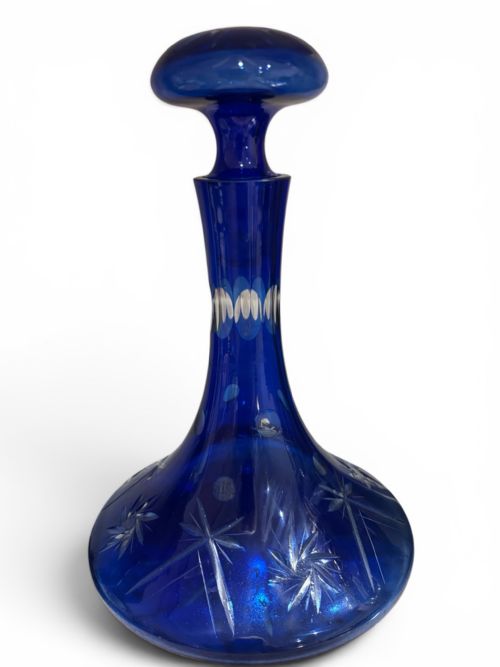
A blue glass stoppered bottle encompasses several distinct forms, from heavy spirit decanters and apothecary jars to delicate dressing table scent bottles. When searching for a blue glass stoppered bottle, buyers most frequently encounter Victorian chemist vessels, Georgian decanters, and 1930s perfume flasks.
The materials and origins span British, French, and Bohemian workshops, utilising rich cobalt and opalescent hues. Functional forms served to hold whiskey, wine, medicine, or perfume, each retaining its original matching or fitted stopper.
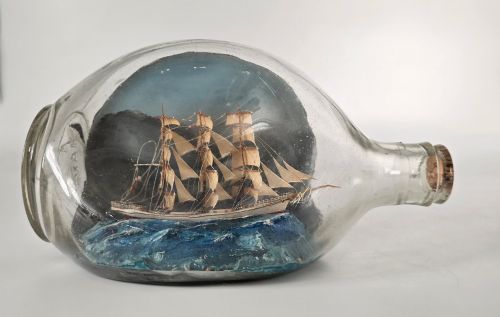
Makers ranged from large French glasshouses to folk artists placing tiny sailing ships inside glass chambers. Every period brings a different weight and shade, from deep Bristol blue to translucent opalescence.
How they were made
Makers shaped molten glass by hand, blowing it into moulds or free-blowing the vessel before adding applied handles, silver plate, or painted enamel details. Cobalt and other metal oxides were added to the batch to achieve the distinct blue colour.
Stoppers were individually ground to fit each specific neck, ensuring an airtight seal for volatile perfumes or spirits. Artisans also utilised inside-painting techniques for miniature snuffs and delicate cutting for crystal decanters.
Materials appearing across these entries include cobalt glass, opalescent crystal, wood, cork, and hand-painted enamel.
What varies in quality
Quality rests upon the depth of the glass colour, the crispness of any cut facets or enamel painting, and the integrity of the stopper. Fine pieces display a harmonious balance between the vessel and its matching closure.
The precision of the glassblowing and the clarity of the metal dictate the distinction between everyday utilitarian wares and exhibition pieces. Weight and proportion also separate standard production from master craftsmanship.
Rene Lalique·Sabino·Portieux Vallerysthal
The Blue Glass Stoppered Bottle Glossary
- Bristol blue
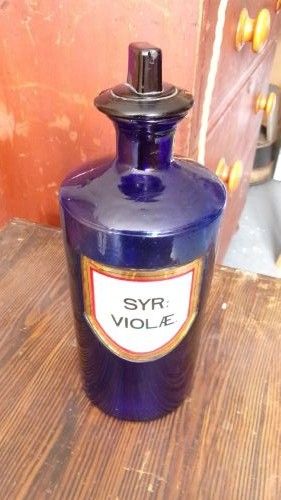
- A deep cobalt glass historically produced in the Bristol area during the eighteenth and nineteenth centuries. It was widely used for apothecary jars and fine spirit decanters.
- Lollipop stopper
- A flat, circular glass closure shaped like a disc on a short stem. This style is frequently found on Victorian chemist and apothecary bottles.
- Opalescent glass
- A translucent glass that displays milky or pearlescent highlights, particularly around the edges when caught by the light. It is characteristic of many Art Deco French scent bottles.
- Mell decanter
- A specific Georgian decanter shape with a wide body tapering towards the shoulder, designed for storing whiskey or wine. These often feature hand-painted enamel labels.
- Nailsea glass
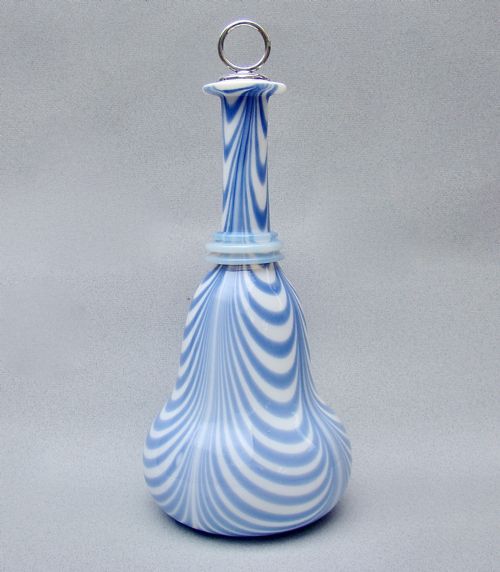
- Glassware produced in the village of Nailsea near Bristol, known for traditional looped or splashed decorative threads. It often appeared in combination with metalwork on wine carafes.
Blue Glass Stoppered Bottle: Frequently Asked Questions
Are the stoppers original to the bottles?
Many pieces retain their matched stoppers, which were ground by hand to fit the exact contours of the neck. You can often check for a matching number etched on both the base and the stopper.
Replacements do occur over time, so checking the fit and glass colour provides a good guide to originality.
What is the difference between an apothecary bottle and a decanter?
Apothecary bottles were made for storing medical ingredients and chemicals, frequently featuring painted enamel labels to identify the contents. They often use distinctive lollipop stoppers.
Decanters are heavier vessels designed for holding wine or spirits on the dining table or sideboard.
How can I tell a Georgian bottle from a Victorian one?
Georgian pieces often display hand-blown pontil marks on the base and feature hand-painted or gilt labelling. The glass can show minor bubbles and irregularities from early manufacturing methods.
Victorian examples tend to have heavier moulded forms, brighter cobalt shades, and more standardised shapes for commercial apothecary use.