
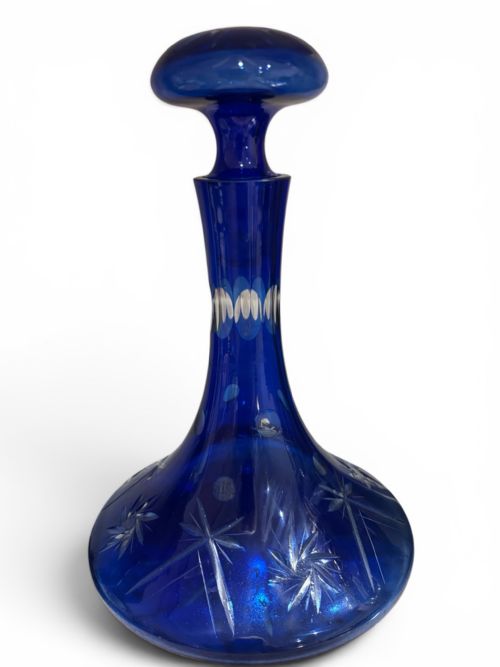


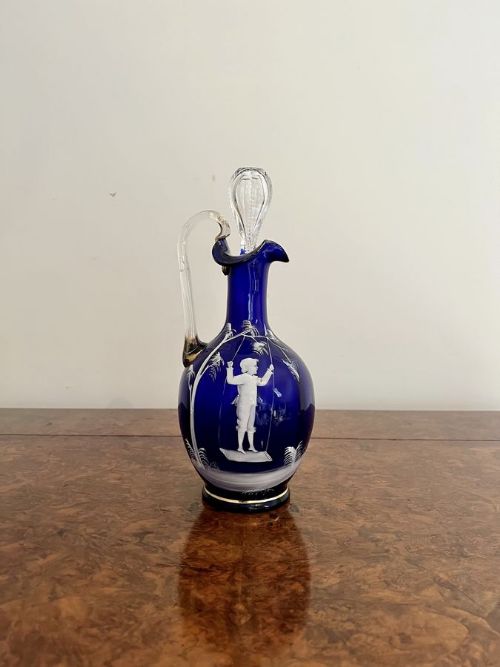
Victorian Cobalt Blue Decanter
These Victorian cobalt blue decanter pieces are striking vessels of deep-coloured glass, prized for their rich hue and period presence on any table.
Victorian Cobalt Blue Decanter
A victorian cobalt blue decanter brings intense colour and nineteenth-century craftsmanship to domestic interiors. Buyers searching for this phrase encounter wine bottles, rum decanters, and apothecary jars made during the Victorian era.
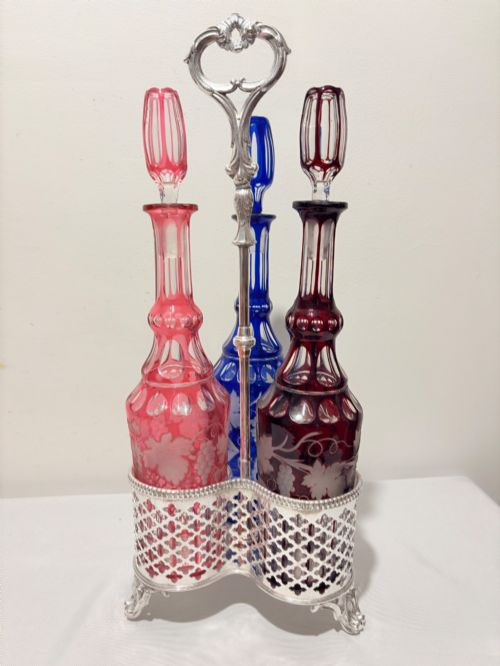
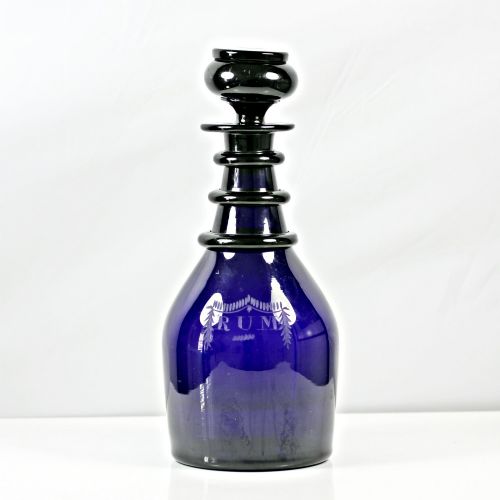
Most examples originate from British glasshouses or Bohemian workshops producing items for export markets. The selection includes ringed decanters, mell shapes, and flagons, often paired with metal mounts or silver-plated stands.
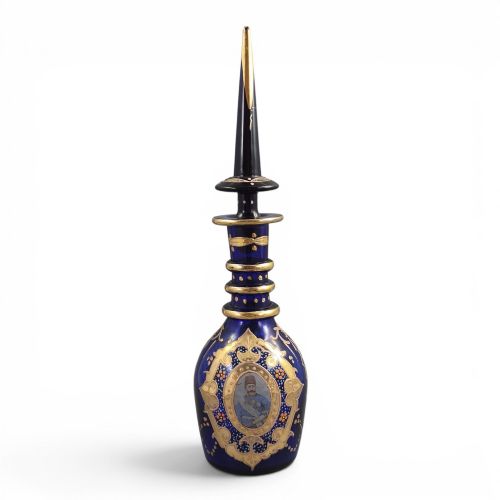
Forms span from simple serving bottles to elaborately decorated vessels featuring enamel or gilt detailing. These pieces reflect the functional and decorative drinking customs of the nineteenth century.
How they were made
Glassmakers utilised cobalt oxide to achieve the deep blue coloration within the molten metal. Hand-blowing techniques produced characteristic variations in thickness and bubble distribution across the bodies of the vessels.
Many items incorporate cut glass detailing, polished pontil marks, and applied rings around the neck for secure handling. Decoration frequently includes hand-painted enamel, gold leaf, and silver plate collars or stoppers.
Listings feature nineteenth-century items spanning from 1830 to 1900, incorporating cobalt glass, silver plate, enamel, and gold leaf.
What varies in quality
Quality rests upon the depth and clarity of the cobalt glass, alongside the crispness of any hand-cut facets. Finely executed enamel work and well-fitted silver-plated hardware elevate the standing of a piece.
The weight of the metal mounts and the proportion of the vessel shape distinguish standard utility wares from exhibition pieces. Original stoppers and intact gilding significantly influence the desirability among collectors.
The Victorian Cobalt Blue Decanter Glossary
- Cobalt glass
- Glass coloured deep blue by the addition of cobalt oxide during melting. This material forms the primary body of nineteenth-century blue decanters.
- Mell decanter
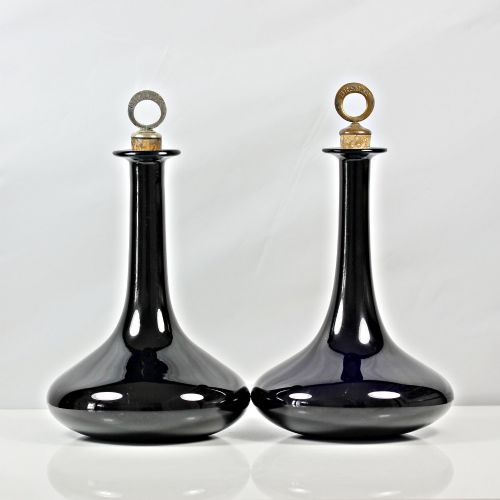
- A mallet-shaped bottle with a wide base and tapering neck, designed to sit securely on shipboard tables. This form appears frequently in Scottish and English Victorian glass.
- Pontil mark
- The rough scar left on the base of a vessel where the punty rod was detached after blowing. Its presence indicates traditional hand-blown manufacturing methods.
- Silver plate
- A thin layer of silver fused to a base metal, commonly utilised for the collars, necks, and stands of Victorian bottles. This technique provided the appearance of solid silver at lower cost.
Victorian Cobalt Blue Decanter: Frequently Asked Questions
How were cobalt blue decanters used?
These vessels served to store and pour wine, spirits, and cordials at the dining table or sideboard.
They were also utilised in pharmacies and private homes as apothecary bottles for holding medicines and liquids.
How do I clean an antique decanter?
Washing should be done by hand using warm water and mild detergent without soaking silver mounts.
Avoid abrasive sponges or sudden temperature changes to protect the fragile nineteenth-century glass and any enamel decoration.
Are stoppers always original?
Many surviving pieces retain their matching stoppers, though replacements are common due to breakage over time.
Matching the glass colour and grinding fit helps identify whether a stopper belongs to the specific bottle.
How do I distinguish Bristol blue from Bohemian glass?
English Bristol glass often displays simpler forms with ring necks and minimal gilding.
Bohemian pieces frequently exhibit heavier crystal cutting, elaborate enamel painting, or specific export markers for Persian markets.